Tulvo: Build an Interconnected Workspace with One Sentence, Ending the Chaos of Ten Apps
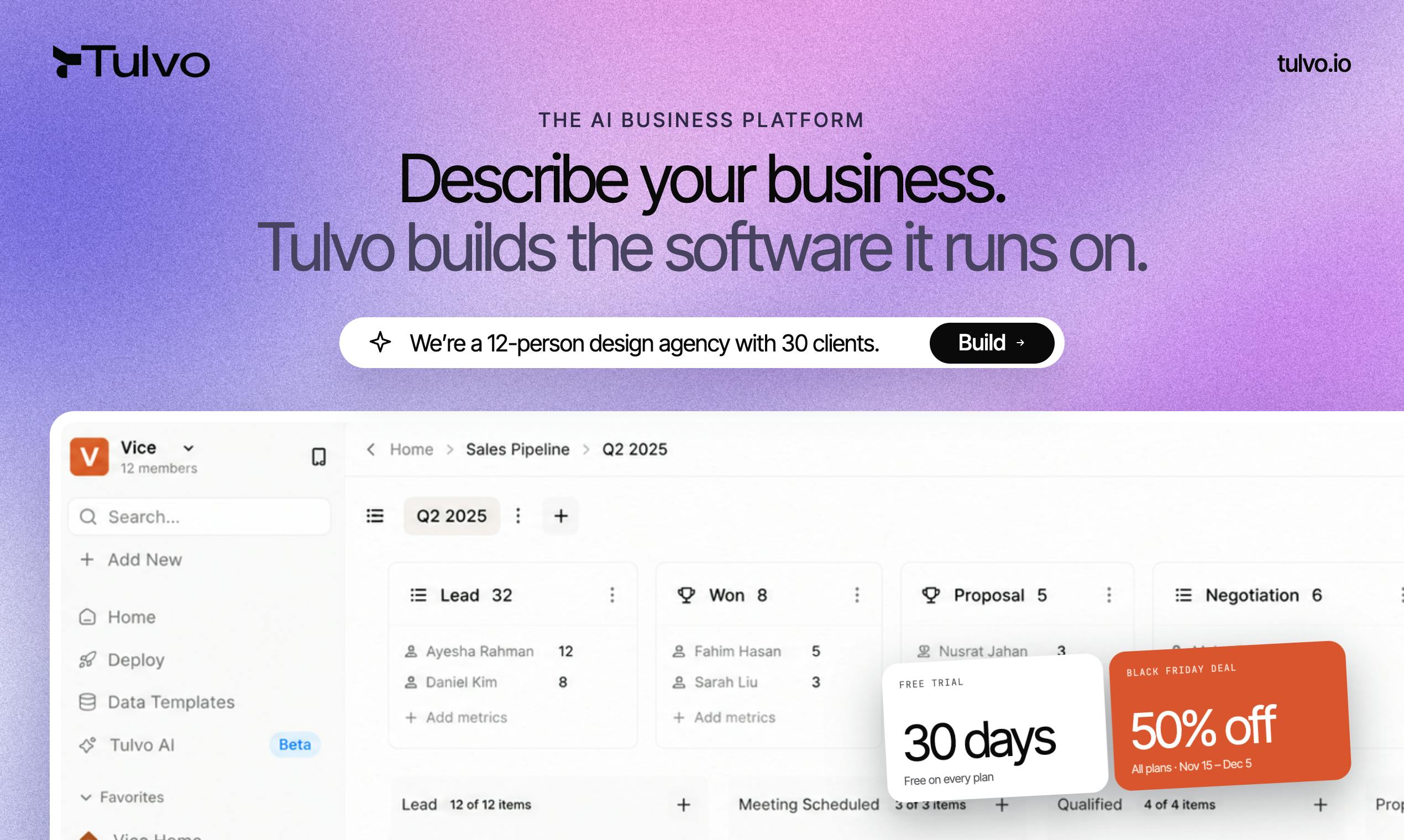
Tulvo uses one sentence to have AI generate an interconnected business system, replacing the ten-plus scattered tools of small businesses.
Tulvo addresses the pain point of small businesses having too many tools and disconnected data by putting all business data on a single interconnected structure. Its core capability is describing your business in natural language and having AI automatically generate databases, boards, documents, and reports—translating "describing the business" into "data structure + views + automation" and lowering the barrier for non-technical teams to build internal systems. Data ingestion supports forms and Webhooks, built-in automation rules, and MCP to connect users' own AI models, plus hosted online sites. The product received 105 votes, 6 comments, and ranked #2 on Product Hunt. The article also notes that all-in-one workspaces face a tension between feature breadth and point-solution depth, and that post-migration data governance and collaboration experience are key to retention—suggesting users leverage the 30-day trial and Black Friday 50% discount to run one or two real workflows before deciding on a full migration.
The Data Silo Dilemma for Small Businesses
Most small businesses run on a fragile patchwork: documents live in one tool, tasks in another, customer information sits in spreadsheets, and forms and websites are scattered elsewhere. According to Tulvo's product description on Product Hunt, this often means more than ten apps are in use at once—and they almost never share data with each other.
The core problem isn't a lack of tools; it's disconnected data. Every app switch means another manual transfer and another chance for error. Tulvo aims to solve exactly this layer: putting all business data on a single interconnected data structure, rather than building yet another isolated productivity tool.
Describe Your Business in One Sentence, and AI Builds the Whole System
Tulvo's most distinctive capability is initializing a workspace with natural language. Users simply describe their business in one sentence, and Tulvo AI generates the matching databases, boards, documents, and reports.
This isn't simple template application—it translates "describing the business" directly into a combination of "data structure + views + automation." For small teams without technical backgrounds, this dramatically lowers the barrier to building internal management systems—where previously someone who understood databases had to spend time configuring things, now AI provides a usable starting point.
"Data structure + views + automation" is the three-layer architecture of this type of platform, and understanding it helps assess the quality of AI generation. The data structure layer defines entities and fields (such as "Customer," "Order," and the relationships between them) and determines whether data can interconnect; the view layer is different presentations of the same data (boards, tables, calendars, reports) and determines how teams use it; the automation layer consists of triggers and actions (such as "automatically create a record and notify the owner when a form is submitted") and determines whether repetitive work can be replaced by rules.
What AI generates from a one-sentence business description is essentially the initial skeleton of these three layers. Whether the skeleton is reasonable depends on whether the description includes key entities, state transitions, and role assignments—the more specific the description, the closer the generated structure is to real workflows; when the description is too vague, users still need to make secondary adjustments to the generated result.
From Forms and Webhooks to Your Own AI: A Closed Loop of Data and Automation
For data ingestion, Tulvo supports importing data from forms and Webhooks, meaning website leads and external system events can all enter the same data layer. Combined with built-in automation capabilities, repetitive workflow tasks can be handled by rules.
Another notable point is MCP support. Users can connect their own AI through MCP, letting external models directly operate on data and workflows in Tulvo. This is uncommon among small business tools—most SaaS AI capabilities are closed, while Tulvo chooses to open up the AI layer and give choice back to users.
Additionally, Tulvo supports hosting online sites, putting external presentation and internal data management in the same product, reducing one layer of external dependency.
MCP (Model Context Protocol) is a protocol standard proposed and open-sourced by Anthropic in late 2024, aimed at establishing a unified connection method between AI models and external data sources and tools. Think of it as "the USB-C interface of the AI world": previously, every AI application needed a separately developed adapter layer to connect to an external system; with MCP, as long as a model supports the protocol, it can read data, call tools, and execute operations in a standardized way.
For SaaS products, supporting MCP means users are no longer locked into vendor-built-in AI capabilities—they can connect the models they trust (such as Claude, GPT, or locally deployed open-source models) directly to business data. This also brings new considerations: MCP connections involve permission boundaries and the scope of data exposure. When enterprises authorize external models to access internal data, they need to clarify which tables and fields can be read and written—this is also a security dimension that must be noted when evaluating such open capabilities.
Market Feedback and What to Watch
On Product Hunt, Tulvo received 105 votes and 6 comments, ranking #2 and categorized under Productivity, Artificial Intelligence, and No-Code. For a product positioned more as "infrastructure," this result shows that the narrative of "replacing ten apps with one platform" genuinely resonates.
What needs to be viewed calmly is that this type of "all-in-one workspace" faces a long-term contradiction: the broader the feature coverage, the easier it is for point solutions to be surpassed by specialized tools; and the value of data interconnection can only be realized when users truly migrate their business in. Tulvo's AI auto-building lowers the migration barrier, but post-migration data governance, permissions, and collaboration experience are the key to retention.
Currently, Tulvo offers a 30-day free trial and a 50% discount during Black Friday, which is a low-cost validation window for small teams. It's recommended to first generate a workspace with one sentence, run one or two real business processes through it, and then decide whether a full migration is worthwhile.
FAQ
Who is Tulvo for? It's for small business teams using multiple disconnected tools with data scattered across documents, spreadsheets, and forms, as well as users who want to quickly build internal systems with AI but lack technical resources.
How is it different from traditional no-code platforms? Traditional no-code platforms require users to design data tables and views themselves; Tulvo's approach is to have AI generate the initial structure based on a business description, which users then adjust.
Can I use my own AI model? Yes, Tulvo supports connecting users' own AI through MCP.
Related articles
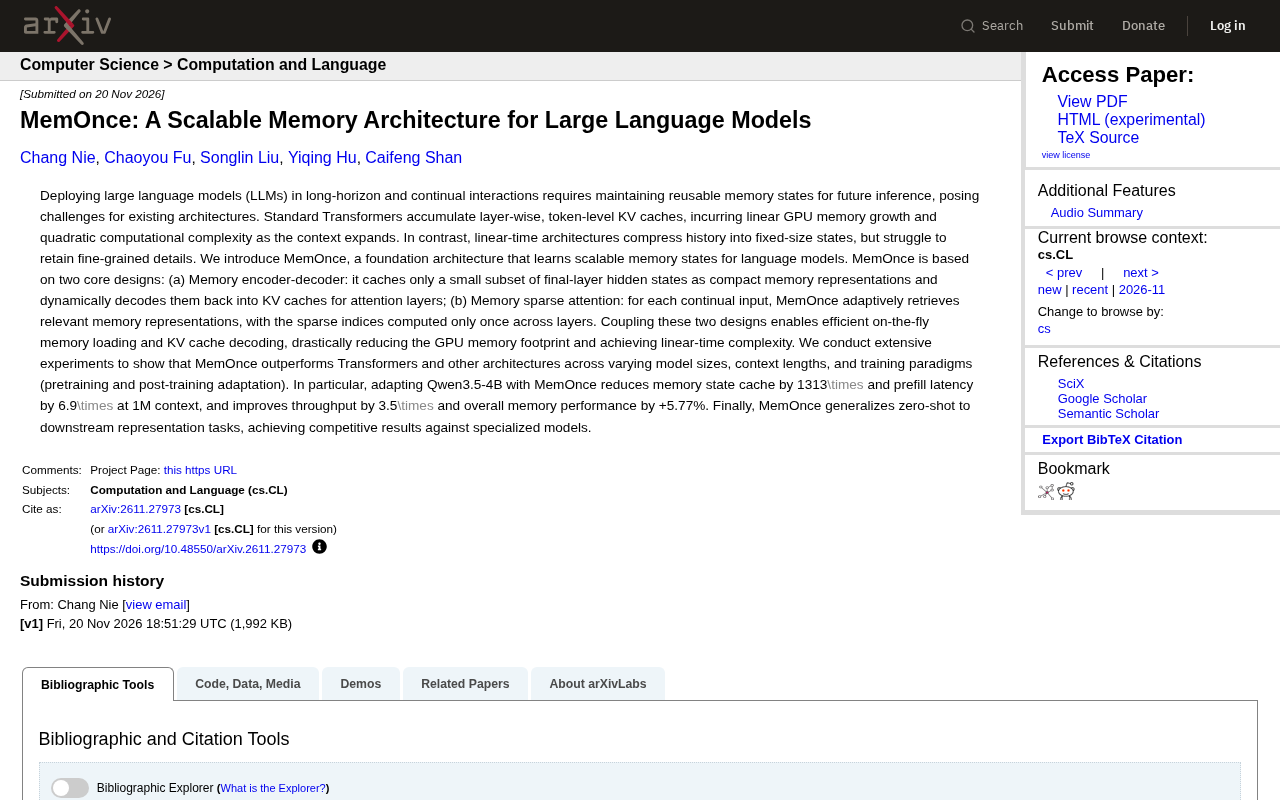
MemOnce: A Scalable Memory Architecture for LLMs That Cuts 1M-Context GPU Memory by 1000x
MemOnce introduces a scalable memory architecture with memory encoding-decoding and sparse attention, cutting Qwen3.5-4B memory cache 1313x and prefill latency 6.9x at 1M context.

COP31 Climate Talks End Without Agreement Over Fossil Fuels and Finance Disputes
COP31 climate talks failed to reach agreement over fossil fuel phase-out and climate finance disputes. This article analyzes the core conflicts behind the breakdown and its impact on global climate governance.
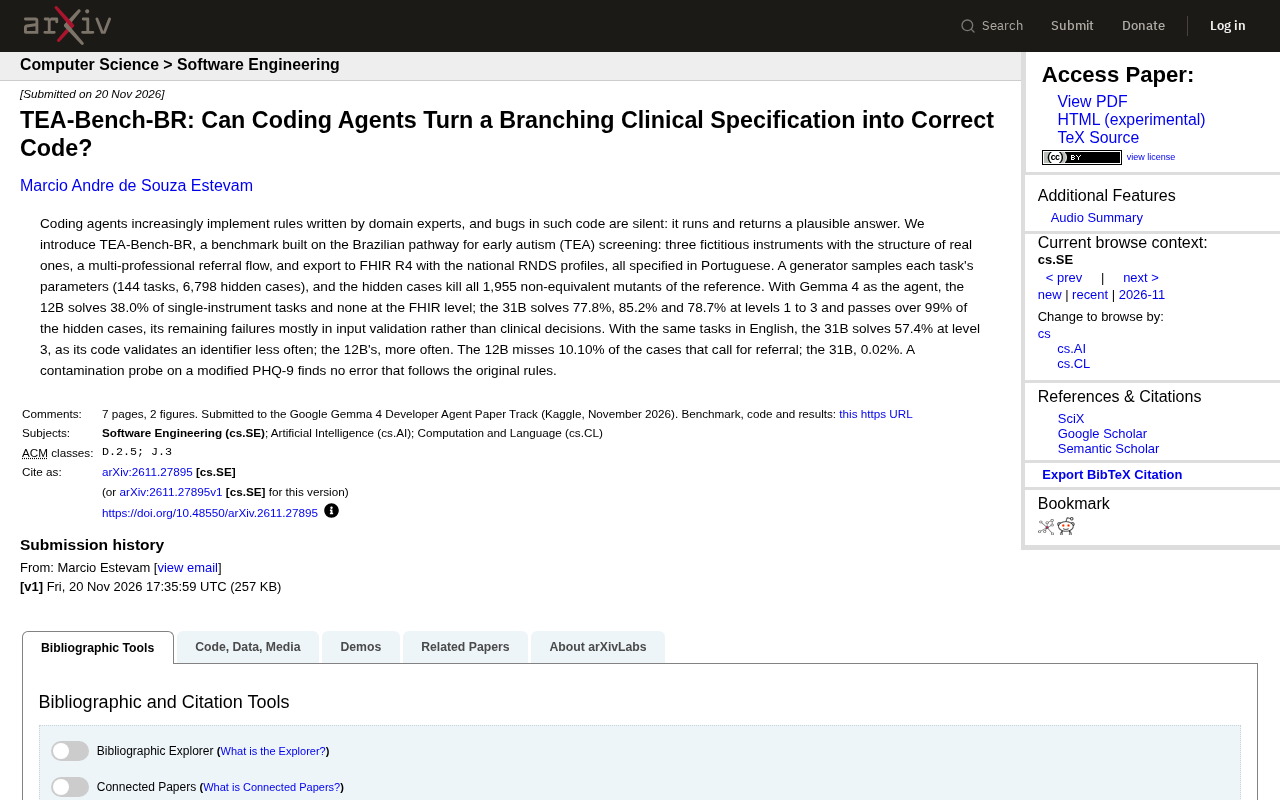
TEA-Bench-BR: Can Coding Agents Turn Branching Clinical Guidelines into Correct Code?
TEA-Bench-BR evaluates coding agents on converting Brazilian autism screening clinical guidelines into code. The 31B model solves over 77%, but drops to 57.4% in English, with input validation as the main failure point.