Uber Launches Parking Booking Feature Across 400 Cities Following SpotHero Acquisition
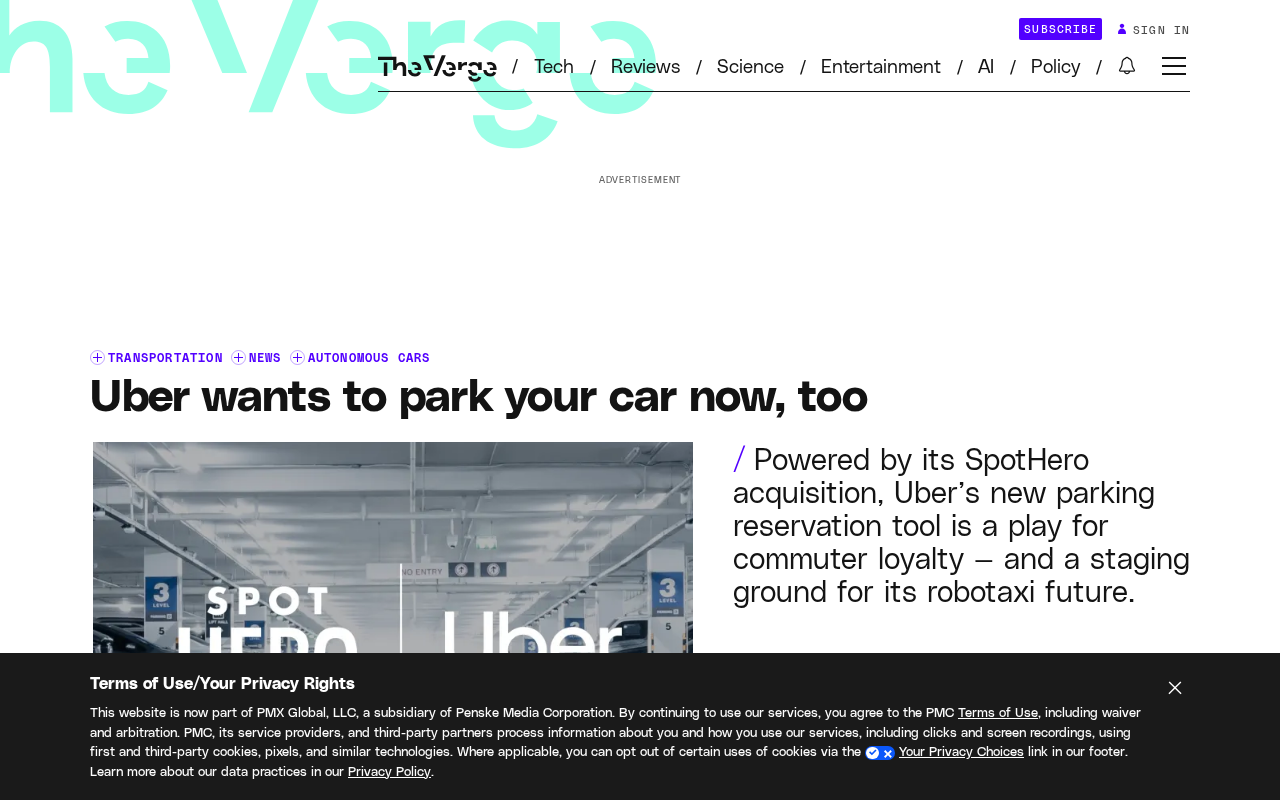
Uber launches native parking booking feature after acquiring SpotHero, bringing parking into its mobility transaction loop.
Uber has announced Uber Parking, a native in-app feature letting users find, book, and pay for garage and lot spaces without leaving the app. It's a direct result of Uber's recent acquisition of parking platform SpotHero, inheriting a network of 400+ cities and 13,000+ facilities. Parking is the final link in the travel chain and a high-frequency pain point; bringing it into Uber's transaction loop can boost transaction frequency, supplement mobility data, and extend revenue. It pressures standalone parking platforms and means both exposure and traffic dependence for lot operators, while integration challenges remain around service consistency, price transparency, and city regulations.
Uber is extending its reach from "getting you to your destination" to "helping you park your car." According to RSS sources, Uber has announced the launch of Uber Parking, a native in-app booking feature that lets drivers find, reserve, and pay for garage and lot spaces in advance. The feature is a direct result of Uber's recent acquisition of SpotHero, integrating a network covering more than 400 cities and over 13,000 parking facilities into the Uber app.
From Mobility to Parking: What Is Uber Parking
The core logic of Uber Parking is not complicated: users can find, book, and pay for parking spaces entirely within the Uber app, without being redirected to a third-party platform. This means Uber is no longer just "dropping you at the door" but stepping further into the high-frequency, high-pain-point scenario of "where to park your car."
From a product standpoint, this is a native feature rather than a simple API integration. Native means the user experience, payment flow, and data all stay within the Uber ecosystem, which directly helps boost user stickiness and transaction frequency. Parking reservations are also a highly predictable need—users often know in advance where they're going and roughly when they'll arrive, creating a natural use case for advance booking.
The SpotHero Acquisition: A Ready-Made Answer for the Parking Network
Uber Parking wasn't built from scratch. Reports explicitly state that the feature is the result of Uber's recent acquisition of SpotHero. SpotHero itself is a parking booking platform with a network covering more than 400 cities and over 13,000 facilities. Through the acquisition, Uber directly gained this network rather than spending years negotiating with parking lot operators city by city.
This "buy time through acquisition" strategy is not uncommon in the mobility industry. For Uber, parking is the final link in the travel chain and the one most easily intercepted by third parties. Integrating SpotHero's network into its own app fills the gap between "navigation ends" and "car is parked," reducing opportunities for users to drift to other parking apps.
Founded in 2011 and headquartered in Chicago, SpotHero is one of the leading parking booking platforms in the United States. Its model aggregates idle spaces from parking lot operators, letting users book by the hour or by the day in advance and pay online, with the platform taking a commission. For parking lot operators, SpotHero helps improve space utilization and clear inventory; for users, it offers price comparison and certainty. This two-sided platform nature has allowed it to accumulate extensive city-level parking supply and pricing data, as well as partnerships with local operators and municipal parking authorities. For Uber, a direct acquisition means gaining the supply network, operational experience, and existing contractual relationships all at once—saving the lengthy groundwork and negotiation cycle of building from scratch, but also requiring the cost of integrating different systems, unifying settlement, and aligning data standards.
Why Uber Is Targeting Parking
Parking is an underappreciated high-frequency scenario. Almost every drive involves a parking decision, and the anxiety of finding a space, the inconvenience of payment, and unpredictable pricing have long plagued drivers. If Uber can bring this link into its own transaction loop, it delivers at least three layers of value.
First is increased transaction frequency. Ride-hailing is an occasional need, while parking is more routine for car owners. Uber Parking gives Uber an opportunity to reach people who drive themselves, not just those who call for rides. Second is data supplementation. Data on parking destinations, duration, and price preferences can complement Uber's existing mobility data, helping it understand user movement patterns more precisely. Third is business model extension. Parking reservations inherently carry transaction attributes, and the platform can earn revenue share or service fees at the booking stage.
The closed-loop transaction is a key concept for understanding this strategy. In the platform economy, a closed loop means the entire process—from need discovery and comparison to ordering, payment, and after-sales service—happens within the same app, allowing the platform to capture complete behavioral data and earn transaction commissions. The value of a closed loop lies in reducing user leakage to external links (so-called "interception") and increasing per-user lifetime value. Uber's previous closed loop ended at "getting out of the car," with the parking link handled by third-party apps. By bringing parking into the loop, Uber can record not only "where you went" but also "how long you parked and how much you're willing to pay for a space"—data with direct value for pricing, recommendations, and advertising monetization.
What It Means for the Industry
The launch of Uber Parking further blurs the boundary between mobility platforms and parking infrastructure. For standalone parking booking platforms, Uber's entry-point advantage and data capabilities constitute competitive pressure; for parking lot operators, connecting to the Uber network means more exposure but may also bring dependence on platform traffic.
More noteworthy is the possibility of product synergy. Uber's app already aggregates a large number of users who are "about to arrive somewhere." If parking reservations can be triggered naturally as users navigate toward their destination, the conversion path becomes very short. This kind of contextual embedding is an advantage that standalone parking apps struggle to replicate.
Of course, integration is never instantaneous. Service consistency across 13,000+ facilities, price transparency, and differences in parking regulations across cities are all details Uber needs to work through in actual operations. SpotHero's network provides scale, but the polish of the user experience still depends on how Uber embeds this feature into its own product logic.
From a broader perspective, Uber Parking is a step in Uber's evolution from a "mobility service" to "mobility life infrastructure." When a company simultaneously knows your mode of travel, your destination, and your parking space, its coverage of urban mobility scenarios becomes one layer deeper.
Contextual embedding refers to presenting a service at the moment the user needs it most, with the least friction. Uber's advantage is that it already has real-time location, navigation routes, and estimated arrival times, theoretically enabling it to proactively push nearby available spaces with one-click booking before the user approaches their destination. Compared to the path of a standalone parking app—where users must open the app, enter a destination, and then search—this location- and trip-triggered recommendation significantly shortens the decision chain. However, contextual recommendations also carry experience risks: pushing too frequently can interfere with navigation, and inaccurate recommendations can damage trust. Therefore, refining trigger timing and ranking logic determines whether this advantage can truly be realized.
One-line Summary
Uber launches a native parking booking feature following its SpotHero acquisition, bringing parking into the mobility transaction loop.
Paragraph Summary
Uber has announced Uber Parking, a native in-app parking booking feature that lets users find, reserve, and pay for garage and lot spaces within the Uber app without redirecting to third-party platforms. The feature is a direct result of Uber's recent acquisition of parking booking platform SpotHero, inheriting a network covering more than 400 cities and over 13,000 parking facilities. The article argues that parking is the final link in the travel chain and a high-frequency scenario with clear pain points; bringing it into its own transaction loop can boost transaction frequency, supplement user mobility data, and extend revenue sources. It creates competitive pressure on standalone parking platforms and means both exposure and traffic dependence for parking lot operators. Implementation still faces integration challenges such as service consistency, price transparency, and differences in city regulations.
Related articles
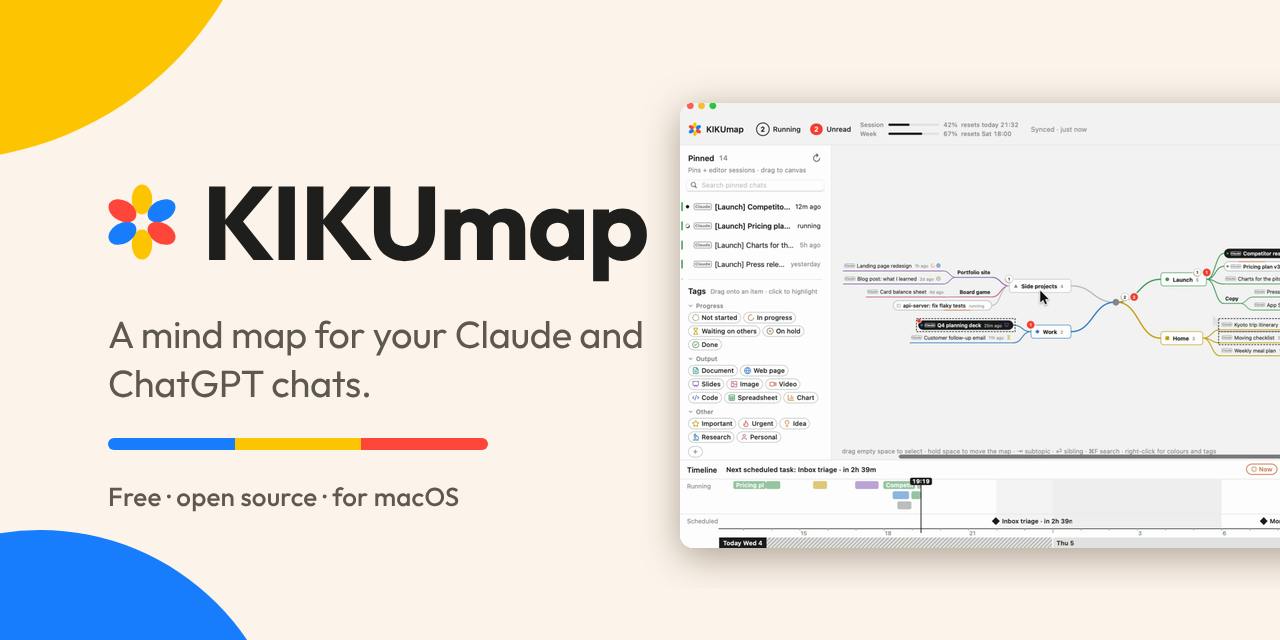
KIKUmap: Manage Your Claude and ChatGPT Conversations with Mind Maps
KIKUmap is a macOS menu bar app that visualizes Claude and ChatGPT conversations as mind maps with real-time status. Free and open source.
Hugging Face Executive Warns: Cyberattacks Are Eroding the Openness of Open-Source AI
Hugging Face executive Irene Solaiman warns that rising cyberattacks on open AI platforms may force stricter security limits, threatening the openness of the open-source community and affecting the developer ecosystem.
Google Cloud Launches Healthcare Version of Gemini: Integrating Clinical Data and Automating Workflows
Google Cloud releases healthcare version of Gemini, focusing on unified clinical data and automated workflows to reduce administrative burnout. Analysis of positioning, challenges, and the healthcare AI landscape.