Unprofitable AI Trillion-Dollar IPO: Founder Cash-Outs and Leverage Risk Contagion

AI firm's $1.4T IPO lets seven founders cash out $250M each, while leveraged products and forced selling amplify risk.
An unprofitable AI company is pursuing a $1.4 trillion IPO, with seven co-founders each cashing out $250 million. The valuation is liquidity-driven, not profit-driven. European 3x leveraged ETPs and crypto perpetuals spill private risk into public markets. FTX's forced sale at $1.34 billion missed over $30 billion. Watch founder selling, leveraged product growth, and FTX estate realizations.
Title
Unprofitable AI Trillion-Dollar IPO: Founder Cash-Outs and Leverage Risk Contagion
Meta Description
An unprofitable AI company plans to list at a $1.4 trillion valuation, with seven founders each cashing out $250 million on IPO day. This article breaks down the fully-diluted valuation basis, the risk spillover from 3x leveraged ETPs, the lesson from FTX selling shares for $1.34 billion and missing out on $30 billion, and identifies three key signals to watch.
Article Content
An AI company that has not yet turned a profit is pushing ahead with a listing at a $1.4 trillion valuation, and seven co-founders will each cash out $250 million on IPO day. This is not a joke—it is actually in process. According to a deep-dive analysis by the Bilibili program "Web3 Observation Post," the company's per-share pricing range is $70 to $78, which at the fully-diluted basis corresponds to an upper limit of $1.404 trillion; Bloomberg, citing the Financial Times, reports that investment banks are still discussing $1.5 trillion or even higher. Meanwhile, a 3x leveraged Anthropic ETP has already appeared in Europe, and crypto perpetual contracts are also pricing its IPO timing. This article breaks down the risk transmission mechanism of this AI capital cycle through four threads: valuation basis, founder share reductions, leveraged products, and FTX's unexpected recovery.
1. The $1.4 Trillion Valuation: Liquidity Pricing, Not Profit Pricing
Traditional trillion-dollar companies rely on stable cash flow discounting, allowing conservative models to be built for projection. But for an AI company whose revenue structure has not yet been publicly verified, the pricing benchmark is no longer the price-to-earnings ratio—it is "narrative intensity." The figure of $1.404 trillion is essentially liquidity pricing: it measures how much premium the market is willing to pay for a scarce AI asset.
The "fully-diluted basis" must be explained thoroughly here: it is the total share count after converting all issued shares, options, restricted stock, and convertible bonds into shares. The valuation calculated this way is a theoretical maximum—the book value assuming all options are exercised. This is not fraud; it is a choice of basis, but investors must understand that between the trillion-dollar figure they see and each share they actually buy, there is a layer of options. As Da Shu pointed out on the program: raising expectations before the range is even priced itself shows that the underwriting team is very optimistic about subscription demand, and that the AI narrative is extremely scarce in the secondary market.

Liquidity breadth determines how long such valuations can be tolerated. As long as capital continues to flow into the AI sector and new leveraged products continue to absorb demand, the valuation can hold; once liquidity tightens at the margin, the first to be re-rated will be assets like this with no profit support, and the decline is often non-linear.
ETP (Exchange Traded Product) is a general term for a class of financial products listed and traded on stock exchanges. Structurally more flexible than ETFs, ETPs can hold stocks, bonds, commodities, or even employ leveraged strategies. Leveraged ETPs use derivatives (such as swaps) to track a multiple of the underlying's daily price movement—for example, a 3x leveraged ETP aims to provide 3 times the single-day return of the underlying. The key mechanism is daily rebalancing: the product adjusts its derivative positions at each day's close to maintain the target leverage multiple, which leads to path-dependent decay (volatility decay) in choppy markets, and long-term holding returns may deviate significantly from three times the underlying's cumulative gain. Such products are typically aimed at day traders, but because their names carry hot underlying assets, they are often mistaken by retail investors for long-term tools, thereby amplifying risk exposure.
2. Seven Equal Share Reductions: A Collective Plan, Not Individual Departures
What is more intriguing than the valuation is the detail of the share reductions: seven co-founders each reduce their holdings by about $250 million, exactly the same amount. If a single founder suddenly cashed out a large sum, the market would interpret it as a loss of personal confidence; but seven people reducing equally in sync becomes a planned action written into the IPO documents. This is signal management—equal reductions ensure no single person can be singled out for blame, and after the reduction the group still controls the company. It is essentially a combined move of "monetization plus lock-up."
Early shareholders gaining liquidity is a normal function of capital markets; what really matters is the proportion. Selling only a small portion and keeping the vast majority is lifestyle-improvement cashing out; selling more than half is a matter of attitude. The source material does not give specific ownership percentages, but the combination of seven people reducing equally at the IPO moment itself conveys information: they have a judgment about the current valuation. In plain terms, if you believe your house can still double in value, you would not rush to sell a piece of it on the first day it is listed.
IPO lock-up period is a selling restriction agreed between underwriters and company insiders (founders, early shareholders, employees) before an IPO, typically 180 days. During this period insiders may not sell shares, to protect post-listing price stability. After the lock-up expires, insiders may reduce holdings according to pre-disclosed rules. Some companies plan scheduled sales in advance in IPO documents (such as 10b5-1 plans), allowing insiders to sell a specific number of shares at specific times to avoid being questioned about informational advantage. If the seven founders' equal synchronized reduction occurs on IPO day, it may mean the lock-up was waived or the reduction is part of the IPO offering (such as a secondary sale); this requires careful reading of the "Selling Shareholders" section in the prospectus to confirm the specific arrangements.
3. Leveraged Products: Private-Market Risk Spills into Public Markets
The most alarming thread of the whole affair is that a 3x leveraged Anthropic ETP from Leverage Shares has already appeared in Europe. Before Anthropic's official listing, it holds interest-bearing assets; after the stock is listed, it tracks three times the underlying's daily price movement, with management fees and daily rebalancing. The biggest trap of a 3x leveraged product is not getting the direction wrong, but volatility decay: if the underlying falls 10% today and rises 11% tomorrow, you think you are back to even, but the net value has already decayed; back-and-forth decay over several consecutive days becomes very obvious. It is supposed to be an intraday trading tool, but many retail investors treat it as a long-term holding because the name says Anthropic.

At the same time, the crypto perpetual contract market is also pricing its IPO. A company that has not yet traded on public markets already has its price expectations turned into leveraged products traded simultaneously across multiple markets. Traditionally, private-market valuation risk was absorbed within a small circle and re-priced by public markets after listing; now this gate has been bypassed—the risk transmission path has changed. Previously, if the valuation was wrong, primary-market investors bore the loss; now, if the valuation is wrong, a group of people holding 3x leverage in public markets bears it. The liquidation logic of leveraged products is often automatic and chain-reaction: forced liquidation at a certain level, and the liquidation itself exacerbates the decline. The most dangerous aspect of the leverage narrative is turning a valuation event into a liquidity event.
Crypto perpetual futures are derivative contracts with no expiry date that anchor to the spot price through a funding rate mechanism. When the contract price is above spot, longs pay funding to shorts, and vice versa, incentivizing price convergence. Perpetual contracts allow high leverage (commonly up to 100x) and trade 24/7, so they react extremely quickly to news and sentiment. The article mentions that crypto perpetual contracts are pricing Anthropic's IPO timing, meaning traders can speculate on this unlisted company's valuation event, forming a kind of "shadow pricing." This mechanism directly exposes private-market risk to leveraged traders in the crypto market; once expectations reverse, it may trigger cascading liquidations and exacerbate market volatility.
4. FTX's Unexpected Recovery: Forced Liquidation Is the Most Expensive Mistake
In 2024, the FTX bankruptcy estate sold this batch of Anthropic shares for $1.34 billion. At the currently proposed IPO price, this batch would be worth more than $30 billion—a difference of more than 20 times. Back then, FTX was forced to liquidate under bankruptcy pressure and sold just before dawn. There are two lessons here: first, the liquidation pace of bankruptcy proceedings is often the worst—forced sellers never have pricing power; second, the fact that FTX was able to acquire these shares shows that in those years the exchange's balance sheet held not cash but a pile of venture investments—an amplifier in bull markets and a breaking point in bear markets. Proof of reserves can only prove part of the liability side, not the asset side.

But the other side must also be seen clearly: to realize $30 billion worth of shares, they must ultimately be sold into the market—a huge source of potential selling pressure. With founders reducing holdings on one side, the bankruptcy estate waiting to sell on another, and leveraged products amplifying demand on yet another, this structure is quite fragile.
5. Three Signals for Observers
For crypto holders, the connection is direct. The funding conditions of AI and crypto are resonating: a hot AI IPO creates a wealth effect, which is short-term positive for overall risk appetite; if the AI sector's valuation corrects, sentiment will infect in reverse, and crypto—trading 24 hours with higher leverage—will react more violently and quickly. On-chain markets pricing perpetual contracts for non-crypto asset events shows both that market boundaries are expanding and that they are absorbing more and more external risk. After FTX payouts are completed, some funds may flow back into crypto markets—a structural capital return that exists in the medium term, but not a reason to bet on it.

The program does not offer buy or sell advice, but an observation checklist: first, watch whether founders continue reducing holdings after listing; second, watch the growth curve of European 3x leveraged products—if they swell rapidly after listing, it means retail investors are chasing highs with leverage; third, watch the pace of FTX bankruptcy estate realizations. If all three signals deteriorate simultaneously, that is the top characteristic of this AI capital cycle; if they remain within controllable range, it is the beginning of a new pricing system.
The keyword for this whole affair is not bubble—it is transmission. Bubble is a conclusion that requires time to verify; transmission is a process that can be seen right now. For the industry, if the IPO is completed smoothly and the secondary market remains stable, it will open a window: a batch of high-valuation AI companies will accelerate their listings, leveraged products will proliferate, and risk will spread from the few to the many; if there is a significant break below the offer price or a rapid pullback, the window closes, queued companies delay, and private valuations are marked down. In either case, holders of leveraged products are the first to get hurt. The most expensive thing in this market is never buying at a high price—it is being forced to sell at the wrong moment.
One-line Summary
An AI company advances a $1.4 trillion IPO with seven founders each cashing out $250 million; leveraged products spill private risk into public markets, and FTX's forced sale missed a 20x gain—a warning about liquidity pricing and contagion risk.
Paragraph Summary
An unprofitable AI company is advancing an IPO at a $1.4 trillion valuation, with seven co-founders each cashing out $250 million on day one. The article breaks down four threads: the valuation is calculated on a fully-diluted basis and is essentially liquidity pricing rather than profit pricing; the founders' equal synchronized reductions are planned signal management; European 3x leveraged ETPs and crypto perpetual contracts let private valuation risk bypass traditional gates and spill into public markets; FTX's bankruptcy estate sold shares for $1.34 billion in 2024, now worth over $30 billion at the IPO price, confirming that forced liquidation is the most expensive mistake. The author notes that daily rebalancing and liquidation cascades of leveraged products could turn a valuation event into a liquidity event, and offers three signals to watch: founder reduction pace, leveraged product scale, and FTX estate realization pace.
Related articles

AI Writes Your Code—Do You Still Need to Learn Git? Five Reasons
AI coding agents handle Git operations automatically—is it still necessary to learn Git? Five reasons: team communication, reviewing agent PRs, monitoring code changes, fallback when AI goes down, and the joy of learning—plus how the focus of learning Git is shifting in the agent era.
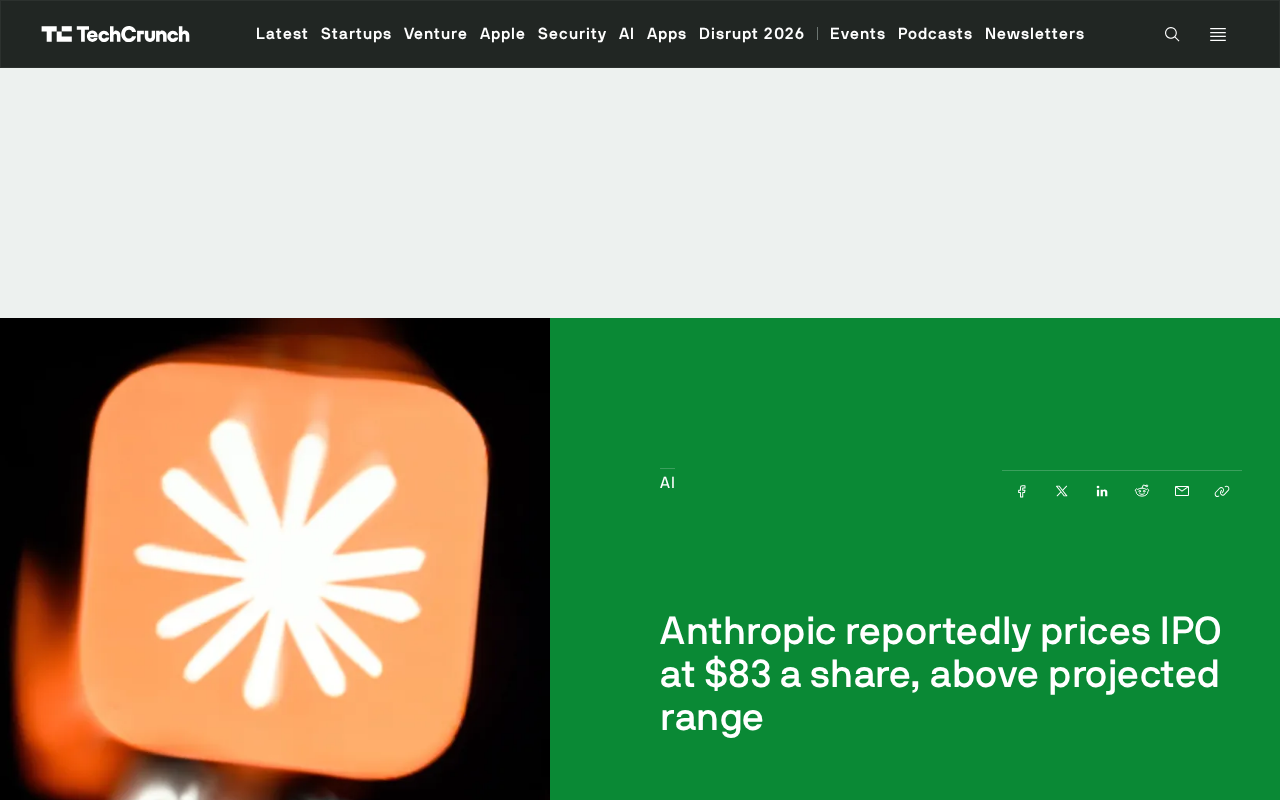
Anthropic Reportedly Prices IPO at $83 Per Share, Valuing Company at $1.5 Trillion
Anthropic reportedly prices IPO at $83 per share, above the expected range, with a fully diluted valuation of $1.5 trillion. This article analyzes the signal significance of the pricing and its impact on the AI industry's financing environment.
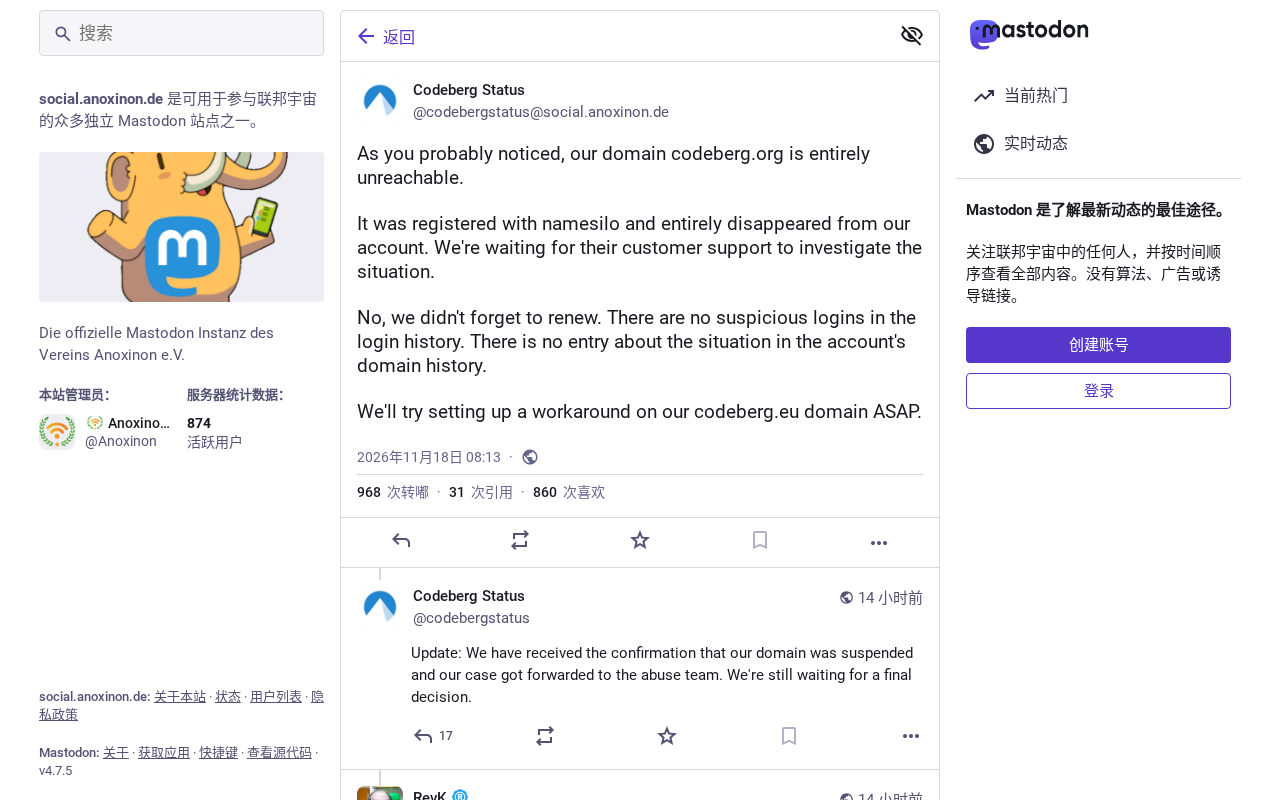
Open-Source Code Hosting Platform Codeberg Suffers Outage, Sparking Debate in Developer Community
Open-source code hosting platform Codeberg.org suffered an outage, sparking Hacker News debate over nonprofit platform stability and open-source infrastructure dependency risks.