Ur-Nammu: Founder of the Sumerian Renaissance

Ur-Nammu drove a system-level revival of Sumerian civilization through standardization and institution-building, offering governance analogies for technologists.
Inspired by a minimal Hacker News post about Ur-Nammu, this article notes that despite low engagement and no body text, the title points to an overlooked civilizational turning point. Ur-Nammu, founder of the Third Dynasty of Ur, rose amid the fragmentation after the Akkadian Empire's collapse and achieved a "system-level" revival of Sumerian civilization in politics, law, architecture, economy, and culture by establishing a central bureaucracy, standardizing weights and measures, and promoting irrigation and urban reconstruction. His law code replaced talionic revenge with compensation, and the great ziggurat of Ur became a paradigm for later generations. The article emphasizes that this case offers cross-era lessons for contemporary technologists: protocol standardization, information recording to support large-scale collaboration, and long-term public investment and institutional trust are governance challenges shared across time.
An Underrated Turning Point in Civilization
On Hacker News, a post titled "Ur-Nammu Founder of the Sumerian Renaissance" sparked a small-scale discussion. The post itself was minimal, containing only points and a title, but it pointed to a figure often overlooked at the intersection of technological and civilizational history—Ur-Nammu. For those familiar with ancient Near Eastern history, this name signifies a systematic revival of Sumerian civilization after a long period of turmoil; for a broader audience, it offers a case study in understanding "how civilizations rebuild from collapse."
It should be noted that the original material did not provide the article body, only the title and minimal metadata. Therefore, this analysis is based on the historical theme indicated by the title, interpreted through the scholarly consensus on Ur-Nammu and his era, rather than a verbatim retelling of the original post.
Who Was Ur-Nammu: From City-State Ruler to Empire Architect
Ur-Nammu was the founder of the Third Dynasty of Ur, ruling the Sumerian city of Ur around the late 22nd century BCE. He initially served as governor of Ur, rising to power amid the fragmented landscape following the collapse of the Akkadian Empire, and eventually unified large parts of southern Mesopotamia. Unlike conquerors who relied solely on military force, Ur-Nammu's rule is noted for its institutional building: he established a centralized bureaucratic system, standardized weights and measures, and promoted large-scale irrigation projects and urban reconstruction.
From a technological history perspective, one of the most notable legacies of Ur-Nammu's era is the maturation of administrative technology. Cuneiform was used more systematically to record taxes, land, and labor, and the scale of bureaucratic archives expanded significantly. The establishment of this "information infrastructure" enabled a vast regime to operate at relatively low cost, a logic that bears some structural resemblance to modern enterprise information systems.
The Third Dynasty of Ur was the last powerful unified dynasty of Sumerian civilization, existing from approximately 2112 to 2004 BCE, named after its capital at Ur. It was established after the collapse of the Akkadian Empire, following a period of chaos characterized by Gutian invasions and city-state fragmentation. A distinctive feature of this dynasty was the return of its "Sumerianness"—during the Akkadian Empire, the Semitic Akkadian language had become the official language, but the rulers of the Third Dynasty of Ur re-established Sumerian as the language of administration and literature, itself a declaration of cultural revival. The dynasty's administrative system was highly centralized, with a redistributive economy based on taxation and labor as its core, leaving behind an astonishing number of administrative archives that provide valuable material for understanding the governance mechanisms of early states.
The Sumerian Renaissance: Not Just Reconstruction, but Upgrade
The term "Sumerian Renaissance" in the title is not an exaggeration. During the chaotic period following the decline of the Akkadian Empire, the Sumerian city-state system suffered severe damage, trade networks were disrupted, and public works were abandoned. The revival promoted by Ur-Nammu and his successors manifested on multiple levels:
- Legal level: The Code of Ur-Nammu is one of the earliest known written law codes, predating the Code of Hammurabi. It emphasized compensation rather than talionic revenge, reflecting a redesign of community order.
- Architectural level: The great ziggurat of Ur was extensively expanded during Ur-Nammu's time, becoming a paradigm for later ziggurat architecture.
- Economic level: Unified weights and measures and standardized containers reduced the costs of cross-regional trade.
- Cultural level: Sumerian was re-established as the official and literary language, and royal inscriptions and hymns proliferated.
Together, these measures constituted a "system-level" revival rather than isolated fixes. This is why some historians regard the Ur-Nammu era as the final golden age of Sumerian civilization.
Ziggurat is a distinctive religious architectural form of ancient Mesopotamia, consisting of multiple stacked platforms decreasing in size, typically with a temple at the top. It was not a place of worship for ordinary believers, but rather a "base" for gods to descend to earth; its construction itself was a political-theological expression linking human order with cosmic order. The ziggurat of Ur (now known as the Great Ziggurat of Ur) is the best-preserved and most representative example, with its core structure laid during Ur-Nammu's time, and later Neo-Babylonian ziggurats largely influenced by its form. The construction of a ziggurat required mobilizing massive labor and resources, thus it also served as a material symbol of royal organizational capacity and legitimacy construction.
Why Technologists Today Should Pay Attention
In technology communities like Hacker News, ancient history posts occasionally appear and often trigger analogical discussions about "institutional design," "standardization," and "infrastructure." Ur-Nammu's case is worth reading for technologists because it demonstrates several governance challenges that transcend eras:
First, how to rebuild interoperability in fragmented systems. Unifying weights and measures is essentially protocol standardization; the difficulty lies not in formulating standards but in getting different stakeholders to accept and implement them.
Second, how to support large-scale collaboration with information records. The expansion of cuneiform archives was a prerequisite for improved administrative capacity, paralleling the importance of data governance in modern organizations.
Third, how to make long-term public investments under limited resources. Ziggurats and irrigation projects required sustained investment with payback periods far exceeding any single ruler's tenure, involving the establishment of institutional trust.
The Code of Ur-Nammu is one of the oldest surviving written law codes, with clay tablet copies dating to approximately 2100–2050 BCE, about three centuries earlier than the famous Code of Hammurabi. Written in Sumerian, the code covers litigation procedures, property, marriage, and compensation for injuries. Unlike the later "eye for an eye" principle of talionic revenge, the Code of Ur-Nammu emphasized monetary compensation, even specifying different compensation amounts for different social classes in injury cases. This orientation toward compensation over retaliation reflects an institutional design aimed at constraining violence through calculable rules and maintaining community order, and is crucial for understanding how early law transitioned from customary to written law.
Limitations of the Original Discussion and Further Reading
It should be noted that the Hacker News post received only 4 points and 0 comments, indicating it did not generate substantive discussion in the community. The original content also provided no article link or body, so it is impossible to judge the specific arguments and evidence of the original post. This discussion is built on the historical theme indicated by the title, not a commentary on the original post.
For readers wishing to delve deeper, one can start with the surviving clay tablets of the Code of Ur-Nammu, archaeological reports on the Ur ziggurat, and compiled research on the administrative archives of the Third Dynasty of Ur. Together, these materials sketch a civilizational sample of rebuilding order on the brink of collapse, whose lessons are far richer than a single title can convey.
Cuneiform is a writing system used in the ancient Near East, named for its wedge-shaped strokes, originating in Sumer around 3200 BCE. It was initially used for economic accounting and later expanded to law, literature, and diplomacy. Symbols were pressed into wet clay tablets with reed pens, and the tablets were preserved by drying or firing. During the Third Dynasty of Ur, the scale and systematization of cuneiform archives increased significantly, with administrative documents archived by subject and year, regarded as a typical form of early "information infrastructure." Understanding the materiality and writing practices of cuneiform helps appreciate how administrative technology shaped the organizational capacity of early states.
Related articles

Putting TimesFM 3.0, Chronos-2, and Toto 2.0 to the Test: Time-Series LLMs Can't Beat Simple Baselines
A developer's zero-shot benchmark of TimesFM 3.0, Chronos-2 and Toto 2.0 on 24 U.S. stocks and ETFs: directional accuracy of just 49.9%-51.1%, and simulated trading underperformed buy-and-hold. Time-series foundation models show no edge over simple baselines on financial data.
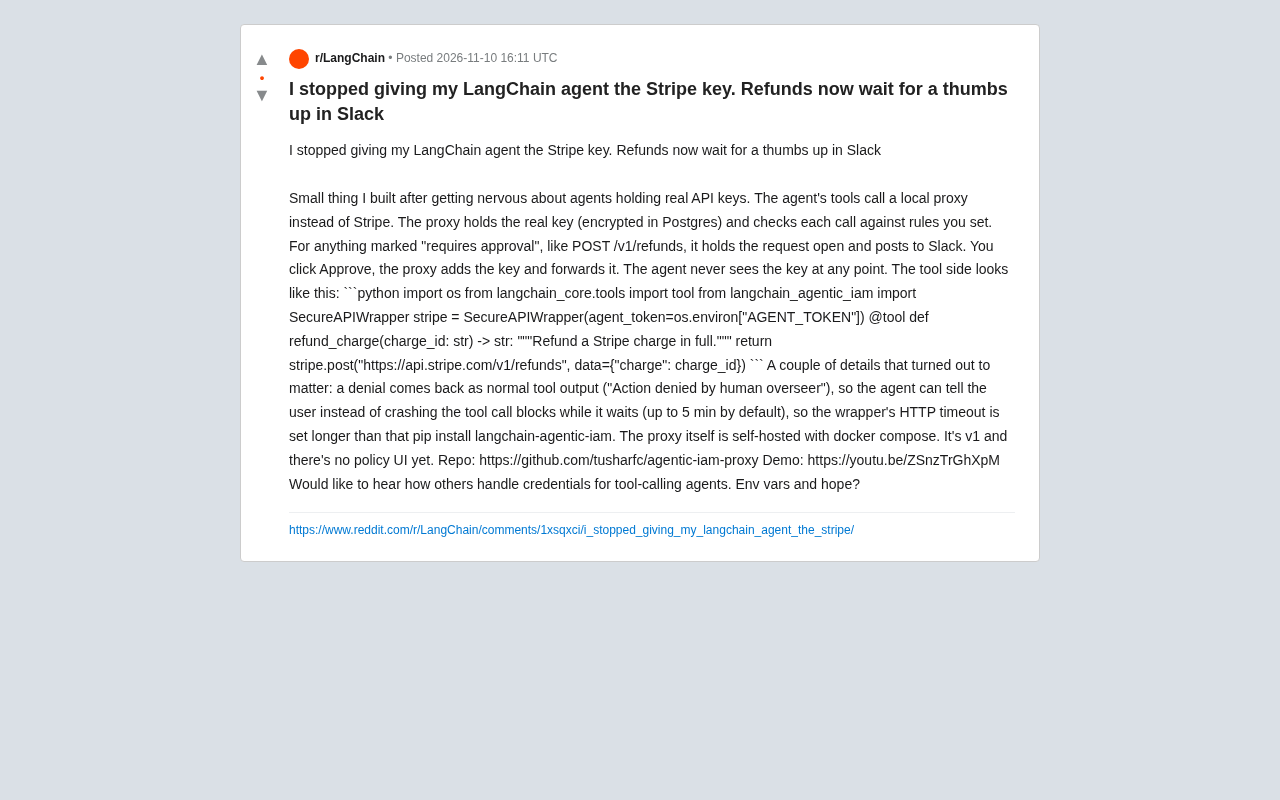
LangChain Agents No Longer Hold Stripe Keys: Refunds Require Slack Approval
A developer shares a credential management approach for LangChain agents: agents don't hold Stripe keys, and sensitive operations like refunds are forwarded through a local proxy and only executed after human approval in Slack, with code examples and engineering details.
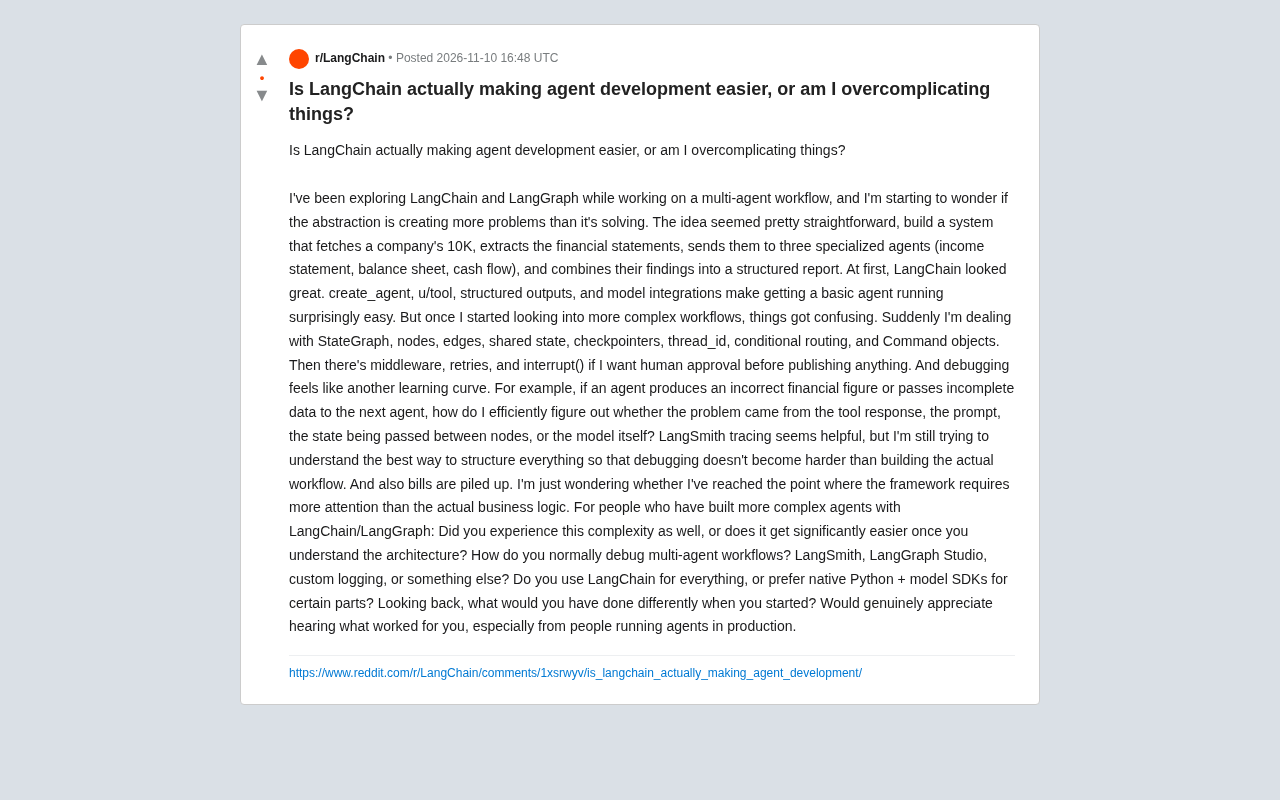
Does LangChain Really Make Agent Development Easier? A Developer Reflects on the Cost of Abstraction
A Reddit developer reflects on the abstraction cost of LangChain and LangGraph in multi-agent workflows: easy to start, but StateGraph, state management, debugging, and cost control add new complexity. The discussion covers debugging methods, whether to mix native Python + model SDKs, and production trade-offs.