Van Hollen on Holding Trump Accountable: Hearings and Building the Evidentiary Record
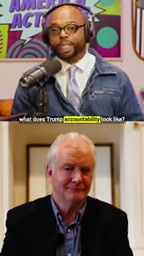
Van Hollen advocates holding the Trump administration accountable through focused hearings and an evidentiary record, preserving documentation for future criminal liability.
In an interview, Senator Chris Van Hollen proposed a procedural accountability plan: first, hold highly focused congressional hearings to expose White House corruption and wrongdoing, citing donor Jensen Wang's approval to sell high-end chips to China as a verifiable link between influence and policy favoritism; second, build an evidentiary record now for possible future criminal charges. He criticized the DOJ for favoring lawbreakers over law-abiders, giving open hearings complementary value parallel to the judicial process. The plan is restrained and actionable, but its effectiveness hinges on Senate control and colleague cooperation.
In a recent interview, U.S. Senator Chris Van Hollen laid out his systematic vision for "how to hold the Trump administration accountable." The interview, from YouTube, speaks directly to one of the questions Democratic voters care about most: if Democrats win a Senate majority, what does accountability actually mean? Van Hollen's answer is not an abstract slogan but an operational path built around congressional hearings and the evidentiary record.
The First Layer of Accountability: Focused Hearings That Expose Corruption
Van Hollen made clear that accountability "first requires very focused hearings to shine a spotlight on all the corruption and wrongdoing." He summed up the core logic of the Trump White House as: profiting himself, his family, and his billionaire allies at the expense of the American people.
To ground this judgment, he cited the day's news as an example: a donor named Jensen Wang, who had contributed to the White House ballroom project and attended a million-dollar event at Mar-a-Lago, has now "effectively been given a license to sell high-end chips to China"—which Van Hollen considers a threat to U.S. national security. In his telling, cases like this are exactly what hearings should probe—not vague moral accusations, but a verifiable chain between influence peddling and policy favoritism.
Congressional subpoena power is the core constitutional tool through which Congress carries out its oversight function. Congress does not itself enforce the law, but it has the authority to summon witnesses, obtain documents, require officials to testify under oath, and bring investigative findings into public view through open hearings. The record produced by hearings has legal force: perjury can be prosecuted criminally, and documents and testimony enter the congressional record. Historically, the Watergate hearings and the Iran-Contra hearings both changed the direction of public opinion through open testimony. Van Hollen's "focused hearings" are an attempt to turn this mechanism from routine business into pointed, evidence-based investigative action rather than broad political statements.
The Second Layer: "Building the Record Now" for Potential Criminal Liability
In the interview, Van Hollen pushed the question to a more sensitive level: what should be done about those who participated in unlawful acts in the course of government operations. His answer: build the record now, documenting the wrongdoing so that the evidence is available should criminal charges be brought in the future.
He was rather blunt in his assessment of the current Justice Department: it is "more interested in taking care of those who break the law, like the January 6 participants, than those who obey it." Precisely for this reason, the value of congressional hearings lies not only in exposure but in "illuminating where future cases can go." When the host asked whether this meant "building an evidentiary record," Van Hollen confirmed that it did.
The essence of this approach is to treat congressional investigation as an evidence-gathering mechanism parallel to the judicial process. Given concerns about selective enforcement by the executive branch, open hearings in the legislative branch can create written and oral records that are hard to erase, preserving room for subsequent judicial or political accountability.
The evidentiary record in the congressional context refers to the formal archive formed through procedural materials such as sworn testimony, subpoenaed documents, and hearing transcripts. It differs from the chain of evidence in judicial proceedings: the congressional record need not meet the criminal standard of "beyond a reasonable doubt," nor can it necessarily be used directly for prosecution, but it serves two functions—first, it locks in facts and timelines, preventing key information from being lost or denied over time; second, it provides leads and a starting point for a future Justice Department or independent investigation. With the executive branch facing questions about selective enforcement, the legislative branch proactively keeping its own records amounts to preserving a parallel information source for later accountability that is not directly controlled by the president's will.
What Gives This Approach Its Weight
Van Hollen's remarks did not promise "accountability the moment we take office" but broke accountability down into executable procedural steps: hold hearings, subpoena witnesses, keep records. This restraint is precisely where its political persuasiveness lies—it responds to voters' vague expectations of "accountability" while avoiding over-promising on the outcome of specific allegations.
Of course, the effectiveness of this path depends heavily on Senate control and cooperation from colleagues. What hearings can expose, and whether the evidentiary record is ultimately used, both depend on political conditions. Van Hollen did not elaborate on these constraints in the interview, and this is the variable most worth watching in the plan's practical implementation.
Senate control is the precondition variable for this approach. The U.S. Senate has 100 seats; hearings are chaired by the various committees, committee chairs come from the majority party, and subpoenas and agenda-setting are also led by the majority party. If Democrats win a majority, Van Hollen and others can push for hearings focused on specific issues; if they remain in the minority, they can only exert pressure through the minority's limited subpoena power and procedural motions. Thus, "hold hearings, subpoena witnesses, keep records" may look like technical actions, but each step is in fact constrained by seat distribution and intra-party coordination—which explains why Van Hollen deliberately avoided over-promising on accountability outcomes.
One-line Summary
Van Hollen advocates holding the Trump administration accountable through focused hearings and an evidentiary record, preserving documentation for future criminal liability.
Paragraph Summary
In an interview, Senator Chris Van Hollen proposed a procedural vision for accountability: first, hold highly focused congressional hearings to shine a spotlight on White House corruption and wrongdoing, citing donor Jensen Wang's approval to sell high-end chips to China as an example of a verifiable chain between influence peddling and policy favoritism; second, build an evidentiary record now to preserve material for potential future criminal charges. He criticized the Justice Department for being more inclined to look after lawbreakers than law-abiders, arguing that open congressional hearings therefore have complementary value parallel to the judicial process. The plan is restrained and executable, but its effectiveness depends heavily on Senate control and cooperation from colleagues, and its practical impact remains to be seen.
Related articles

Generating SVG and 3D Models with the Codex Plugin: A Hands-On Guide for Developers with Zero Art Background
Codex's SVG & 3D Design plugin lets developers with zero art background generate vector graphics and 3D models via code—editable, Blender-ready, with best practices built in.

Why Recursive Self-Improvement Holds Up: Responding to Six Major Objections One by One
Dwarkesh Patel responds point by point to six major objections about recursive self-improvement and superintelligence by 2030: whether verifiable proxy metrics exist, the human-link threshold for RSI, whether the math explosion can be analogized to AI research, the experimental compute bottleneck, reward hacking and the motivation for power-seeking, and whether METR acceleration rates can be extrapolated.

AI Progress Compression: 6 Years Into 6 Months — What's the Superintelligence Risk?
Paul Christiano warns that automated AI R&D is compressing years of progress into months, raising short-term risk from 1% to over 10%, with a one-in-three chance of superintelligence within a year and almost no chance of a smooth transition.