Vibe Coding End-to-End in Practice: Building Products with AI from Zero
Bilibili's 80-episode Vibe Coding course advocates AI-directed coding to run the full-chain product development of a one-person company.
The article introduces Bilibili's course "Vibe Coding: From Zero Basics to Hands-On Practice." The instructor believes AI has upgraded from a tool to a new form of productivity, where a single person can complete product development that previously required a multi-role team. The course defines Vibe Coding as people directing AI to write code, capable of page generation, database integration, test-and-fix, and documentation generation. It points out that workflow orchestration tools like Coze and Dify are only foundational, and real delivery depends on "AI + code + agents + engineering." The course focuses on an end-to-end closed loop, covering requirements analysis, UI design, multi-platform development, deployment, and AI-driven operations and promotion, and uses UniApp combined with AI to lower the multi-platform threshold. The article also reminds readers that "everyone can develop" is a directional judgment: Vibe Coding lowers the coding barrier, not the barrier to product and engineering thinking.
Vibe Coding End-to-End in Practice: Building Products with AI from Zero
Recently I came across a course on Bilibili called "Vibe Coding: From Zero Basics to Hands-On Practice." The instructor, "Storyboard Cinema," opened with a very blunt judgment: AI is no longer just a tool—it is becoming an entirely new form of productivity. In the past, building a product required coordination across product managers, designers, frontend, backend, testing, and operations. Now one person is enough. What this course aims to do is bring everyone truly into the era of AI development.
The course currently has 80 episodes and emphasizes "progressive depth, all substance." From requirements analysis and UI design to multi-platform development, deployment, and AI-driven operations and promotion, it attempts to run through the entire chain of building a complete product.
What Is Vibe Coding?
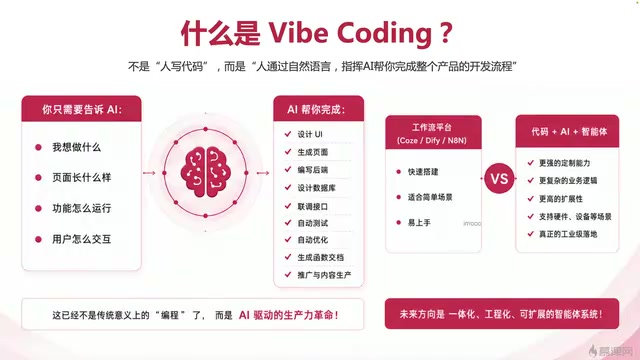
The course's definition is straightforward: it's no longer people writing code, but people directing AI to write code. You tell AI what page you want, what it should look like, and how the functionality should work, and AI can generate the page, write the code, connect to the database, automatically test and fix bugs, generate documentation, and even produce promotional copy and short videos.
This sounds like "anyone can develop software," and the instructor clearly endorses that direction. But the course immediately points out a common misconception: many people's understanding of AI development is still stuck at workflow orchestration tools like Coze, Dify, and n8n, believing that wiring up a few nodes and running a few flows counts as knowing AI development. The course argues that these are relatively basic approaches. The core direction that can truly achieve industrial-grade deployment, build complex systems, and construct future AI products must be a system of "AI + code + agents + engineering."
What will truly be valuable in the future isn't simple chatbots, but AI applications—such as AI e-commerce, digital humans, automation systems, AI enterprise platforms, and so on. All of these ultimately come back to engineering capability.

The term Vibe Coding was coined by AI researcher Andrej Karpathy in early 2025. It refers to developers describing intent in natural language and letting large language models generate, modify, and even debug code, with humans mainly playing the role of "director" rather than "actor." The key shift is moving the cognitive burden of coding from syntax memorization to intent expression and result validation, so people without a formal technical background can also quickly produce runnable prototypes. However, Vibe Coding also has boundaries: the quality of AI-generated code depends heavily on the precision of prompts and the completeness of context. Complex business logic, performance optimization, and security compliance still require human review and engineering experience as a backstop—which is also why the course repeatedly emphasizes "engineering."
The Course's Two Goals: Learn Skills, and Learn to Monetize
The instructor candidly admits two goals for making this course. The first is learning—helping people truly master AI development (Vibe Coding) and the engineering-driven delivery of AI products, rather than just knowing how to use a few AI tools. The second is making money, because in the future there will certainly be a large number of "one-person companies," AI entrepreneurs, and super-individuals. For many people, the future may no longer be about finding a job, but about using AI to build products.
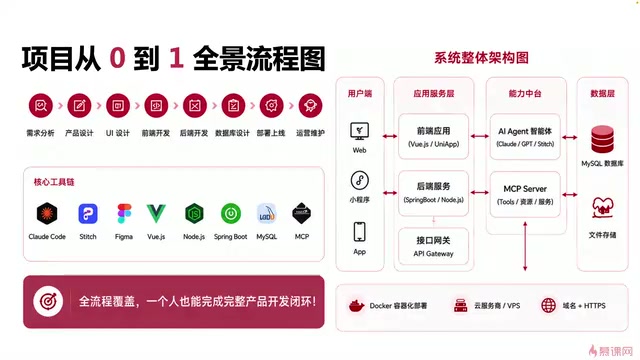
So this course isn't purely a tool course; it's more like a "one-person company hands-on course for the AI era." The course presents a complete flowchart of a project from zero to one, emphasizing that a real product isn't just handwritten code—it requires connecting requirements analysis, UI design, page development, backend logic, databases, testing, deployment, operations, and promotion. The course's biggest feature is the end-to-end closed loop—not building a simple demo, but guiding you through building a complete product.
The "one-person company" is an entrepreneurial form that has emerged in recent years with the spread of AI tools. It refers to a single individual using AI to complete product design, development, operations, customer service, and other tasks that originally required team division of labor, thereby running a micro-enterprise at extremely low marginal cost. Its economic basis lies in AI converting fixed labor costs into variable compute costs, greatly reducing the cost of trial and error. Typical one-person companies often focus on AI applications or content products in niche scenarios, monetizing through subscriptions, advertising, or tool revenue sharing. But a one-person company does not mean "zero capability." It requires founders to have product judgment, the ability to prioritize requirements, and resource integration skills. AI only amplifies individual output; it cannot replace judgment about the market and users.
AI-Collaborative Development and Multi-Platform Capabilities
In the AI development system architecture presented by the course, future software development is no longer about isolated capabilities but about AI-collaborative development. Tools like Cloud Code, Stitch, MCP, Skills, and Figma will collaborate with one another. AI will no longer just chat, but truly participate in the entire process of design, development, testing, optimization, and operations.
Multi-platform development used to be very painful: one set for web, one set for apps, and yet another set for mini programs. The course argues that AI is dramatically lowering the threshold for multi-platform development: by combining UniApp with AI-generated code and reusable components, you can achieve develop once, run on multiple platforms. This is also an important reason why the "one-person company" has become possible.
The MCP (Model Context Protocol) mentioned in the article is an open protocol proposed by Anthropic and gradually adopted by multiple vendors to standardize how AI models connect to external tools and data sources. You can think of MCP as the "USB interface" of the AI world: whether it's a database, file system, design file, or third-party API, as long as capabilities are exposed according to the protocol, the model can call them directly in a conversation. Skills are encapsulations of reusable capabilities or instruction sets, making AI more stable on specific tasks. Figma, as a mainstream design tool, when linked with AI, allows design files to be directly converted into frontend code. The value of these tool collaborations lies in bridging the semantic gap between "design—coding—data—testing," turning AI from an isolated chat window into a collaborator embedded in the engineering pipeline.
UniApp is a cross-platform development framework based on Vue.js. One codebase can be compiled and published to iOS, Android, H5, and multi-platform mini programs such as WeChat and Alipay. Its core mechanism is to shield platform differences through conditional compilation and a unified component layer, so developers only need to make minor adaptations for platform-specific features. The significance of combining AI with UniApp is that AI can directly generate pages and component code that conform to UniApp specifications based on natural language descriptions, and reuse existing component libraries, significantly shortening the multi-platform adaptation cycle. However, cross-platform frameworks still make compromises in native performance and access to platform-specific capabilities. When heavy animation or hardware capabilities are involved, native development is still needed as a supplement—this is also something to view rationally when it comes to "develop once, run on multiple platforms."
Shipping the Product Is Just the Beginning—AI Operations Is the Closed Loop
Many people think product development is the end, but the course points out that the real difficulty is promotion. AI has now entered the operations domain and can automatically generate WeChat official account articles, promotional copy, video scripts, and even automatically generate product promotional videos, letting the product "promote itself."
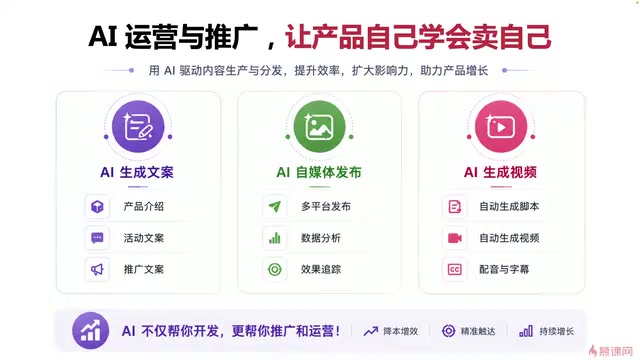
Therefore, in the course's view, the truly formidable people of the future will definitely be those with dual capabilities in "development + AI operations." After completing this course, the goal is to possess the ability to independently develop products, AI end-to-end collaboration capability, AI engineering capability, multi-platform development capability, and AI automated operations capability—ultimately gaining the ability to build products as one person.
A Calm Perspective: Course Positioning and Target Audience
From the course introduction, this 80-episode tutorial covers a wide range, from conceptual understanding to end-to-end hands-on practice. It's suitable for zero-basics learners who have product ideas but weak technical backgrounds, and also for developers who want to understand the path to engineering AI delivery. However, it should be noted that the course's promotional claims like "one person is enough" and "everyone can develop software" are more directional judgments. Real product delivery still requires understanding requirements, controlling quality, and handling engineering details. Vibe Coding lowers the barrier to coding, not the barrier to product and engineering thinking.
The instructor said at the end that in the coming years, AI will certainly eliminate a large amount of repetitive labor, and at the same time will certainly give rise to a large number of super-individuals, one-person companies, and AI entrepreneurs. Opportunities belong to those who prepare in advance. Whether this course can deliver on the promise of "the one-person company end-to-end chain" still depends on the quality of the subsequent hands-on content, but the direction it proposes—"AI + code + agents + engineering"—deserves serious attention from anyone interested in AI development.
One-line Summary
Bilibili's 80-episode Vibe Coding course advocates AI-directed coding to run the full-chain product development of a one-person company.
Paragraph Summary
The article introduces Bilibili's course "Vibe Coding: From Zero Basics to Hands-On Practice." The instructor believes AI has upgraded from a tool to a new form of productivity, where a single person can complete product development that previously required a multi-role team. The course defines Vibe Coding as people directing AI to write code, capable of page generation, database integration, test-and-fix, and documentation generation. It points out that workflow orchestration tools like Coze and Dify are only foundational, and real delivery depends on "AI + code + agents + engineering." The course focuses on an end-to-end closed loop, covering requirements analysis, UI design, multi-platform development, deployment, and AI-driven operations and promotion, and uses UniApp combined with AI to lower the multi-platform threshold. The article also reminds readers that "everyone can develop" is a directional judgment: Vibe Coding lowers the coding barrier, not the barrier to product and engineering thinking.
Related articles

TensorLean: A New Tool for Formal Verification of GPU Kernels
Columbia University and CertiK propose TensorLean, which uses Lean to formally verify production GPU kernels at the PTX level. It checked 149 kernel instances, proving 83 correct and finding 38 defects, involving FlashAttention, DeepGEMM, and others.
WorkBuddy Zero-Basics Office Automation Hands-On Tutorial
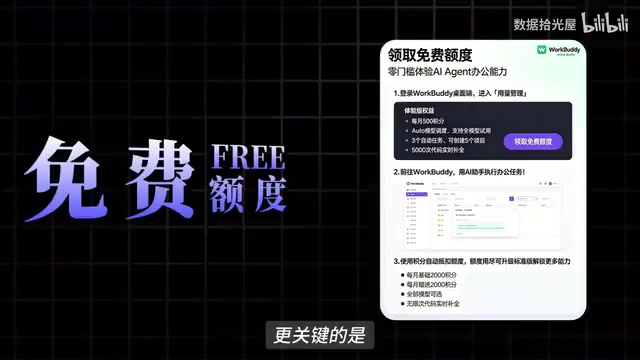
WorkBuddy hands-on tutorial: learn how this domestic Codex alternative adapts to common office software, with 28 knowledge points and SQL materials to automate your office work.
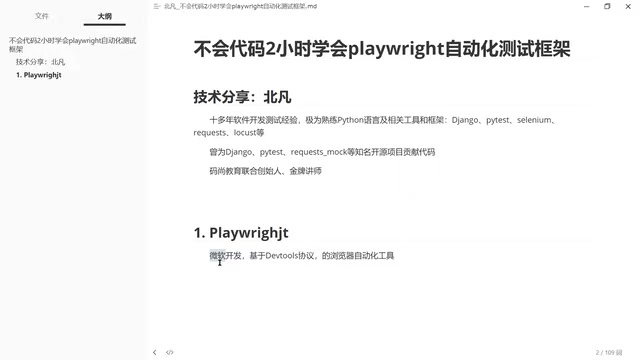
Zero to Hero in 3 Hours: AI Automation Testing with Playwright and DeepSeek
Based on a popular Bilibili video, this article explains Playwright's core advantages: Microsoft-built, DevTools Protocol-based, driver-free, and natively async. It compares Playwright with Selenium and introduces a zero-background path to agent testing via MCP and LLMs.