WACV 2027 FABRIC Workshop Issues Urgent Call for Reviewers, Deadline November 6

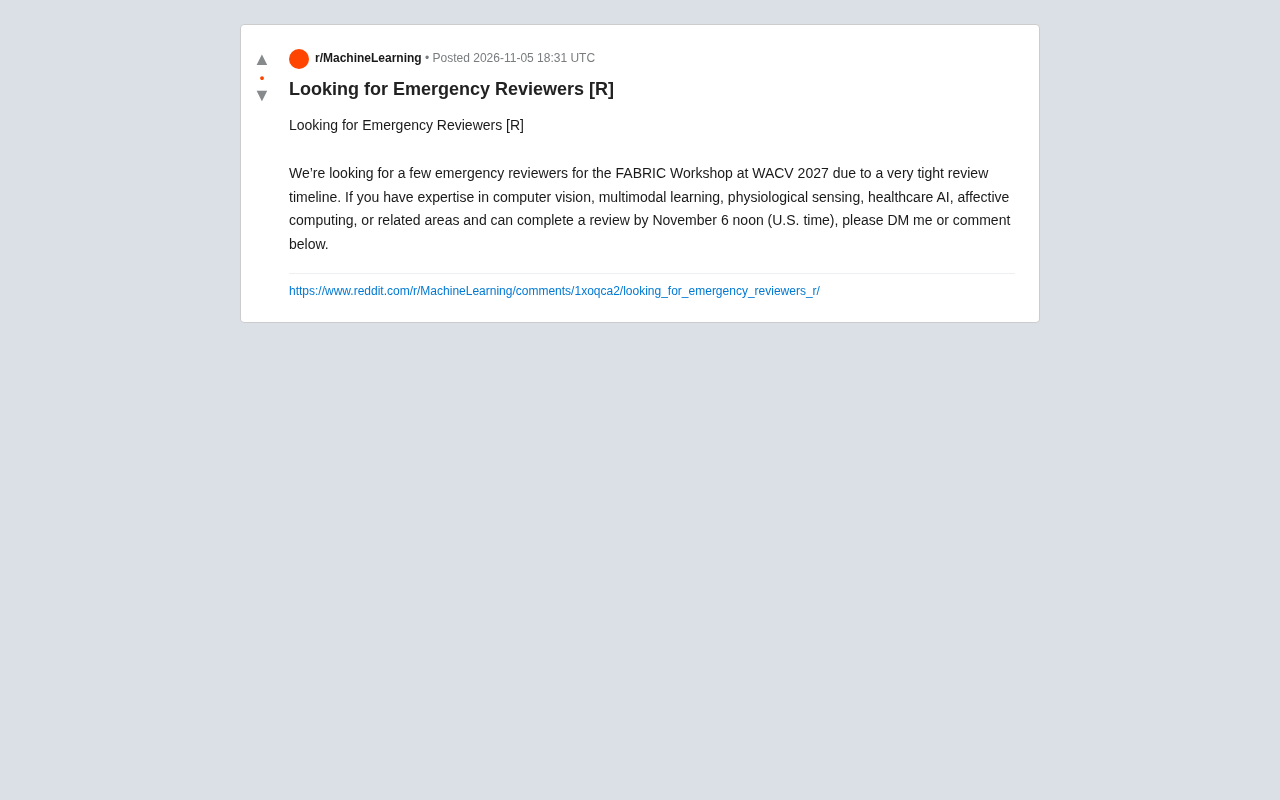
WACV 2027 FABRIC Workshop urgently recruits emergency reviewers due to a tight review timeline.
An urgent recruitment post appeared in the Reddit academic community: the WACV 2027 FABRIC Workshop, facing an extremely tight review timeline, is seeking a few emergency reviewers to complete reviews by noon November 6 (US time). Topics cover computer vision, multimodal learning, physiological sensing, healthcare AI, affective computing, and related areas. Interested parties can contact the poster via DM or comment. The post highlights the scarcity of reviewer resources at the Workshop level and offers early-career researchers a chance to gain review experience.
An urgent recruitment post has appeared on Reddit aimed at the academic community: the FABRIC Workshop at WACV 2027, facing an extremely tight review timeline, is looking for a few "Emergency Reviewers" who can complete their reviews by noon on November 6 (US time).
Recruitment Background: Compressed Review Cycle
This post comes from Reddit's academic discussion community, and the poster directly states the reason for recruitment—"very tight review timeline." For Workshop-level academic events, the review cycle is already shorter than that of the main conference; once the timeline is compressed further, organizers often need to recruit temporarily to fill the review staffing gap.
This situation is not uncommon among computer vision workshops: fluctuations in submission volume, reviewers withdrawing at the last minute, and conference schedules moving earlier can all create review gaps. The post does not disclose the exact number of openings, stating only that it needs "a few" reviewers.
WACV (IEEE Winter Conference on Applications of Computer Vision) is a major international conference in computer vision. Compared with main conferences such as CVPR and ICCV, it places more emphasis on applied research and is held every winter. Workshops are typically small, topic-specific academic events attached to the main conference, focusing on a particular subfield, with lower submission thresholds and shorter review cycles than the main conference. The reviewer pool usually consists of program committee (PC) members and is limited in size. When submissions exceed expectations or reviewers withdraw at the last minute, organizers urgently recruit reviewers through mailing lists, social media, and other channels to ensure that each submission receives a sufficient number of reviews.
What Kind of Reviewers Are Needed
Judging from the areas listed in the post, the FABRIC Workshop's scope of submissions spans multiple interdisciplinary fields:
- Computer vision
- Multimodal learning
- Physiological sensing
- Healthcare AI
- Affective computing
The organizers close with "or related areas," meaning researchers in related directions are also being considered. For graduate students, postdocs, or young faculty interested in academic service, the threshold for this kind of emergency review invitation is relatively flexible, but the time requirement is very clear.
Affective computing is a frontier interdisciplinary field that studies how machines can recognize, understand, and express human emotions; it involves computer vision, speech processing, physiological signal analysis, and other directions, with typical applications including facial expression recognition and affective state inference. Physiological sensing refers to technologies that collect physiological signals such as heart rate, electrodermal activity, and EEG through wearable devices or sensors, often combined with affective computing and healthcare AI for emotion monitoring or health assessment. The FABRIC Workshop soliciting submissions across these areas side by side indicates that its theme focuses on multimodal applied research for sensing human states.
How to Participate and Key Dates
The post provides two ways to get in touch: direct message (DM) the poster, or comment below the post. The only hard constraint is the review deadline—noon on November 6 (US time).
Interested reviewers need to assess two things themselves: first, whether their research direction matches the above fields; second, whether they can set aside enough time before the deadline to complete a responsible review. Although Workshop reviews usually require less length than main conference reviews, the "emergency" nature means the window for reading and writing is very narrow.
A Brief Observation
The recruitment post itself does not contain much information, but it reflects a reality of the academic conference review system: reviewer resources are always scarce, especially at the Workshop level. As a winter conference in computer vision, WACV's Workshop review pressure tends to concentrate in a short period after the submission deadline, making temporary recruitment of emergency reviewers a common stopgap measure.
For the community, such posts are also windows of opportunity for participating in academic service—especially for early-career researchers who hope to accumulate review experience but have not yet entered the main conference reviewer pool.
One-line Summary
WACV 2027 FABRIC Workshop urgently recruits emergency reviewers due to a tight review timeline.
Paragraph Summary
An urgent recruitment post has appeared in the Reddit academic community: the FABRIC Workshop at WACV 2027, facing an extremely tight review timeline, is looking for a few emergency reviewers who can complete their reviews by noon on November 6 (US time). The scope covers computer vision, multimodal learning, physiological sensing, healthcare AI, affective computing, and related fields. Interested parties can contact the poster via DM or comment under the post. The post reflects the reality that reviewer resources are scarce at the Workshop level and temporary stopgaps are common, while also offering early-career researchers a window to accumulate review experience.
Related articles
 Tech Frontiers
Coldframe: A Honeypot Disguised as a Supermarket Freezer Controller
Coldframe is a honeypot disguised as Danfoss AK-SM 800A and Dixell XWEB freezer controllers, built as a single Python file that detects CVE-2025-41450 attempts and is identified as real devices on Shodan.
 Tech Frontiers
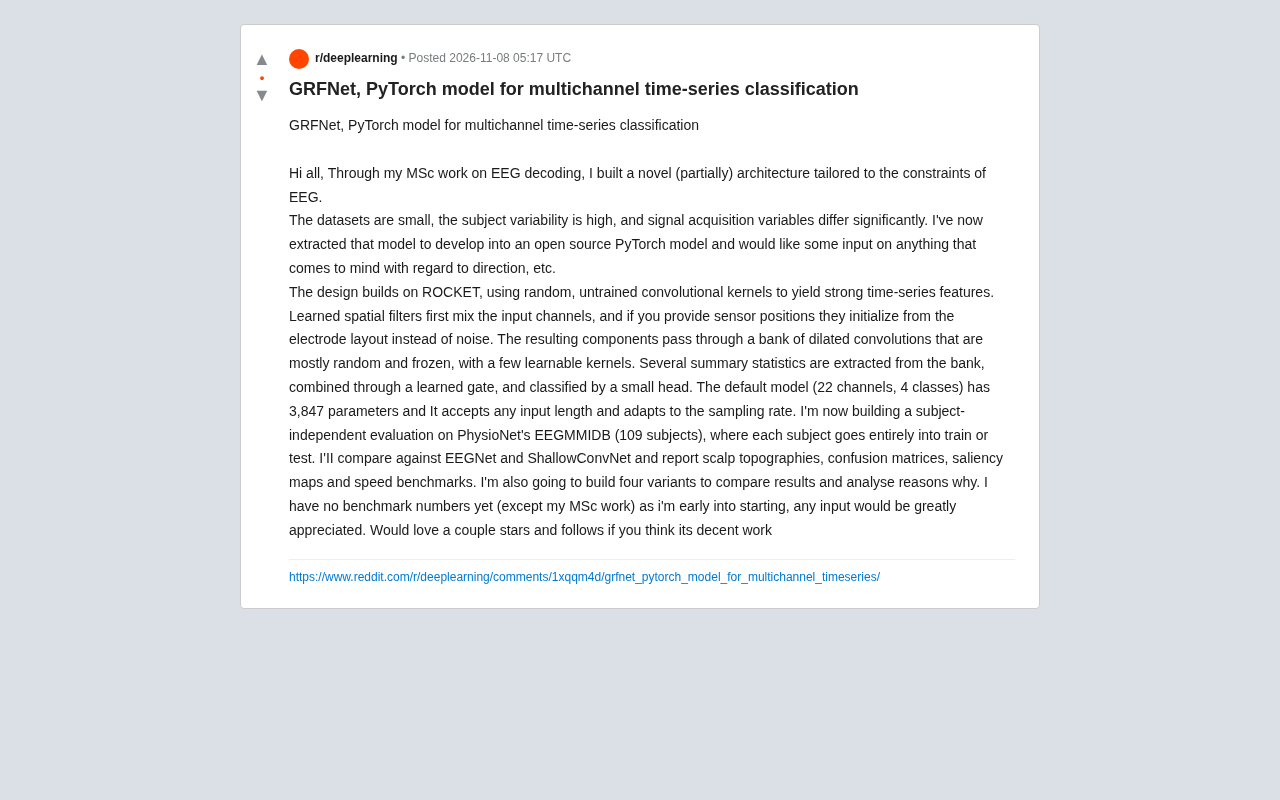
GRFNet: A Lightweight PyTorch Model Designed for Multichannel Time-Series Classification
GRFNet is a lightweight PyTorch model for multichannel time-series classification, originating from EEG decoding research. With only 3,847 parameters, it is based on the ROCKET architecture, combining random convolution kernels with learnable spatial filters, supports arbitrary input lengths, and will soon be evaluated on the PhysioNet dataset.
 Tech Frontiers
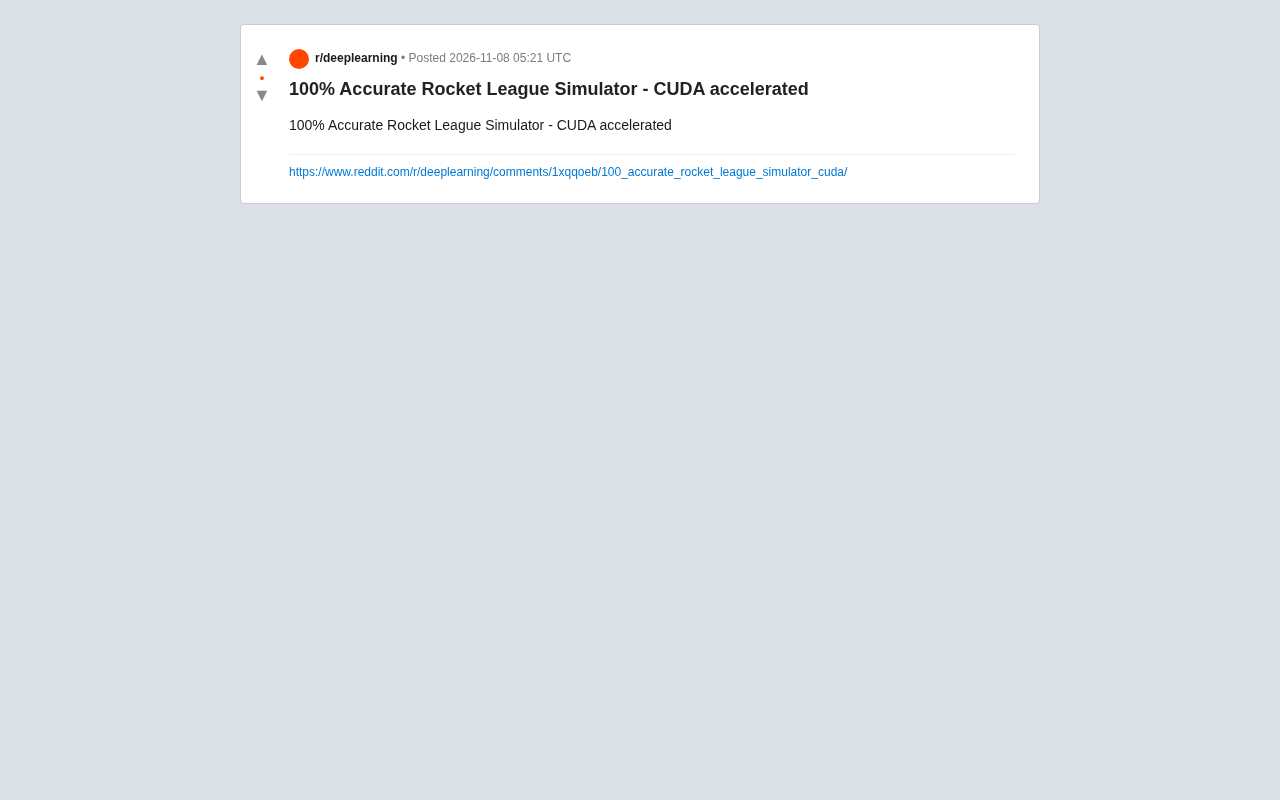
CUDA-Accelerated Rocket League Simulator: A Player-Made Hardcore Experiment
A Reddit post shows a "100% Accurate" Rocket League simulator accelerated with CUDA. We analyze its technical context, CUDA's value in game physics simulation, and the significance and limitations of such community projects.