When Among Us Meets Werewolf Fairy Tale: A Social Deduction Game That Had Everyone Dying of Laughter

Red Howl mod fuses Among Us with Werewolf roles, showcasing fresh social deduction through absurd wipeouts and information gambits.
This article recaps a custom Among Us mod called Red Howl that blends Among Us' task system with Werewolf role abilities like Raven Master, Politician, Jester, and Assassin. Streamers experience dramatic moments in a fairy-tale town—dueling Raven Master claims, a fatal lever mishap, a truth-baiting Jester, and a lone Assassin—highlighting both the mod's charm and its balance challenges.
When Space Werewolf Dons a Fairy Tale Costume
If you thought Among Us social deduction had run out of new tricks, this custom game mode called "Red Howl" might change your mind. A familiar crew—Kirsty, Ravs, Zylus, Nilesy, Lewis, Boba, and others—dropped into a medieval fairy-tale town and kicked off a chaotic match that blends Among Us' task system with Werewolf role abilities.
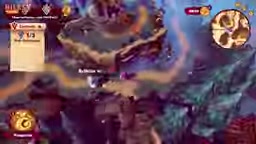
The mod's ambition is clear from the opening moments: the map is scattered with collectibles like carrots and apples, and there's even a stretch of "hardcore parkour." The streamers alternate between "this is so cute!" and immediate confusion—"What are we supposed to do?" That familiar sense of helplessness is, fittingly, the most authentic opening line a social deduction game could have.
The Role System: From "Ordinary Villager" to "Raven Master"
Core Rules and the Role Pool
The core mechanic isn't complicated: good players do tasks and find the werewolves, while werewolves hunt in the shadows. But the mod adds a whole deck of role cards—Chaperone is understood as "good-aligned," Jester wins by getting voted out, Raven Master can summon ravens to verify identities, Politician can imprison one player per round, and Revenant is essentially an "ordinary good guy" with no special ability.
Players can click on role descriptions to check their abilities. When Kirsty drew "ordinary villager," she read the description aloud: "You have no special abilities. You must vote wisely to save the village." This design lets newcomers get up to speed quickly, but what really complicates things is the information asymmetry between roles.
Among Us is a multiplayer social deduction game released by Innersloth in 2018. Its core loop: crewmates complete tasks and identify the Impostor, while the Impostor creates chaos through kills and sabotage. Its signature design elements are "emergency meetings," "voting and ejection," and vision-limited information asymmetry. The "mods" mentioned in this article typically refer to injecting custom roles and rules by modifying the game client or using third-party platforms (such as Town of Us, The Other Roles, etc.). These mods have spawned their own viewing ecosystem on streaming platforms like Twitch. Werewolf/Mafia is the classic offline social deduction format, emphasizing the alternation between night actions and daytime debate. The essence of the Red Howl mod is embedding Werewolf's "role card" logic into Among Us' "spatial task" framework—players must both navigate a 2D map to complete tasks and engage in verbal sparring during meetings.
The Raven Master Identity Verification Experiment
One of the most entertaining segments of this match was Kirsty trying to prove her innocence using the Raven Master ability. Her logic was straightforward: summon ravens to circle the target a few times, and they'd confirm she was good. Ravs immediately said, "I saw it, I believe you"—then flipped at the meeting, claiming "I saw Kirsty kill Nilesy."
Even more chaotic, Boba also came forward saying "I'm the Raven Master," while Nilesy's autopsy report showed he "could be a Politician, Prospector, or Raven Master"—three possible identities, two of which had been claimed by living players. The group plunged into a philosophical debate on the spot: Can multiple players have the same role? Some insisted "that shouldn't be possible," while others pointed out "there were literally two Raven Masters just now." This rule ambiguity ended up being the most dramatic part of the game.
Information asymmetry in social deduction games refers to structural differences in how much information different players possess: werewolves know each other's identities, while good players can only infer based on task progress, body reports, and contradictions in testimony. Introducing role abilities changes the information distribution—verification roles like the "Raven Master" essentially provide a "credibility anchor" for the good faction. But when multiple players claim the same identity simultaneously, information doesn't converge—it generates new noise. This phenomenon is called "counter-claiming" in Werewolf terminology, and its strategic value lies in the fact that genuine verifiers can prove themselves while werewolves who fake the role can dilute credibility, forcing the good faction to make probabilistic judgments under time pressure. Mod designers typically need to establish uniqueness or mutual-exclusion rules for each role, otherwise you get the rule vacuum seen in this article—"two Raven Masters."
Those Hilarious Wipeout Moments That Had Everyone Slapping the Table
"I Was Trying to Save Him—and Sent Him Off Instead"
If there's a prize for the most tragic misplay of the match, it goes to Rydian's imprisonment incident. Ozy used the Politician ability to lock Rydian in a cage, and when Kirsty and Boba walked by and saw a lever nearby, they assumed it was the "release" switch and pulled it—only to discover it was the "send him to the abyss" mechanism.
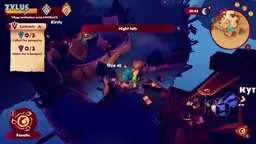
Kirsty's defense afterward: "I thought that was the lever to set him free, not the lever to send him to hell." Boba added: "It did set him free—just on a spiritual level." The exchange was quoted repeatedly by other players, and Rydian himself said, "I wish I could lock myself in there too." This kind of absurd death caused by UI design is comedy material unique to digital Werewolf.
The Jester's Perfect Bait
In the first round, Nilesy completed the Jester's win condition with a single sentence. He claimed Ravs "wasn't doing tasks," the reasoning sounded plausible, and everyone went along with the vote—only for Ravs to be revealed as the Jester, winning instantly upon ejection.
Nilesy's post-game recap was an instant classic: "I just said he wasn't doing tasks. That was true. I just didn't mention that I was." This kind of manipulation—using information gaps to steer collective decisions—showcases high-level social deduction play: the truth can be the sharpest weapon of all.
The Werewolf Faction's Struggles and Mod Balance Issues
The Assassin Fighting Alone
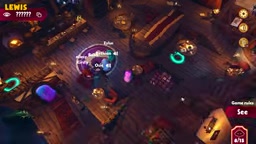
Ravs drew the Assassin role in the second round and immediately took out Boba. But the problem was: he had to face three Trap Masters simultaneously, and his werewolf teammates didn't seem to coordinate effectively. Ravs's defense at the meeting was "I'm cleaning up the town, one at a time," and he even tried to negotiate with the good players: "Give me one day, and I'll only kill werewolves."
This absurd request—an Assassin wanting to switch to the good side—exposed a balance issue with the mod. Players were blunt in the post-game: "The evil faction is really hard to win with unless you're genuinely skilled." They noted that only top-tier players had managed werewolf victories so far. The three Trap Masters configuration kept werewolves walking on eggshells with every move, while the good faction's information roles (Raven Master, Seer, Coroner) could rapidly cross-verify.
The Blood Moon Mechanic and Information Warfare
Late in the game, a "Blood Moon" event triggered—nighttime doubled in length, and blood-red markers appeared on the map. Kirsty speculated it was related to "filling the werewolf vessel," and while the exact trigger conditions were never fully figured out, dynamic events like this definitely added variables to nighttime actions.
What's more interesting is the information verification chain: Lewis claimed to be a "Revenant," and Boba also claimed to be a "Revenant"—one of them had to be a werewolf. Boba was ultimately voted out and confirmed as good, exposing Lewis's lie. This classic "dual counter-claim" Werewolf gambit still works in this mod.
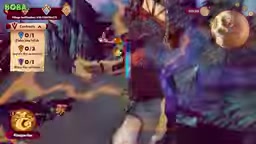
Blood Moon is a common dynamic event symbol in many Werewolf variants and horror-themed games, usually representing an extended night phase, an expanded werewolf action window, or triggering additional kills. In the context of Among Us mods, these events typically compress the good faction's information-gathering time by altering the day-night rhythm while creating more room for werewolf plays. Unlike fixed rules, the value of dynamic events lies in breaking players' "optimal strategy" habits—when nighttime doubles, good players need to reassess grouping strategies, and werewolves gain more opportunities for kills or sabotage. In this article, players hadn't fully figured out the trigger conditions, which is itself part of the mod's appeal: rule opacity increases the sense of exploration and provides discussion material for streams, though it can also intensify balance debates.
Why Mods Like This Are Worth Watching
From a game design perspective, what "Red Howl" succeeds at is lowering the barrier to entry for social deduction. Traditional Werewolf requires players to memorize complex role abilities and speaking order, but this mod visualizes abilities—ravens actually fly out, cages actually appear on the map, traps actually trigger. Newcomers can understand the rules by observing the game world rather than relying solely on text descriptions.
On the other hand, the mod retains plenty of depth. Role ability combinations, the cost of information verification, the gambit of true versus false identities—none of the core fun is lost. Kirsty kept saying "I trust Boba" throughout the game, and Boba did turn out to be good; but Ravs, whom she also trusted, was the Assassin—this cycle of trust and betrayal is the eternal appeal of social deduction games.
For content creators, these mods have another hidden advantage: they're naturally suited for streaming and highlight reels. Pulling the wrong lever and killing a teammate, a Jester baiting with the truth, an Assassin trying to negotiate for mercy—every clip has standalone shareability. The spontaneous "oh my god" and "what the fuck" reactions in this match are more infectious than any carefully scripted production.
If you're tired of standard Among Us, or you want a digital new home for Werewolf, these fusion mods are worth a try. The prerequisite is—you need to find a group of friends willing to go along with your nonsense and who can still laugh when you pull the wrong lever.
One-line Summary
Red Howl mod fuses Among Us with Werewolf roles, showcasing new social deduction gameplay through absurd wipeouts and information gambits.
Paragraph Summary
This article chronicles a match of a custom Among Us mod called Red Howl, which combines Among Us' task system with Werewolf role abilities, adding identities like Raven Master, Politician, Jester, and Assassin. The streamers experience a series of dramatic events in a fairy-tale-style town: multiple players claiming the Raven Master identity sparks rule disputes, a Politician's cage lever gets pulled by mistake causing a teammate's death, a Jester baits with the truth to achieve victory, and an Assassin struggles to survive against three Trap Masters. The article notes that the mod lowers the barrier for newcomers through ability visualization, but insufficient UI cues lead to frequent misplays, and the werewolf faction faces obvious balance pressure when too many information roles are in play. Overall, these mods preserve the core fun of social deduction and are naturally suited for streaming.
Related articles

Claude Sonnet 6 Suspected Leak: Anthropic's Internal Model Acceleration Is Astonishing
Anthropic suspected leak of Sonnet 6; Meter reports its AI R&D accelerated 1.9x; OpenAI releases GPT-6 Cyber, GPT-6.2 Astra may be coming; Google Gemini Omni 1.2 Flash tops video generation leaderboard; Meta stealth models and real-time avatars unveiled; despite market volatility, Google still invests $17 billion in data centers.

How Accurate Are Sci-Fi's Predictions About AI?
How accurate are sci-fi's predictions about AI? Drawing on a Hacker News discussion, this article analyzes sci-fi's foresight and blind spots in AI development, arguing its true value lies in inspiring thought rather than precise prediction.

SwarmEvolve: Latent-Space Agent Swarms Accelerate Evolutionary Search
SwarmEvolve lets hundreds of low-cost agents swarm-reason in latent space, sharing info via KV caches to achieve fast evolutionary search for math and science problems—reaching in a median of 3–8 minutes the best scores other frameworks need 60 minutes for.