When Did Humans Start Eating Salt? A 10,000-Year History of Salt

From biological instinct to civilizational catalyst, salt runs through the history of human diet, economy, and politics.
Based on popular science video material, this article traces salt's key role in human history. All animals depend on salt for neural and digestive functions; hunter-gatherer ancestors obtained salt by eating meat, and after agriculture arose about 11,000 years ago, people began adding salt to food. Coastal civilizations produced salt by sun-evaporating seawater, while inland peoples boiled saltwater or mined rock salt. Salt was used not only to preserve food (by inhibiting microorganisms through osmotic pressure) and enhance flavor but also became an important trade good, exchanged in sub-Saharan Africa even for equal amounts of gold dust. Ancient Roman soldiers' pay may have included salt, and the English word "salary" derives from the Latin word "sal." Salt taxes helped spark the French Revolution and Gandhi's Salt March. In the 20th century, industrialization greatly increased salt production and lowered prices; the Morton Salt Company added magnesium carbonate to prevent clumping, which helped popularize the salt and pepper shaker.
Salt, the most ordinary condiment in the kitchen, is an indispensable driving force in the history of human civilization. From prehistoric hunters to the modern dining table, humanity's pursuit of salt has never ceased. Based on material from the YouTube popular science video "When did humans start using salt?", this article traces salt's key role in human diet, economy, and politics.
Salt: Biological Instinct and Early Acquisition
All animals depend on salt (sodium chloride) to maintain basic physiological functions. The influx of sodium ions triggers nerve cell firing and signal transmission, while chloride ions are a key component of stomach acid, helping digest food. Humans are no exception—we can go to astonishing lengths for salt.
The video opens with a case: in 2018, goats in Olympic National Park in the United States became highly aggressive while chasing the salt in hikers' sweat and excrement, even trampling rare plants. The park had to capture hundreds of goats and airlift them out by helicopter. This craving for salt is exactly the same as that of our human ancestors.
Hunter-gatherer ancestors mainly met their salt needs by eating other animals. Plants also contain salt, but in much smaller amounts. Therefore, when agriculture arose about 11,000 years ago, the practice of adding salt to food began to spread.
Sodium ions and neural signals: At rest, a neuron has a negatively charged interior and a positively charged exterior across its membrane, creating a membrane potential of about -70 millivolts. When stimulated, voltage-gated sodium channels open, and sodium ions rush into the cell down their concentration gradient, rapidly depolarizing the membrane potential and generating an action potential (i.e., "firing"). This electrical signal travels along the axon and is the basis of neural transmission, muscle contraction, and sensation. If body fluid sodium concentration is too low, fatigue, cramps, and even impaired consciousness can occur. The human body precisely regulates sodium balance through the kidneys and hormones (such as aldosterone); the minimum daily sodium requirement is only a few hundred milligrams, but modern diets often far exceed this.
Ancient Salt Production: From Seawater Evaporation to Rock Salt Mining
Coastal civilizations were the first to use sunlight to evaporate seawater: seawater was poured into shallow ponds, and after drying, salt crystals remained. Inland settlers had different methods. Along a saltwater river in central China, ancient people boiled the river water in large pots, evaporating the water to harvest salt crystals. And in Hallstatt, Austria today, miners carved into the mountains to extract rock salt buried deep underground after ancient oceans evaporated.
Salt is not only a physiological necessity but also an important tool. It allowed ancient civilizations to preserve fish, meat, vegetables, and dairy products. Salt kills the bacteria that cause food spoilage by drawing water out of microbial cells. At the same time, salt enhances food flavor: a little salt can mask bitterness and bring out sour, sweet, and umami tastes; more salt suppresses sweetness and enhances umami. However, how salt achieves these flavor transformations remains a mystery to this day.
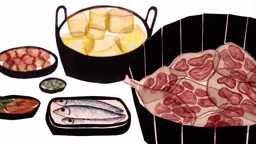
The science of salt preservation: Salt inhibits microbial growth through osmosis. When food is salted, the high salt concentration on the food surface creates a high-osmotic-pressure environment, causing water inside bacterial cells to be drawn out, the cytoplasm to separate from the cell wall, and metabolic activity to stop or the cells to die. In addition, salt lowers water activity (aw), reducing the water available to microorganisms. Different microorganisms have different salt tolerance; molds and certain halophilic bacteria may still survive, so cured products often need to be combined with drying, acidification, or refrigeration. This principle has not changed since ancient times; only after industrialization have salt purity and methods of addition become more controllable.
The Salt Trade and Currency: From the Sahara to Rome
Wherever salt resources were abundant, humans mined it and traded it to salt-scarce regions. As early as the first millennium AD, large camel caravans carried salt slabs mined in the Sahara to West Africa. Local salt supplies were extremely scarce, and people even exchanged equal amounts of gold dust for this precious commodity.
In ancient Rome, salt was so valuable that it is believed part of soldiers' pay was given in salt—which may be why the English word "salary" contains the Latin root "sal" (salt).

As for table salt, the earliest known salt cellars appeared in ancient Greece. Many scholars believe that at medieval European banquets, these elaborate salt cellars marked social status: the most important members sat at one end of the table, above the salt, while lesser figures sat below it.
The etymology of "salary": The English word "salary" comes from the Latin "salarium," literally meaning "something related to salt." The ancient Roman writer Pliny the Elder recorded that soldiers' "salarium" was an allowance for buying salt, but modern scholars dispute this. Some argue that "salarium" more likely referred to soldiers' regular pay, used to buy various supplies including salt. Regardless of the truth, salt did hold a prominent place in the Roman economy: the Romans built the Via Salaria (Salt Road) to transport salt from the Ostia salt pans to the interior. The salt tax was also an important source of revenue for the Roman treasury. Although this etymological story may be simplified, it vividly reflects salt's central role in the ancient economy.
Salt Taxes and Resistance: From the French Revolution to Gandhi's March
Over the years, the unequal distribution of salt resources has never been free of controversy. In the 18th century, an unpopular salt tax in France (from which nobles were exempt) helped fuel the French Revolution. In 1930, Gandhi led the Salt March to protest British laws that prohibited Indians from collecting or selling salt themselves; the movement helped advance India's independence movement.
Background of Gandhi's Salt March: In 1930, the British colonial government monopolized India's salt production and sales and taxed salt, prohibiting Indians from collecting or making salt themselves. This severely affected the lives of the poor, because salt is an indispensable and cheap staple in the Indian diet. On March 12, 1930, Gandhi set out from Sabarmati Ashram and walked about 390 kilometers, arriving at Dandi Beach on April 6, where he scooped up seawater and boiled it into salt, symbolically breaking the salt law. Tens of thousands joined along the way, and the movement triggered large-scale nonviolent protests; about 60,000 people were arrested. Although the action did not immediately abolish the salt tax, it greatly undermined the legitimacy of British rule, became an important turning point in India's independence movement, and showed the world the power of nonviolent resistance.
Industrialization and the Spread of Salt
In the early 20th century, with industrialization and the discovery of new salt mines, global salt production expanded and prices fell. Producers used methods that had been in use for thousands of years, but with more precise tools, harvesting millions of tons of salt each year.

In 1911, the Morton Salt Company began adding magnesium carbonate to prevent salt from clumping in humid kitchens. Once salt could flow freely, the salt and pepper shaker was invented, and this seasoning pair became a regular feature on North American and European dining tables.
From biological instinct to civilizational catalyst, the story of salt is far from over. It reminds us that the most ordinary materials often carry the most profound human history.
One-line Summary
From biological instinct to civilizational catalyst, salt runs through the history of human diet, economy, and politics.
Paragraph Summary
Based on popular science video material, this article traces salt's key role in human history. All animals depend on salt for neural and digestive functions; hunter-gatherer ancestors obtained salt by eating meat, and after agriculture arose about 11,000 years ago, people began adding salt to food. Coastal civilizations produced salt by sun-evaporating seawater, while inland peoples boiled saltwater or mined rock salt. Salt was used not only to preserve food (by inhibiting microorganisms through osmotic pressure) and enhance flavor but also became an important trade good, exchanged in sub-Saharan Africa even for equal amounts of gold dust. Ancient Roman soldiers' pay may have included salt, and the English word "salary" derives from the Latin word "sal." Salt taxes helped spark the French Revolution and Gandhi's Salt March. In the 20th century, industrialization greatly increased salt production and lowered prices; the Morton Salt Company added magnesium carbonate to prevent clumping, which helped popularize the salt and pepper shaker.
Related articles

Seven Years of Evolution: How Far Has the Foldable Come From the First Generation?
From the first foldable to today's latest models, what has seven years changed? Shallower creases, higher brightness, thinner bodies, and smoother software migration—has the foldable crossed the chasm from enthusiasts to ordinary users? This article discusses the question based on a video comparison.

Microsoft Paza Research: How African Language Speech Recognition Breaks Through Architecture and Data Bottlenecks
Microsoft's Paza research evaluates 53 speech models across 39 African languages, revealing architecture choice matters more than pre-training coverage, 200-300 hours is the practical data threshold, and language typology deeply influences recognition performance.

Timeline of Nvidia CEO Jensen Huang's Alleged Affair with a Purported Chinese Spy
Reports claim Nvidia CEO Jensen Huang had an affair with an alleged Chinese spy; a timeline notes possible national security concerns amid the U.S.-China AI race, though details remain unverified.