Why Did a Banana Flower Fritter Recipe Hit Hacker News?

A South Indian banana flower recipe post on Hacker News reflects the diversity and chance behind tech communities' content boundaries.
Using a South Indian banana flower recipe post on Hacker News as a starting point, this article explores the content boundaries and distribution mechanisms of tech communities. The post received only 5 points and 0 comments, making it a link that was "seen but not discussed." The article introduces how Vazhaipoo Vadai is made and its "turning waste into treasure" culinary wisdom, analyzes tech community readers' interest in unfamiliar content, and notes that low-scoring posts are equally part of the community ecosystem. It concludes that niche communities' content boundaries are wider than imagined, and that the value of content itself matters more than platform labels.
Why Is a Recipe Post Showing Up on a Tech Community?
Hacker News's front page has always centered on technology, startups, and deep discussion, but every so often a post that seems "out of place" pops up. Recently a link titled "Vazhaipoo Vadai – Banana Flower Recipe" appeared on the platform, picking up 5 points and no comments. Judging by the numbers alone, it's unremarkable—but the fact that it appeared at all is a phenomenon worth pondering.
Vazhaipoo Vadai is a traditional snack from South India, made by deep-frying banana flower (Vazhaipoo) mixed with a lentil batter. It's neither tech news nor a product launch—just a pure recipe page. So how did it make it into Hacker News's field of view?
Hacker News is a tech news aggregation and discussion community operated by the venture capital firm Y Combinator, using a user-submission and community-voting mechanism to determine content ranking. Its front-page ranking algorithm takes into account factors such as the points a post receives, its posting time, and comment activity—it doesn't simply rank by point count. As a result, a recipe post with only 5 points appearing on the front page is often related to being submitted during a low-traffic window when there was little competing content. This mechanism means Hacker News's content ecosystem has both a side that's highly focused on technical topics and a degree of randomness and diversity.
The "Scrap Philosophy" of the South Indian Kitchen
Banana flower is a common ingredient in South India, but it's rather laborious to prepare. Each small floret needs to have its stamen and bracts removed, or it will taste bitter. Vadai, meanwhile, is a common South Indian deep-fried lentil fritter—chop up the banana flower, mix it into the batter, and fry it for a crispy exterior and soft interior with a distinctive botanical fragrance.
The appeal of this dish isn't complexity but the idea of "turning waste into treasure": banana flower is usually a byproduct of banana cultivation, and it's hardly unusual to simply discard it, but turning it into a standalone snack reflects a kind of culinary wisdom about making use of marginal ingredients. This approach bears a subtle resemblance to the engineering mindset of "recombining idle resources."
Vadai is a general term for a category of deep-fried snacks in South Indian cuisine, with common varieties including Medu Vada (lentil doughnuts) and Paruppu Vadai (lentil fritters). The basic method is to soak peeled lentils, grind them into a coarse batter, add spices and chopped vegetables, shape into patties, and deep-fry. Banana flower (Vazhaipoo) means banana flower in Tamil; before cooking, each floret must be opened one by one and its stamen and bracts removed—a tedious process, which is why it's often regarded as a home ingredient that tests one's patience. This practice of meticulously processing a cheap byproduct into a standalone dish has similar traditions across banana-growing regions such as South India and Southeast Asia.
Why Are Tech Communities' Tastes So Diverse?
Hacker News's submission mechanism allows users to share anything they find interesting. A recipe earning points shows that at least some readers thought it was worth a look. Posts like this usually don't win on topic popularity but on "strangeness"—for most native English-speaking tech workers, South Indian home cooking is a completely unfamiliar domain.
From the perspective of community behavior, such posts often don't spark long comment threads, but they do attract a small handful of readers interested in cooking, ingredients, or cross-cultural content. The combination of 5 points and 0 comments precisely illustrates that it's a link that was "seen but not discussed."
Low-Scoring Posts Are Worth Observing Too
On Hacker News, high-scoring posts are often controversial topics or major releases, but low-scoring posts are equally part of the community ecosystem. They're like "crack content" beyond the front page, reminding us that users of tech communities are also people with everyday lives. A recipe appearing there doesn't need to be over-interpreted, but it does reflect the submitter's personal interests and the community's inclusiveness.
Content Distribution's Element of Chance, as Seen Through a Recipe Post
The spread path of this kind of post is hard to replicate. It has no SEO optimization, no clickbait title, not even an image caption—just a plain recipe title. Its being submitted and seen by a small number of users is more the result of chance combined with community mechanisms.
For content creators, the lesson of this case isn't "go post recipes on Hacker News" but rather: the content boundaries of niche communities are wider than you'd imagine. As long as the content itself has genuine value or interest, it has a chance to be noticed by a specific audience—even if the numbers aren't impressive.
Conclusion
The Vazhaipoo Vadai post itself doesn't have much technical substance, but its appearance is an interesting slice: a tech community isn't a closed fortress—it will also make room for a South Indian fritter. Next time you see something "out of place" in your feed, you might click on it and take a look; there may be some life experience you didn't expect hidden behind it.
Related articles
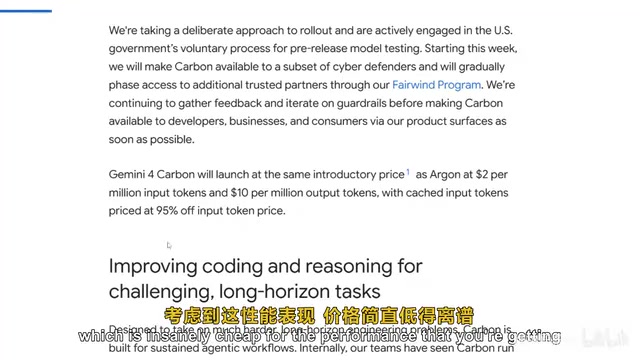
Gemini 4 Carbon Hands-On: The Strongest AI Model? Compared with Claude Opus 5.5
Google's Gemini 4 Carbon tops the Artificial Analysis leaderboard with 71% on CW Bench and leads Vending Bench. Hands-on comparison with Claude Opus 5.5: stunning front-end design but slightly behind in web development, with a clear price advantage.

Gemini 4 Carbon Tops Global Rankings as AI Productivity and Open-Source Ecosystems Surge
Google DeepMind's Gemini 4 Carbon tops global benchmarks, built for complex agents and system security. ByteDance launches Doubao Work integrated with Feishu, Anthropic's AI autonomously breaches 5 system-level attack chains, and ModelBest and Fudan open-source on-device multimodal and image generation models.

Overseas Creator Breaks Down N8n AI Agent Business Playbook: From Tooling to Monetization
An overseas creator breaks down the N8n AI agent business playbook: comparing Zapier, Make, and N8n, detailing four monetizable automation categories—lead capture, WhatsApp follow-up, booking, and content pipelines—plus agency pricing and a sales playbook.