Why Did Goldman Sachs Take Back Its Traders' AI Coding Tools?

Goldman Sachs revoked traders' AI coding tools, drawing the line at who can read code — revealing that AI governance hinges on auditability.
Goldman Sachs recently and quietly withdrew AI coding tools from traders and bankers, while roughly 12,000 engineers and code-capable Strats roles kept access. The dividing line isn't department or seniority but whether you can read the code AI produces. Traders had used the tools to monitor flows and aggregate data, but AI can write code that runs perfectly while being quietly wrong — indistinguishable to non-engineers. Officials cited productivity and risk management; reporting points to no incident. Four months earlier the same executive praised traders building prototypes with engineers taking over production. MUFG's contrast was rebuilding a controlled version rather than banning. Companies face three choices: ban, open to all, or draw a line by auditability — Goldman chose the third. The core question: is there anyone in the room who can verify what AI wrote?
Goldman Sachs recently did something that surprised outsiders: it took back the AI coding tools that had been sitting on traders' desks for months. According to internal guidance reviewed by Bloomberg, tools like Cloud Code and GitHub Copilot — the professional software used by engineers to build real systems — were quietly withdrawn in October. No announcement, no press release, just new rules.
This is easy to read as "the bank is afraid of AI," but the truth is the opposite. Goldman is one of Wall Street's most aggressive AI adopters: its in-house GSAI Assistant runs models from multiple companies, with early Reuters reporting around 10,000 employees using it, later expanded to tens of thousands company-wide. In summer 2025, it was also piloting Cognition's autonomous AI programmer Devin; the tech lead told CNN they'd start with a few hundred, scalable to thousands, and media at the time called it the bank's "first AI employee."
So what Goldman took back wasn't AI — it was AI access for a certain class of people. Where that line is drawn is the key to the whole story.
Keep and Revoke: A Line Drawn by "Can You Read the Code"
Those who lost the tools were bankers and traders — thousands of them. Those who kept them were roughly 12,000 engineers. And one more group got an exemption — what Goldman calls Strats: hybrid roles that sit on the trading side, do quantitative research, and also write real software.
Look at this line: it's not tech versus business, not senior versus junior. The people who kept the tools share one trait — they can read what the tools produce. Reports say some of those who lost access complained, but the bank's rule is clear — not "AI is dangerous," not "AI is harmless," but "who is holding it."
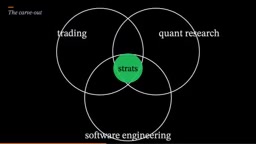
Strats (short for Strategists) are a distinctive hybrid technical role in investment banking, especially typical at Goldman. They usually have backgrounds in math, physics, or computer science, sit within trading or securities divisions rather than IT, and their daily work includes quantitative strategy research, pricing model development, and production-grade software development. Because Strats both understand business logic and can independently read, write, and review code quality, they are treated in AI tool governance as a group whose output is "auditable." This role setup precisely illustrates: a financial institution's permission allocation for AI coding tools is essentially based on whether a role has built-in code review capability, not simple department or seniority divisions.
What Do Traders Use AI For? The Problem Isn't Use, It's Verification
Reports say the things traders previously did with these tools sounded harmless: watching trade flows, aggregating numbers, generating content. A trader who wanted to see the day's cash flows used to file a ticket and wait a week for the tech team; now they just ask the AI, the AI writes code, and it runs.
The discomfort lies right here: someone without an engineering background can turn an idea into a working tool in an afternoon. But the question that follows is — who read that code?
AI-written code can run perfectly while being quietly wrong: the wrong column, the wrong date range, numbers that look plausible but aren't. Engineers catch these errors because reading code is their job. To someone who can't read code, a correct AI answer and a wrong AI answer look exactly the same.
Goldman's spokesperson gave a one-line official explanation: the decision weighed "multiple factors, including productivity and risk management." Risk is the layer everyone thinks of — these agentic tools don't just suggest a line of code, they can execute, touch files, and connect to systems, which inside a bank is first and foremost a compliance issue. Productivity is the quiet layer: someone looked at what thousands of non-engineers produced with these tools and judged it not worth it.
Nothing in the reporting points to a data leak, loss, or incident, and the bank hasn't reported any. We don't know what they saw — only that the same bank was saying something different in July.

Agentic tools (or AI agents) refer to AI programs that can autonomously plan and execute multi-step operations and call external tools and system interfaces, unlike assistive tools that only generate text or code suggestions. The Cloud Code and GitHub Copilot mentioned in the article are assistive coding tools, while Devin is a further step toward an autonomous coding agent. The core risk of agentic tools is that enterprise security architectures typically assume operations are initiated by humans and confirmed with a click, whereas agents call APIs directly, read and write files, and access databases, bypassing interface-based access controls and log auditing without human intervention. Therefore, financial institutions' control focus for such tools is often not on the model's own capabilities, but on whether its execution path can be monitored, interrupted, and traced.
July and October: Same Method, but Step Two Became Optional
In July, Goldman CIO Marco Argenti publicly praised a way of working: traders and asset managers build their own prototypes, then engineers turn them into real production systems. The idea itself is good — the people who understand the problem best make the rough version, and the people who can read code make it safe.
The trouble is: what happens when step two becomes optional. July was "build your own prototype"; October was "don't build with these tools." Four months — less a flip in position than an experiment that ran to completion and returned its results.
Every big company is running this experiment now. Japanese financial giant MUFG's approach in July was reported by Risk.net: rather than banning Cloud Code, they rebuilt a version wrapped in their own control system, inside their own walls, with human in the loop preserved. The concern driving that decision deserves attention from every company: agentic tools can bypass access controls and compliance checks that enterprises spent years building — not maliciously, just by following instructions. Your control system assumes a human clicking in the system, but an agent doesn't click — it calls directly.
Every company actually faces three options: ban it and watch competitors run faster; give it to everyone and pray; or draw a line by "who can audit the output." Goldman chose the third, and the Strats exemption is the evidence.

Human in the loop is a key control principle in AI governance, referring to retaining human review and approval at key decision points in automated processes to ensure system output passes human judgment before being adopted. In agentic tool scenarios, the difficulty of human in the loop is that agents execute quickly and operate over long chains; if human review stays only at the final result level, it often can't cover the accumulation of errors in intermediate steps. MUFG's approach of wrapping Cloud Code inside its own control system is precisely an attempt to embed review points into each of the agent's tool calls rather than gating only at the end. This model contrasts with simple banning or laissez-faire, representing a third path of controlled deployment.
The Real Question: Is There Anyone in the Room Who Can Verify
It comes down to one sentence: the question was never whether AI can write code — it obviously can. The question is whether there's anyone in the room who can verify what it wrote.
The failure here won't be dramatic. Not a hacker intrusion, but a trader making a decision based on a slightly wrong number from a very confident machine, and no one in the chain catching it because no one was capable of catching it. This isn't just a Wall Street problem — it's the spreadsheet problem, the reporting problem, the dashboard problem — and it's your company's problem too.
If your company is rolling out these tools, there are two questions to ask: not "is AI good," but "who has access" and "who reads what it did." Goldman spent two years pushing AI in front of tens of thousands of people, and the first lesson solid enough to write into policy has nothing to do with the model — it's about whose hands it's in.
Soon someone will draw this line around you too. What's useful is knowing in advance: which side of the line you're on, and why.
Related articles

No Coding Required: He Shipped an App Store App by 'Cutting Features' and Nitpicking with AI
A game designer with zero frontend/backend skills shipped a dual-platform App Store app with AI—not via one-click generation, but by cutting scope and nitpicking like a demanding client.

What Is Harness Engineering? From Concept Origins to Enterprise-Level Agent Implementation
What is Harness Engineering? This article traces the concept's origins and analyzes enterprise-level Agent requirements for tool call fault tolerance, data security, tenant isolation, and memory gaps.
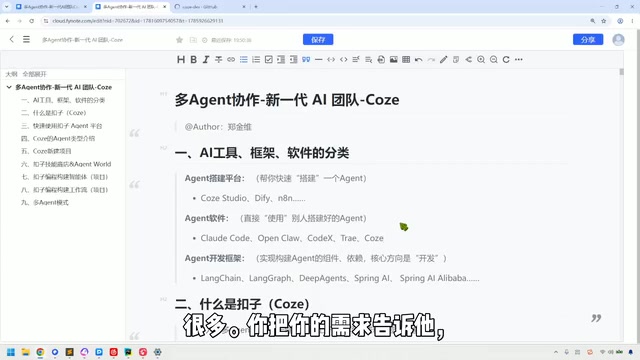
Coze in Practice: A Three-Tier Agent Classification and a Multi-Agent Collaboration Guide
A Bilibili tutorial breaks down the multi-agent collaboration toolchain into three categories: building platforms like Coze Studio and Dify, Agent software like Claude Code, and development frameworks like LangChain—plus a Coze demo of industry templates, three-platform interoperability, local Agent integration, and the trade-offs of credit consumption.