Why Fair Use Benefits Everyone: OpenAI Publishes Multi-Party Case Brief Analysis

OpenAI publishes multi-party court briefs, borrowing third-party voices to defend fair use for AI training.
OpenAI published excerpts from court briefs gathering supportive statements on fair use from creators, scholars, accessibility advocates, and legal experts, using a "borrowing voices" approach to build public arguments for AI training amid copyright disputes. The article outlines the fair use doctrine's judgment logic—purpose, nature, proportion, and market impact—and identifies transformative purpose and market substitution as core litigation disputes. Accessibility advocates reveal an overlooked dimension: raising training data barriers will first affect groups relying on AI-assisted technologies. From an industry competition perspective, strict authorization may squeeze out smaller developers and research institutions, actually increasing innovation concentration. The article reminds developers that training data compliance is shifting from industry convention to accountable norms.
A Public Statement on "Fair Use"
OpenAI recently published a set of excerpts from court briefs through its official channels, gathering voices from creators, scholars, accessibility advocates, and legal experts, all centering on one proposition: how fair use supports AI training and innovation.
What makes this material distinctive is that it is not OpenAI's own argument, but rather a collection of third-party statements from different identities and positions. From a communications strategy perspective, this is a classic case of "borrowing voices"—bringing supportive arguments from legal and public policy discussions to the forefront amid ongoing copyright disputes.
Cross-Validation from Multiple Perspectives
According to content shared by OpenAI, the submitters of these court briefs cover a remarkably broad range of groups: artists and authors directly engaged in creation, research scholars, accessibility advocacy organizations focused on information access for people with disabilities, and legal experts in intellectual property.
The demands of different groups are not entirely identical, but they converge in these briefs—the fair use doctrine is not a deprivation of creators, but a shared infrastructure for knowledge production and technological evolution. Scholars care about research freedom and data availability, accessibility advocates care about whether technology can lower barriers to information access, and creators examine their own interests from a broader ecological perspective. This multi-source cross-presentation approach, to some extent, enhances the public persuasiveness of the argument.
The Logic Connecting Fair Use and AI Training
To understand the significance of these briefs, one needs to return to the fair use doctrine itself. As an exception mechanism in copyright law, it allows unauthorized use of copyrighted works under specific conditions, typically considering the purpose of use, the nature of the work, the proportion used, and the impact on the market.
AI model training involves processing massive amounts of text, images, and other materials. Whether this process falls within the scope of fair use is the central dispute in multiple ongoing lawsuits. The briefs cited by OpenAI clearly argue that: training behavior has a transformative purpose, its outputs do not constitute direct market substitutes for original works, and therefore should be protected by fair use. Such arguments have considerable accumulation in academic and legal circles, but disagreements remain in judicial determinations of specific cases—some rights holder groups insist that large-scale reproduction itself exceeds the boundaries of reasonableness and erodes the licensing market.
The four factors of fair use are the judgment framework established by Section 107 of the U.S. Copyright Act. Courts must comprehensively weigh: (1) the purpose and character of the use, including whether it is commercial and whether it is transformative; (2) the nature of the copyrighted work; (3) the amount and substantiality of the portion used relative to the whole work; (4) the effect of the use on the potential market for or value of the original. The four factors are not a mechanical scoring system but an overall balancing, with "transformative" and "market impact" carrying the highest weight in practice. In AI training cases, plaintiffs often argue that training constitutes complete reproduction of the expressive content of original works, while defendants emphasize that the purpose of training is to extract statistical patterns rather than reproduce works—the two sides interpret factors two and four in fundamentally different ways.
Transformative use originates from Campbell v. Acuff-Rose (1994), referring to new use that changes the original work with a different purpose or manner rather than simply substituting it. The more transformative the use, the more likely it is to be recognized as fair use. Supporters of AI training argue that models learn language and visual patterns, and outputs are not reproductions of original works, possessing high transformativity; critics point out that if models can generate outputs highly similar in style and content to original works, the transformative argument is weakened. This concept is one of the most central and contested issues in current AI copyright litigation.
The Balance Point Between Innovation Ecosystem and Public Interest
Another layer of information in this material is that the discussion of fair use should not be confined to the binary opposition between tech companies and copyright holders. The inclusion of accessibility advocates highlights an often-overlooked dimension—if the barriers to accessing training data are significantly raised, groups benefiting from AI-assisted technologies (such as visually impaired users who rely on speech and image understanding tools to access information) may be the first to suffer.
From an industry perspective, whether fair use is relaxed or tightened will directly affect the cost structure and entry barriers of model development. If every piece of training material requires individual authorization, large enterprises with abundant resources can still bear it, but small and medium developers and research institutions may be squeezed out, and innovation concentration would actually increase. This is a competition policy argument frequently invoked by fair use supporters.
Of course, this argument also faces challenges: opponents believe that lowering training costs does not mean labor results of others can be used for free, and the licensing market itself can be designed more efficiently. The tension between the two sides precisely demonstrates that fair use is not a black-and-white answer, but a dynamic balance requiring continuous calibration by the judiciary and legislature.
Implications for Developers and Content Professionals
For practitioners concerned with AI applications and content production, the value of this event lies more in its signal significance. On one hand, the legal framework surrounding training data is still in formation, and the platform's proactive disclosure of supportive legal opinions indicates that the direction of related litigation may influence product strategies for some time to come.
On the other hand, the fair use debate will ultimately come down to specific use scenarios and business models. Developers in open-source tools and AI programming fields especially need to note: the compliance of data sources and the boundaries of model output usage are migrating from "industry convention" to "accountable norms." Establishing a basic judgment on copyright risk in advance is more economical than responding after the fact.
OpenAI's approach this time is essentially accumulating arguments for its own position in the public opinion arena. Regardless of the final judicial conclusion, the publication of multi-party briefs at least makes the participants in this discussion more diverse—and this itself is a manifestation of the original design intent of the fair use doctrine.
One-line Summary
OpenAI publishes multi-party court briefs, borrowing third-party voices to defend fair use for AI training.
Paragraph Summary
OpenAI published a set of excerpts from court briefs through official channels, gathering supportive statements on fair use from creators, scholars, accessibility advocates, and legal experts, using a "borrowing voices" approach to accumulate public arguments for AI training in copyright disputes. The article outlines the judgment logic of the fair use doctrine—purpose of use, nature of the work, proportion used, and market impact—and points out that the transformative purpose of training behavior and market substitutability are the core disputes in litigation. The inclusion of accessibility advocates reveals an often-overlooked dimension: raising barriers to training data will first and foremost affect groups relying on AI-assisted technologies. From an industry competition perspective, strict authorization requirements may squeeze out small and medium developers and research institutions,反而推高创新集中度. The article concludes by reminding developers that training data compliance is shifting from industry convention to accountable norms, requiring advance establishment of copyright risk assessment.
Related articles

Mistral Large 4 Open-Sources a Trillion Parameters, Microsoft Offers Voluntary Severance to 60,000 Employees
Mistral Large 4 open-sources a trillion-parameter multimodal model with a coding agent score of 48; SanDisk earnings show AI inference reshaping NAND demand; Google Gemini adds in-app file editing, OpenAI raises Codex quotas, and Microsoft offers voluntary severance to 60,000 employees.
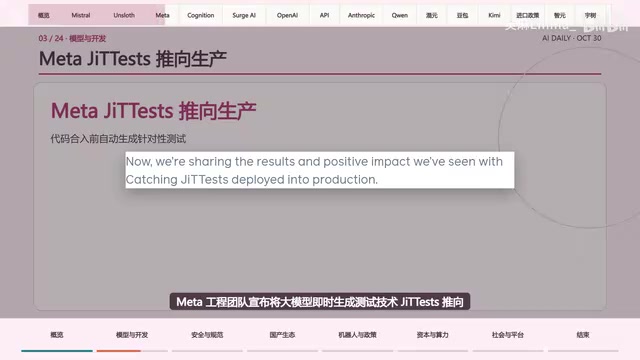
Mistral Large 4 Opens Its Weights: AI Morning Brief Roundup of Models and Ecosystem Trends
Mistral Large 4 opens its weights, a 1-trillion-parameter MoE architecture that can run locally on MacStudio; Meta's test-generation technology enters production; top tax benchmark pass rate only 10.8%; Canadian government takes a stake in Cohere; Doubao Work opens third-party model calls. This AI Morning Brief rounds up model, ecosystem, capital, and policy developments.
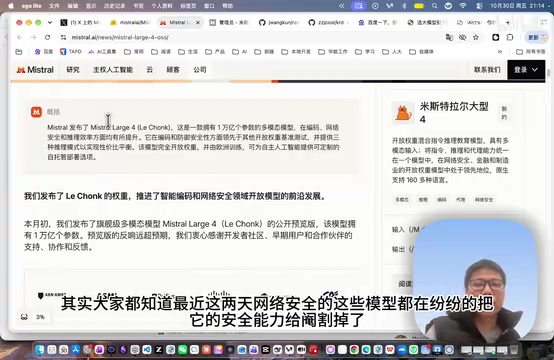
Mistral Large 4 Goes Open Source: A 1T-Parameter European Qwen Challenging DeepSeek
Mistral Large 4 is now open source: 1T total parameters, 52B activated, focused on coding and cybersecurity, with ~610G NVFP4 weights. We analyze its comparison with DeepSeek V4 Flash, API pricing, demo realism, and local deployment value.