Why Mamdani Is the Centrist We Need Today

Hacker News piece reframing Mamdani as a centrist sparks debate on political labels and tech community's political identity.
Based on a Hacker News post with just 11 points and no comments, this article examines the headline 'Mamdani Is the Centrist We've Been Waiting For.' It explores the ambiguity of the 'centrist' label in a polarized era, suggesting traditional centrism may be abandoned by mainstream politics while Mamdani is cast as a new pragmatic, evidence-based centrist. The tech community's skepticism of labels yet interest in breaking the left-right binary makes this framing resonant, though calling someone a centrist can also be a strategic repositioning.
The Hacker News Signal
The story appeared on Hacker News with a modest 11 points and no comments at the time of capture. That lack of engagement is telling: it suggests the piece sparked curiosity but not yet debate—or perhaps it arrived quietly, waiting for the right audience to unpack its implications. For those who did notice, the title alone raised a question: who is Mamdani, and why is a self-described centrist label being applied to him?

The absence of comments doesn't mean the piece is irrelevant. On Hacker News, silence can precede deeper reflection. Many high-signal articles first appear without fanfare, only to be rediscovered later. The positioning of Mamdani as a centrist—rather than as a progressive, socialist, or outsider—suggests a deliberate reframing that could appeal to readers tired of binary political narratives.
Hacker News is a tech community launched in 2007 by the Silicon Valley startup incubator Y Combinator, known for its minimalist interface and "Hacker News"-style voting and ranking mechanism. Its content focuses primarily on technology, startups, and science, but political and social issues also appear frequently. Because the community emphasizes "intellectual depth" and "first principles" discussion, whether an article receives comments often reflects its controversy and thought-provoking nature more than its score does. A case of 11 points and zero comments usually means the article was just posted, or the title was click-worthy enough but the body had not yet sparked the desire to discuss. In the HN context, it is not uncommon for an entry to be "rediscovered"—the algorithm pushes content based on votes and time decay, and a silent post may suddenly explode hours later after being shared by a big influencer. Therefore, the low engagement at the time of capture does not mean its value was rejected; rather, it suggests it may be on the eve of a topic fermenting.
What Does 'Centrist' Mean in This Context?
The article's title implies that Mamdani occupies a space that mainstream centrism has vacated. In an era when political extremes dominate headlines, a genuine centrist might be someone who rejects orthodoxy on both sides. But calling Mamdani a centrist is controversial because his policy positions have often been associated with the left. This tension is precisely what makes the argument interesting: perhaps centrism isn't about splitting the difference, but about pragmatism, evidence-based governance, and refusing to be owned by any faction.
For technology readers, this framing has a familiar ring. In tech, the most effective leaders are often those who blend ideas from different camps—open source and commercial, regulation and innovation. If politics followed the same logic, a "centrist" would be someone who prioritizes outcomes over ideology. The article seems to argue that Mamdani fits this mold, even if his detractors would disagree.
"Centrist" in political science usually refers to factions holding moderate positions on the left-right spectrum and opposing extreme ideologies. But in different national contexts, its connotations vary enormously: European centrists are often associated with Christian democracy or social liberalism, while American centrists more often refer to independent voters or "Third Way" Democrats. In recent years, as polarization has intensified, the term "centrist" has often been criticized as unprincipled fence-sitting. However, there is another current of thought—"radical centrism"—which advocates transcending the left-right divide and making policy in a problem-oriented, evidence-based manner. Centrism under this definition is not simple compromise but an active rejection of the two-party discourse system. By placing Mamdani in this lineage, the article is in fact challenging the boundaries of traditional labels—if centrism means pragmatism and results-orientation, then can a political figure who leans left in policy but rejects dogma also be included? This is precisely the deeper reason the title sparks debate.
Why This Resonates with the Tech Community
Hacker News readers are, by and large, skeptics of political labeling. They value first-principles thinking and are quick to spot inconsistency. A headline that challenges the conventional left-right axis is likely to get a click, even if the ensuing discussion is muted. The idea of a "centrist we've been waiting for" touches a nerve: many in tech feel politically homeless, frustrated by polarizing rhetoric and hungry for candidates who can articulate a coherent, non-dogmatic agenda.
Mamdani's appeal, as framed by the article, may lie in his ability to speak to multiple constituencies without pandering. That's a rare quality. Whether or not one agrees with his policies, the argument that he represents a new kind of centrism is worth examining—especially for those who believe that the best ideas often come from outside the mainstream.
The Risk of Labeling
Of course, calling someone a centrist can be a strategic move as much as a descriptive one. It can soften a radical image, attract moderate voters, or distance a figure from controversial associations. The article's title may therefore be doing double duty: inviting readers to reconsider Mamdani's political identity while also making a case for a broader realignment. Without the full text of the piece, we can only speculate about the specifics, but the Hacker News posting alone reveals that the conversation is underway.
In the end, the value of this story isn't in resolving the debate but in starting one. For a tech audience accustomed to rapid iteration, the notion that a political figure might be redefined—and that centrism itself might be due for an upgrade—is compelling. Whether Mamdani truly is the centrist we've been waiting for remains an open question, but the framing alone is enough to make us think twice.
Note: This article is based on the headline and metadata from Hacker News; the full source article was not available for detailed analysis.
One-line Summary
A Hacker News article redefining Mamdani as a centrist sparked discussion about political labels and the tech community's sense of political belonging.
Paragraph Summary
Based on a Hacker News post with only 11 points and zero comments, this article explores the meaning behind the headline "Mamdani Is the Centrist We've Been Waiting For." It analyzes the ambiguity of the "centrist" label in a polarized era, noting that traditional centrism may have been abandoned by mainstream politics, while Mamdani is framed as representing a new centrist path based on pragmatism, evidence, and rejection of partisan dogma. The tech community is skeptical of political labels yet naturally interested in narratives that break the left-right binary, so this framing may resonate. At the same time, the article cautions that calling someone a centrist may be a strategic repositioning aimed at softening their image and attracting moderate voters. Due to the lack of the full original text, the specific arguments remain unclear, but the headline itself has successfully started a conversation.
Related articles
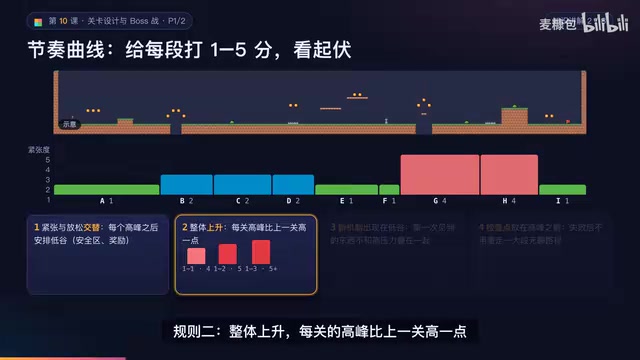
AI Game Development in Practice: Designing Levels with the Four-Step Method and Pacing Curves
AI game development lesson 10: design levels with the four-step method (teach, practice, combine, test) and a 1-5 pacing curve, plus sightline guidance and safety zones—implement Animatable Body 2D moving platforms and generate ASCII sketches for 1-2 Underground Cavern and 1-3 Guard Hall.

AI Game Development in Practice: Two-Phase Boss State Machines and Death Heatmap Tuning
AI game development lesson 10: implement a two-phase Boss with a state machine, guarantee fairness with color signals and a 0.4-second warning floor, locate difficulty cliffs with a death heatmap, and apply lightest-to-heaviest fixes one at a time, with an acceptance checklist and common pitfalls.
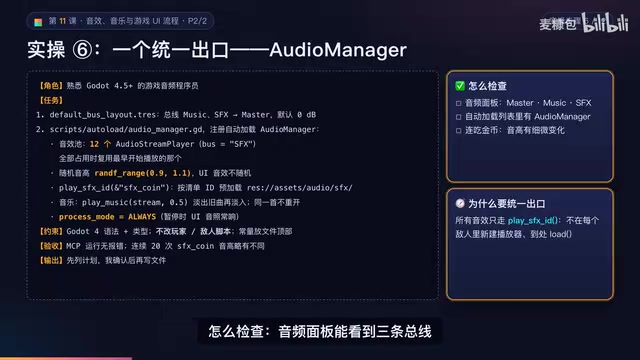
AI Game Development in Practice: Audio Buses and Building the Full UI Flow
AI game dev lesson 11 part 2: Godot's audio trio, audio buses and dB conversion, AudioManager's player pool and random pitch, autoload boundaries, the full UI flow from title to clear, fault-tolerant JSON saves, and pixel font anti-aliasing and integer-size rules.