WorkBuddy in Practice: Building a Smart Office Assistant with Tencent's AI Agent

Starting from a Doubao failure case, comparing chat LLMs with AI Agents, evaluating WorkBuddy, and offering selection advice.
The article starts with a failed Doubao test: the chat LLM accurately understood the requirement to 'batch convert DOCX files in a directory to PDF and archive them' and provided a code solution, but could not directly operate the user's local files, still requiring a human to understand the code and execute it manually. This leads to the difference of AI Agents—after authorization, they can invoke local tools, execute commands, and autonomously proceed based on results, forming an execution loop. The author tested Tencent WorkBuddy completing the same task in about three minutes for 1.55 credits. The article also notes that WorkBuddy is clearly weaker than Codex on complex tasks but wins on free quota, no VPN requirement, and low barriers, and provides scenario-based selection advice by general-purpose versus development-oriented categories.
Why Do We Need AI Agents? Starting with a Doubao Failure
In office scenarios, we often encounter repetitive tasks like batch file format conversion and data organization. Take converting all DOCX files in a directory to PDF and archiving them as an example—many people first think of chat LLMs like Doubao or DeepSeek. In our tests, Doubao accurately understood the requirement and provided a detailed plan including dependency installation, Python code, and execution steps. But the problem is: it can only "think," not "do." For non-programmers, reading Python code and executing it manually is still a barrier, and more critically, it cannot directly operate your local files.
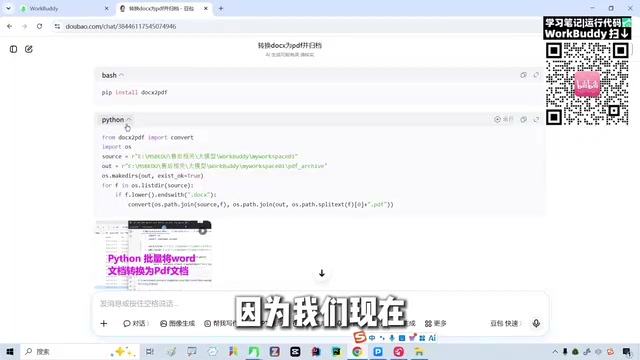
This "intelligent advisor" model—providing suggestions but requiring human execution—is precisely the limitation of ordinary chat LLMs. The emergence of AI Agents shifts AI from "answering questions" to "executing tasks," and from "giving suggestions" to "delivering results."
First Experience with WorkBuddy: From Understanding Requirements to Getting Real Work Done
WorkBuddyAd is an AI Agent tool launched by Tencent for office scenarios. It also uses LLMs as its brain, but users don't need to guide it step by step—they simply describe requirements in natural language and grant file access permissions, and it can autonomously invoke tools, execute commands, and process files.
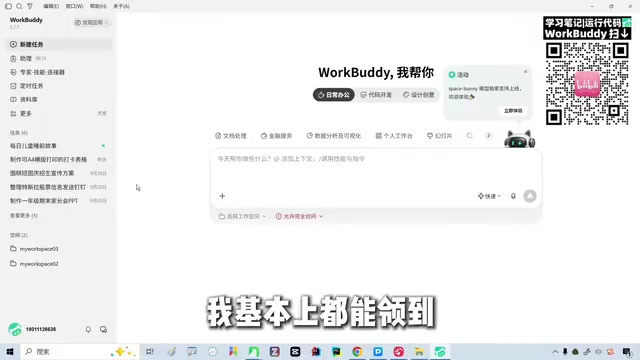
In our test, when given the requirement to "convert all DOCX files in a directory to PDF and archive them," WorkBuddy automatically completed the conversion in about three minutes, consuming 1.55 credits (100 free credits are given daily). No code writing was needed, and results were directly archived to the specified folder.
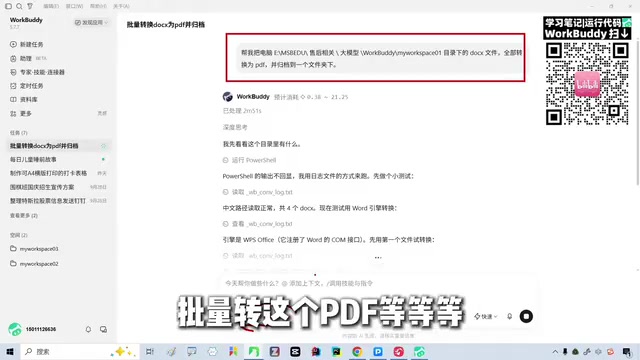
The core difference in this experience is: after authorization, WorkBuddy can access local folders, invoke system tools, execute commands, and autonomously adjust subsequent steps based on execution results, forming an "execution loop." With ordinary chat LLMs, humans must relay results at every step.
Chat LLMs vs AI Agents: What Are the Key Differences?
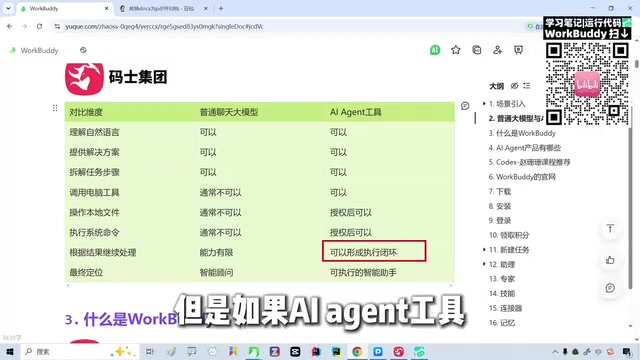
| Capability Dimension | Chat LLM (e.g., Doubao) | AI Agent (e.g., WorkBuddy) |
|---|---|---|
| Understanding natural language, decomposing tasks | ✅ | ✅ |
| Providing solutions | ✅ | ✅ |
| Invoking local tools, executing commands | ❌ | ✅ (after authorization) |
| Autonomously handling subsequent tasks based on results | ❌ | ✅ |
Ordinary chat LLMs are more like "intelligent advisors," while AI Agents are "intelligent assistants." The latter can actually get things done for you, rather than just telling you "how to do it."
The Technical Core of AI Agents: Tool Use and the Execution Loop
The key mechanism that distinguishes Agent-capable models from pure chat models is commonly called Tool Use or Function Calling. During inference, the model no longer outputs only text but can output structured "call requests" that the runtime environment actually executes—such as reading/writing files, making HTTP requests, running shell commands—and then feeds the execution results back to the model as input for the next round. This back-and-forth forms a ReAct-style loop: Reason → Act → Observe → Reason again.
Two supporting capabilities are needed around this loop: first, permissions and sandboxing—the Agent must be explicitly granted which directories it can access and which commands it can execute, to avoid unauthorized operations; second, state preservation and error recovery—when a task spans multiple steps, it must remember what has been completed, and when a command fails, it must be able to retry via an alternative path. This is exactly what chat models lack when "every step requires a human to relay results."
Positioning and Trade-offs of Domestic AI Agents
WorkBuddy is not the most capable Agent. In comparative tests, for the same task of "designing an Excel format based on an image," WorkBuddy took about 23 minutes with unsatisfactory results, while Codex met the requirement in just two to three minutes. But Codex costs about 200 yuan per month (membership fee plus VPN costs), while WorkBuddy gives 100 credits daily, enough to cover light office tasks.
For non-programmers with limited budgets in office settings, WorkBuddy's advantages lie in friendly installation, smooth usage, and no need for VPN. Although there is a performance gap, through multi-round dialogue and gradual correction, it can ultimately meet requirements.
"Credit" Billing and Context Windows
The "credits" mentioned in the article are a common metering method for Agent-type products: an Agent often needs to call the model dozens of times to complete a task (each reasoning step and each re-judgment after tool returns counts as a call), with token consumption far higher than a single Q&A. Therefore, vendors tend to convert task consumption into credits or quotas rather than billing by conversation rounds. Designs like giving 100 free credits daily essentially allow users to try the product at near-zero cost in low-intensity office scenarios.
Another hidden factor affecting experience is the context window. In long tasks, the large amount of intermediate results returned by tools crowds the context, and the model may "forget" the original goal or miss earlier steps, manifesting as drifting further off course as the task progresses. This explains why complex tasks take longer and produce unstable results, and why multi-round dialogue correction is actually helping the model realign with the goal.
Product Convergence and Scenario Selection
Current AI Agent products can be divided into two categories: general-purpose (e.g., WorkBuddy, OpenClawAd) and development-oriented (e.g., Codex, Claude Code). General-purpose ones target ordinary office scenarios, where coding is just one capability; development-oriented ones center on software engineering. But in the long run, competitor features will gradually converge—understanding, reasoning, and hands-on capabilities will eventually level out, with differences increasingly reflected in product focus and ecosystem.
Selection advice: if you mainly handle office tasks like documents, spreadsheets, and file archiving, a general-purpose Agent like WorkBuddy is more suitable; if your core need is writing code and debugging projects, development-oriented Agents are more efficient.
Related articles
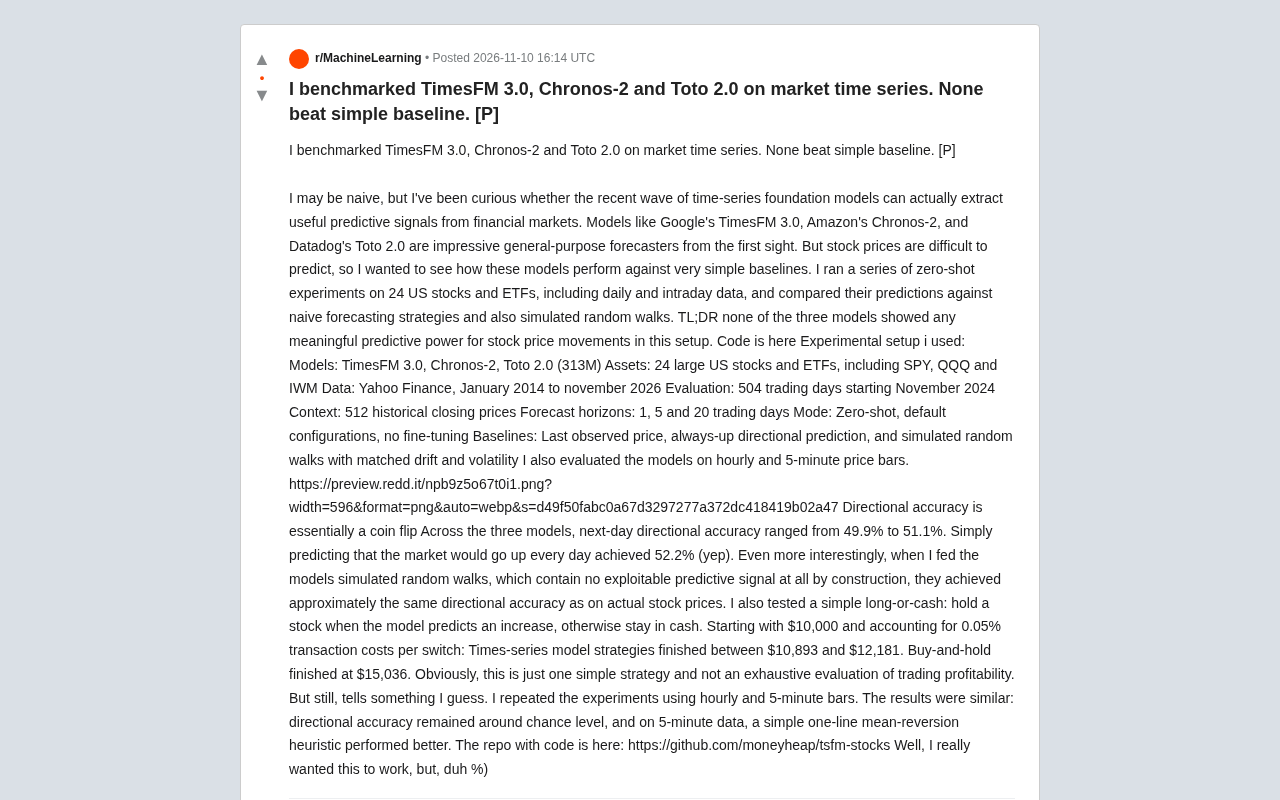
Putting TimesFM 3.0, Chronos-2, and Toto 2.0 to the Test: Time-Series LLMs Can't Beat Simple Baselines
A developer's zero-shot benchmark of TimesFM 3.0, Chronos-2 and Toto 2.0 on 24 U.S. stocks and ETFs: directional accuracy of just 49.9%-51.1%, and simulated trading underperformed buy-and-hold. Time-series foundation models show no edge over simple baselines on financial data.
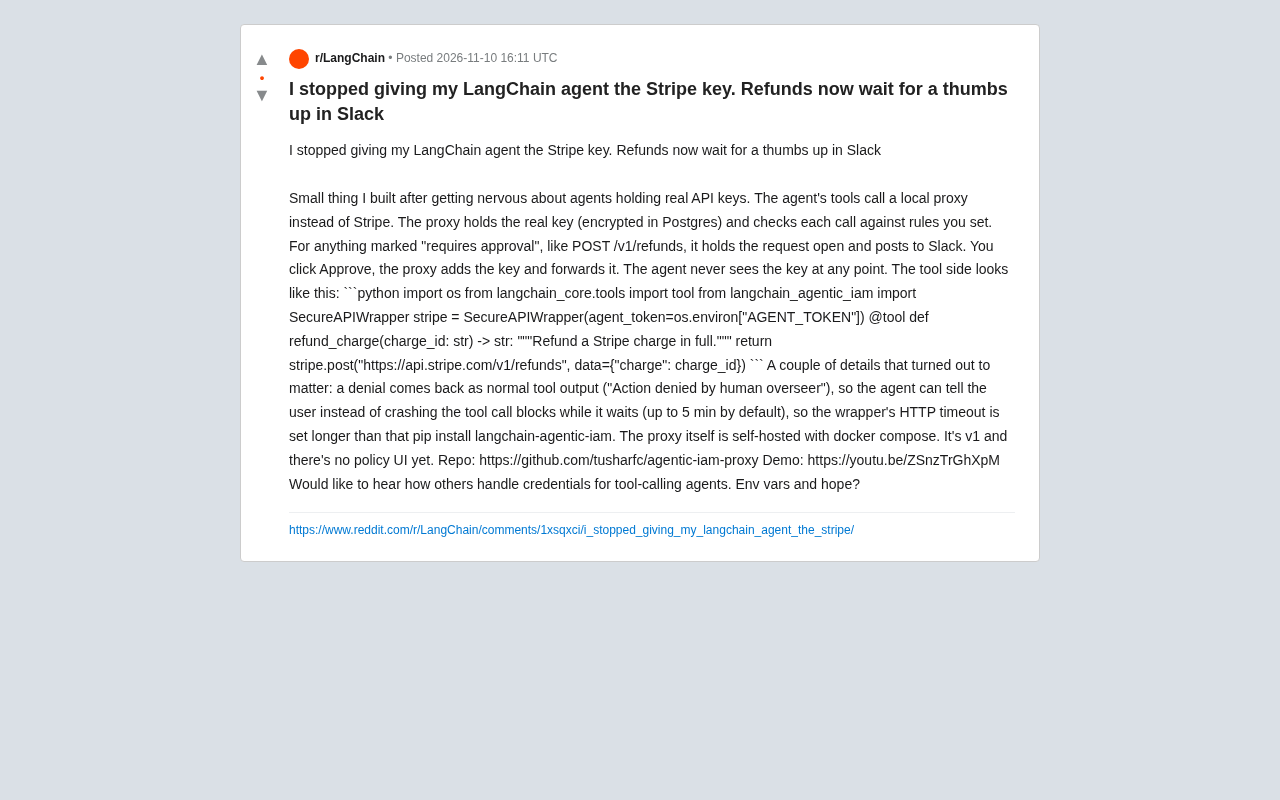
LangChain Agents No Longer Hold Stripe Keys: Refunds Require Slack Approval
A developer shares a credential management approach for LangChain agents: agents don't hold Stripe keys, and sensitive operations like refunds are forwarded through a local proxy and only executed after human approval in Slack, with code examples and engineering details.
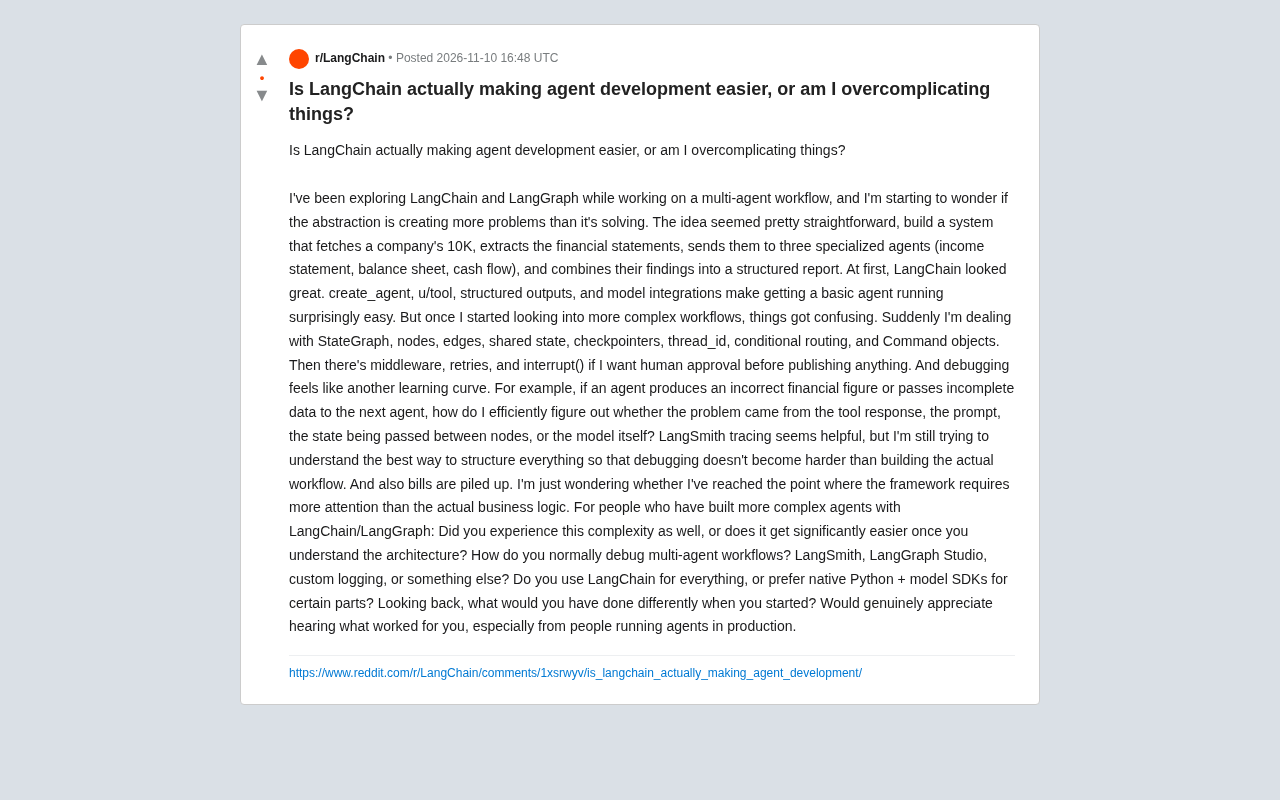
Does LangChain Really Make Agent Development Easier? A Developer Reflects on the Cost of Abstraction
A Reddit developer reflects on the abstraction cost of LangChain and LangGraph in multi-agent workflows: easy to start, but StateGraph, state management, debugging, and cost control add new complexity. The discussion covers debugging methods, whether to mix native Python + model SDKs, and production trade-offs.