X Platform's Promoted Button Escalates: Animated Arm Aggressively Pushes Paid Promotion
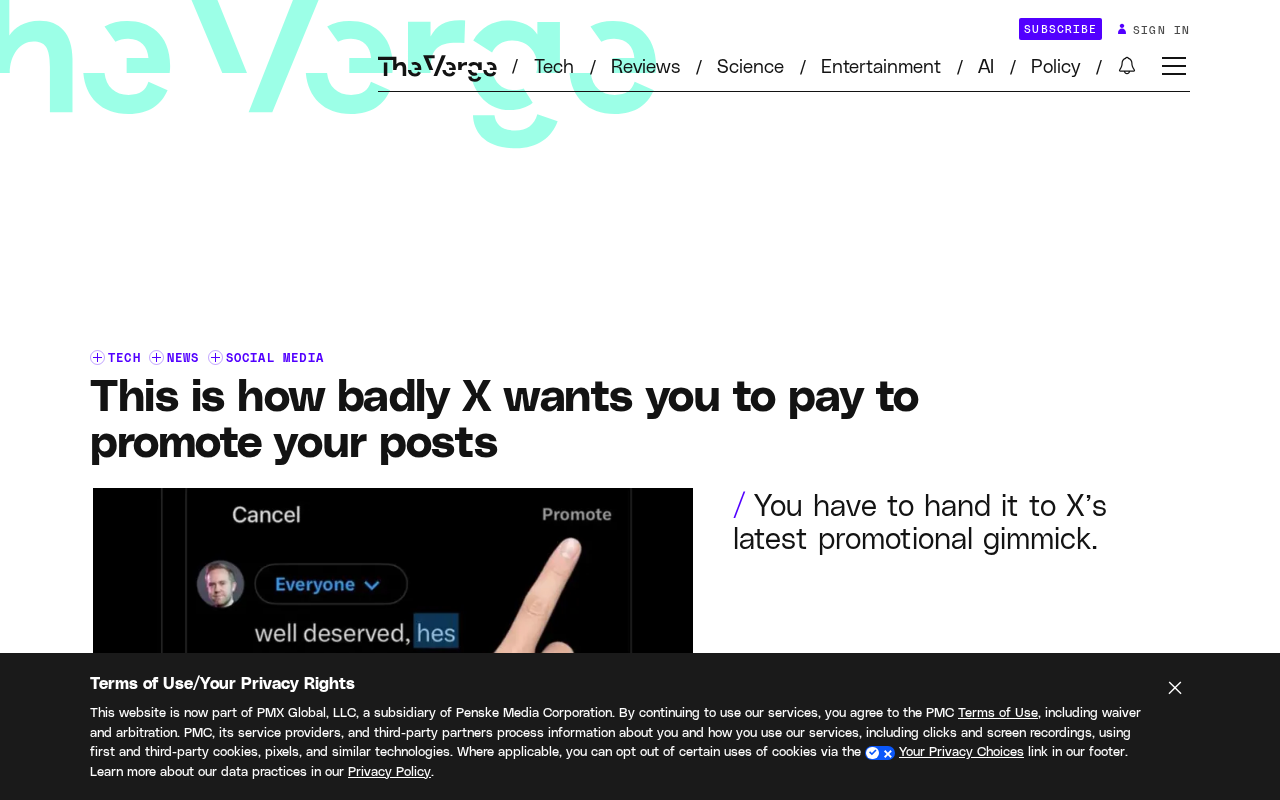
X uses an animated arm to push its "Promoted" button, clashing with Musk's warnings on low-quality ads.
X has been observed using a screen-spanning animated arm to draw attention to the "Promoted" button, an intrusive design that contrasts with Elon Musk's warnings about low-quality ads. The article examines the attention-capture mechanism, noting it reflects an imbalance between monetization pressure and user experience and raises "double standard" concerns.
From Warning to Hard Sell: X's Advertising Strategy Shift
Elon Musk warned earlier this month that advertisers who post "ugly, jarring, exaggerated product claims" on X will be banned from advertising. Yet the platform's own approach to promoting paid content tells a different story — according to recent observations, X is using a striking animated arm that sweeps across the screen to draw users' attention to the "Promoted" button. This visually intrusive design forms a subtle contrast with Musk's public statements on ad quality.
How the Animated Arm "Grabs" Attention
The animated arm extends from one side of the screen and dynamically points to the "Promoted" button below a post, with the goal of forcibly inserting a visual focal point as users browse their timeline. From a product design perspective, this is a classic attention-capture tactic, but the problem lies in its intrusiveness: users did not actively seek out promotional services, yet are forced to accept an animation that disrupts the content area. For everyday browsing, this design may be seen as damaging to interface cleanliness and may also prompt associations with the platform's urgency to monetize.
Attention Capture is a concept in interaction design and cognitive psychology that refers to using visual or auditory stimuli (such as motion, high-contrast colors, or sudden movement) to forcibly attract attention and divert users from their current task. In UI design, animations, pop-ups, and flashing elements are often used as attention-capture tactics, but overuse can lead to "attention fatigue" and negative emotions. X's animated arm leverages humans' sensitivity to motion to create visual interference as users browse their timeline — an attention-capture strategy on the more intrusive end of the spectrum.
The Tension Between Paid Promotion Boundaries and User Experience
X's hunger for promotion revenue is no secret, but directly "poking" users with an animated arm reflects that the platform's balance is tilting between monetization pressure and user experience. On one hand, X needs to prove the effectiveness of its promotional tools to advertisers; on the other, overly aggressive prompts may wear down user patience. Musk's earlier hardline stance on ad content was intended to improve the quality of the platform's advertising ecosystem, but the platform's own use of an animated arm to sell its promotion feature may leave users feeling a sense of "double standards."
The Promoted Button is a paid exposure feature that social media platforms offer to content creators and businesses; clicking it upgrades an ordinary post to "promoted" status for broader reach. X's promoted button is typically located below a post alongside actions like "Reply," "Repost," and "Like," but animated prompts can significantly boost its click-through rate. This design turns the promotion feature from an "optional tool" into a "visual focal point," blurring the line between organic content and advertising and fueling discussion about whether the platform is over-commercializing.
The Platform Logic Behind the Controversial Design
From a broader perspective, this design is a microcosm of social media platforms under advertising revenue pressure. X is not the first platform to adopt aggressive prompting tactics, but the intrusiveness of the animated arm stands out among similar products. For content creators and ordinary users, this means having to more frequently ignore or dismiss such promotional prompts in daily use. It remains unclear whether the design is rolled out to all users or specific regions, but its very existence is enough to spark discussion about the boundaries of platform commercialization.
Double Standard in this context refers to the platform applying different standards to advertisers and to its own promotional behavior: Musk publicly warns advertisers against low-quality ads, yet X itself uses intrusive animations to promote paid features. This inconsistency may undermine user trust in the platform's advertising policies and invite criticism that "the rules only bind others." In social media governance, consistency between a platform's own behavior and its public commitments is key to maintaining credibility, and double standards can easily inflame user dissatisfaction.
User Reaction and What to Watch
Although the original article does not provide specific user feedback data, forced prompting designs of this kind typically provoke negative sentiment within the community. Whether X will adjust how the animation is presented under pressure, or keep it as the norm, will test the sincerity of the platform's commitment to user experience. Against the backdrop of Musk's emphasis on ad quality, the "quality" of the platform's own promotional behavior deserves equal attention.
One-line Summary
X uses an animated arm to aggressively push the "Promoted" button, creating a double standard against Musk's warnings about low-quality ads.
Paragraph Summary
X has recently been observed using a screen-spanning animated arm to draw users' attention to the "Promoted" button — an intrusive design that contrasts sharply with owner Elon Musk's earlier warnings about low-quality ads. The article analyzes the animation's attention-capture mechanism and argues it reflects an imbalance between monetization pressure and user experience. This aggressive promotion may wear down user patience and raise questions about the platform's "double standards." Although it remains unclear whether the design is fully rolled out, its very existence is enough to spark discussion about the boundaries of social media commercialization and to test the sincerity of the platform's commitment to user experience.
Related articles

Vibe Coding Full-Stack in Practice: AI Programming from Beginner to Enterprise Deployment
From Cursor to Claude Code, this Bilibili AI programming course uses four progressive projects to cover full-stack development, open-source secondary development, and team collaboration. The article analyzes the shock to frontend roles, the efficiency shift from 50 people to 5, and the methodology required for enterprise-grade projects.

David Blaine's Global Quest for Real Magic: From South Africa to Japan and India
David Blaine travels to South Africa, Japan, and India in his Do Not Attempt special, documenting Spinning drivers, black mamba rescuers, iaijutsu masters, and ascetics—exploring the boundary between magic and real human极限 challenges.

Is a Touchscreen MacBook Coming? Vergecast Reveals Apple Executive's Response
Vergecast podcast reveals a conversation between a reporter and Apple executive John Ternus about a touchscreen MacBook and Apple Pencil support. Ternus says iPad is the best device for a stylus, while the reporter bets MacBook will eventually support Apple Pencil.