Xbox Overhauls PC, Web, and Cloud Gaming Apps, Launch Speed Up to 60% Faster

Microsoft overhauls Xbox multi-platform apps, PC launch speed up to 60% faster, Insiders testing first.
Microsoft is comprehensively overhauling the Xbox app experience across PC, web, and smart TV. The new Xbox PC app launches up to 60% faster and adopts a unified design echoing cloud gaming and TV updates. Xbox Insiders can test the updated PC app starting today, with cloud gaming updates in progress but no specific timeline announced. Microsoft prioritized performance optimization to address PC launcher sluggishness, while unified design reinforces the cross-device ecosystem narrative.
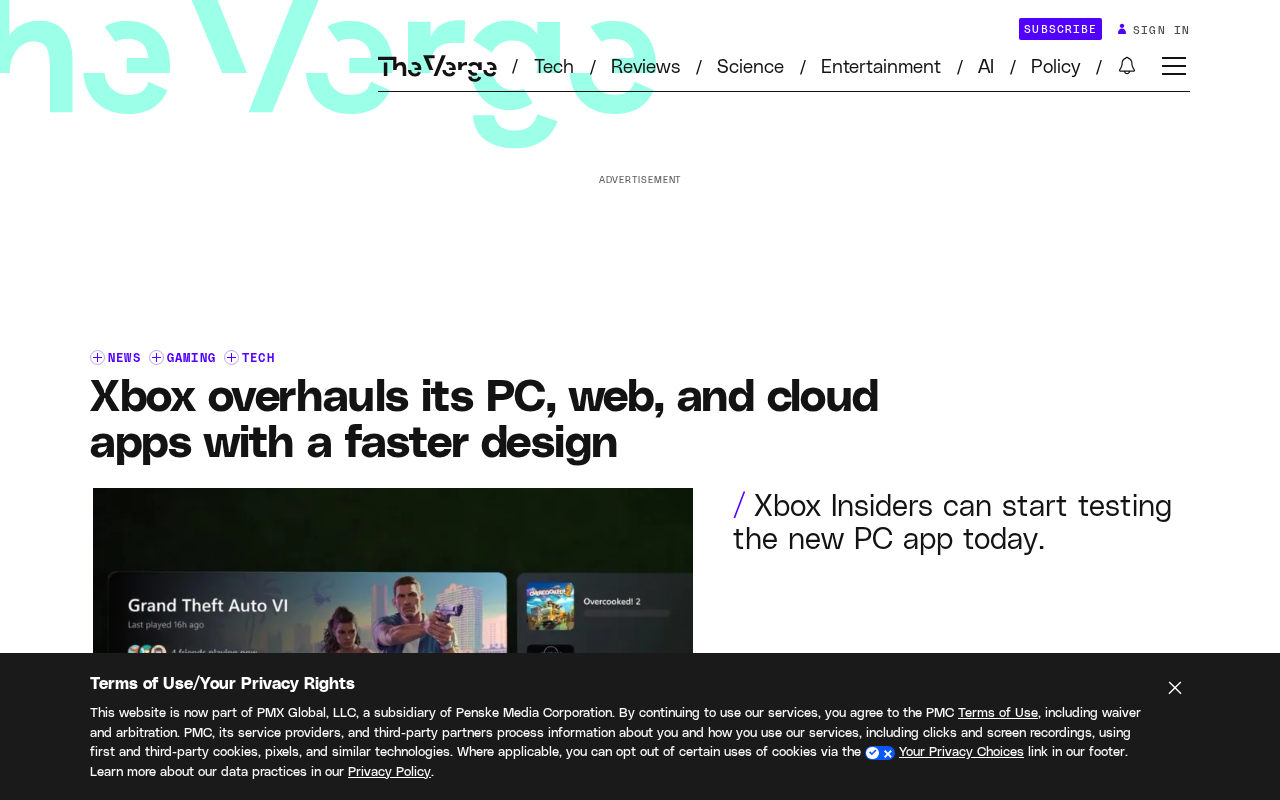
Microsoft is undertaking a comprehensive overhaul of the Xbox app experience across PC, web, and smart TV. According to RSS feed reports, the new Xbox PC app launches up to 60% faster than before and adopts a fresh design that echoes updates to the Xbox Cloud Gaming web version and smart TV apps. Xbox Insiders can begin testing the updated Xbox PC app starting today, with cloud gaming updates also rolling out in parallel.
A Unified Design Upgrade Across Multiple Platforms
This update isn't limited to a single platform—it simultaneously covers the PC app, web-based cloud gaming, and smart TV. Microsoft clearly wants Xbox to present a more consistent visual language and interaction logic across different devices. For players who frequently switch between PC, browser, and TV, unified design means a lower learning curve.
Based on the information disclosed, PC is the focus of this update. A launch speed improvement of "up to 60%" is a substantial figure—for an app that needs to be launched frequently, switch between games, and browse the store, reduced startup wait times directly impact usage frequency and retention.
Behind the Performance Boost: Why Launch Speed Matters
One of the core complaints about PC game launchers has long been sluggish responsiveness. Users often have to wait several seconds or more after opening the app before seeing the main interface, which accumulates into a negative experience in high-frequency usage scenarios. By making "up to 60% faster" a core selling point, Microsoft signals that the team prioritized performance optimization ahead of the design overhaul.
It's worth noting that "up to 60% faster" is a peak figure measured under specific test conditions—actual experience will vary depending on hardware configuration, system environment, and app state. But this metric at least indicates that Microsoft made substantive changes to the underlying loading process, not just a cosmetic refresh.
Launch speed technically refers to the time from when a user clicks the icon to when the main interface completes interactive rendering, involving multiple stages: process cold start, runtime library loading, account authentication, remote content fetching, and first-frame UI rendering. PC game launchers often need to simultaneously check for updates, fetch store recommendations, and load friend statuses at startup—if these network requests are handled serially, wait times increase significantly. Common optimization approaches include parallelizing requests, locally caching data needed for the initial screen, lazy-loading non-first-screen modules, and moving certain logic off the main thread. The so-called "60% improvement" generally refers to the relative reduction in total pipeline time rather than improvement in any single metric, so hardware performance, network conditions, and cache hit rates all affect the actual perceived experience.
Insiders Test First, Cloud Gaming Follows
The updated Xbox PC app will first open for testing to Xbox Insiders. This cadence aligns with Microsoft's usual approach: let the core testing group verify stability first, then gradually roll out to all users. The source mentions that updates to the cloud gaming web version and smart TV are also underway, but no specific rollout timeline was disclosed.
For regular users, this means they won't be able to directly experience all the changes in the short term. Following feedback from the Insiders channel can serve as a reference for judging the maturity of the official release.
Xbox Insiders is a public preview program established by Microsoft for the Xbox platform. Users can voluntarily register to join and get early access to test versions of system updates, app redesigns, and game features. The program is divided into multiple Ring tiers, from the Alpha ring—which receives the most aggressive updates with the lowest stability—to the relatively conservative Omega ring, with Microsoft rolling out to each ring in order of decreasing risk. Users participating in testing must accept risks such as app crashes, missing features, or data anomalies, with the corresponding reward being first access to new features and the ability to provide direct feedback to the development team. For Microsoft, the Insiders channel serves both as a stress-testing environment and an important channel for collecting real-device compatibility data. Therefore, when an app chooses to start with Insiders, it typically means it hasn't yet reached the stability threshold for all users.
Significance for the Xbox Ecosystem
In recent years, Microsoft has continued to expand Xbox from a single console brand into a cross-device service. The simultaneous redesign of the PC app, web cloud gaming, and TV app reinforces the "Xbox everywhere" product narrative. Faster launch speeds and more unified design help lower the barrier to entry for new users and make it smoother for existing users to migrate between devices.
However, the available information is relatively limited—specific feature additions or removals, store experience changes, or cloud gaming streaming quality improvements have not been disclosed. These aspects will need to become clearer as Insiders testing progresses.
Xbox Cloud Gaming (branded as Xbox Cloud Gaming, part of the Ultimate subscription) allows users to run console games on PC, mobile, browser, and smart TV via streaming without local installation. Experience quality depends on the end-to-end pipeline: data center encoding, network transmission jitter, client decoding, and input return latency. Therefore, the launch speed and interface responsiveness of cloud gaming client apps aren't just about "looking good"—if the app itself loads slowly, it compounds on top of streaming latency, further amplifying the user's sense of waiting. This explains why Microsoft, while advancing multi-platform cloud gaming coverage, lists client performance as a priority in the redesign: a unified lightweight frontend helps lower the barrier to entry across all endpoints.
Summary
Microsoft's comprehensive overhaul of Xbox PC, web, and cloud gaming apps sends two core signals: first, performance is the primary focus of the redesign, with "up to 60% faster" launch speed addressing long-standing experience pain points; second, unified design reinforces cross-device ecosystem consistency. As Insiders testing progresses, more details are worth following closely.
One-line Summary
Microsoft overhauls Xbox multi-platform apps, PC launch speed up to 60% faster, Insiders testing first.
Paragraph Summary
Microsoft is undertaking a comprehensive overhaul of the Xbox app experience across PC, web, and smart TV. The new Xbox PC app launches up to 60% faster than before and adopts a unified design that echoes updates to the cloud gaming web version and TV app. Xbox Insiders can test the updated PC app starting today, with cloud gaming updates rolling out in parallel, though no specific rollout timeline has been announced. The article notes that Microsoft prioritized performance optimization ahead of the design overhaul to address the long-standing sluggishness of PC launchers; unified design reinforces the "Xbox everywhere" cross-device ecosystem narrative. Due to limited information, details on feature changes, store experience, and streaming quality improvements await clarity after Insiders testing.
Related articles
 Tech Frontiers
Coldframe: A Honeypot Disguised as a Supermarket Freezer Controller
Coldframe is a honeypot disguised as Danfoss AK-SM 800A and Dixell XWEB freezer controllers, built as a single Python file that detects CVE-2025-41450 attempts and is identified as real devices on Shodan.
 Tech Frontiers
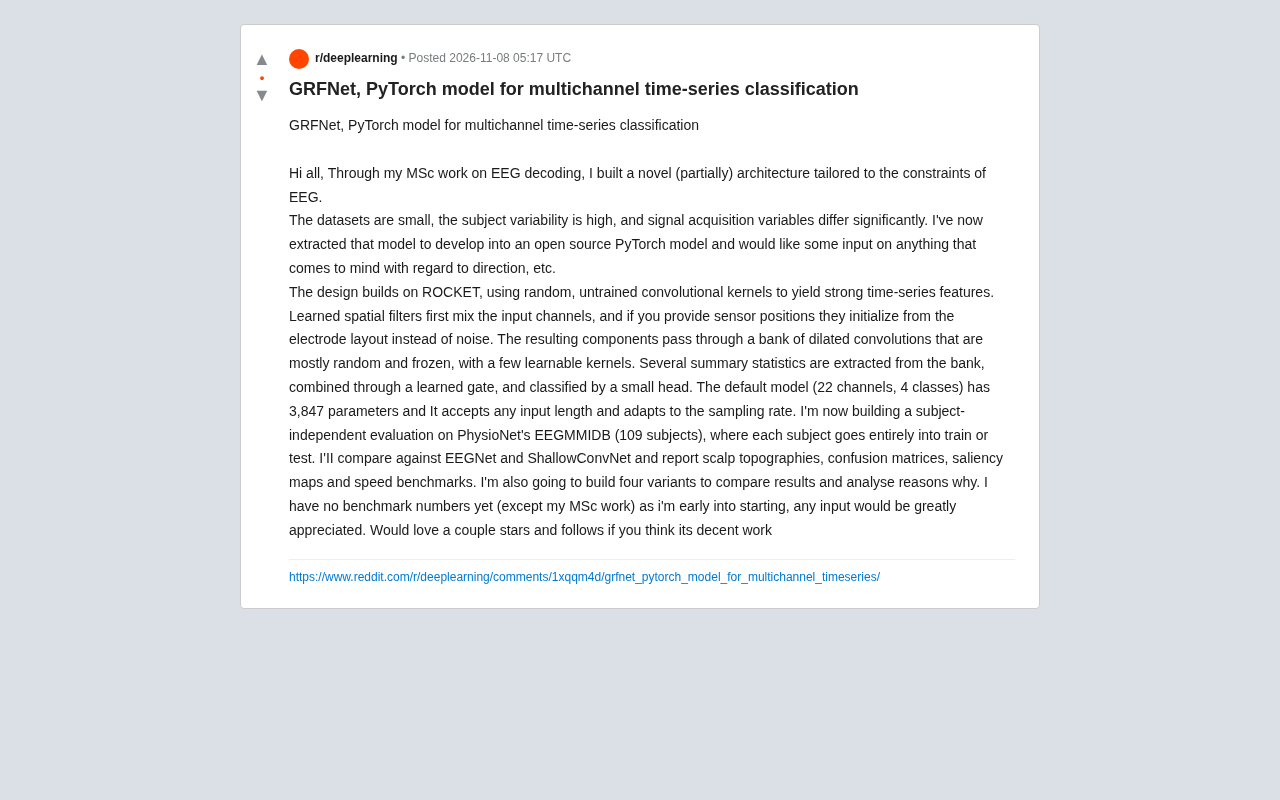
GRFNet: A Lightweight PyTorch Model Designed for Multichannel Time-Series Classification
GRFNet is a lightweight PyTorch model for multichannel time-series classification, originating from EEG decoding research. With only 3,847 parameters, it is based on the ROCKET architecture, combining random convolution kernels with learnable spatial filters, supports arbitrary input lengths, and will soon be evaluated on the PhysioNet dataset.
 Tech Frontiers
CUDA-Accelerated Rocket League Simulator: A Player-Made Hardcore Experiment
A Reddit post shows a "100% Accurate" Rocket League simulator accelerated with CUDA. We analyze its technical context, CUDA's value in game physics simulation, and the significance and limitations of such community projects.