ZAI Adapter Patch Release in Vercel AI SDK: A Dependency Chain Upgrade Explained
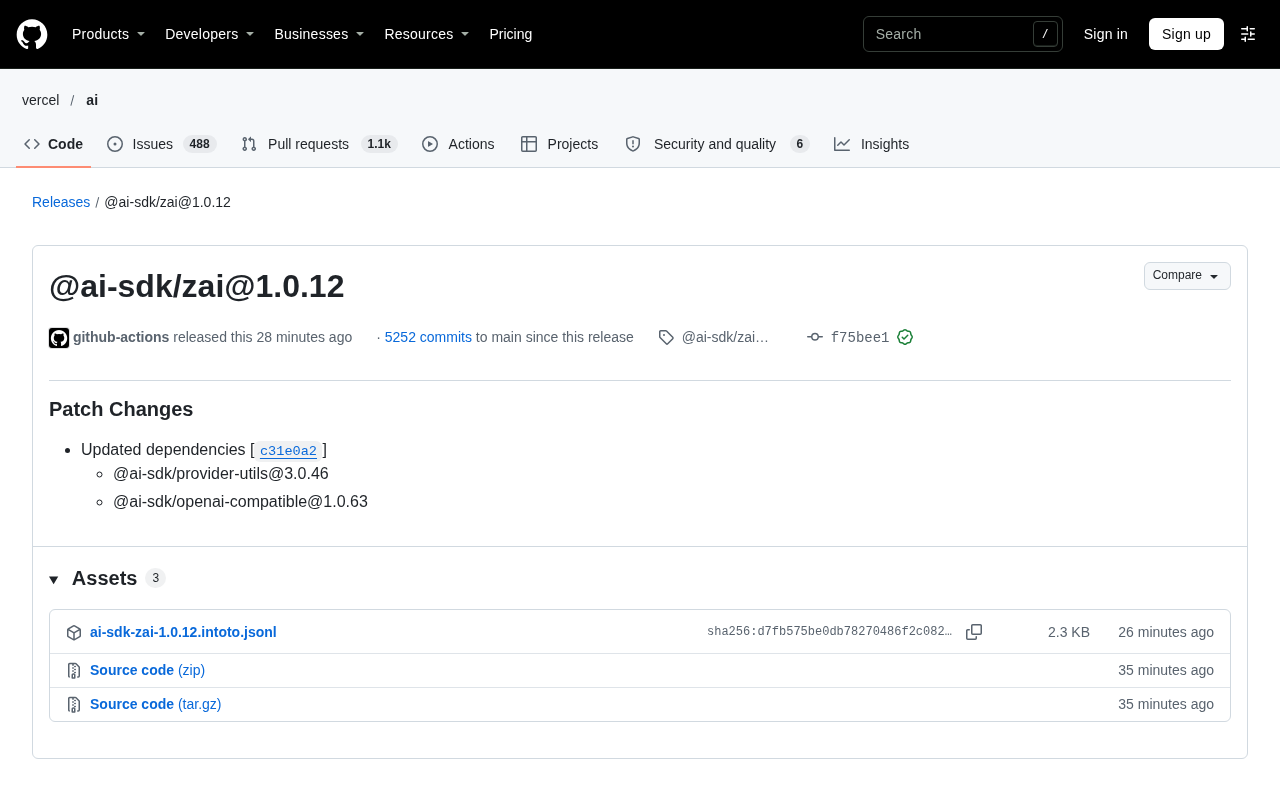
@ai-sdk/zai@1.0.12 only synchronizes two dependency upgrades, reflecting the coordinated release rhythm of the AI SDK ecosystem.
The article explains the @ai-sdk/zai@1.0.12 patch release in the Vercel AI SDK repository: no new features, no specific bug fixes, the only change is upgrading @ai-sdk/provider-utils to 3.0.46 and @ai-sdk/openai-compatible to 1.0.63. It first introduces @ai-sdk/zai as the ZAI provider adapter — only a translation layer from unified interface to provider API, so iterations are mostly dependency linkage. Then it analyzes that the dependency upgrade indicates the ZAI adapter is built on the OpenAI-compatible layer, and minor adjustments in the foundational utility library require the adapter to follow up to avoid version mismatch. For developers, the patch semantics imply backward compatibility and low upgrade risk, making it a recommended but not mandatory update. Finally, it observes the AI SDK ecosystem's maintenance pattern of "foundational libraries first, adapters follow" and offers upgrade advice such as unifying version lines and monitoring foundational library release notes.
A Seemingly Inconspicuous Version Bump, Backed by the Collaborative Rhythm of the AI SDK Ecosystem
In the Vercel AI SDK repository on GitHub, @ai-sdk/zai@1.0.12 has been released as a patch version. According to the release notes, this update introduces no new features and fixes no specific business bug. The core content is just one line: update dependency versions — @ai-sdk/provider-utils to 3.0.46, and @ai-sdk/openai-compatible to 1.0.63.
For readers unfamiliar with the AI SDK system, this description may seem a bit abstract. But for developers using Vercel AI SDK to integrate ZAI services, it means a synchronization of the underlying toolchain, ensuring compatibility among modules.
What Is @ai-sdk/zai
The design philosophy of Vercel AI SDK is to unify the invocation methods of different model providers into a single interface (unified entry point), and then connect to each provider's service through provider adapters. @ai-sdk/zai is the adapter package for the ZAI provider.
The adapter package itself typically only bears the responsibility of a "translation layer": translating unified SDK calls into the corresponding provider's API request format, and then handling the response results. Therefore, its version iterations often do not involve algorithms or business logic, but are more about dependency linkage and compatibility maintenance.
The unified interface of Vercel AI SDK refers to a set of model-agnostic APIs provided by its core package ai, such as generateText, streamText, embed, etc. These functions are not directly bound to any single provider, but accept a provider instance as a parameter (e.g., openai('gpt-4o'), zai('model-id')), and the provider is responsible for translating the unified call into a specific HTTP request. This design allows developers to switch models without changing business code — only the provider configuration needs to be replaced.
Provider adapters are independent npm packages corresponding to each provider, typically named following the @ai-sdk/<vendor> convention. Inside the adapter, it depends on two key layers: @ai-sdk/provider defines the abstract interface specifications that providers need to implement (such as method signatures for language models and embedding models), and @ai-sdk/provider-utils provides common implementations such as request construction, streaming parsing, and error handling. @ai-sdk/openai-compatible further encapsulates the OpenAI-style /chat/completions protocol, allowing any provider compatible with that protocol to reuse the same request logic — which is also why the ZAI adapter depends on it.
What This Patch Changed, and Why It's Worth Noting
Synchronized Upgrade of the Dependency Chain
The release notes list two updated dependencies:
@ai-sdk/provider-utils@3.0.46: This is the SDK's internal foundational utility library, often shared by various providers;@ai-sdk/openai-compatible@1.0.63: Used for the request protocol compatible with the OpenAI interface style.
The upgrade of these two indicates a fact: the ZAI adapter is built on top of the OpenAI-compatible layer, and its implementation path is highly related to OpenAI-style APIs. Minor changes in the foundational utility library (such as adjustments to common capabilities like request construction and streaming response parsing) require the adapter to follow up synchronously to avoid version mismatch.
In Semantic Versioning (SemVer), the patch position (such as the last digit in 1.0.12) indicates that it contains only backward-compatible bug fixes or internal adjustments, without adding features or changing the public API. Therefore, @ai-sdk/zai@1.0.12 can be judged as a low-risk update from the version number itself. It should be noted that SemVer constrains the public interface of the package itself, but if packages it depends on, such as provider-utils, undergo subtle behavioral adjustments, they may still indirectly affect the adapter's runtime behavior — which is exactly why patch versions also synchronize dependencies.
Lockfile (such as package-lock.json, pnpm-lock.yaml) locks the exact versions of the dependency tree, so even if package.json specifies ^1.0.11, 1.0.12 will not be automatically pulled unless the lockfile is actively updated. Dependency auditing tools (such as npm audit, Dependabot) compare the lockfile with the latest repository versions and suggest upgradeable items. For projects using multiple providers, it is recommended to keep shared dependencies such as provider-utils at a single version in the lockfile, to avoid npm nesting multiple copies due to version range conflicts.
Practical Impact on Developers
In dependency management practice, this kind of patch version upgrade is usually a "recommended but not mandatory" update: not upgrading generally won't cause immediate errors, but upgrading ensures consistency with other latest modules. For projects using lockfiles, if dependency auditing is enabled in CI, it may flag versions as outdated.
It should be noted that the release notes do not mention any interface changes or behavioral changes, and the patch semantics itself also implies backward compatibility. Therefore, the upgrade risk assessment is low.
Observations on the Maintenance Pattern of the AI SDK Ecosystem
From this release, we can see a typical rhythm of the AI SDK series packages: multiple provider packages and shared utility packages advance versions in near synchronization. As infrastructure layers, provider-utils and openai-compatible are referenced by various adapters, so a single foundational library update often triggers coordinated releases of multiple adapters.
The advantage of this pattern is ensuring consistent behavior across packages in the ecosystem; the disadvantage is that version numbers grow quickly, and developers need to rely on changelogs to determine which updates are relevant to them.
Monorepo and coordinated releases are the key background for understanding this rhythm. Vercel AI SDK uses a monorepo to manage dozens of provider packages and shared utility packages, leveraging tools like Changesets to record changes when merging PRs, and automatically bumping affected package versions based on dependency relationships at release time. When a new version of provider-utils is released, all adapter packages that depend on it will receive a patch release for dependency upgrade — even if the adapter code hasn't changed a single line. This explains why version numbers grow quickly and individual changes may seem "content-free."
For developers, to determine whether a coordinated release is relevant to them, it's better to first check the changelogs of provider-utils and openai-compatible rather than each adapter package; if there are no behavioral changes in the foundational libraries, the adapter patches can usually be safely skipped.
Upgrade Recommendations
- If the project has pinned to a specific version and runs stably, evaluate as needed; no need to follow up immediately;
- If the project uses other AI SDK provider packages simultaneously, it is recommended to unify version lines to reduce dependency conflicts;
- Before upgrading, pay attention to the release notes of
provider-utilsandopenai-compatibleto confirm no behavioral changes.
Overall, @ai-sdk/zai@1.0.12 is a routine maintenance release — no flashy new features, but it reflects the SDK ecosystem's collaborative approach of "foundational libraries first, adapters follow."
Related articles
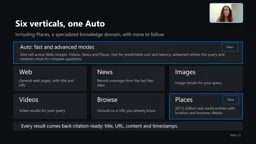
Microsoft WebIQ: Verifiable Real-Time Web Grounding for AI Agents
Microsoft WebIQ gives AI Agents real-time, citable web grounding across web, news, images, videos, and Places—164ms P95 latency, 50% fewer tokens, Scopes source control, and MCP integration.
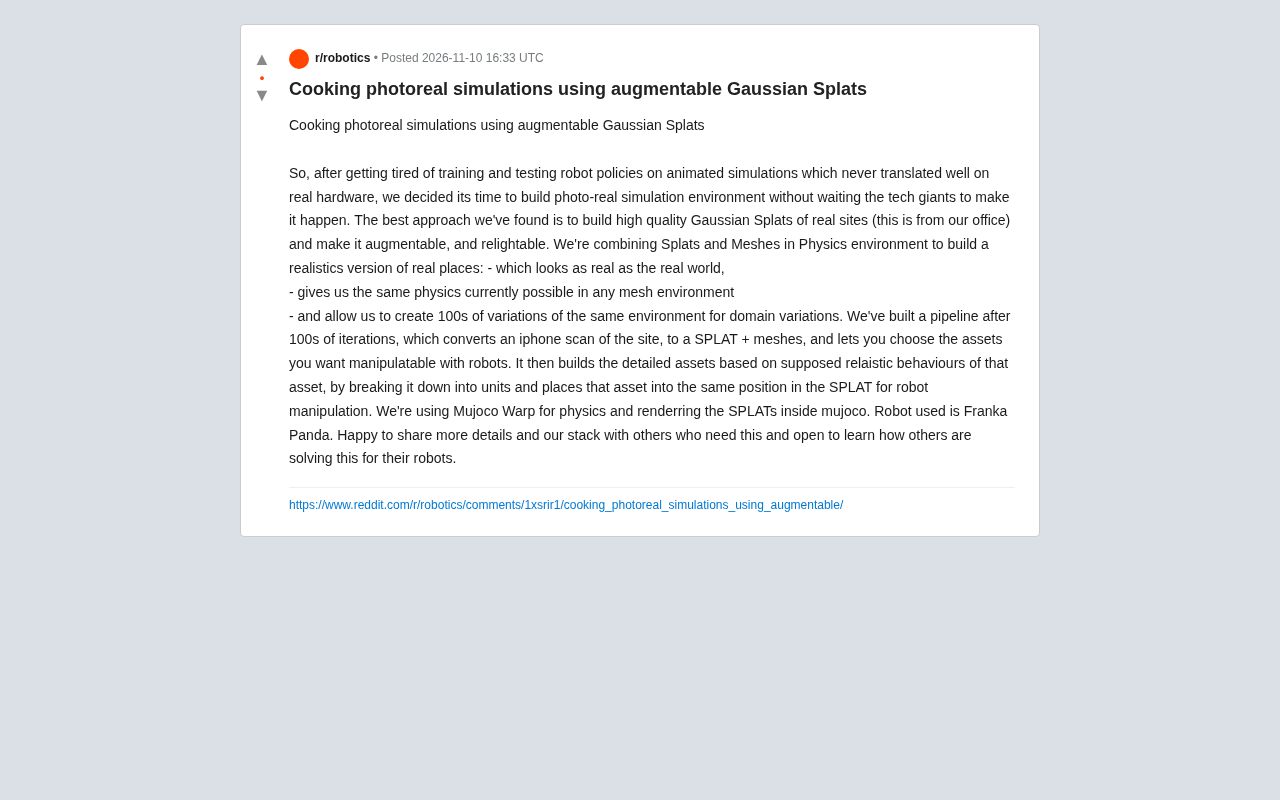
Augmentable Gaussian Splatting: Building Photorealistic Simulation Environments for Robot Training
Team combines Gaussian Splatting with meshes to build photorealistic robot simulation environments, integrating MuJoCo Warp physics and Franka Panda for augmentable, relightable real-site simulation.

Gemini 4 Carbon Released: The Leap from Gemini 3 to Gemini 4 in Under a Year
Google releases Gemini 4 Carbon, less than a year after Gemini 3. In the official demo, Carbon reverse-engineered the Theme Park binary, added a new DeepMind-themed ride, and ported it to the web in one shot.