#ReAct
7 related articles

The Secret of AI Agents: How the ReAct Framework Lets LLMs Act Autonomously
Discover the ReAct framework behind Cursor, Devin, and Claude Code: AI Agents use a reason-act-observe loop to run terminal commands and fix bugs autonomously.

Deconstructing ReAct: A Hands-On Guide to Building AI Agents from Scratch
A deep dive into the ReAct (Reason and Act) pattern behind AI Agents, demonstrated through a weather query case: how LLMs call tools, the inner mechanics of the ReAct loop, multi-tool routing and state management, along with infinite-loop pitfalls and development best practices.
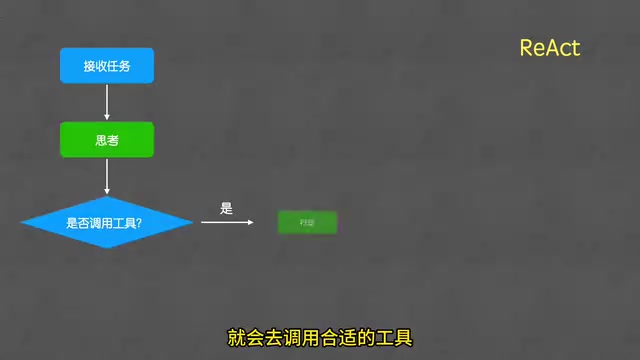
Building an AI Agent from Scratch: The ReAct Paradigm and Architecture Blueprint
A deep dive into the ReAct paradigm for AI Agents: the think-act-observe loop, Provider adapters, context systems, tool systems, and user entry points — a complete blueprint for building production-ready Agents from scratch.
 Tutorials
Hermes Agent in Practice: A Complete Breakdown from ReAct Loop to Autonomous Skill Evolution
Deep dive into Hermes Agent's four progressive cases: terminal ReAct loop, Feishu AI assistant, four-layer persistent memory, and three-stage Skill evolution with DeepSeek support.
 Tutorials
AI Agent Open-Source Course: 36 Chapters from ReAct to Claude Code Full-Stack Practical Guide
Open-source GitHub project agent-study offers 36 chapters covering ReAct loops, Claude Code reverse engineering, MCP protocol, RAG, DSPy, and production observability as runnable Python code.
 Deep Dives
ReAct Pattern and Transformer Architecture Explained: High-Frequency AI Interview Topics for Frontend Developers
Deep dive into Agent core logic ReAct (Reasoning + Acting) execution flow, Transformer self-attention mechanism, and essential AI skills for frontend developers including prompt engineering, RAG, and Agent development.