In-Depth Analysis of IT Job Market: Is Switching to Software Testing Worth It?
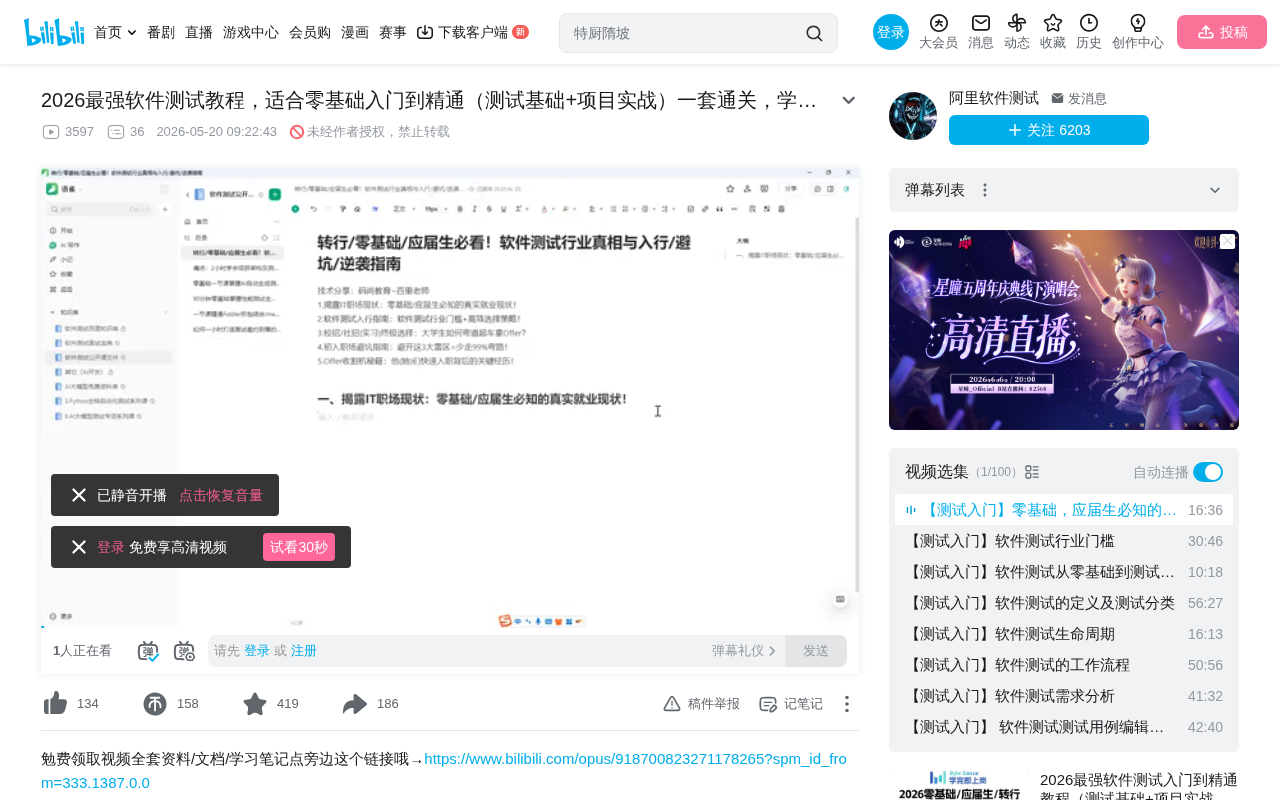
IT roles face mounting pressure as software testing emerges as a stable career transition choice.
Amid structural adjustments in the IT industry, front-end development is declining as full-stack engineers take over, back-end competition is brutal, and operations roles have limited salary ceilings. Software testing has evolved through four stages and entered its standardization period in 2024, branching into traditional testing, automotive testing, banking testing, big data/security testing, and AI/LLM testing. The field is attracting developers over 35 seeking stability and diverse career paths.
Introduction
In the current economic climate, the IT industry is undergoing profound structural adjustments. From front-end development to back-end engineering, from operations to implementation, every role faces varying degrees of challenge. On the other hand, software testing—a relatively stable field with moderate entry barriers—is attracting an increasing number of professionals looking to transition. This article systematically analyzes the real state of major IT roles today, as well as the development trajectory and future trends of the software testing industry.
Current State of Major IT Roles
Front-End Development: A Rapidly Declining Track
Although most current projects adopt front-end/back-end separation architecture, an undeniable trend is emerging: a large number of back-end developers have already acquired front-end development capabilities. This means independent front-end positions are being replaced by full-stack back-end engineers.
Front-end/back-end separation architecture refers to a development model that decouples the user interface (front-end) from server logic (back-end) through API interfaces. Under this architecture, the front-end typically uses frameworks like React, Vue, or Angular to build Single Page Applications (SPAs), while the back-end provides RESTful APIs or GraphQL interfaces. The original intent of this architecture was to improve development efficiency and team collaboration. However, with the rise of full-stack frameworks like Next.js and Nuxt.js, and as back-end engineers deepen their mastery of front-end technologies, the irreplaceability of pure front-end roles is diminishing. Particularly in small and medium-sized enterprises, a single full-stack engineer can often handle both front-end and back-end development, directly compressing the market space for independent front-end positions.
From the actual recruitment market, front-end development has entered a rapid downward trajectory. More and more front-end developers are seeking career transitions—some are self-learning Python, others are targeting AI, and a significant portion are choosing to move into software testing.
Back-End Development: High Pay but Brutal Competition
Back-end development (Java, Python, etc.) offers some of the highest salary ceilings in the IT industry, but it also comes with the most intense competition and heaviest workload. The current market demands from back-end developers have far exceeded basic CRUD operations—microservices architecture, distributed systems, and middleware tech stacks have become standard requirements.
Microservices architecture is a pattern that breaks monolithic applications into multiple independently deployable small services, each built around specific business capabilities and communicating through lightweight mechanisms (such as HTTP/gRPC). Distributed systems involve multiple computers working collaboratively, requiring solutions for data consistency, network partitioning, service discovery, and other complex problems. The middleware tech stack that back-end developers currently need to master includes: message queues (Kafka, RabbitMQ), caching systems (Redis), search engines (Elasticsearch), service registration and discovery (Nacos, Consul), and container orchestration (Kubernetes). The steep learning curves of these technologies mean that developers who only know basic Spring Boot CRUD lack competitiveness in the market.
Developers who can only perform basic CRUD operations already find it quite difficult to land jobs in today's market. This explains why many back-end developers with years of experience are also considering career transitions.
Operations and Implementation: Clear Salary Ceilings
Operations roles are primarily responsible for maintaining server stability and project deployment, requiring on-call availability to handle emergencies—late nights are the norm. The salary ceiling is approximately 10K RMB.
Implementation roles have lower entry barriers, with primary responsibilities including software installation, configuration, debugging, and client communication/training. However, this role requires frequent business travel, and the salary ceiling is similarly limited at around 10K RMB.
Product Manager: Communication Skills Determine Your Ceiling
Product managers are responsible for product planning and coordinating multiple resources, requiring frequent client interaction. Business dinners and social engagements are "standard operations" for this role, demanding strong communication and interpersonal skills.
Development Stages of the Software Testing Industry
Evolution from Inception to Standardization
Looking back at the development of the software testing industry, it can be clearly divided into four stages:
- 2009-2013 (Inception Period): The industry was just starting, with job demand gradually forming
- 2013-2018 (Bonus Period): One month of training could land a job paying over 10K RMB; entry barriers were extremely low
- 2019-2023 (Correction Period): The bonus faded; simple training could no longer guarantee high-paying employment
- 2024 onwards (Standardization Period): The industry enters a normal development phase, becoming a permanent fixture in IT
This evolution shows that software testing has moved from wild growth to mature standardization. Competition is fierce for junior functional testers, but relatively mild for mid-to-senior-level test engineers.
Diverse Specialization Paths in Software Testing
Software testing has now developed multiple specialization paths, each with different skill requirements and career prospects:
1. Traditional Software Testing (Classic Path)
Includes API testing, automation testing, and performance testing. This is a time-tested path with long-term stability, suitable as a foundational route for most career changers.
API testing is a method that verifies the correctness of data interactions between system modules, primarily targeting APIs (Application Programming Interfaces) for functional validation, exception handling, and data format verification. Common tools include Postman, JMeter, and Python's Requests library. Automation testing involves writing scripts to replace manual execution of repetitive test cases, divided into UI automation (Selenium, Appium), API automation (pytest+requests framework), and continuous integration automation (Jenkins/GitLab CI integration). Performance testing focuses on system response time, throughput, and resource utilization under high-concurrency and large-data scenarios, with mainstream tools being JMeter and Locust. These three areas constitute the core skill progression path from junior to senior test engineer.
2. Automotive Testing
Beyond basic functional and API testing, this requires mastery of hardware knowledge (CANoe, CAPL, UDS diagnostics, etc.). With the booming development of new energy vehicles (Xiaomi, Tesla, BYD, NIO, Li Auto, etc.), automotive testing experienced a bonus period over the past five years. It's currently at the tail end of that bonus period but still maintains stable demand.
CANoe, used in automotive testing, is a bus analysis and simulation tool developed by Vector, widely used in the development and testing of automotive Electronic Control Units (ECUs). CAN (Controller Area Network) is the standard protocol for communication between automotive electronic devices. CAPL (Communication Access Programming Language) is the programming language on the CANoe platform, used for writing test scripts and simulation nodes. UDS (Unified Diagnostic Services) is an automotive diagnostic communication protocol defined by the ISO 14229 standard, used for ECU fault diagnosis, software flashing, and parameter configuration. With the development of intelligent connected vehicles, automotive testing has expanded to include ADAS (Advanced Driver Assistance Systems) testing, OTA (Over-The-Air) update testing, and in-vehicle infotainment system testing, placing higher demands on test engineers' hardware knowledge and protocol comprehension.
3. Banking Testing
Requires familiarity with banking business processes. Recruitment demand is the largest in the testing industry, making it the specialization with the most job openings—ideal for those prioritizing stable employment.
The high demand for banking testing is closely related to the financial industry's unique characteristics. Banking systems involve core banking systems (deposits/loans, clearing/settlement), credit card systems, online/mobile banking, risk control systems, anti-money laundering systems, and many other subsystems, each with strict regulatory compliance requirements. Banking test engineers need to understand financial business processes, such as cross-bank transfer clearing mechanisms, interest rate calculation rules, and debit-credit balance in accounting. Additionally, banking systems demand extremely high data accuracy (precise to the cent), system availability of 99.99% or above, and must meet Level 3 or higher information security protection standards. These special requirements have given rise to an independent knowledge system for banking testing, including end-of-day batch testing, online transaction testing, disaster recovery switchover testing, and other banking-specific test scenarios.
4. Big Data Testing and Security Testing
Job openings are limited, but mastery leads to very attractive salaries. The challenge is that it's easy to get started but hard to master—knowing only the basics may not be enough to land a job.
5. AI/LLM Testing (Latest Direction)
Currently in a trending bonus period, primarily involving prompt testing, knowledge base testing, AI agent testing, and the integration of AI with traditional testing. However, it's important to note that AI testing cannot exist independently—it must be combined with traditional testing skills to be competitive.
AI/LLM testing is an emerging testing field with core test subjects including: Prompt Testing, which verifies the accuracy, consistency, and safety of model outputs under different input prompts; Knowledge Base Testing (RAG Testing), which evaluates retrieval accuracy and content reliability in Retrieval-Augmented Generation systems; and Agent Testing, which verifies the decision correctness and tool-calling capabilities of AI Agents in multi-step task execution. Unlike traditional software testing, AI testing faces the challenge of output non-determinism—the same input may produce different but equally valid outputs. This requires test engineers to establish new evaluation criteria and testing methodologies, including semantic similarity-based assertions, hallucination detection, toxic content filtering, and other specialized testing capabilities.
Why More IT Professionals Are Switching to Testing
Insights from Real Transition Cases
From actual cases, the profile of those transitioning to testing is highly diverse:
- A 36-year-old Java developer with a bachelor's degree and 18K RMB salary, chose to switch to testing after 7 years of development
- A 35-year-old female Java instructor working in Beijing, chose to transition from Java instruction to testing
These cases reveal several key insights: even high-earning Java developers face physical and mental energy bottlenecks after age 35. Female professionals in particular, after years of high-intensity development work, tend to prefer the relatively lower-pressure testing direction, even if it means accepting a moderate pay cut.
Relative Advantages of Software Testing
In the current economic environment, the IT industry as a whole still outperforms other traditional industries. The core advantage of software testing is: with systematic learning, one can generally achieve a salary level around 10K RMB, which would require much longer accumulation in other industries.
For professionals with existing IT backgrounds, transitioning to testing offers natural advantages—coding foundations can be directly leveraged, the learning curve is relatively gentle, and work intensity is typically lower than pure development roles.
Summary and Transition Recommendations
The current IT job landscape is being reshaped. Front-end development is accelerating downward, back-end development suffers from severe involution, and operations/implementation roles have limited ceilings. Software testing, as a field that has entered its standardization period, no longer offers the windfall profits of its early days but wins on stability and diverse development paths.
For those considering entering or transitioning into the field, here are some recommendations:
- Don't stay at the junior functional testing level—advance quickly toward API testing, automation testing, and performance testing
- Pay attention to AI/LLM testing integration, but build on a foundation of traditional testing skills
- Banking testing has the highest demand and can be prioritized for quick employment
- Although automotive testing has passed its peak bonus period, the continued development of the new energy vehicle industry still provides stable opportunities
Regardless of which specialization you choose, continuous learning and deep skill development are the core competitive advantages for long-term growth in the testing industry.
Related articles
 Industry Insights
AI Product Development in Practice: Model Selection, Building Moats, and Paths to Commercialization
Practical strategies for AI product development: why not to train models from scratch, when to use APIs vs. fine-tuning, building product moats, and the full path from evaluation systems to commercialization.
 Industry Insights
No Product Fits Your Needs? Building It Yourself Is the Best Starting Point for Indie Developers
Can't find a product that fits? Building from personal pain points is the best entry for indie developers. Niche needs + AI tools = rapid product creation.
 Industry Insights
OpenAI Codex Tutorials Mass-Copied on Bilibili, Highlighting AI Content Farm Problem
At least 9 Bilibili accounts mass-published identical OpenAI Codex tutorial videos, exposing content farm operations in the AI tools space.