No Product Fits Your Needs? Building It Yourself Is the Best Starting Point for Indie Developers

Niche personal pain points are the ideal starting point for indie developers.
Using a Bilibili creator's experience building a niche feature as a springboard, this article explains the core indie development philosophy: be your own first user. Niche needs make great entry points because big companies ignore them, competition is low, and the internet's long tail effect ensures meaningful user scale. AI tools have lowered development barriers, so indie developers should just start building.
Starting from Personal Pain Points: The Primal Drive of Indie Development
In the world of indie development, the best products often emerge from a simple thought: "Nothing on the market does what I need, so I'll build it myself."
A Bilibili creator (小平存档) recently shared his journey of developing a "very niche feature." He admitted that the target audience might be tiny, but he genuinely needed it for his own practice (seemingly related to English learning). More importantly, this need had been lingering in his mind for a long time—he just never found a suitable product to fulfill it.
This brief share reveals the core product philosophy of indie developers: You are your own first user. This "eat your own dog food" (Dogfooding) approach has a long tradition in the software industry—companies like Microsoft and Apple require employees to use early versions of their own products to catch issues early. For indie developers, this advantage is even more natural: you don't need user research because you are the most demanding user.
Why "Niche Needs" Are Actually Great Entry Points
What Big Companies Won't Do Is Your Opportunity
Many indie developers fall into a trap early on: believing a product must target the mass market to have value. Reality is the opposite—mass markets are already dominated by giants, while seemingly "low-demand" niche needs often hide overlooked real pain points.
The scenario this developer described is typical:
- The need genuinely exists (he'd "wanted it for a long time")
- No existing solution on the market
- The feature is sufficiently focused ("a very niche feature")
These three conditions together form the ideal characteristics of an indie development project. In business strategy, this is called "Blue Ocean Strategy"—avoiding the fiercely competitive red ocean and creating new demand in untapped territory. For indie developers, limited resources actually become an advantage, forcing you to focus on a small enough problem and nail it.
From "One Person's Need" to "A Community's Product"
Countless successful indie products have followed this path. Notion's founder initially just wanted a better note-taking tool; Obsidian was born from an obsession with local knowledge management. When you solve a real problem for yourself, there's a high probability that thousands of others face the same struggle—they just haven't spoken up yet.
The judgment that "very few people will use this" is often self-doubt in a project's early stages. In reality, under the internet's Long Tail effect, even 0.01% of the population represents a significant number globally. The Long Tail concept, systematically proposed by Wired editor Chris Anderson in 2004, argues that once the internet removes shelf-space constraints, the cumulative demand for numerous niche products can rival or exceed that of a few blockbusters. On Amazon, the total sales of lower-ranked books exceed those of bestsellers—and this phenomenon holds true for digital products. As an indie developer, you just need to find your spot on that long tail.
The AI Era: The Barrier to Indie Development Has Never Been Lower
From this creator's tags, we can spot "AI." In today's tech landscape, AI coding tools have dramatically lowered the technical barriers to indie development.
Current mainstream AI coding tools each have their strengths: Cursor is a deeply customized AI editor based on VS Code that understands your entire codebase context and generates, modifies, and refactors code from natural language instructions; Claude and GPT as general-purpose LLMs provide architecture design advice, code debugging, and tech stack guidance through conversation. Additionally, GitHub Copilot offers inline code completion, while tools like Bolt.new and v0 can generate complete frontend applications directly from descriptions. The combined use of these tools enables someone with ideas but limited technical skills to complete the entire journey from prototype to launch.
This means:
- Extremely low validation costs: Spend a few days building an MVP (Minimum Viable Product) to see if it actually solves your problem. The MVP concept comes from Eric Ries's Lean Startup methodology—the core idea is to build a product version with minimal resources that validates your core hypothesis, iterating rapidly through "Build-Measure-Learn" cycles to avoid over-investing in the wrong direction.
- Extremely fast iteration: Being both developer and user means near-zero feedback loop delay
- Technology is no longer the bottleneck: Even if you're not a full-stack engineer, AI can fill your skill gaps
Takeaways for Indie Developers
Though this short share contains limited information, its signal is crystal clear:
- Don't wait for perfect market validation—if you are the target user, your intuition is the best validation.
- Niche doesn't mean valueless—focus creates differentiation more easily than generalization.
- Bias toward action is your greatest competitive advantage—"If it doesn't exist, I'll build it" is a mindset that filters out 99% of people.
Indie development never requires a grand vision to start. A small tool that makes your own life easier might be the seed of the next meaningful product. The key is: Build it first, figure out the rest later.
Related articles
 Industry Insights
AI Product Development in Practice: Model Selection, Building Moats, and Paths to Commercialization
Practical strategies for AI product development: why not to train models from scratch, when to use APIs vs. fine-tuning, building product moats, and the full path from evaluation systems to commercialization.
 Industry Insights
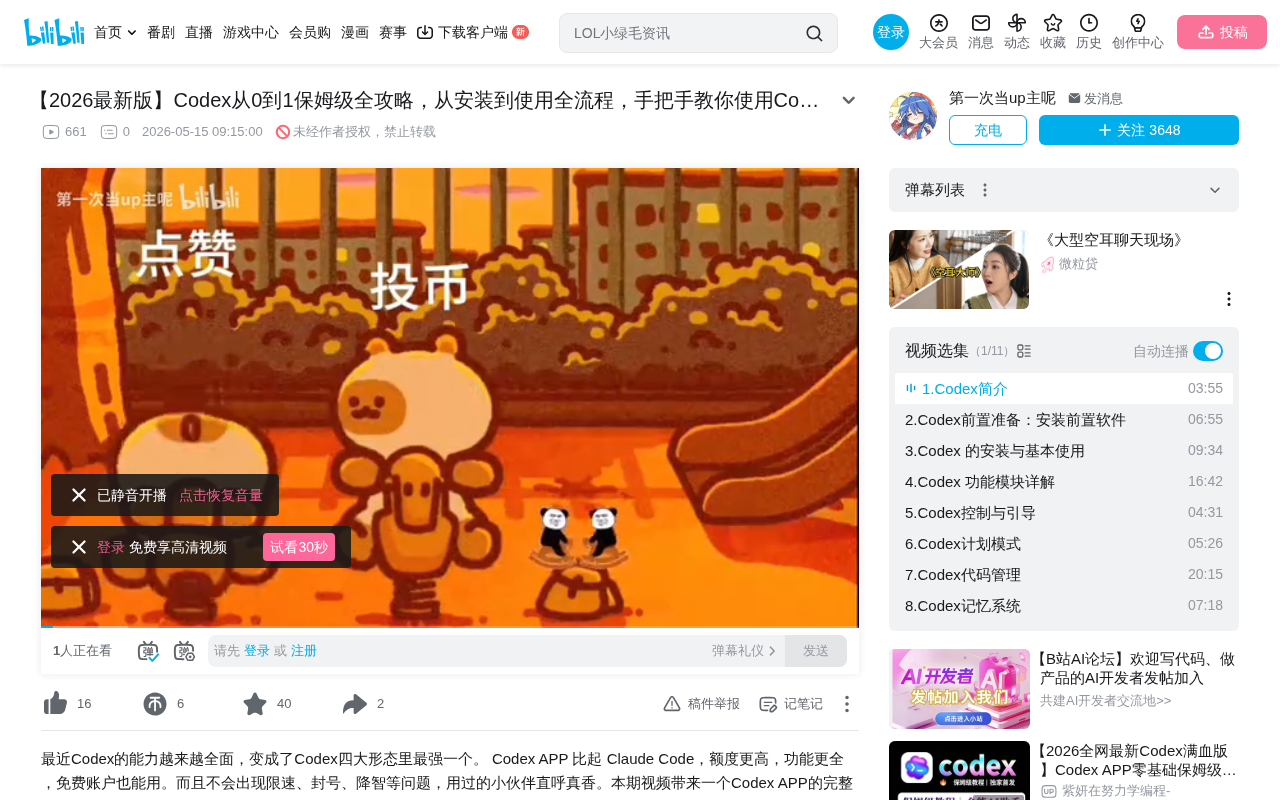
OpenAI Codex Tutorials Mass-Copied on Bilibili, Highlighting AI Content Farm Problem
At least 9 Bilibili accounts mass-published identical OpenAI Codex tutorial videos, exposing content farm operations in the AI tools space.
 Industry Insights
Apple's AI Meltdown: The Siri Power Struggle and the Full Story Behind Apple Intelligence's Failure
Deep dive into why Apple's AI strategy failed: faked WWDC demos, Siri's 14-year stagnation, internal AI team wars, the ChatGPT shock, and what comes next.