How to Choose an AI Agent Framework in 2026? Pros and Cons of Four Leading Solutions

A practical guide to choosing the right AI Agent framework in 2026 based on your skill level and goals.
This article systematically compares four categories of mainstream AI Agent frameworks: the zero-barrier Coze, developer-focused AutoGen/CrewAI/LangChain, and AutoGen Studio which balances ease of use with flexibility. It analyzes each framework's strengths and weaknesses across dimensions like coding requirements, private deployment, and commercialization, offering tailored recommendations and learning paths for beginners, developers, and business professionals.
With the rapid evolution of AI Agent technology, a wide variety of agent development frameworks have emerged. From no-code visual platforms to professional frameworks requiring deep programming expertise, the sheer number of options can be overwhelming. This article provides a systematic comparison of today's leading AI Agent frameworks based on hands-on experience, helping readers with different backgrounds find the solution that best fits their needs.
What Is an AI Agent Framework?
An AI Agent framework is a collection of tools for building intelligent agent applications. In simple terms, it provides a standardized way for developers to define an agent's roles, skills, and workflows, while integrating the capabilities of large language models with external tools and data sources.
First, it's important to understand what an AI Agent actually is. An AI Agent is an AI system capable of perceiving its environment, making autonomous decisions, and taking actions to achieve specific goals. Unlike traditional single-turn Q&A AI, agents possess capabilities such as memory, planning, tool usage, and self-reflection. Since 2023, as the reasoning capabilities of large language models like GPT-4 have taken a leap forward, agents have rapidly moved from academic concepts to engineering reality. Stanford University's "Generative Agents" experiment, the viral success of AutoGPT, and OpenAI's launch of Function Calling as a core API capability all marked the entry of agent technology into a practical stage. By 2026, agents have evolved from single-agent systems to Multi-Agent collaboration paradigms, capable of simulating team-based division of labor to accomplish complex tasks.
Different frameworks vary significantly in their positioning: some target zero-experience users with out-of-the-box experiences, while others cater to professional developers with highly flexible programming interfaces. The core factors to consider when choosing a framework include: ease of getting started, private deployment capability, extensibility, and commercialization potential.
In-Depth Comparison of Four Leading AI Agent Frameworks
1. Coze (扣子): The Zero-Barrier Entry Point
Coze is an agent development platform launched by ByteDance, and its biggest feature is being ready to use out of the box.
Pros:
- Extremely easy to get started — no programming skills required
- Visual interface with drag-and-drop workflow building
- Great for quick experimentation and prototype validation
Cons:
- No private deployment — this is the most critical drawback. On the Coze platform, all runtime environments and data storage depend on the platform provider. You cannot migrate your built agents to your own servers
- Limited commercialization — cannot integrate products into enterprise internal systems
- All capabilities are "locked in" by the platform, leaving minimal room for customization
It's worth elaborating on why private deployment matters so much. Private deployment means deploying a software system on an enterprise's own servers or private cloud environment, rather than relying on a third-party SaaS platform. For AI Agent applications, its importance manifests on three levels: First, data security — core business data, customer information, and knowledge base content stay within the internal network, meeting compliance requirements for industries like finance, healthcare, and government. Second, operational control — no dependency on the platform provider's service interruptions, pricing changes, or feature modifications. Third, deep integration — seamless connection with existing enterprise systems such as ERP, CRM, and OA. In the Chinese market, where data cross-border transfer and information security regulations are becoming increasingly strict, private deployment capability has become a hard requirement for enterprises when selecting AI frameworks.
Best for: Users who want to experience the AI Agent concept or build small personal tools for fun. However, if you have long-term product or commercialization plans, Coze is not the ideal choice.
2. AutoGen / CrewAI / LangChain: The Standard Arsenal for Developers
These three frameworks are arguably the most popular choices in the current AI developer community, and they have become the standard toolkit for programmers building AI products.
Although often mentioned together, these three frameworks have significantly different design philosophies. LangChain was the earliest LLM application development framework (released in late 2022), with the core concept of "chain-based invocation" — linking Prompt templates, model calls, output parsing, and tool usage into reusable Chains. It later expanded with LangGraph for building stateful, multi-step Agent workflows. AutoGen, developed by Microsoft Research, centers on "conversation-driven multi-agent collaboration" — multiple agents complete tasks through structured dialogue, with support for Human-in-the-loop, and excels particularly in code generation and complex reasoning scenarios. CrewAI draws inspiration from real-world team management, defining agents with "Role, Goal, and Backstory," and orchestrating collaboration through "Tasks" and "Processes." Its API design is more intuitive, with a relatively gentler learning curve. Developers should choose based on project characteristics: LangGraph for fine-grained workflow control, AutoGen for multi-agent conversational collaboration, and CrewAI for quickly assembling role-based teams.
Pros:
- Highly flexible, supporting complex multi-agent collaboration scenarios
- Active communities with rich documentation and tutorial resources
- Deep customization of agent behavior logic
- Support for private deployment and commercialization
Cons:
- High programming barrier — solid Python development skills are a must
- Requires understanding of underlying AI principles, including LLM API calls and Prompt engineering
- Environment setup and debugging can be relatively complex
Best for: Developers with strong programming skills, especially technical teams looking to build enterprise-grade AI applications. If you're a programmer, pick one of these three to dive deep into — there's no need to try to learn all of them.
3. Microsoft AutoGen Studio: The Best Balance for Business Users
Microsoft's AutoGen Studio occupies a unique position — it is open-source while also providing a standardized visual interface.

Pros:
- No need to write extensive code — after setting up the environment, you can build agents through the interface
- Standardized workflow: Configure skills → Define roles → Design processes → One-click run
- Open-source and free, with private deployment support
- Supports integration with custom knowledge bases and external tools
- Experience similar to OpenAI's GPTs, but with greater flexibility
Cons:
- Still requires some environment configuration skills
- Advanced customization capabilities are slightly limited compared to pure-code frameworks
Best for: Business professionals who don't know much about coding but want to create deployable, commercially viable products. It strikes an excellent balance between ease of use and flexibility, and is particularly suitable for enterprise users with technical team support for secondary packaging and feature extension.
How to Choose an AI Agent Framework Based on Your Situation
The core logic for choosing a framework is actually quite simple — it comes down to three dimensions:
| Dimension | Coze | AutoGen/CrewAI/LangChain | AutoGen Studio |
|---|---|---|---|
| Programming Required | None | High | Low |
| Private Deployment | ❌ | ✅ | ✅ |
| Commercialization | ❌ | ✅ | ✅ |
| Time to Get Started | Fastest | Slowest | Moderate |
| Customization Flexibility | Low | Highest | Moderate |
Decision Guide:
- Pure exploration / personal toy → Coze — up and running in 5 minutes
- Professional development / enterprise products → Pick one from AutoGen, CrewAI, or LangChain
- Business-driven / rapid deployment → Microsoft AutoGen Studio
Recommended Learning Path for AI Agents
Regardless of which framework you choose, learning AI Agents requires building a systematic knowledge base. Here's a recommended learning path:
Foundation Stage
- Understand the basic principles of large language models (Transformer architecture, Prompt engineering)
- Master Python fundamentals (if taking the code route)
- Learn about API calls and basic web development concepts
Regarding Transformer architecture and Prompt engineering — these two are the cornerstones of understanding modern AI. Transformer is a deep learning architecture proposed by Google in the 2017 paper Attention Is All You Need. Its core innovation is the Self-Attention mechanism, which allows the model to attend to information at all positions simultaneously when processing sequential data, rather than processing step by step like RNNs. This architecture laid the foundation for all modern large language models, including GPT, BERT, LLaMA, and others. Understanding the basic principles of Transformers (such as tokenization, embedding vectors, attention weights, feed-forward networks, etc.) helps developers better understand the model's capability boundaries and failure modes. Prompt engineering is the technique of guiding models to produce desired outputs by carefully designing input text, without modifying model parameters. Common techniques include Few-shot Learning (providing examples), Chain-of-Thought (guiding step-by-step reasoning), and role setting (System Prompt). In Agent development, Prompt engineering directly determines the quality of an agent's behavior.
Intermediate Stage
- Deep dive into RAG (Retrieval-Augmented Generation) technology
- Master Function Calling and tool invocation mechanisms
- Learn design patterns for multi-agent collaboration
RAG (Retrieval-Augmented Generation) is a key technology for solving the "knowledge cutoff" and "hallucination" problems of large language models. It works as follows: when a user asks a question, the system first retrieves the most relevant content fragments from an external knowledge base (such as enterprise documents, databases, web pages, etc.), then feeds these fragments as context along with the user's question into the large model, allowing it to generate answers based on real data. The RAG tech stack typically includes: document parsing and chunking, text vectorization (Embedding), vector database storage and retrieval (e.g., Milvus, Pinecone, Chroma), and retrieval result reranking. In Agent scenarios, RAG enables agents to access up-to-date, domain-specific knowledge, making it the core technology for building enterprise-grade knowledge Q&A, intelligent customer service, and document analysis applications. Advanced RAG approaches also include Graph RAG (knowledge graph-based retrieval) and Agentic RAG (where the Agent autonomously decides when and what to retrieve).
Function Calling is a key capability introduced by OpenAI in June 2023, subsequently adopted widely by major model providers. It allows large language models to identify user intent during conversations and output the function name and parameters to be called in structured JSON format, rather than directly generating natural language responses. For example, when a user asks "What's the weather like in Beijing today?", the model won't fabricate an answer but instead outputs an instruction to call a weather API (function name: get_weather, parameter: city=Beijing). The developer's application receives this instruction, executes the actual API call, returns the result to the model, and the model then generates a final answer based on real data. Function Calling is the technical foundation that enables agents to "use tools" — whether querying databases, sending emails, manipulating file systems, or calling third-party services, all are achieved through this mechanism. In multi-agent frameworks, each Agent can be assigned different tool sets, enabling specialized division of labor.
Hands-On Stage
- Choose a framework and start practicing with simple projects
- Gradually build complete agents with knowledge bases, tool invocation, and multi-turn dialogue
- Experiment with private deployment and performance optimization
Key Principle: Different learning goals dictate different priorities. If your goal is employment, focus on hands-on projects with mainstream frameworks. If your goal is research, devote more attention to papers and cutting-edge technologies. Determine your learning focus based on the most pressing problem you need to solve right now, and avoid blindly pursuing "comprehensive coverage."
Conclusion
By 2026, the AI Agent ecosystem has become quite mature. Choosing a framework is no longer about "which one is the best" but rather "which one is the best fit for you." Zero-experience users can start with Coze to experience the magic of intelligent agents, programmers should jump straight into AutoGen, CrewAI, or LangChain to build professional applications, and business professionals can leverage AutoGen Studio to achieve private agent deployment without writing code.
Most importantly: Pick a direction and take action immediately — don't overthink the framework choice. Technology iterates rapidly, and accumulating core competencies is far more valuable than any individual tool.
Related articles
 Product Reviews
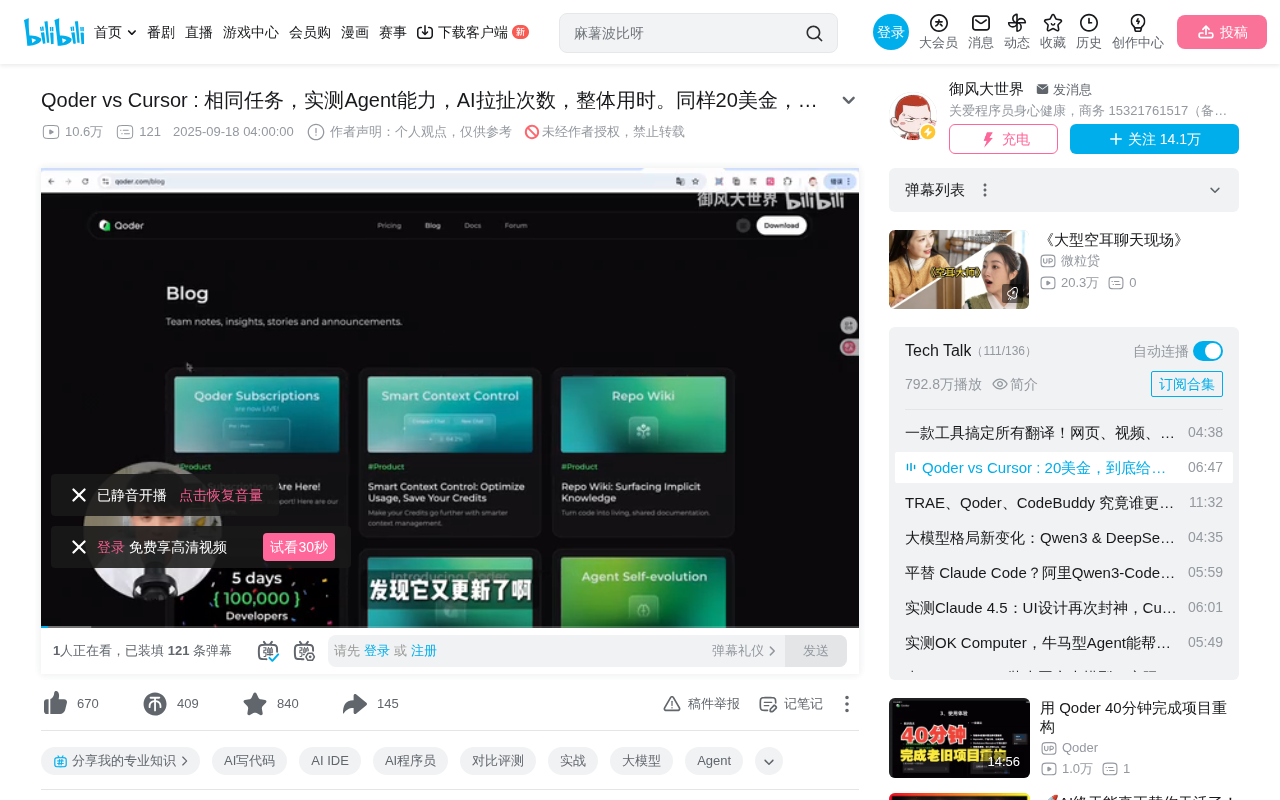
Qoder vs Cursor Real-World Comparison: Which $20/Month AI IDE Is Better?
Hands-on comparison of Qoder vs Cursor AI IDEs: Agent autonomy, human interaction count, and architecture decisions. Qoder needed only 2 interactions vs Cursor's 8.
 Product Reviews
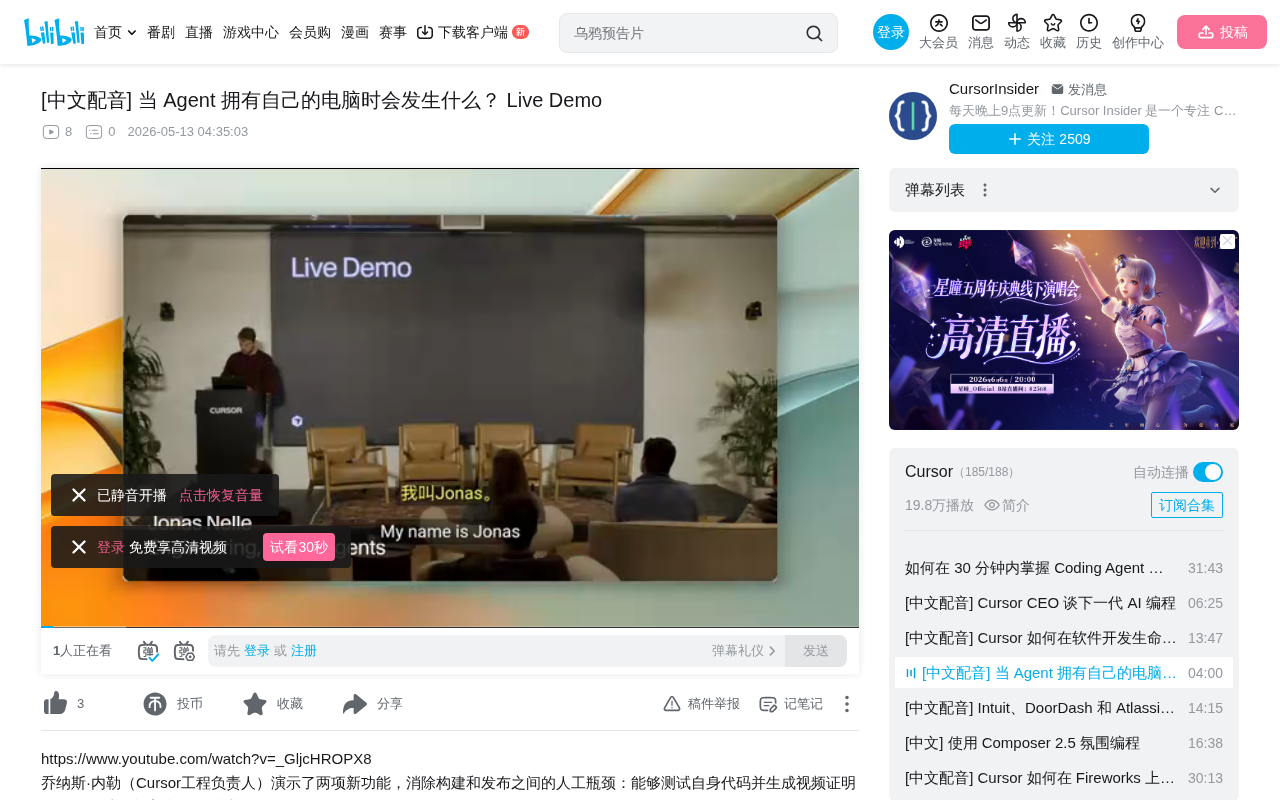
Cursor Cloud Agent Demo: Eliminating Bottlenecks Across the Entire Software Development Lifecycle
Deep analysis of Cursor's Cloud Agent demo showing how cloud VMs, automated test artifacts, and a full-chain control plane systematically eliminate human bottlenecks across the software development lifecycle.
 Product Reviews
Cursor 3.0 Deep Dive: Multi-Agent Parallelism, Design Mode, and Best-of-N Model Comparison
Cursor 3.0 evolves from an AI coding assistant into an Agent fleet command center. Explore multi-agent parallelism, Design Mode, and Best-of-N model comparison.