5 Actionable AI Money-Making Paths for Ordinary People: A Deep Dive

Five practical AI monetization methods ordinary people can start today during the early AI boom.
The article argues that the AI industry is in an early dividend stage similar to mobile internet in 2010, with massive information asymmetry and insufficient supply. It breaks down 5 AI monetization methods for ordinary people: developing AI mini programs/apps, AI account proxy reselling, AI matrix account content farming, lightweight AI paid services (fortune telling, naming, etc.), and local large model deployment and fine-tuning. The core message is that initiative and trend sensitivity matter more than technical ability, and the window of opportunity is limited — act now.
The Window for AI Monetization Is Opening Now
The AI industry is currently in its very early stages, similar to where mobile internet was around 2010. That year, the iPhone 4 launched, Android was rapidly gaining adoption, and the App Store had just crossed 300,000 apps. Back then, simple utility apps (flashlights, calculators, ringtone downloaders) could easily rack up millions of downloads, and developers could earn tens of thousands per month from ad revenue alone. These opportunities vanished quickly after 2013 as the market matured. The AI industry is at a similar inflection point: the infrastructure (large model APIs) has just matured, user demand is surging while supply remains severely insufficient, and information asymmetry is enormous — this is the golden window for individual entrepreneurs.
For ordinary people, this means a wealth of low-barrier money-making opportunities remain largely untapped. A Bilibili creator summarized 5 AI monetization methods suitable for everyday people. While they may seem simple or even "unsophisticated," people are quietly making real money with them.
This article breaks down the underlying logic, practical difficulty, and revenue potential of each method to help you determine which path suits you best.
Method 1: Developing AI Products (Mini Programs/Apps) for Monetization
Core Logic
Search for keywords like "AI face swap" or "AI old photo restoration" in major app stores, and you'll find numerous small apps with hundreds of thousands of downloads. These apps typically use a subscription model, with 99 RMB/year being a common price point.
Practical Barriers
The technical difficulty of these AI products is far lower than you might imagine — the backend is essentially just calling APIs from large models like GPT. "Calling an API" means developers don't need to train their own AI models; they simply send user input to servers from platforms like OpenAI or Baidu's ERNIE via HTTP requests, then display the AI-generated results to users. In this model, developers are essentially "middlemen" — AI capabilities are provided by large model vendors, while developers handle product design and user experience.
Taking GPT-4o as an example, each API call costs approximately $0.01-0.03, while users might pay 1-3 RMB for a single "AI face swap" service — leaving a considerable profit margin. Developing a mini program frontend can be done for a total cost of 10,000-20,000 RMB. If you already have some AI tool proficiency, you can even use AI-assisted coding tools (like Cursor or GitHub Copilot) to compress development costs to near zero.
The key isn't technology — it's product selection and distribution. Find real user pain points, package the product well, and optimize for app store visibility (ASO), and you can continuously attract organic traffic. ASO refers to optimizing app titles, keywords, descriptions, screenshots, and other elements to improve search ranking in app stores. It's the core method for acquiring free traffic, equivalent to SEO in the website domain.
Method 2: AI Account Reselling and Proxy Services
Market Status
This is currently one of the most "aggressive" monetization methods in the AI space. According to the creator, someone selling shared MidJourney accounts has sold over 200,000 copies. There are also various forms like GPT account sharing and Claude account pooling.
MidJourney is an AI image generation tool that runs on the Discord platform, with subscription fees ranging from $10-60/month, requiring overseas payment methods (Visa/Mastercard credit cards). Claude is a large language model developed by Anthropic that excels in long-text comprehension and code generation, also requiring overseas network access. For Chinese users, payment barriers and network barriers create a dual obstacle — this is precisely the market foundation for proxy services.
How It Works
Technically, you only need to set up a proxy server to resell overseas AI services to domestic users. "Shared accounts" typically come in two forms: one where multiple people share a single paid account, and another where an API relay is used to build a domestically accessible mirror service, allowing users to access AI capabilities through a relay station. The latter technically requires an overseas server as a proxy node to forward user requests to AI service providers. Due to information asymmetry and payment barriers, a large number of users are willing to pay for "convenience."
It's worth noting that this approach carries certain compliance risks — primarily involving unauthorized commercial resale, potential data cross-border transfer compliance issues, and violations of platform terms of service. Account sharing may also violate platform ToS, leading to account suspension risks. However, from a market demand perspective, as long as access barriers exist between overseas AI services and domestic users, this business won't disappear.
Method 3: AI Batch Content Generation for Matrix Account Traffic
Operating Model
Use AI to batch-generate content, then publish at scale through matrix accounts (dozens of accounts operating simultaneously). The essence is "playing the odds" — some content will inevitably go viral.
The underlying logic of this approach is based on social media platform content distribution mechanisms. Taking Douyin (TikTok China) and Xiaohongshu (RED) as examples, platforms use a "horse racing mechanism" — each piece of content is first pushed to a small audience (typically 200-500 people), and metrics like completion rate, like rate, and comment rate determine whether it enters larger traffic pools. When you simultaneously operate 50-100 accounts publishing hundreds of pieces of content daily, even if the viral probability per piece is only 1%, you can consistently produce viral content overall.
Typical content directions include:
- "Things every woman must know before turning 30"
- "Understanding these points is how women marry into wealthy families"
- Various emotional growth and relationship soft articles
Monetization Pipeline
After generating traffic, funnel followers into private domains (WeChat personal accounts, community groups, and other channels for repeated engagement), then sell them to various organizations — relationship consulting, wellness courses, paid knowledge products, etc. Traffic resale is typically priced by follower quality, with female followers in the emotional/relationship niche valued at approximately 3-10 RMB per person. Once someone trains their AI prompts, a single piece of content can spawn hundreds of variations with extreme efficiency.
The core competitive advantage of this AI matrix account approach isn't content quality — it's scalable operations capability and understanding of platform algorithms. Note that platforms are implementing increasingly strict detection mechanisms for bulk registration and automated posting, so operators need to find a balance between efficiency and risk control.
Method 4: AI Lightweight Paid Services
Case Studies
- AI Fortune Telling: Packaged as "AI destiny analysis," charging 9.9 RMB per session
- AI English Name Generator: Generating personalized English names based on user information, 9.9 RMB per session
- AI Resume Optimization, AI love letter writing, etc.
Why Do People Pay?
The essence of these services is information asymmetry + packaging. Information asymmetry is a classic economics concept referring to unequal information between transaction parties. In the AI space, this inequality is particularly pronounced: statistics show that as of late 2024, the proportion of China's population that has actually used AI chat tools doesn't exceed 10%, and those who can skillfully write prompts account for less than 1%.
Users could absolutely chat with AI themselves to get the same results, but most people don't know how to ask the right questions or are too lazy to do it themselves. As long as you package the service professionally enough and price it low enough (not expensive enough to cause hesitation), conversion rates won't be bad. The 9.9 RMB pricing strategy leverages the "mental accounting" effect from behavioral economics: the amount is low enough to require zero decision-making cost, users barely hesitate, and impulse purchase probability is extremely high.
This is the classic "selling shovels" logic — you don't need to invent AI, you just need to translate AI capabilities into services that ordinary people can understand and use. Just as shovel sellers during the Gold Rush earned more consistently than gold miners, selling "user-friendly packaging of AI capabilities" in the AI era is often easier to monetize than developing AI itself.
Method 5: Local Large Model Deployment and Fine-Tuning Services
Demand Sources
Many enterprises, due to data security concerns, don't allow external network connections and cannot use online AI services (like Coze, Dify, etc.). Yet they have clear AI application needs — such as internal knowledge base Q&A, contract review, customer service automation, and other scenarios — creating a market for local deployment. Industries with extremely high data compliance requirements like finance, healthcare, and government affairs find local deployment virtually the only option.
Pricing and Technical Barriers
Deploying a local AI agent typically costs several thousand RMB. Currently, relatively few people possess this skill, so competition isn't fierce. You need to understand:
- Open-source large model selection: Llama is Meta's open-source large language model series; the latest Llama 3.1 supports parameter scales from 8B to 405B, suitable for different computing power conditions. Qwen (Tongyi Qianwen) is Alibaba's open-source model that excels at Chinese language tasks, making it more suitable for domestic enterprise scenarios
- Local deployment tools: Ollama is a tool that simplifies local model deployment — users can run open-source models locally with a single command, dramatically lowering the deployment barrier. vLLM is a high-performance inference engine that optimizes GPU memory utilization through technologies like PagedAttention, enabling a single GPU to serve more concurrent requests
- Basic model fine-tuning methods: Fine-tuning refers to secondary training on a pre-trained model using enterprise-specific data to make model outputs better aligned with business needs. Common fine-tuning methods include LoRA (Low-Rank Adaptation), which only trains 0.1%-1% of model parameters, dramatically reducing computing power requirements — a consumer-grade GPU (like an RTX 4090 with 24GB VRAM) can complete small-scale fine-tuning
This is the highest technical barrier among the 5 methods, but it's also the most sustainable and professionally defensible AI money-making direction. As enterprise AI application demand explodes, this market's ceiling is far higher than the other approaches.
Core Takeaway: Sensitivity Matters More Than Technical Skill
The common characteristic of these 5 AI money-making methods is: the barrier isn't high, but you need initiative and sensitivity to trends.
AI is currently in its very early stages. Whether you choose to find an AI-related job, pursue an AI side hustle, or start an AI business, the most important thing is to start moving. Those who neither learn AI tools, nor follow industry developments, yet still hope to make money from AI, will ultimately become the ones being harvested — contributing tuition fees to others' "AI courses" and "AI bootcamps."
Real opportunities belong to those willing to spend time understanding AI's capability boundaries and quickly converting them into commercial value. History repeatedly proves that the dividend period of technological revolutions typically lasts only 3-5 years. Once markets become fully competitive and giants enter the field, the opportunity window for individual entrepreneurs narrows dramatically. Now is the best time.
Related articles
 Industry Insights
AI Product Development in Practice: Model Selection, Building Moats, and Paths to Commercialization
Practical strategies for AI product development: why not to train models from scratch, when to use APIs vs. fine-tuning, building product moats, and the full path from evaluation systems to commercialization.
 Industry Insights
No Product Fits Your Needs? Building It Yourself Is the Best Starting Point for Indie Developers
Can't find a product that fits? Building from personal pain points is the best entry for indie developers. Niche needs + AI tools = rapid product creation.
 Industry Insights
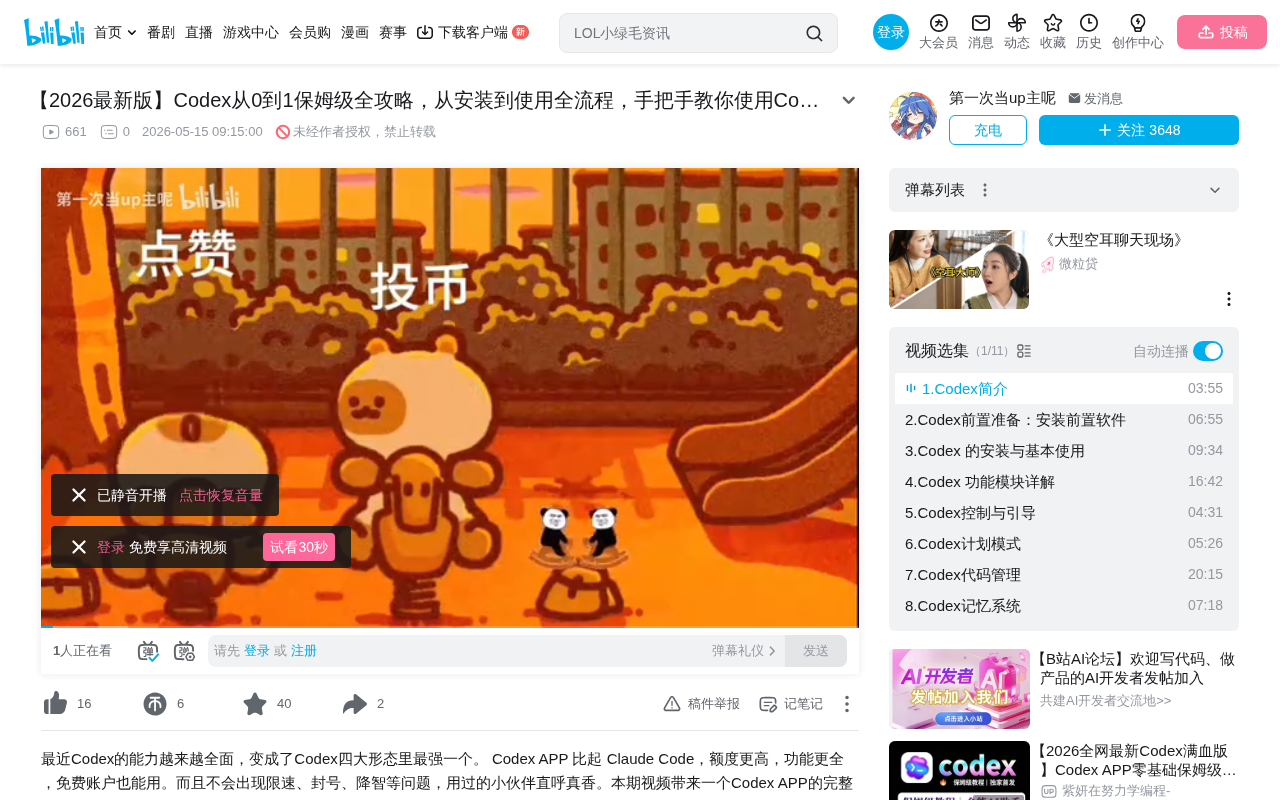
OpenAI Codex Tutorials Mass-Copied on Bilibili, Highlighting AI Content Farm Problem
At least 9 Bilibili accounts mass-published identical OpenAI Codex tutorial videos, exposing content farm operations in the AI tools space.