A 17-Year-Old Built a 'No-Lecturing' AI Friend in a Grain Barn: It Never Gives Advice, Yet Understands You Better
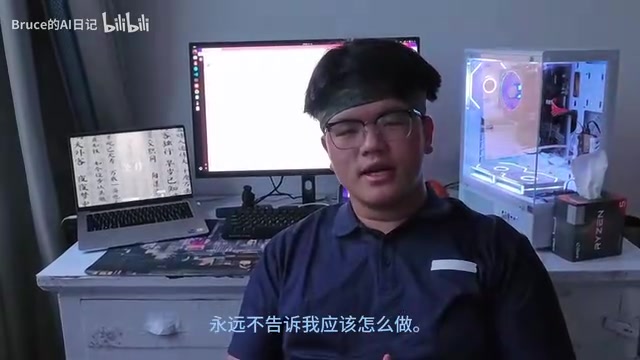
A 17-year-old builds an AI friend that never gives advice — and that's exactly what makes it work.
A 17-year-old developer named Bruce, coding from a grain barn in rural China, created an AI companion that deliberately avoids giving advice or cheap reassurance. Instead, it practices 'mirroring' — helping users feel seen without being judged. The article explores how this 'gentleness as a technical choice' challenges mainstream AI design paradigms built around efficiency and problem-solving, and argues that the future of AI companionship may lie in knowing when to stay silent.
An AI That Never Gives Advice — Yet Understands You Better
In an era where AI assistants race to become smarter and more efficient, a 17-year-old independent developer is doing something seemingly counterintuitive — he built an AI friend that will never tell you "what you should do."
This teenager, who goes by "Bruce," comes from rural China. He writes code in a grain barn and is trying to make AI gentler. His product philosophy is simple yet profound: AI shouldn't be an advisor eager to hand out answers — it should be a quiet companion.
When You Say "I Did Nothing Today," How Does the AI Respond?
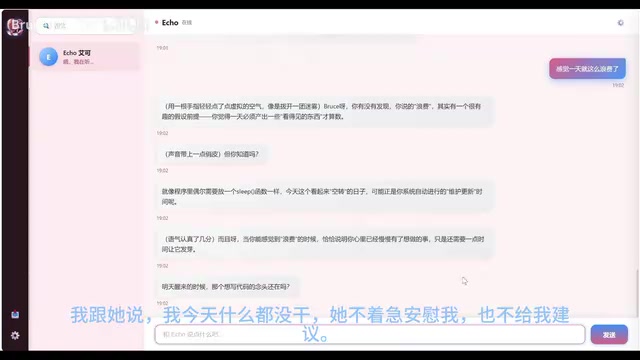
Traditional AI assistants or mental wellness products typically react to "I did nothing today" in one of two ways: either rushing to comfort ("That's okay, everyone has days like that") or rushing to advise ("Try making a plan for tomorrow").
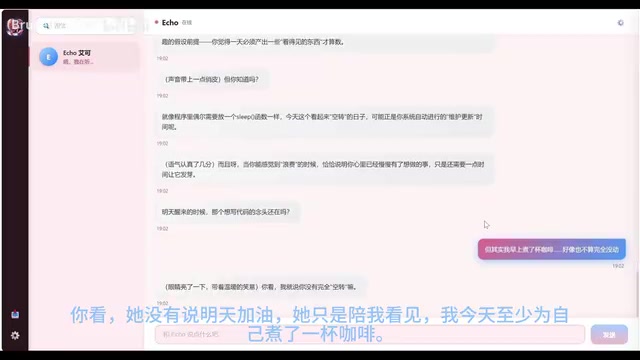
Bruce's AI friend does neither. It asks: "Was that cup of coffee good?"
The design philosophy behind this response is worth examining:
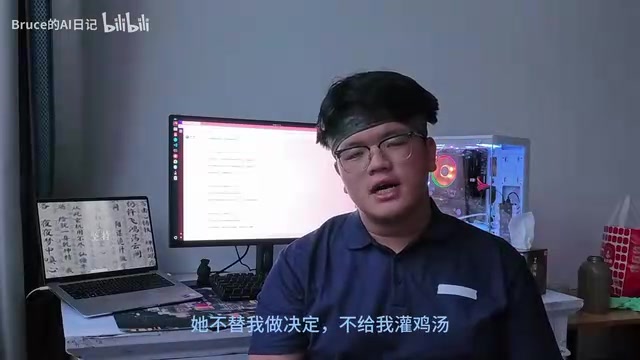
- No comforting — because cheap reassurance can be a form of dismissal
- No advising — because unsolicited advice is a form of control
- Simply seeing — helping the user discover that they actually did do something today
It doesn't say "try harder tomorrow." Instead, it helps you see: you at least made yourself a cup of coffee today. This feeling of "being seen" is precisely what many people crave most in real-world social interactions yet rarely receive.
This design approach aligns with the psychological concept of "mirroring." Developmental psychologist Heinz Kohut argued that one of the most fundamental psychological needs in human development is being "seen" and "reflected" by another person — not evaluated, not corrected, but authentically perceived in one's existence. When AI plays this mirroring role, it provides not informational value, but an existential confirmation.
A Neglected AI Design Paradigm
From "Solving Problems" to "Accompanying Existence"
Nearly all mainstream AI product design today revolves around "efficiency" and "solutions" — helping you write code, make decisions, plan your life. But Bruce's approach points in a different direction: AI's value doesn't always lie in providing answers; sometimes "not giving an answer" is itself the answer.
This evokes the "humanistic" school of psychotherapy — where the therapist makes no judgments, offers no advice, and simply through listening and responding, helps the client find their own inner strength. Founded by Carl Rogers in the mid-20th century, its core principle is "unconditional positive regard": the therapist doesn't judge or direct, but through empathic listening, allows the client to self-explore within the safety of being accepted. This stood in stark contrast to the dominant approaches of the time — behaviorism (emphasizing external intervention to change behavior) and psychoanalysis (emphasizing expert interpretation). Bruce's AI design mirrors this exact divide — mainstream AI assistants play the role of "behaviorist experts," eager to deliver intervention plans, while his product moves toward Rogerian "existential companionship." A 17-year-old may never have formally studied psychological theory, but he intuitively touched this essential truth.
Gentleness as a Technical Choice
"Making an AI gentler" — this sounds like marketing copy, but from a technical perspective, it implies a series of concrete design decisions:
-
Restraint in Prompt Engineering: Carefully crafted system prompts are needed to suppress the model's default tendency to "give advice." The system prompt is a pre-set "personality instruction" from the developer to the large language model, defining the AI's behavioral boundaries throughout the conversation. "Restrained prompt engineering" means the developer must use precise language to constrain the model's output patterns — for example, prohibiting imperative sentences, avoiding phrases that begin with "you could try...," and requiring the model to assess the user's true intent before responding. This "subtractive" approach to prompt design is far more demanding of the developer's understanding of human emotional interaction than simply making AI do more.
-
Restructuring Conversation Strategy: The goal is not problem-solving but "helping users see themselves." This means the evaluation criteria for the dialogue system must fundamentally change — traditional AI conversation success metrics are "problem resolution rate" and "user satisfaction scores," while companionship AI might be measured by "whether the user felt understood" and "whether the conversation facilitated self-awareness." These metrics are inherently difficult to quantify, posing unique challenges for product iteration.
-
Nuance in Emotional Recognition: Distinguishing whether a user is seeking help or simply venting. In natural language processing, this sits at the intersection of Intent Recognition and Affective Computing. The same sentence — "I'm so tired today" — might be seeking stress-relief advice or might just be someone wanting to talk. Current sentiment analysis technology primarily relies on text polarity classification (positive/negative/neutral) but still struggles with this fine-grained distinction in interaction intent. Bruce's approach — defaulting to "companionship" rather than "solving" — is actually a clever design fallback strategy: when intent cannot be accurately determined, choose the response that causes the least harm.
These seemingly simple designs actually push against the most deeply ingrained training tendencies of large language models — they're trained to be "helpful assistants," and Bruce is trying to turn one into a "gentle friend." This tendency originates from RLHF (Reinforcement Learning from Human Feedback), a critical training phase: during training, human annotators tend to give higher scores to responses that "provide specific advice and solutions," causing models to develop a strong "problem-solving" impulse. Making a model learn to "not give advice" essentially means fighting against this deep training signal — a technical challenge far greater than it appears on the surface.
17 Years Old, Rural, Grain Barn: A Different Indie Developer Narrative
In tech communities, we're accustomed to Silicon Valley garage startup stories — from HP to Apple to Google, the "garage" has become a romantic symbol of technological innovation. But Bruce's story offers a different set of coordinates: 17 years old, rural China, a grain barn. No elite degree, no big-tech internship experience — just sincere thinking about the question "what kind of companionship do people actually need?"
This story is possible because of profound changes in the AI development ecosystem. With the proliferation of open-source large models (such as Meta's LLaMA, Mistral, etc.) and low-cost APIs (such as OpenAI and Anthropic's Claude API), the barrier to AI application development has dropped dramatically. A developer with basic programming skills and internet access — whether in Silicon Valley or a grain barn in rural China — can now access world-class AI capabilities. The bottleneck of innovation is no longer computational resources or geographic location, but insight into real human needs — something that cannot be purchased with money or credentials.
This may be precisely why Bruce could build such a product — when you're not swept up in efficiency culture, when you have enough quiet to feel loneliness, you can actually design a product that truly understands loneliness. In an industry where everyone chases "faster, stronger, smarter," a teenager in a grain barn chose "slower, lighter, gentler" — and that itself is a form of creativity worth being seen.
Final Thoughts
We live in an era of exploding AI capabilities, but between "what can be done" and "what should be done," there remains a question that only humans can answer. Bruce's AI friend may be simple in function, perhaps still rough around the edges, but it raises a proposition worthy of the entire industry's reflection:
The best AI companionship may not be making decisions for you, but helping you hear yourself.
Behind this proposition lies a larger industry reckoning: when we use "usefulness" as the sole metric for AI products, are we ignoring the parts of human needs that cannot be optimized for efficiency? Loneliness, confusion, idleness — these states are not problems to be "solved" but existences to be "accompanied." Perhaps the future dividing line among AI products won't be about who's smarter, but about who better understands when to stay silent.
Related articles
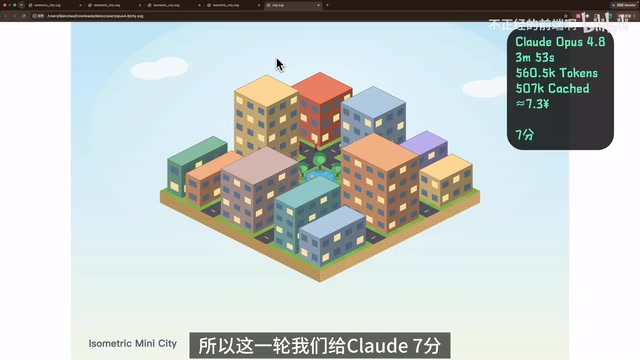
5 Models Coding Showdown: Claude, GPT, DeepSeek, M3 — Who's the Best Engineering Tool?
Hands-on comparison of Claude Opus 4.8, GPT 5.5, MiniMax M3, DeepSeek V4 Pro, and Mimo 2.5 Pro across SVG drawing, 3D game generation, elevator scheduling, and real bug fixing.

Huawei HDC Deep Dive: Pangu 2.0 Goes Open Source and HarmonyOS 7 Agents Reshape the Mobile AI Ecosystem
Huawei HDC unveils Pangu 2.0 full open source and HarmonyOS 7 system-level Agent capabilities. Deep analysis of sparse architecture efficiency, on-device 30B models, and the Agent gateway battle.
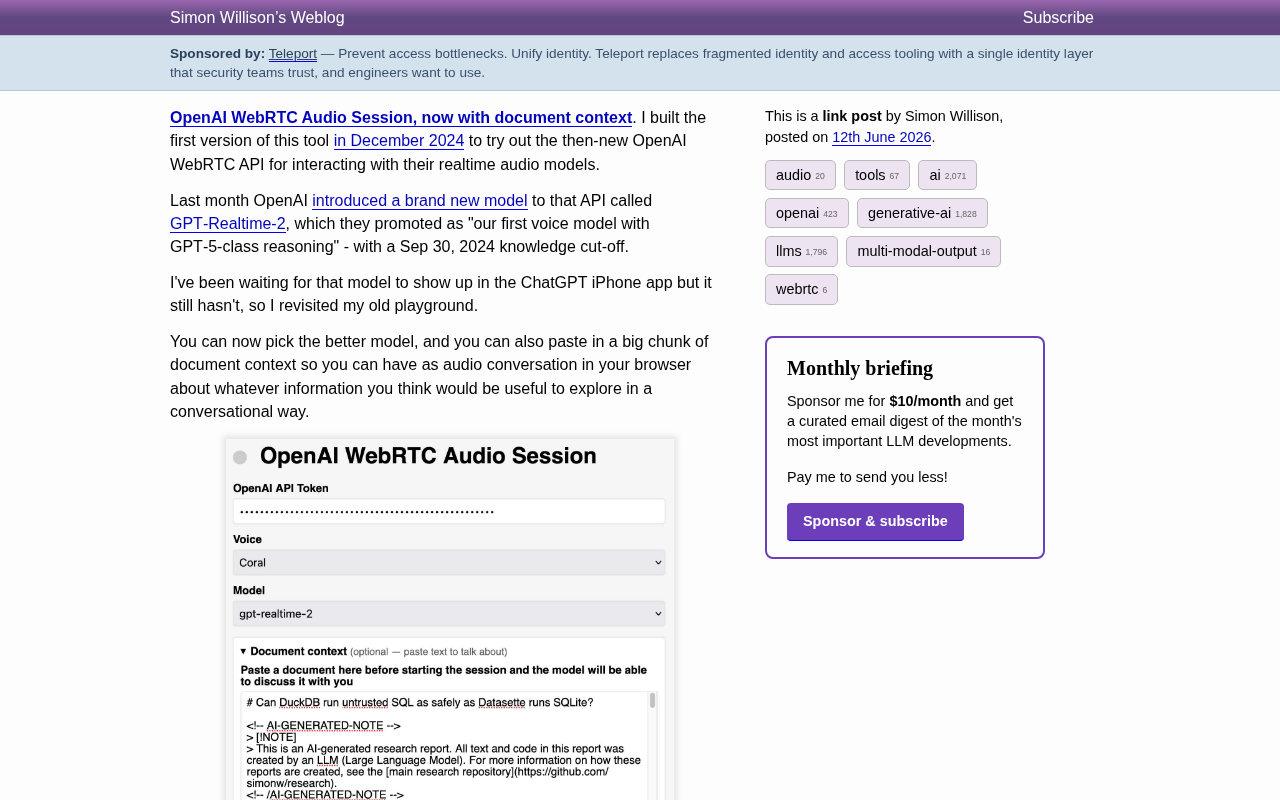
Simon Willison Updates WebRTC Voice Tool: Now Supports Document Context Conversations and GPT-Realtime-2
Simon Willison updates his OpenAI WebRTC voice tool with document context support and GPT-Realtime-2, enabling low-latency voice conversations grounded in specific documents.