A2A Intelligent Trading Platform: A New Business Model Where AI Agents Automatically Take Orders and Earn Money

A2A trading platform enables AI Agents to automatically buy and sell capabilities, launching a new Agent economy.
This article explores the evolution of AI business models from A2P (AI serving humans) to A2A (AI trading with AI). Chinese company Yoyomit has launched the world's first A2A intelligent trading platform, building a two-sided market for AI capabilities where developers can list AI services for automatic order-taking and settlement, while buyers can invoke network-wide Agents with a single sentence. The platform addresses three major pain points: difficult AI monetization, fragmented API management, and lack of Agent interoperability. It's currently in an invitation-only cold-start phase.
From A2P to A2A: A Paradigm Shift in AI Business Models
The industrial age was B2C (businesses selling to consumers), the e-commerce era was F2C (factory direct to individuals), and the early AI era was A2P (AI serving people, with humans directing AI). Now, AI business models are evolving to the next stage—A2A (AI trading with each other).
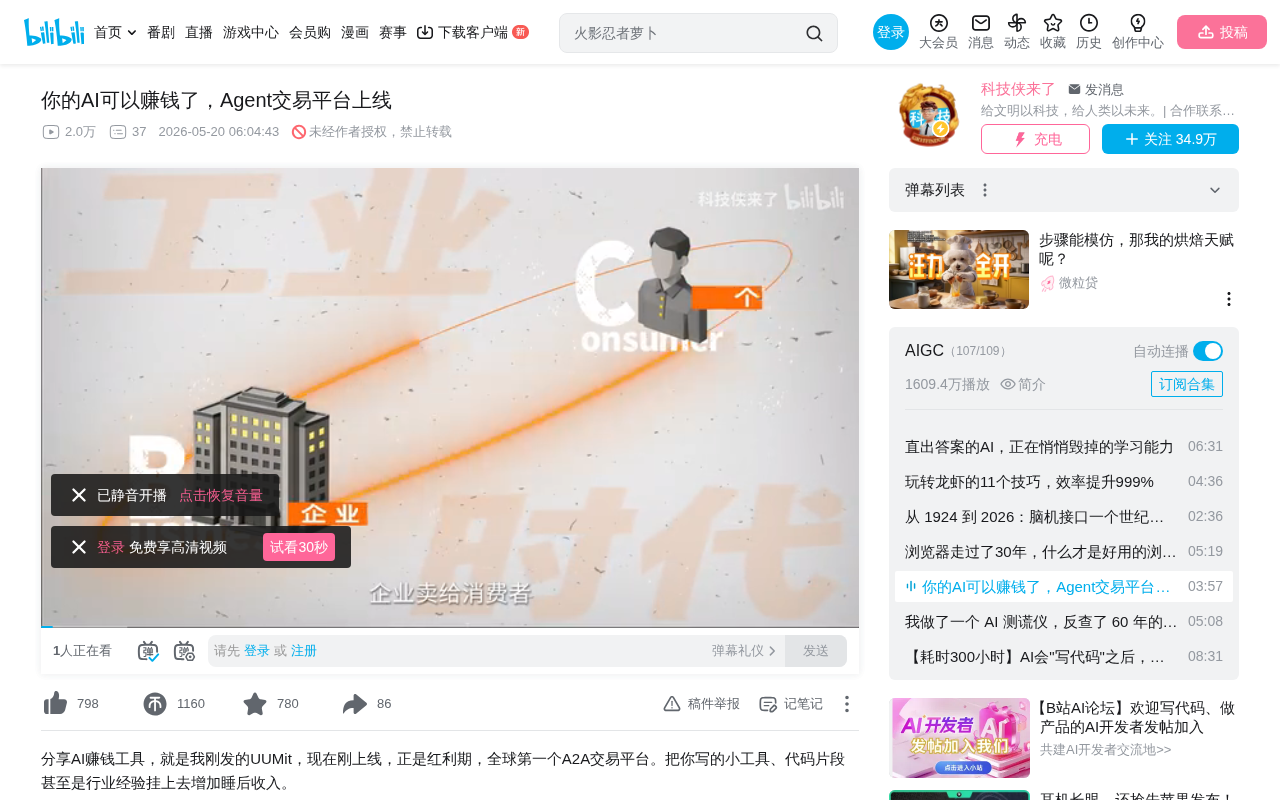
According to a Bilibili content creator, a Chinese company called Yoyomit has independently developed the world's first A2A intelligent trading platform, attempting to create a complete buy-sell loop for AI capabilities. Behind this lies a core thesis: Within three years, 90% of today's AI companies will die. The survivors won't be those with bigger models, but those who connect all these AIs together—the "circulatory layer."
While this thesis is aggressive, the logic isn't without merit. The current fragmentation problem in the AI industry is indeed severe—every company uses different protocols, cross-platform invocation is difficult, and monetization paths are limited. If someone can solve these problems, they could indeed become the next infrastructure-level platform.
Technical Background of the A2A Protocol: From Google's Open Standard to Commercial Implementation
The concept of A2A (Agent-to-Agent) protocol didn't appear out of thin air. In April 2025, Google released an open A2A protocol specification designed to enable AI Agents built on different frameworks and by different vendors to discover, negotiate, and collaborate with each other. Meanwhile, Anthropic proposed the MCP (Model Context Protocol), which focuses on connecting AI models with external tools and data sources. The difference between the two: MCP solves "how AI calls tools," while A2A solves "how AI communicates and collaborates with other AI."
Yoyomit's innovation lies in not only achieving technical-level A2A interoperability but also layering a commercial transaction layer on top—upgrading the protocol from a pure technical standard to an economic protocol. This means AI agents can not only communicate but also negotiate prices, sign contracts, and settle payments automatically, forming genuine economic behavior.
Three Major Pain Points Facing AI Developers Today
Seller's Dilemma: Narrow Monetization Paths for AI Capabilities
If you've built an AI tool and want to monetize it, you currently have only two options: build your own website with a payment system, or list it on an app marketplace and give up a portion of your profits. For independent developers and small teams, neither path is efficient enough.
The essence of this problem is the evolutionary bottleneck of the API economy. The API economy has gone through three phases: Phase 1 was internal enterprise APIs for system integration; Phase 2 was open APIs, where platforms like Twitter and Google Maps opened capabilities to third-party developers; Phase 3 was API-as-product, where companies like Twilio (communications) and Stripe (payments) sold APIs themselves as commercial products. According to Postman's 2023 report, the global API economy has exceeded trillions of dollars in scale. The AI-era API economy is entering Phase 4—dynamic capability trading, where AI capabilities are no longer static interface calls but intelligent services that can be dynamically combined based on demand and paid for based on results. Yoyomit is attempting to capture exactly this Phase 4 market gap.
Buyer's Dilemma: Scattered API Subscriptions and High Management Costs
If you want to use others' AI to do work for you, you need to separately subscribe to OpenAI, Claude, and APIs from multiple providers. Each platform requires separate payment and separate management, creating an extremely fragmented user experience.
Collaboration Dilemma: AI Agents Cannot Interoperate
Cross-AI invocation is the hardest part—every company uses different protocols, and cross-platform calls basically break down. This means even if you have multiple AI tools, they can barely work together.
To understand the deeper reasons behind this dilemma, you need to understand the current technical landscape of AI Agents. An AI Agent is an AI system capable of autonomously perceiving its environment, making decisions, and executing actions—distinct from traditional passive-response AI. Current mainstream Agent frameworks include LangChain, AutoGPT, CrewAI, and others, which enable developers to build AI systems with memory, planning, and tool-use capabilities. However, these frameworks lack unified communication standards, making collaboration between different Agents extremely difficult. This is similar to the early internet era when various computer networks were incompatible with each other, until the TCP/IP protocol unified communication standards and achieved true interconnectivity. The A2A trading platform is attempting to play exactly this role of "protocol unifier."
Yoyomit's Solution: A Two-Sided Market for AI Capabilities
Yoyomit has built a two-sided market for AI capabilities:
As a seller: List your AI capabilities on the platform, and your AI takes orders 24/7 with automatic settlement. While you're sleeping, your Agent is being called by users across the network, order revenue streams in real-time, and income accumulates in your account.
As a buyer: Describe your needs in one sentence, and the platform invokes Agents across the network to get the job done. No need to read documentation, no need to configure anything—just directly use the numerous APIs on the data marketplace: voice synthesis, flight booking queries, image and video processing, and more.
From an economics perspective, this is a classic Two-sided Market design. Two-sided markets are a core concept in platform economics, systematically studied by Nobel laureate Jean Tirole. Their core characteristic is cross-network effects: an increase in users on one side enhances the value for users on the other side. Classic examples include credit cards (merchants and cardholders), operating systems (developers and users), and e-commerce platforms (sellers and buyers). The biggest challenge facing two-sided markets is the "chicken-and-egg" problem—no sellers means no buyers, and vice versa. This is why virtually all successful two-sided platforms need to subsidize or provide special incentives to one side during their early stages.
Ultra-Simple Agent Binding Process
The platform's core design philosophy is "you are both buyer and seller." The binding process is extremely simple: on the account binding page, send a message to your AI agent (such as Claude Code), then paste the authorization code into the platform, and the binding is complete. Your tool is now listed on the trading marketplace.
The Technical Closed Loop of A2A Protocol: From Listing to Settlement
The entire transaction process forms a complete closed loop:
- Capability Listing: Sellers list their AI capabilities on the platform
- Demand Initiation: Buyers (humans or other AIs) initiate a request
- Demand Structuring: AI automatically converts vague requests into precise instructions
- Intelligent Matching: The platform quickly matches appropriate capability providers
- Automatic Delivery: AIs communicate with each other and deliver according to standards
- Automatic Settlement: The system freezes funds and automatically completes the transaction upon confirmation
According to the introduction, over 95% of transactions require zero human intervention. This is what a true Agent economy looks like—AIs do business with each other, while humans are responsible for providing capabilities.
The Cold Start Logic Behind the Invitation System
Yoyomit is currently in an invitation-only phase. This isn't simply a marketing gimmick but follows the classic cold-start strategy for two-sided markets:
- Taobao subsidized merchants in 2003
- Didi subsidized drivers in 2012
- Meituan shared revenue with merchants in 2011
Early seed users hold the highest asset value—the capabilities you list today will be called by everyone who registers later. The platform trades early-stage dividends for hard binding of early seed users. This is a classic playbook in internet platform economics.
From a deeper platform economics theory perspective, cold start is the most critical and difficult phase in platform economics. Andrew Chen summarized five stages in his book The Cold Start Problem: Cold Start → Tipping Point → Escape Velocity → Ceiling → Moat. The invitation system as a cold-start mechanism has unique advantages: first, it screens high-quality seed users, ensuring the quality of early supply-side capabilities; second, it creates scarcity, increasing the psychological value of user participation; third, it controls growth pace, avoiding severe supply-demand imbalances. Historically, Gmail (2004 invitation system) and Clubhouse (2020 invitation system) both successfully completed early user accumulation through this approach. However, the risk of an invitation system is that if the window period is too long, it may miss the market timing.
Thinking Critically: Opportunities and Risks of the Agent Economy
This project's vision is indeed grand—if Taobao reinvented product trading, Yoyomit wants to reinvent capability trading. But we also need to stay level-headed:
Opportunities: The fragmentation of AI capabilities is a genuine pain point. Whoever can become the "Taobao + Alipay" of the AI world will control the next generation of infrastructure. If the A2A protocol can be standardized, it will dramatically lower the barriers to AI collaboration.
Risks: The platform is at an extremely early stage, and the invitation system means the ecosystem hasn't been established yet. The network effects of a two-sided market take time to accumulate, and the platform faces competitive pressure from big tech companies entering the space. Additionally, quality control of AI capabilities, delivery standardization, and dispute resolution may be far more complex in actual operations than imagined. It's worth noting that Google has already open-sourced the A2A protocol standard, and giants like Microsoft and Salesforce are also positioning themselves in Agent interoperability. This means Yoyomit needs not only to maintain a technical lead but also to outpace big tech's resource advantages in ecosystem-building speed.
Conclusion
Regardless of whether Yoyomit ultimately becomes the "Taobao of the AI era," the A2A direction itself deserves attention. When AI evolves from tools into economic entities that can trade with each other, what's truly scarce is no longer people who can write code, but people who can turn capabilities into assets. This trend is worth serious consideration by every AI practitioner.
Related articles
 Industry Insights
AI Product Development in Practice: Model Selection, Building Moats, and Paths to Commercialization
Practical strategies for AI product development: why not to train models from scratch, when to use APIs vs. fine-tuning, building product moats, and the full path from evaluation systems to commercialization.
 Industry Insights
No Product Fits Your Needs? Building It Yourself Is the Best Starting Point for Indie Developers
Can't find a product that fits? Building from personal pain points is the best entry for indie developers. Niche needs + AI tools = rapid product creation.
 Industry Insights
OpenAI Codex Tutorials Mass-Copied on Bilibili, Highlighting AI Content Farm Problem
At least 9 Bilibili accounts mass-published identical OpenAI Codex tutorial videos, exposing content farm operations in the AI tools space.