Andrew Ng's Agent Skills Tutorial: A Complete Guide to Teaching AI Agents New Skills
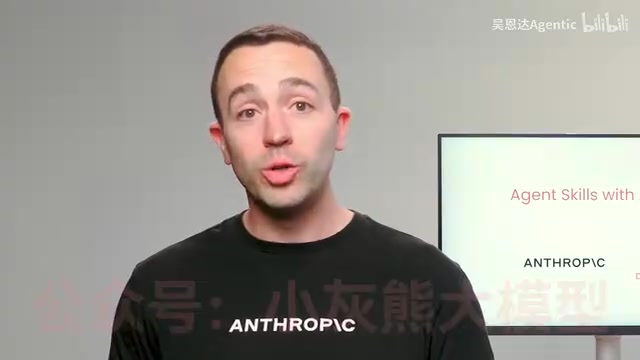
Andrew Ng's new course teaches how to extend AI agent capabilities through standardized, reusable skill files.
Andrew Ng and Anthropic's Agent Skills course teaches developers how to equip AI agents like Claude Code with new capabilities using standardized skill files. The course covers skill structure, progressive disclosure for context optimization, MCP integration, subagent orchestration, and practical applications spanning marketing, data analysis, code review, and research agents — all built on an open standard designed for cross-platform reusability.
Course Overview
Andrew Ng has partnered with Anthropic to launch a brand-new course — Agent Skills — taught by instructor Ellie Sherwick. The course focuses on how to equip AI agents like Claude Code with new capabilities, enabling them to perform a wide variety of tasks more efficiently.
Claude Code is Anthropic's command-line AI programming tool that allows developers to interact directly with the Claude model from the terminal to complete coding tasks. Unlike traditional IDE plugins, Claude Code runs natively in the terminal and can directly access the project file system, execute shell commands, run tests, and more. Its core advantage lies in full development environment awareness — it can read entire codebases, understand project structures, and execute build and test workflows. Claude Code is essentially an AI agent with file system access and code execution capabilities, making it a natural host for the Skills system.
The core idea of the course is simple: Skills are a set of instruction folders that extend an AI agent's capabilities through specialized knowledge. If you have a workflow you repeatedly ask an AI agent to execute, instead of explaining it from scratch every time, you can package it as a Skill so the agent automatically knows what to do.
What Are Agent Skills?
Basic Structure
At the heart of Skills is a standardized file structure. Each Skill must include a skill.md Markdown file that defines:
- Skill Name: A concise description of what the skill is
- Skill Description: An explanation of when the skill should be used
- Main Instructions: Detailed execution steps and rules
The main instructions can also reference other files, including scripts, additional Markdown files, as well as resource files like templates and images.
Progressive Loading Mechanism
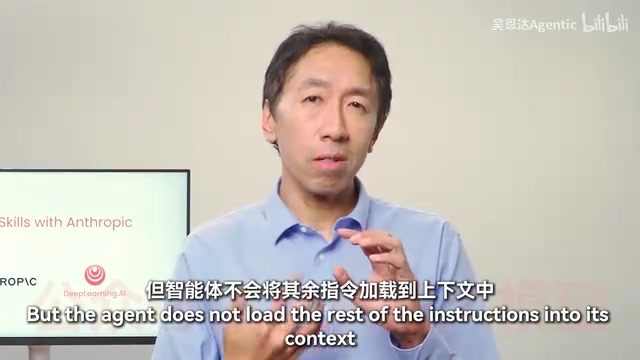
The course introduces a key design principle — Progressive Disclosure. This means the skill's name and description are always present in the agent's context window, but the agent won't load the remaining instructions into context until a user request matches the skill description. After that, the agent may additionally load referenced files and resource files as needed.
It's important to understand a key concept here: the context window is the maximum text length a large language model can process in a single interaction, typically measured in tokens. For example, Claude's context window can reach 200K tokens, while GPT-4 Turbo supports 128K tokens. Although windows are getting larger, context space remains a scarce resource — filling it with too much irrelevant information causes the model's attention to scatter, degrades reasoning quality, and increases API call costs. Progressive disclosure is an engineering optimization strategy designed specifically to address this bottleneck.
This design is remarkably elegant — it ensures the agent always "knows" which skills it has available while avoiding unnecessary context consumption, maximizing the use of the limited context window.
Skills as an Open Standard
Notably, Skills has now become an Open Standard. This means it has a standardized format and can work with any Skills-compatible agent. You only need to build a skill once and can deploy it across multiple agent products — achieving "write once, run anywhere."
The significance of Skills as an open standard can be compared to the HTML standard in web development or the OCI standard in container technology. When a technology format transitions from a proprietary implementation to an open standard, it typically triggers network effects — more developers participate in creating content, more platforms support the format, and ultimately a positive feedback loop forms an ecosystem. In the AI agent space, current agent tools (such as OpenAI's GPTs and Google's Gems) all use proprietary formats, making skills and configurations non-transferable across platforms. The emergence of the Skills open standard aims to break this fragmentation, enabling skill assets to flow freely between different agent products.
Foundational Tools for Running Skills
To enable AI agents to use skills, a set of foundational tools is required:
- File System Access: The ability to read and write files
- Batch Processing Tools: The ability to execute code
These tools enable agents to execute any commands required by a skill. Even more powerful is the ability for agents to combine Skills with MCP (Model Context Protocol) and Subagents to create robust agent workflows.
MCP is an open protocol launched by Anthropic in late 2024, designed to provide AI models with a standardized interface for interacting with external data sources and tools. Think of MCP as the "USB-C port" of the AI world — it defines a unified communication specification that enables AI agents to connect to databases, APIs, file systems, and various other external resources without writing custom integration code for each data source. MCP uses a client-server architecture where AI applications act as clients and various data sources expose their capabilities through MCP servers. This protocol has dramatically reduced the development complexity of AI agent interactions with the external world.
Subagents represent a multi-agent architectural design pattern where the main agent decomposes complex tasks and delegates them to specialized subagents for execution. Each subagent has its own independent context window (i.e., "isolated context"), meaning subagents aren't distracted by the main agent's full conversation history and can focus on their subtasks. This architecture is similar to the microservices concept in software engineering — improving overall system reliability and efficiency through separation of concerns and independent execution. Claude Code's subagent mechanism allows the main agent to spin up subagents for specific work when needed, then aggregate the results back to the main agent.
Here's an example of how the three work together:
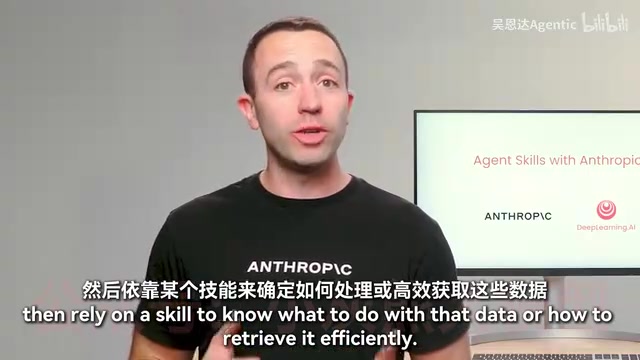
- Use MCP to fetch data from external data sources
- Rely on a Skill to determine how to process that data or how to retrieve it efficiently
- Delegate tasks to subagents with isolated contexts, which can themselves use Skills to access specialized knowledge
Detailed Course Curriculum
The course covers a complete learning path from beginner to advanced:
Part 1: Cloud API + Marketing Skills
Starting with the Cloud API, you'll create a marketing campaign skill and combine it with pre-built Excel and PowerPoint skills. This is a highly practical business scenario — automating marketing content generation and report creation.
Part 2: Content Creation and Data Analysis
Create two skills for content creation and data analysis workflows, tested through the Cloud API.
Part 3: Code Review and Testing
Combine Skills with Claude Code for code review and testing scenarios. This is an extremely appealing application direction for developers.
Part 4: Research Agent
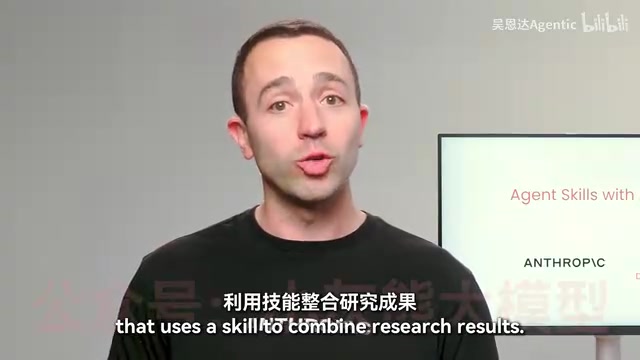
Use the Cloud Agent SDK to build a research agent that leverages Skills to synthesize research findings. The Cloud Agent SDK (also known as the Anthropic Agent SDK) is a Python development toolkit provided by Anthropic for building autonomous agent applications based on the Claude model. It encapsulates the core logic of the agent loop — the iterative process of model reasoning, tool invocation, and result processing — so developers only need to define the agent's toolset and behavioral rules to quickly build agent systems. The SDK includes built-in support for multi-agent orchestration, tool usage, safety guardrails, and more, significantly reducing the engineering complexity of building AI agents from scratch. This section demonstrates the potential of Skills in complex knowledge work.
Core Value and Industry Implications
This course reveals an important trend in AI agent development: modularity and standardization. Skills essentially encode human expertise and workflows into a standard format that agents can understand and execute.
For developers and AI practitioners, this means:
- Reusability: Good skills can be shared across different projects and products
- Composability: Multiple skills can be combined to produce more powerful capabilities
- Ecosystem Effects: An open standard will foster skill marketplaces and communities
As Skills becomes an open standard, we may see a skill ecosystem emerge similar to a "plugin store," allowing AI agent capabilities to be freely combined and extended like LEGO bricks. This has significant implications for lowering the barrier to AI application development and accelerating AI adoption across industries. From a broader perspective, the emergence of the Skills standard marks the evolution of AI agents from "general-purpose conversational tools" to "programmable, specialized work platforms" — a trajectory that closely mirrors software engineering's historical path from monolithic applications to microservices, and from closed systems to open ecosystems.
Key Takeaways
Related articles
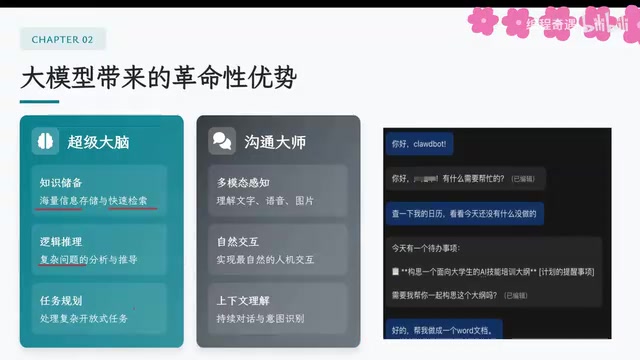
AI Agent Core Architecture Breakdown: From Concept to Enterprise-Grade Intelligent Agent Development
Deep dive into AI Agent architecture: perception, brain, and action modules. Covers RAG memory systems, tool calling mechanisms, Chain of Thought reasoning, and enterprise agent development roadmap.
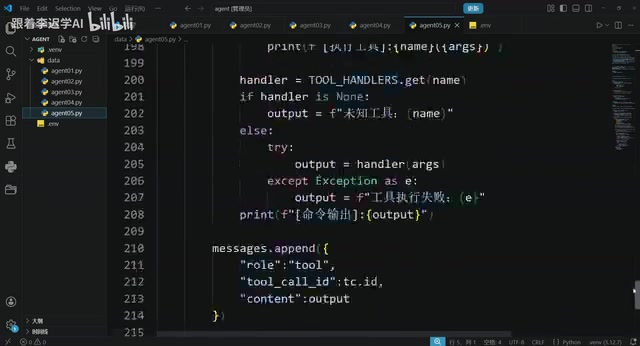
Hands-On Tutorial: Build an AI Agent from Scratch with 200 Lines of Python
Build an AI Agent from scratch with 200 lines of Python, covering prompts, memory, tool calling, RAG, and Skills — a practical guide for developers.
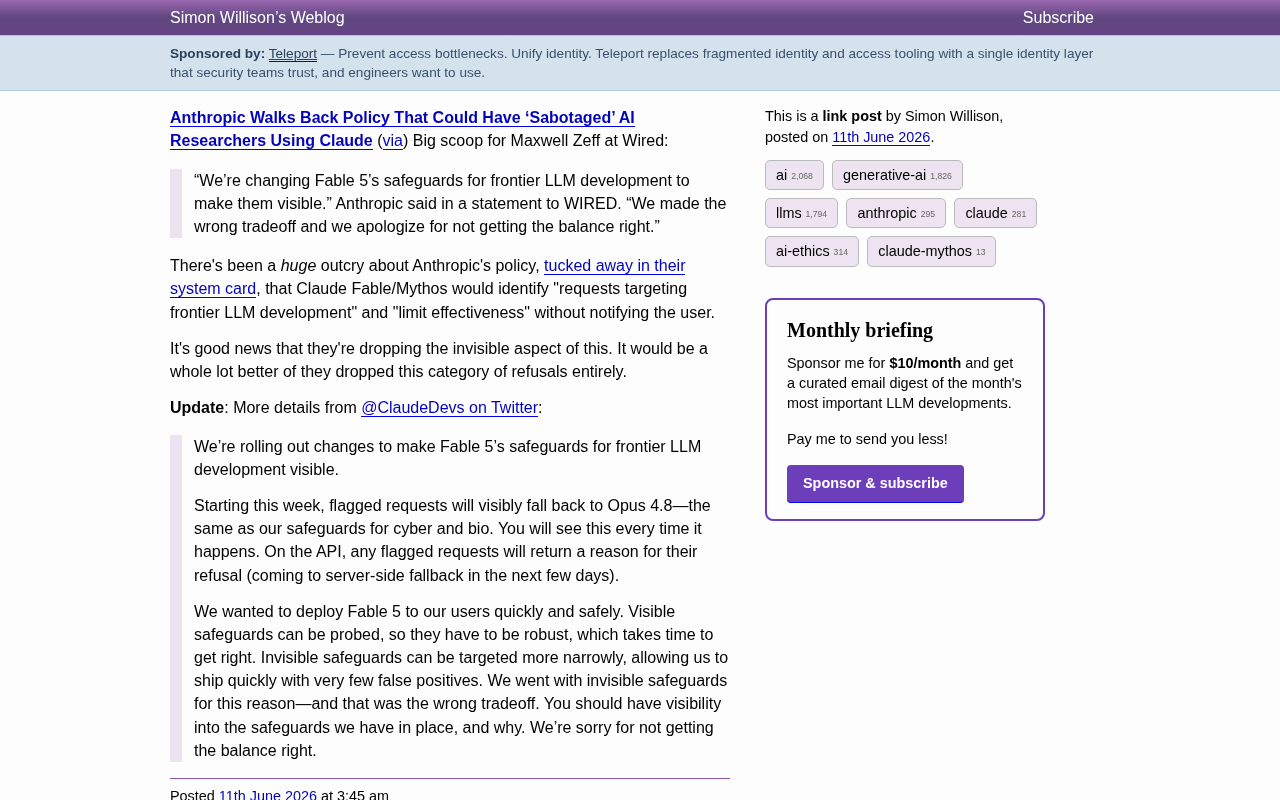
Anthropic Reverses Controversial Policy of Secretly Throttling AI Researchers Using Claude
Anthropic reverses its controversial policy of secretly throttling Claude Fable/Mythos responses to frontier LLM development requests after community backlash, raising critical questions about AI transparency.