BID KING Auction Blind Box Game Experience: An AI-Generated Game That's Surprisingly Addictive
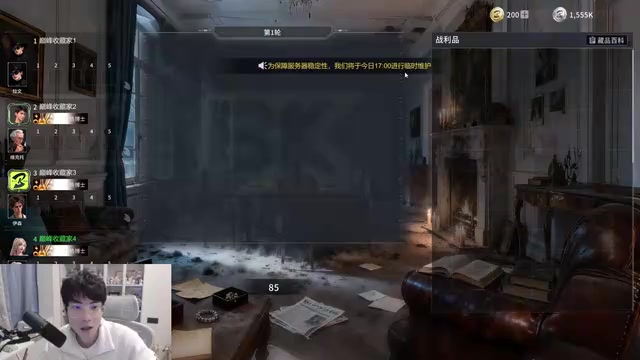
BID KING is an addictive AI-generated auction blind box game with surprising strategic depth.
BID KING is a multiplayer auction blind box game entirely generated by Google's Gemini AI. Four players bid on blind boxes in sealed-bid auctions across five rounds, combining game theory strategy with the psychological thrill of unboxing. Despite simple rules, the game offers deep strategic gameplay involving value prediction, psychological warfare, and risk management, showcasing AI's growing capability in producing genuinely playable games.
A Small AI Auction Game That Gets You Hooked
Recently, a small game called BID KING has been gaining attention among gaming circles. According to a Bilibili content creator's hands-on experience, this game is "entirely made by AI," with simple gameplay yet extremely addictive qualities — in his words, "once you play a round, you're totally hooked."
At its core, this game is a multiplayer auction blind box experience that cleverly combines auction mechanics with unboxing surprises. While the rules are simple, the strategic depth of the gameplay is considerable.


BID KING Core Gameplay Breakdown
The Dual Mechanism of Auction + Blind Box
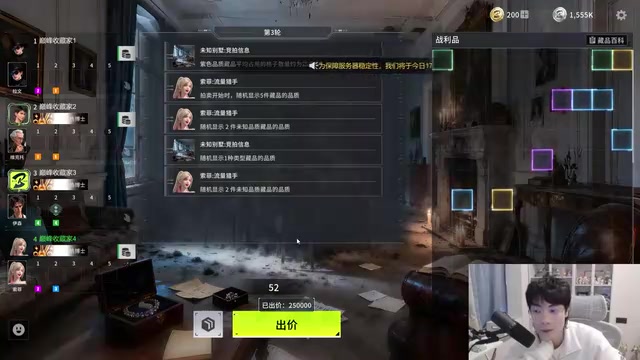
The rules of BID KING can be summed up in one sentence: Four players bid money on blind boxes, and the highest bidder wins the right to open it.
Here's how it works:
- Prizes displayed on the right: The screen shows the blind box slots available for bidding
- Players place bids: All players bid simultaneously, and the highest bidder wins that blind box
- Unboxing reveals value: The blind box opens like a loot crate, revealing the actual value of its contents
- Profit/loss calculation: If the item's value exceeds your bid, you profit; otherwise, you take a loss
Each round consists of five bidding phases total, keeping the pace tight — a full game wraps up in just a few minutes.
It's worth noting that BID KING's auction mechanism has deep theoretical roots in game theory. The sealed-bid auction used in the game is a classic example of incomplete information games — each player submits their bid simultaneously without knowing what others have offered. This is closely related to the auction theory proposed by Nobel Economics laureate William Vickrey. In traditional auction theory, there's a phenomenon known as the "Winner's Curse": in auctions with incomplete information, the final winner is often the person who overestimated the item's value the most, meaning that winning the auction itself may signal a loss. The example later in this article where a player bids 400,000 only to open a low-value item is a textbook case of the Winner's Curse.
Item Rarity System
Items in the game are divided into five rarity tiers:
| Tier | Color | Value |
|---|---|---|
| Highest | Red | Extremely High |
| High | Gold | High |
| Medium | Purple | Medium |
| Common | Blue | Average |
| Basic | Green | Low |
Red items are the rarest and most valuable, followed by gold. Before bidding, players need to assess what rarity tier the blind box might contain to determine their bidding strategy.
The addictive nature of blind box mechanics is backed by solid behavioral psychology. B.F. Skinner's "Variable Ratio Reinforcement" theory states that when rewards appear at unpredictable frequencies, people exhibit the strongest and most persistent behavioral motivation. This is identical to the addiction mechanism of slot machines. The layered rarity design of blind box items (from green to red) further amplifies this psychological effect — players always harbor the hope that "the next one might be red." Neuroscience research shows that dopamine peaks during the anticipation phase rather than the acquisition phase, which is the scientific explanation for why the game is so "addictive."
Strategic Tips from Real Gameplay
Value Assessment Is the Core Skill
From the content creator's actual gameplay, the most critical ability in this game is value prediction. Before bidding, players need to judge how much a blind box is roughly worth based on limited information, then decide their maximum bid.
For example, in an actual match, the creator judged that a particular round "had no red items" and kept his bid around 250,000. Another player went all-in at 400,000 to grab the blind box, only to find that the item's actual value was far below 400,000 — resulting in a direct loss of over 234,000.
This kind of "impulse spending" lesson is precisely what makes the game so entertaining — you never know if your opponents will drive up the price for you.
The Psychological Battle Between Restraint and Impulse
There's clear psychological warfare in the game:
- Conservative strategy: Control your bids, willing to pass rather than overpay, waiting for high-value rounds
- Aggressive strategy: Bid big on every blind box, gambling on high-value items
- Wait-and-see strategy: Observe opponents' bidding habits in early rounds, then strike precisely later
The content creator adopted a relatively conservative strategy in this session, decisively passing on rounds he judged to be low-value ("I'll skip this one"), ultimately earning solid returns by capitalizing on opponents' mistakes.
The interplay between these three strategies actually forms a dynamic equilibrium similar to "rock-paper-scissors": the conservative strategy avoids losses but may miss high-value blind boxes; the aggressive strategy can monopolize good items when opponents are all conservative but is vulnerable to the Winner's Curse; and while the wait-and-see strategy has the greatest information advantage, the compact five-round format leaves limited room for late-game plays. It's precisely this strategic landscape with no absolute optimal solution that gives the game lasting replayability.
The New Trend of AI-Generated Games
Gemini-Powered Game Development
Here's an interesting detail: this game is labeled as a Gemini (Google's AI model) related project, and the content creator mentioned it's "entirely made by AI." This reflects a current trend in AI-assisted game development: using large models to rapidly generate complete small games.
Gemini is a multimodal large language model launched by Google DeepMind in late 2023, capable of understanding and generating text, code, images, and other modalities. In game development scenarios, Gemini can handle everything from game rule design, code writing, and UI layout to numerical balancing. Unlike traditional game development that requires collaboration between designers, programmers, artists, and other specialists, AI-driven development allows a single person to describe requirements in natural language and have the model automatically generate a runnable game prototype. Google has also launched projects like GameNGen specifically targeting gaming scenarios, exploring the possibility of using neural networks to generate game visuals in real-time. As a Gemini-related project, BID KING demonstrates the current practical output capability of large models in developing small but complete games.
From BID KING, we can see that AI-generated games already possess the following characteristics:
- Well-designed rules: The auction + blind box combination offers sufficient strategic depth
- Highly addictive: Easy to understand yet impossible to put down
- Social attributes: The four-player competitive format creates intense strategic tension
The AI-ification of the Casual Games Space
As AI code generation capabilities improve, similar AI-driven small games will likely become increasingly common. They're characterized by short development cycles, rapid gameplay innovation, and low iteration costs. For indie developers, using AI tools to quickly create and validate game ideas is becoming a viable path.
The wave of AI-generated games is reshaping the indie game development ecosystem. Beyond Google's Gemini, models from OpenAI, Anthropic, and other companies are widely used for game prototype development. Since 2024, multiple AI Game Jams have required participants to complete their works entirely using AI tools, producing numerous creatively unique small games. On the distribution side, platforms like WeChat Mini Games and itch.io provide low-barrier channels for AI-generated games. Notably, AI currently excels at generating small games with clear rules and simple interactions — for medium to large games requiring complex narratives and fine-tuned game feel, human developers' experience and aesthetic judgment remain essential. This means that for the foreseeable future, AI is more likely to play the role of "creative accelerator" rather than "complete replacement."
Conclusion
Although BID KING is an AI-generated small game, it creates a rich strategic experience with concise rules. The core auction blind box gameplay tests both value judgment ability and is full of psychological warfare fun. From this game, we can glimpse that AI applications in game development can already produce works with genuine playability, and there's still enormous room for improvement in the quality and complexity of AI games in the future.
Key Takeaways
Related articles

OpenAI Codex Data Analytics Plugin in Practice: The Complete Workflow from Data Collection to Report Delivery
Deep dive into OpenAI Codex's Data Analytics Plugin: cross-system data integration, smart chart generation, data provenance, and Google Slides export reshaping analytics workflows.

OpenAI Codex Creative Production Plugin: How AI Is Revolutionizing Marketing Asset Creation
Deep dive into OpenAI Codex Creative Production Plugin: AI product image generation, Remix style adjustment, one-click brochure creation, and Canva integration for editable output.

Preparing for an Antarctic Cycling Expedition with ChatGPT: How AI Powers Extreme Adventure
An explorer uses ChatGPT to prepare for an unprecedented solo Antarctic cycling expedition. Learn how AI serves as gear optimizer, training coach, and emergency lifeline in extreme adventure.