Building a WeChat Mini Program with Zero Code: A 3-Day Hands-On Journey with Codex + Antigravity
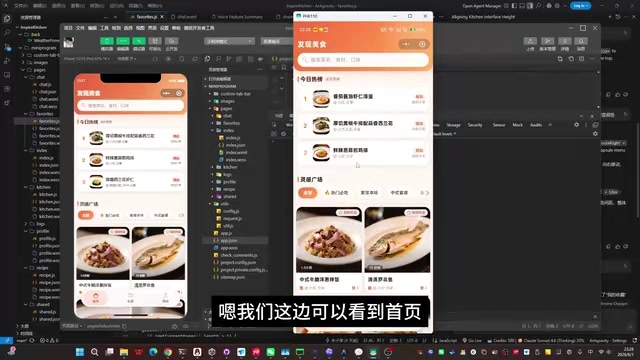
Developer ships a WeChat Mini Program in 3 days using Codex and Antigravity with zero hand-written code.
A developer built and launched an AI-powered recipe WeChat Mini Program in just three days using OpenAI Codex for front-end code generation and Antigravity for UI design — all without writing a single line of code. The app features AI conversational recipe generation, social sharing, and content management. This case demonstrates how multi-tool AI collaboration is lowering development barriers while highlighting that human product thinking remains essential.
A developer spent three days using two AI tools — Antigravity and OpenAI Codex — to build and launch a fully functional WeChat Mini Program without writing a single line of code. This "AI Recipe" mini program features complete social sharing capabilities and built-in AI conversational recipe generation, showcasing the real-world productivity of today's AI programming tools.
Project Overview: An AI-Powered Recipe Mini Program
The mini program's core functionality revolves around cooking — users can generate personalized recipes through AI conversations, and browse or bookmark dishes shared by other users. The developer mentioned that since they cook regularly, they chose this everyday scenario to put AI programming tools to the test.
The final launched product includes the following core modules:
- Home Feed: Displays publicly shared recipes from all users, with browsing and bookmarking support
- Personal Kitchen: A personal space for managing bookmarked and created recipes
- AI Recipe Generation: Customized recipe creation through natural language conversation with AI
- Profile Center: View bookmarked items and creation history
- Social Sharing: Share recipes with friends or publish them publicly
While the overall feature set isn't overly complex, it covers multiple dimensions including user systems, content management, AI interaction, and social sharing — making it quite comprehensive for a zero-code project.
It's worth noting that WeChat Mini Programs come with their own unique technical barriers. They're built on WeChat's proprietary framework, using WXML (an HTML-like markup language), WXSS (a CSS-like styling language), and JavaScript, while adhering to WeChat's component specifications, API restrictions, and review/publishing processes. As of 2024, WeChat Mini Programs have over 500 million daily active users, with millions of active mini programs in the ecosystem. Traditionally, building a fully functional mini program requires developers to master not only front-end technologies but also WeChat Developer Tools, cloud development or self-hosted backend services, and the platform's unique authentication and payment systems. This is precisely why it's so remarkable that someone with zero coding experience could complete the entire process from development to launch in just three days.
AI Conversational Recipe Generation: The Core Highlight
The most interesting feature is AI recipe customization. Users can chat with the AI as naturally as talking to a friend — telling it what they want to eat, how many people are dining, flavor preferences, and more. The AI then automatically generates a complete recipe with an ingredient list and cooking steps.
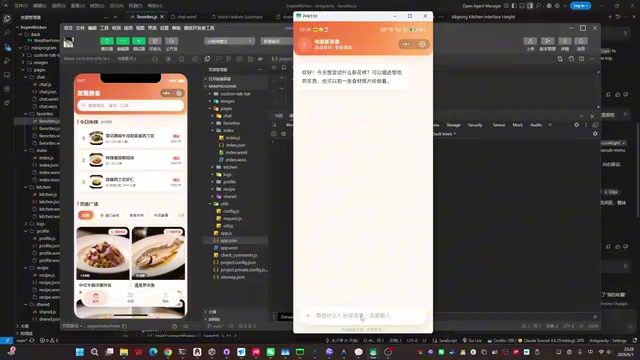
In the demo, the developer typed "I want to eat stir-fried radish with shredded pork today, cooking for one, mildly spicy," and the AI promptly returned a detailed ingredient list and instructions. Here's a nice detail: the interaction supports multi-turn modifications — when the developer realized they only had beef at home instead of pork, they told the AI to adjust, and the system regenerated a beef-based version of the recipe.
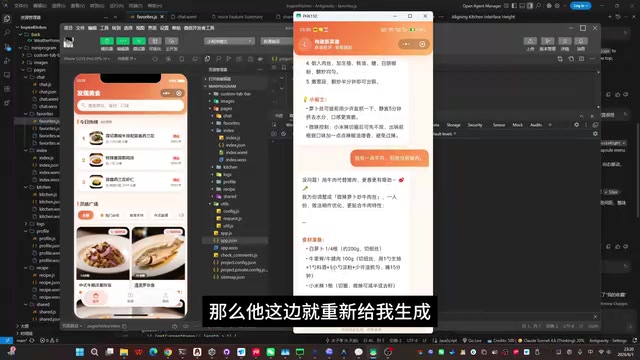
Behind this multi-turn conversational interaction lie two key technologies: context window management and structured output from large language models (LLMs). The context window determines how many conversation turns the model can "remember" — when a user says "replace the pork with beef," the model needs to look back at the previous recipe to make accurate modifications rather than generating an entirely new recipe from scratch. Structured output ensures the AI returns data organized in a fixed format like "dish name – ingredient list – cooking steps" rather than free-form text, enabling the front end to render it as an attractive recipe card. Achieving this typically requires setting a system prompt during API calls to constrain the output format, or using mechanisms like function calling to have the model output structured JSON data.
Once satisfied with the recipe, users tap "Start Customizing," and the system spends about a minute generating the final version, which can then be shared with friends or published publicly. This "conversation → adjust → confirm → generate" interaction flow is designed to feel natural and lowers the barrier to entry.
The Development Toolchain: How Codex and Antigravity Divide the Work
The tool choices for this project are quite representative. The developer used a combination of two AI tools:
- OpenAI Codex: Handled front-end code generation, managing page logic and interaction implementation
- Antigravity: Handled UI design and some integration work, completing the overall visual style
OpenAI Codex is an AI coding agent launched by OpenAI, officially released in 2025. Unlike earlier code completion tools, Codex can autonomously execute multi-step programming tasks in a cloud sandbox environment: it can read the context of an entire code repository, understand the project structure, and then write new features, fix bugs, or refactor code based on natural language instructions. Codex is built on OpenAI's codex-1 model (specifically optimized for programming tasks through reinforcement learning) and can handle code generation tasks ranging from simple scripts to complex engineering-level projects. In this case, the developer described page functionality and interaction logic in natural language, and Codex automatically generated WXML, WXSS, and JS code compliant with WeChat Mini Program specifications.
Antigravity is an AI tool designed for product design and development. Its core capability lies in transforming natural language descriptions or design intent into usable UI interfaces. Unlike Codex's focus on code logic, Antigravity excels at visual work — including page layouts, color schemes, component styling, and interaction animations. It also has integration capabilities that can connect design output with front-end code. In the current AI tool ecosystem, Antigravity is positioned as a combination of "AI designer + front-end UI developer," filling the automation gap between design mockups and usable interfaces. The developer mentioned it includes "verbal model and drawing capabilities," indicating the tool integrates both language understanding and visual generation AI capabilities.
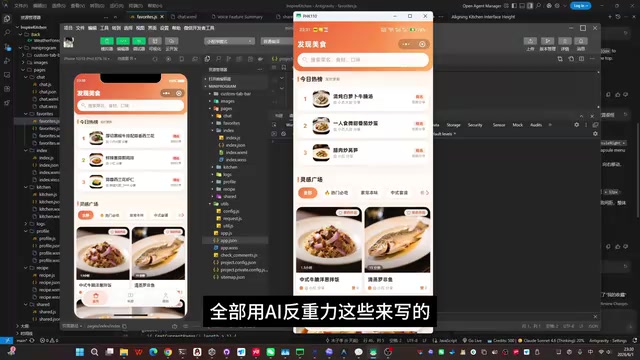
The developer emphasized that from start to finish, not a single line of code was written manually — the entire process was driven by natural language instructions to AI. The whole project took three days, including development and debugging.
Regarding costs, the developer subscribed to Antigravity's Auto membership (which includes verbal model and drawing capabilities) and Codex's basic plan. While specific amounts weren't disclosed, the description of using "the most basic tier" suggests the investment was modest.
The developer also shared an interesting observation: they felt Google's models might perform better in UI design, hinting that they may have compared outputs from different models during development. This observation isn't isolated — Google's Gemini series models have indeed demonstrated strong capabilities in multimodal understanding (processing text, images, and code simultaneously), especially in understanding visual layouts and design intent, likely due to Google's long-standing expertise in computer vision.
Insights and Limitations from This Zero-Code Development Case
From this case study, we can extract several noteworthy trends:
AI Programming Tools Have Reached Practical Utility
Three days, zero coding skills required, and a launchable WeChat Mini Program — this level of efficiency would be nearly impossible under traditional development approaches. Even experienced developers would typically need one to two weeks to build a mini program from scratch with user systems, AI API integration, and social features. AI tools have dramatically lowered the development barrier, shortening the path from idea to product.
Behind this shift is the gradual maturation of the "Natural Language to Code" (NL2Code) paradigm. From GitHub Copilot's introduction of AI code completion to mainstream developer workflows in 2021, to GPT-4 demonstrating the ability to understand complex programming requirements in 2023, to tools like Cursor, Windsurf, Codex, and Bolt.new pushing AI programming from "assisted completion" to "autonomous development" in 2024-2025, the industry has undergone a qualitative shift from "AI writing code snippets" to "AI building complete applications." The current market has formed an initial competitive landscape of AI programming tools for different scenarios: GitHub Copilot and Cursor target productivity gains for professional developers, Bolt.new and Lovable aim at rapid prototyping, while Codex and Devin attempt to play the role of more autonomous "AI software engineers." The Codex + Antigravity combination in this case is a microcosm of this ecosystem's diversification.
Multi-Tool Collaboration Is the Current Best Practice
The developer didn't rely on a single tool but let Codex and Antigravity each handle what they do best. This reflects the reality of current AI programming tools — no single tool can perfectly cover every aspect, and the right combination of tools often yields better results. Assigning front-end logic to Codex (which excels at code generation) and UI design to Antigravity (which has stronger visual capabilities) is an approach worth emulating.
This multi-tool collaboration model actually mirrors the role division in traditional software development: product managers define requirements, designers handle UI/UX, front-end engineers implement interactions, and back-end engineers build services. AI tools can't yet cover all these roles with a single product, but each tool has approached or reached junior practitioner level in its area of expertise. The future trend will likely see increasing interoperability between these tools — for example, design tool outputs being directly understood and consumed by programming tools, creating a smoother automated pipeline.
Human Product Thinking Remains Indispensable
Despite being labeled "zero code," the developer's role was far from passive. They needed to define product requirements, break down feature modules, adjust instructions when AI output wasn't ideal, and coordinate the handoff between the two tools. From "commanding AI" to "launching a product," human product thinking and project management skills remain critical.
This touches on a widely discussed concept — the evolution of Prompt Engineering. Early prompt engineering focused on crafting individual instructions that produce better AI output, but in actual AI-driven development, what developers need is a higher-level capability: decomposing a vague product idea into a sequence of AI-executable tasks, determining which tool should handle each task, and evaluating AI output quality to decide whether to accept, modify, or regenerate. This capability is closer to that of an "AI project manager" or "AI product architect," requiring practitioners to understand both the boundaries of what's technically possible and maintain clear product judgment. As AI programming tools become more widespread, "building products with AI" will become an increasingly important professional skill.
Conclusion
While modest in scale, this case clearly demonstrates the practical capability boundaries of AI programming tools: for applications with well-defined features and moderate complexity, AI can already handle the vast majority of coding work. The core value of developers is shifting from "writing code" to "defining requirements" and "quality control." As tools like Codex and Antigravity continue to evolve, cases of natural language-driven development will only become more common.
Of course, we should also take a realistic view of current AI programming tools' limitations. The mini program in this case has relatively standardized features, a simple data model, and doesn't involve complex concurrency handling, security protection, or large-scale data architecture. For enterprise-grade applications involving payment systems, sensitive data processing, or high-availability requirements, AI-generated code still requires rigorous security audits and performance optimization by professional developers. AI programming tools are currently better suited as accelerators for the "0 to 1" phase, while the engineering refinement of "1 to 100" remains the core battleground for human engineers.
Related articles
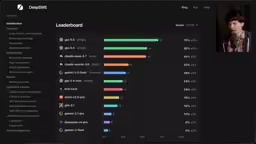
DeepSWE Benchmark Deep Dive: Exposing SWE-Bench Flaws and the True Coding Ability Rankings
Deep dive into how DeepSWE exposes SWE-Bench Pro's data contamination and cheating issues. GPT-5.5 leads at 70%, open-source models lag far behind. Covers results, cost comparisons, and practical developer advice.
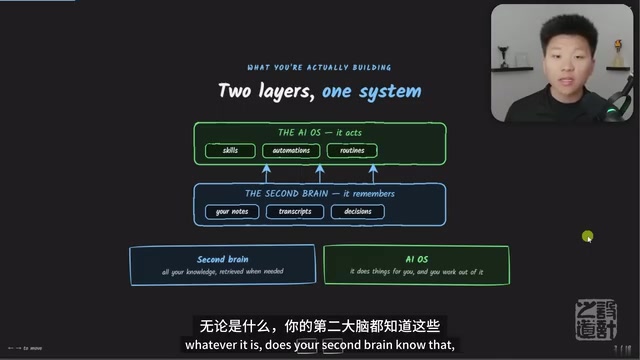
Guide to Building a Second Brain with Claude AI: The Four-C Framework for Your Personal AI Operating System
Learn how to build an AI second brain with Claude using the Four-C Framework (Context, Connection, Capability, Cadence) to create a personal AI operating system with practical examples.
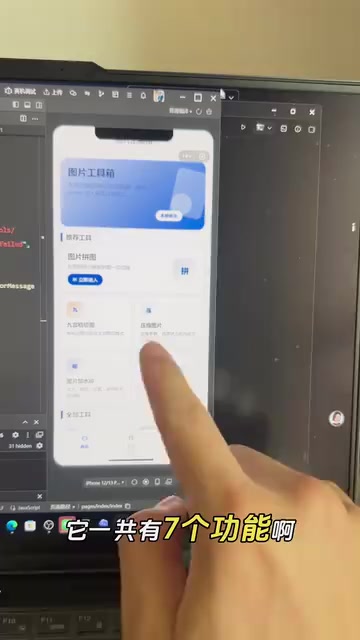
Zero-Code Mini Program Development with Codex: Building 7 Features in 5 Days — A Hands-On Story
A creator used OpenAI Codex to build an image editing mini program with 7 features in 5 days — zero coding. Learn about Codex's AI capabilities and tips for getting started.