Can't Code but Uses AI to Build Websites for Clients — Nearly ¥10,000 Earned from Just 3 Videos: A Full Breakdown
Can't Code but Uses AI to Build Websit…
A non-coding product manager uses AI tool Cursor to freelance websites, earning nearly ¥10,000 from 3 videos.
Qinggong, a product manager with ten years of experience who can't write code, independently completes full website development using AI programming tool Cursor. After posting just 3 short videos, he acquired clients and earned nearly ¥10,000. His case reveals how AI programming tools are redefining technical barriers — product thinking and requirement understanding matter more than coding ability. Meanwhile, individual AI custom development is disrupting the traditional SaaS market at lower cost, currently in an early dividend window.
A product manager with ten years of experience who can't write code is using AI tools to take on freelance website projects. After posting just 3 short videos, he earned nearly ¥10,000. How did he do it? And what industry trends does this reveal?
From "Just for Fun" to Monetization: A Product Manager's AI Freelancing Journey
This product expert, who goes by Qinggong, has ten years of product management experience. His original motivation for posting short videos was simple — "I just thought it was fun." He discovered that with AI tools, he could build websites much faster than before, so he wanted to document the process.
What he didn't expect was that after the videos went live, a flood of requests came pouring in. Some people were willing to pay him to build websites, while others wanted to learn his methods. Just a few videos brought in nearly ten thousand yuan in revenue.

The types of requests he's receiving are quite diverse: corporate website development, e-commerce website building, e-commerce mini-programs, cross-border e-commerce independent sites, and more. These projects used to require a full development team to complete, but now he handles them all by himself.
Can't Write Code — AI Does All the Heavy Lifting
The most surprising part: Qinggong still can't write code and has never learned programming. All coding work is done entirely by AI.
"I still haven't learned to write code — AI writes it for me," he admitted in the interview.

His core tool is Cursor. Cursor is an AI-native code editor deeply rebuilt on the VS Code architecture, launched by Anysphere in 2023. Unlike GitHub Copilot and similar tools, Cursor doesn't just autocomplete code snippets — it understands the entire project context and supports generating complete functional modules from natural language descriptions. Its core capabilities include: Composer mode (multi-file synchronized editing), Chat mode (conversing with the codebase), and Agent mode (autonomously completing complex task chains). Cursor integrates top-tier large models like Claude 3.5 Sonnet and GPT-4o under the hood, giving it far superior code generation quality compared to earlier tools. In 2024, Cursor exploded in popularity within the developer community, surpassing one million monthly active users with a valuation of $2.5 billion. For non-programmer users, Cursor's greatest value lies in its ability to directly transform "product requirement descriptions" into runnable code, dramatically compressing the path from idea to product.
Unlike many people who use AI tools like Doubao or DeepSeek just for writing copy, he uses Cursor to generate complete website code covering the entire pipeline: frontend, backend, testing, and server deployment.
What does this mean? In the past, a website project might require: a frontend engineer, a backend engineer, a QA engineer, plus server operations — a small team configuration. Now, a person who understands product but can't write code can complete all the work alone with AI programming tools.
A product manager who can't write code is replacing an entire development team.
Product Thinking: The Core Competitive Advantage Amplified in the AI Era
The core function of a Product Manager (PM) is to understand user needs, define product feature boundaries, and coordinate resources to drive product delivery. In traditional software development workflows, PMs serve as the bridge between business and technology — they don't need to write code themselves. However, in the AI programming era, this role's value has been amplified: AI can generate code, but it cannot replace the ability to "accurately understand human needs."
Qinggong's ten years of product experience gives him a natural ability to decompose requirements — he can transform a client's vague "I want a good website" into a clear feature list and interaction logic, then use that as prompts to drive AI code generation. This is precisely why product managers, designers, operations professionals, and other "business-savvy" people find it easier to discover new monetization paths in the AI programming wave than pure technical professionals — they fill in AI's weakest link: "requirement understanding."
Even Beginners Can Learn: Students Already Taking on Projects
Five or six people proactively sought out Qinggong to learn his methods, wanting to know if they could do it themselves. His answer: "It's very easy — you just need to get proficient with AI tools."

The results prove this point. One of his students has already graduated and started taking on projects for Qinggong. Qinggong gives most of the project revenue to this student, who returns a portion as operational fees. This has already formed a small-scale collaboration model.
Some might question: Qinggong has ten years of product experience after all — can ordinary people replicate this? But the key point is that product thinking helps him understand requirements, while the actual technical execution is entirely handed off to AI. For beginners, the core barrier isn't programming ability, but whether they can accurately understand client needs and learn to collaborate efficiently with AI tools.
Content as Customer Acquisition: Demonstrating Real Skills Is the Best Marketing
Qinggong's monetization path represents an increasingly mature model in the creator economy: acquiring precise customers by demonstrating real capabilities, rather than relying on traditional advertising. This aligns with the underlying logic of Content Marketing, but is more direct — the video itself is proof of capability, and viewers are potential customers.
This model is particularly efficient on short-video platforms because algorithms precisely push content to users interested in the topic, naturally completing customer filtering. By comparison, traditional freelancing platforms (like Zhubajie or Upwork) require bidding, building reviews, have high customer acquisition costs, and slow trust-building. Notably, Qinggong's case also layers in a "teaching monetization" dimension — people are willing to pay to learn his methods. This allows a single piece of content to simultaneously leverage both service revenue and knowledge-payment revenue streams, significantly increasing the commercial value density of his content.
Industry Signal: A Crisis for SaaS Companies, an Opportunity for Individual Freelancers
Qinggong revealed a noteworthy piece of "insider information": a product lead at a Chinese SaaS investment company told him that since AI programming tools (like Cursor) launched, their company's performance has been declining steadily.

To understand the depth of this disruption, you need to first understand the essence of the SaaS model. SaaS (Software as a Service) has been the most dominant business model in the software industry for the past fifteen years. Companies subscribe to cloud-based software on annual or monthly plans without needing to build their own servers or development teams. Salesforce, Shopify, Feishu, DingTalk, and others are typical examples. The core value of SaaS lies in: standardized features covering most scenarios, continuous updates and maintenance, and low barriers to use. However, its fatal weakness is precisely this — standardization means it can never fully match personalized needs, and accumulated long-term subscription fees add up significantly.
The rise of AI programming tools is shaking SaaS to its foundations: when the cost of custom development compresses from "hundreds of thousands of yuan + months of timeline" to "a few thousand yuan + a few days," SaaS's cost-effectiveness advantage weakens dramatically. This trend is especially pronounced in the SMB market — these businesses were previously forced to choose SaaS due to limited budgets, but now have a more economical alternative.
More and more companies are discovering that instead of spending over ¥10,000 per year on SaaS services, they can pay ¥2,000-3,000 to have someone use AI to build a fully customized system. Lower cost, higher flexibility.
Qinggong charges roughly ¥2,000-3,000 per project, while clients might have previously paid over ¥10,000 annually for SaaS services. Even so, he admits he's "charging too little" — because there are still very few people in the market who can provide this kind of service, creating an obvious supply-demand gap.
His judgment on this trend: Within a certain time window, this will be a money-making opportunity. Essentially, individual AI freelancers are taking money directly from traditional SaaS companies' pockets.
Takeaways for Ordinary People
This case offers several important insights:
-
AI programming tools are redefining the "technical barrier." Not knowing how to code is no longer an obstacle — understanding requirements and using tools effectively are the core competitive advantages. Tools like Cursor convert natural language directly into runnable code, giving "business-savvy" people the ability to independently deliver technical products for the first time.
-
Content is customer acquisition. Qinggong did zero promotion — just a few short videos documenting his process brought in a flood of clients. Authentic capability demonstration is the best marketing, and short-video platform algorithms serve as a natural precision customer acquisition channel.
-
The time window matters. The AI freelancing market is still in its early stages — few competitors, strong demand. But as more people master these tools, this dividend period won't last forever.
-
The SaaS industry is being disrupted. For business scenarios that don't require high standardization, AI custom development may gradually replace traditional SaaS subscription models. This isn't just a change in business models — it's a redistribution of power in the software industry, tilting from large software companies toward individual developers.
If you have product thinking or design skills, now may be the best time to learn AI programming tools and enter this market.
Key Takeaways
- A ten-year product manager who can't write code relies entirely on AI tools (Cursor) to freelance website projects, earning nearly ¥10,000 from just 3 videos
- AI programming tools like Cursor enable one person to do the work that previously required an entire team of frontend, backend, QA, and DevOps engineers
- A product manager's requirement understanding ability is the key to driving AI — "understanding business" currently has more monetization advantage than "understanding code"
- Zero-experience students have learned the method and started taking on projects independently, proving the model is replicable
- Traditional SaaS companies are seeing declining performance due to the rise of AI programming tools, as individual custom development captures market share at lower cost
- The AI freelancing market is in an early dividend period with few competitors, but the time window is limited
Related articles
 Industry Insights
AI Product Development in Practice: Model Selection, Building Moats, and Paths to Commercialization
Practical strategies for AI product development: why not to train models from scratch, when to use APIs vs. fine-tuning, building product moats, and the full path from evaluation systems to commercialization.
 Industry Insights
No Product Fits Your Needs? Building It Yourself Is the Best Starting Point for Indie Developers
Can't find a product that fits? Building from personal pain points is the best entry for indie developers. Niche needs + AI tools = rapid product creation.
 Industry Insights
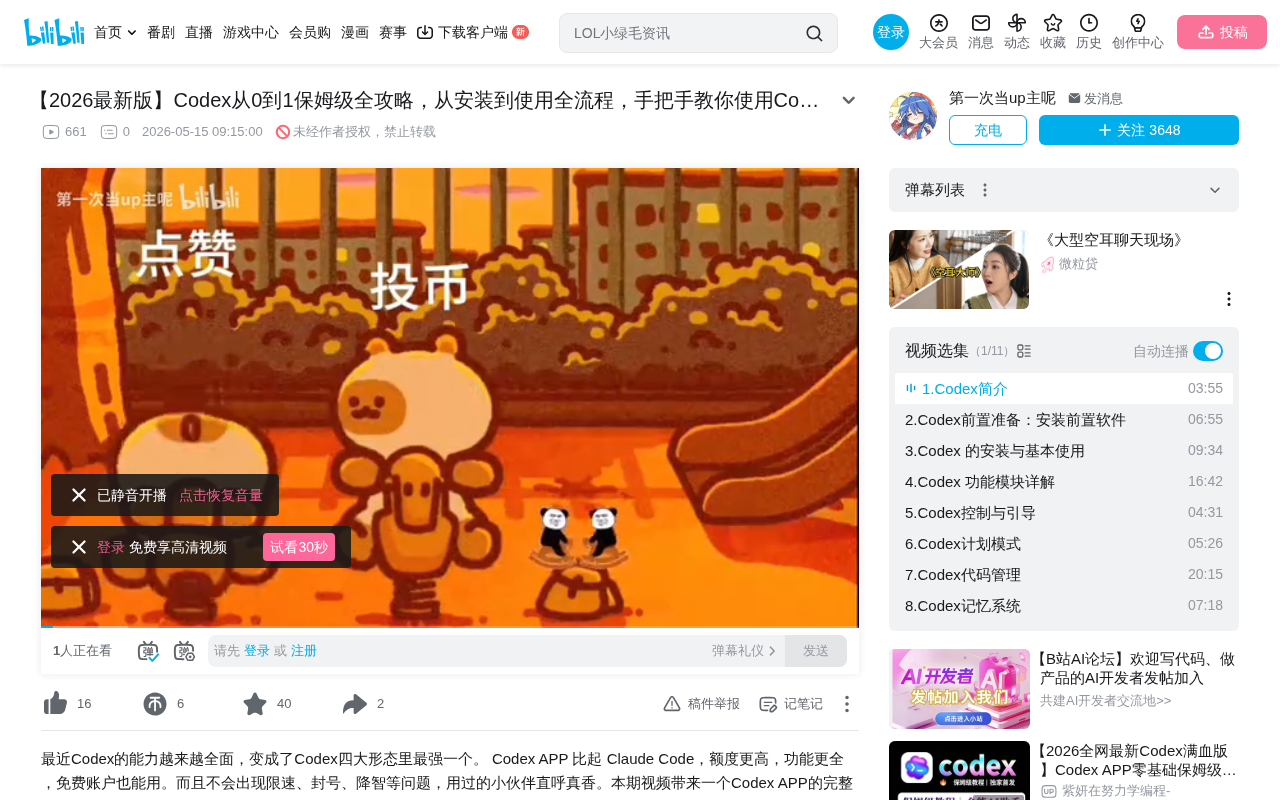
OpenAI Codex Tutorials Mass-Copied on Bilibili, Highlighting AI Content Farm Problem
At least 9 Bilibili accounts mass-published identical OpenAI Codex tutorial videos, exposing content farm operations in the AI tools space.