Cloning AI Websites to Earn $36K/Month: A Four-Step Formula for Low-Cost Entrepreneurship
Cloning AI Websites to Earn $36K/Month…
How an ordinary person clones proven AI websites to earn $36K/month — methodology breakdown
Optometrist Samuel earns $36K/month by cloning three market-validated AI video generation websites. His methodology centers on "four criteria for product selection" (you'd use it yourself, it solves a real problem, it attracts users organically, it's simple to maintain) and "four steps for growth" (paid ads testing → SEO for free traffic → YouTube content marketing → affiliate marketing for viral spread). The essence: leverage others' trial-and-error costs to minimize your own entrepreneurial risk.
An ordinary person with zero programming experience is earning $36,000 per month by cloning three AI websites. The methodology behind it isn't complicated, but it's extremely practical — find products that are already proven successful, then quickly replicate and optimize them. This article breaks down his "four criteria + four steps" playbook and shows how anyone can enter the AI space on a budget.
From Optometrist to $36K/Month AI Entrepreneur
Samuel used to be an optometrist, spending his days checking people's eyesight — a perfectly unremarkable life. One day, he stumbled upon an AI video generation website called AutoShout, which had reached $40,000 in monthly revenue in just five months.

After digging deeper, Samuel discovered that AutoShout's traffic came almost entirely from paid advertising, with a clear and replicable business model. So he spent two weeks cloning his own version — StarryShout, a website that generates specific types of AI videos. Users simply paste a video script and can generate six different styles of video, including first-person perspective videos, brainrot videos, and UGC-style ad videos.
Currently, StarryShout brings in $20,000 per month, while his other two cloned products, Aremis and Cavacity, contribute a combined $16,000 — totaling $36,000 per month across all three websites.

The "Four Criteria" for Product Selection: How to Find Products Worth Cloning
Samuel has a core philosophy: Never build something that doesn't already exist, hasn't already succeeded, or hasn't already gained market traction. This approach dramatically reduces the probability of failure and maximizes the chances of success.
To find products worth cloning, he observes what others are building in indie developer communities, then filters them through four criteria.
About product intelligence sources: Samuel primarily uses two platforms — Indie Hackers and Product Hunt. Indie Hackers is a community built specifically for independent entrepreneurs and small SaaS founders, where creators openly share their monthly revenue, growth curves, and business models, creating an exceptionally rare "revenue transparency culture" — this transparency lets newcomers directly see which products have proven viable and which directions are worth replicating. Product Hunt is a daily product discovery platform where trending products often signal validated market demand. Used together, they function as a free market research database: the former tells you which products are making money, and the latter tells you which products resonate with users.
Criterion 1: You'd Use It Yourself
If you wouldn't use the product yourself, it's hard to understand user needs, and you won't be able to make effective optimizations or improvements. Only when you're part of the target audience can you create truly valuable differentiation in the product experience.
Criterion 2: The Product Already Solves a Real Problem

Don't touch anything still in the proof-of-concept stage. Choose products that the market has already proven can solve real pain points. This involves a core concept in entrepreneurship — Product-Market Fit (PMF), meaning the product precisely meets a real market need, and users are willing to keep using it and spread the word organically. PMF is widely recognized as the hardest to validate yet most critical milestone in early-stage startups: statistics show that over 42% of startups fail precisely because there's "no market need." The traditional startup path requires founders to approach PMF from scratch through extensive user interviews, prototype testing, and iteration — a process that often takes years and burns through massive amounts of capital. The brilliance of Samuel's strategy is that he skips this most expensive validation phase entirely, choosing directions where the original product has already proven PMF. He's essentially starting the race standing on top of someone else's trial-and-error costs.
Criterion 3: It Attracts Users Without Heavy Marketing
If a product has users despite minimal marketing spend, it demonstrates natural product appeal and word-of-mouth potential. Once you add systematic marketing investment to such a product, the growth potential becomes enormous.
Criterion 4: It's Simple to Maintain
As an entrepreneur without programming experience, the product's technical complexity must be manageable. Choose tool-based products with simple architecture that don't require frequent iteration — that's the only way to ensure long-term operational sustainability.
All four criteria must be met before it's worth cloning. The essence of this filtering logic is: use other people's trial-and-error costs to reduce your own entrepreneurial risk.
The "Four Steps" Growth Strategy: From Cold Start to Scale
Once the product is built, Samuel follows a fixed four-step strategy to drive user growth, with each step having clear objectives and decision criteria:
Step 1: Paid Ads for Rapid Testing
Run ads on Google and Meta to quickly validate the product's market acceptance and conversion rates. The core purpose of this step isn't profitability — it's getting data feedback in the shortest possible time.
The key metric here is ad ROI (Return on Investment) — how much revenue each dollar of ad spend generates. Google Ads captures "active search intent," while Meta Ads (Facebook/Instagram ads) excel at "interest-based targeting." Combined, they cover different types of potential users. For new product cold starts, the core value of paid advertising isn't immediate profit but rapid acquisition of real user behavior data — click-through rates, conversion rates, user retention, and willingness to pay. Generally, an ad ROI greater than 1 (i.e., recovering more than $1 for every $1 spent) is considered a signal that the product direction is viable. This "buying data with money" approach lets entrepreneurs complete market assessments in weeks that would otherwise take months, dramatically compressing the trial-and-error cycle.
Step 2: SEO Optimization for Free Traffic

Once paid ad testing proves viable, immediately launch SEO optimization. SEO (Search Engine Optimization) is the technical discipline of optimizing website content, structure, and external links to achieve higher rankings in organic search results on Google and other search engines. Unlike paid advertising's linear logic of "stop spending, stop traffic," SEO has a characteristic compounding effect: once quality content and authoritative backlinks accumulate, they continuously generate free organic search traffic, often growing exponentially over time. SEO typically takes 3–6 months to show significant results, but once ranking advantages are established, competitors find it very difficult to overtake in the short term. This is precisely why Samuel sets SEO as step two rather than step one — first validate the direction with ads, then build a long-term traffic moat with SEO, converting one-time customer acquisition costs into continuously appreciating traffic assets.
Step 3: YouTube Content Marketing
Publish AI-generated video content on YouTube to showcase product capabilities while building attention and trust. This approach is extremely low-cost, and the video content itself serves as the most intuitive advertisement for the product — when users see the results, they naturally want to try it.
Step 4: Affiliate Marketing for Viral Growth
Affiliate Marketing is a performance-based marketing model: the product owner sets a fixed commission (e.g., paying $X for each successfully converted paying user) to attract bloggers, content creators, website owners, and other "affiliate partners" to actively promote the product. Affiliate partners bring their own traffic and audiences, and the product owner only pays when actual conversions occur — theoretically making it extremely low-risk. The network effect of this model means that as the number of affiliate partners grows, the product's exposure channels expand geometrically while marginal customer acquisition costs remain relatively stable. Samuel places this as step four because affiliate partners prefer to promote products that already have reputation and conversion data — the foundation built in the first three steps provides the most convincing endorsement for affiliate marketing, helping the product break through growth ceilings and reach a broader user base.
Key Takeaway: Simple, Boring, but Useful Tools Make the Most Money
The most important lesson from Samuel's case is this: The things that make the most money are often not the flashy, cutting-edge innovations — they're the simple, boring, but incredibly useful little tools.
This "four criteria + four steps" playbook works because it follows several fundamental principles:
- Risk reduction: Don't innovate from 0 to 1; only replicate and optimize from 1 to N
- Rapid validation: Clone a product in two weeks, then use ads to quickly test market response
- Compounding growth: SEO and content marketing build a long-term free traffic moat
- Repeatability: The same methodology can be applied repeatedly to different products
For ordinary people without technical backgrounds, this may be the most pragmatic entrepreneurial path in today's AI era — you don't need to invent the wheel, you just need to find a wheel that's already proven to work and build a better version. Of course, cloning doesn't mean simple copying — creating differentiation in product experience, marketing strategy, and customer service is the key to sustained profitability.
Key Takeaways
- Samuel earns $36K/month by cloning three AI video generation websites (StarryShout, Aremis, Cavacity)
- Product intelligence sources: Indie Hackers (revenue-transparent community) and Product Hunt (new product discovery platform)
- Four selection criteria: you'd use it yourself, it already solves a real problem (i.e., has PMF), it attracts users without heavy marketing, and it's simple to maintain
- Four growth steps: paid ads to test ROI → SEO to build traffic assets → YouTube content marketing → affiliate marketing for viral spread
- The core philosophy is to skip 0-to-1 innovation and only replicate products already validated by the market, reducing the probability of failure
- The real money-makers are often simple, boring, but incredibly useful tools — not flashy tech products
Related articles
 Industry Insights
AI Product Development in Practice: Model Selection, Building Moats, and Paths to Commercialization
Practical strategies for AI product development: why not to train models from scratch, when to use APIs vs. fine-tuning, building product moats, and the full path from evaluation systems to commercialization.
 Industry Insights
No Product Fits Your Needs? Building It Yourself Is the Best Starting Point for Indie Developers
Can't find a product that fits? Building from personal pain points is the best entry for indie developers. Niche needs + AI tools = rapid product creation.
 Industry Insights
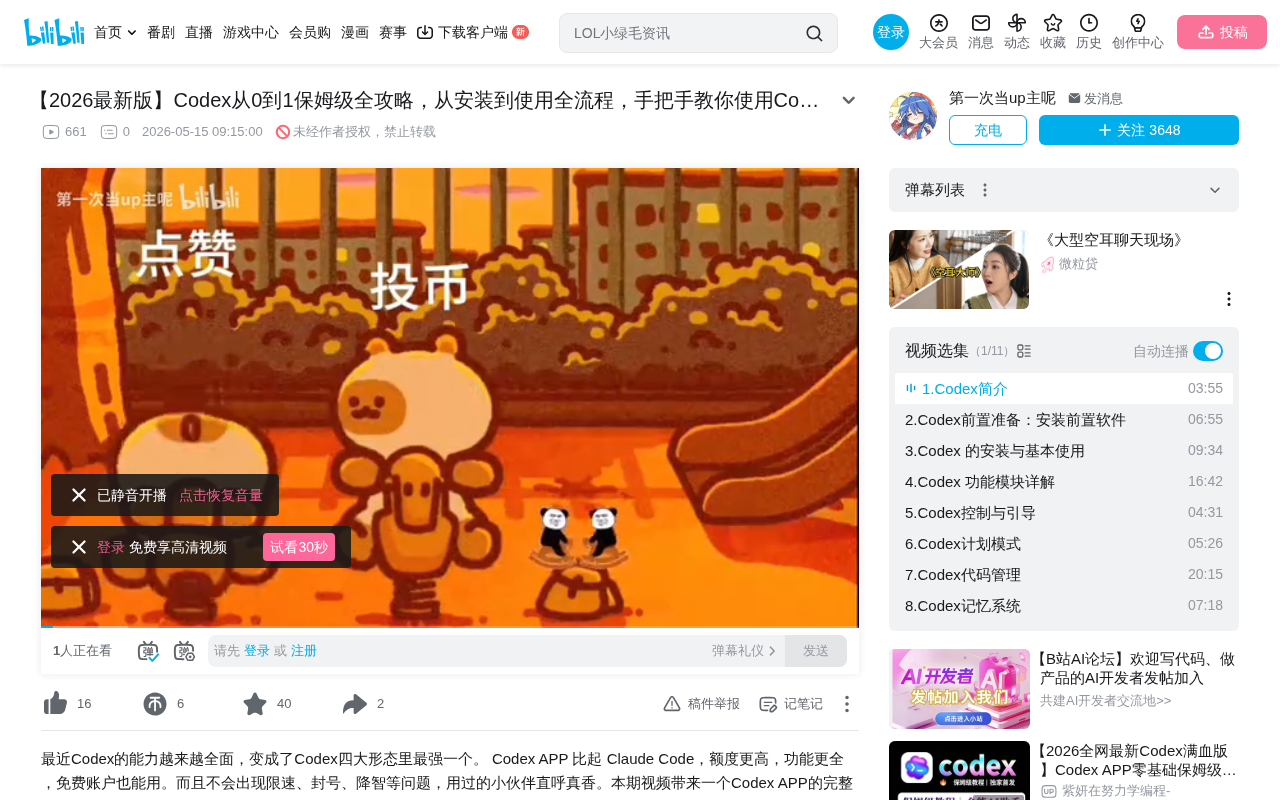
OpenAI Codex Tutorials Mass-Copied on Bilibili, Highlighting AI Content Farm Problem
At least 9 Bilibili accounts mass-published identical OpenAI Codex tutorial videos, exposing content farm operations in the AI tools space.