Cross-Location AI Agent Connectivity: A Complete Guide to Smart Networking Solutions for Enterprises
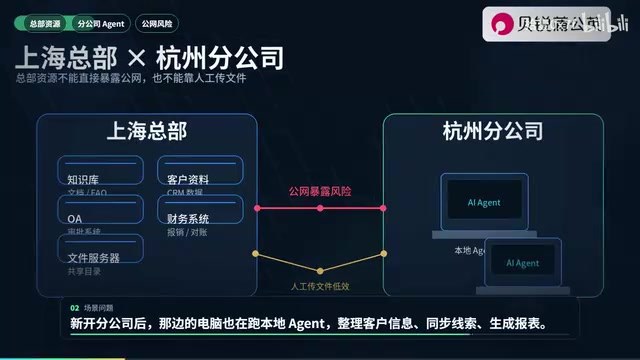
How smart networking solutions solve cross-location AI Agent connectivity for enterprises.
As enterprises deploy AI Agents across multiple offices, reliable network connectivity to shared internal resources becomes critical. This article explores how smart networking (simplified SD-WAN) solutions enable branch office Agents to securely access headquarters' knowledge bases, OA systems, and databases — without costly dedicated lines or complex VPN setups — ensuring 24/7 Agent uptime and collaboration.
New Network Challenges in the AI Agent Era
As AI Agents rapidly gain traction in enterprises, more companies are deploying intelligent agents across customer service, sales, and operations roles. An AI Agent is an artificial intelligence system capable of autonomously perceiving its environment, making decisions, and executing tasks. Unlike traditional chatbots, AI Agents possess Tool Use, Memory Management, and Multi-step Reasoning capabilities, enabling them to independently handle complex business workflows. Since 2024, the rapid advancement of large language models has accelerated the maturation of enterprise-grade Agent frameworks like LangChain, AutoGen, and CrewAI, moving Agents from the lab into production environments.
However, an easily overlooked infrastructure problem is surfacing — how do these Agents, scattered across different locations, reliably connect to the same set of internal resources?
Headquarters hosts the knowledge base, customer records, OA systems, and financial systems. Meanwhile, Agents running locally at branch offices need to organize customer data, sync leads, and generate reports. In practice, Agents typically call various backend services via APIs, placing demands on underlying network infrastructure that far exceed traditional office scenarios. As enterprises scale and Agents are deployed across different physical locations, network connectivity becomes an unavoidable foundational challenge.
The Core Problem: Enterprise Cross-Location Networking
Pain Points of Traditional Approaches
When branch office Agents need to access headquarters' internal network resources, they face several real-world obstacles:
- Security: Internal systems cannot be directly exposed to the public internet without creating serious security risks. Modern enterprise network security is shifting from traditional "perimeter defense" models to Zero Trust architecture, built on the core principle of "never trust, always verify" — even devices already on the internal network must undergo identity authentication and permission checks for every resource access. In Agent scenarios, this means assigning independent identity credentials to each Agent instance, enforcing fine-grained access control through API gateways, and maintaining audit logs for all API calls.
- Efficiency: Manually transferring files and syncing data is extremely inefficient and cannot meet Agents' real-time API call requirements.
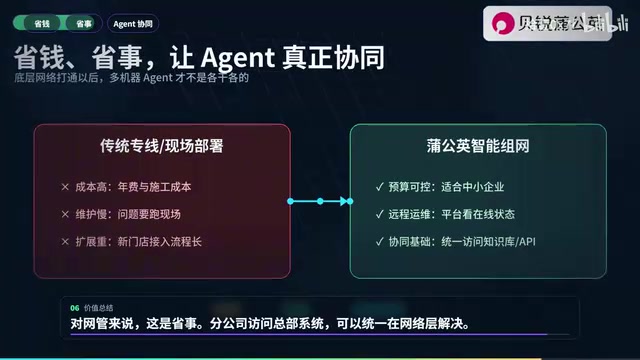
- Cost: Traditional dedicated line solutions can start at tens of thousands of dollars per year, with deployment and maintenance costs adding to the burden.
At its core, this is fundamentally an enterprise cross-location networking problem. From a technology evolution perspective, enterprise cross-location networking has gone through several major phases: first came MPLS (Multiprotocol Label Switching) dedicated lines, where carriers provided end-to-end connections with guaranteed bandwidth but at steep costs, typically ranging from tens of thousands to hundreds of thousands of dollars per circuit annually. Then came IPSec VPN solutions, which created encrypted tunnels over the public internet to reduce costs but required complex configuration and professional IT staff. More recently, SD-WAN (Software-Defined Wide Area Network) technology represents the next generation, using software-layer intelligent routing and traffic scheduling to deliver near-dedicated-line performance over standard internet connections. Before the AI Agent era, cross-location networking was routine IT work; in the Agent era, it has become a critical factor in whether AI infrastructure can function properly.
Why Does the Agent Scenario Make This Problem More Acute?
In traditional office scenarios, employees occasionally need remote access to internal systems, and intermittent connection drops can be resolved by reconnecting. But AI Agents are unattended automation programs running 24/7 — they might execute data sync tasks at 3 AM, automatically process customer tickets on weekends, and need continuous, stable access to knowledge base APIs, databases, and file servers.
It's worth elaborating on the knowledge base architecture that Agents depend on. In the currently dominant RAG (Retrieval-Augmented Generation) architecture, enterprise documents are first converted into high-dimensional vectors via Embedding models and stored in vector databases like Milvus, Pinecone, or Weaviate. When an Agent needs to answer a question, it converts the user query into a vector, performs similarity search in the database (typically using cosine similarity or Euclidean distance), retrieves the most relevant document chunks, and then passes them to the large language model to generate a response. This process is extremely sensitive to network latency — vector search response times are typically in the millisecond range, and if network latency reaches hundreds of milliseconds, the Agent's overall response time will degrade significantly, directly impacting user experience.
Therefore, network infrastructure must have automatic reconnection, failover, and heartbeat detection capabilities. If a tunnel disconnects, the Agent's API calls will time out, potentially causing task queue backlogs, data inconsistencies, or even business outages. Any network fluctuation directly affects Agent service quality and business continuity.
Smart Networking Solutions: Oray Peanuthull (蒲公英) as an Example
Peanuthull (a product under Oray) offers a smart networking solution with a core approach: minimal changes to existing company networks, no traditional dedicated lines, and unified access for remote devices through a virtual private network. From a technical classification standpoint, smart networking products like Peanuthull are essentially simplified SD-WAN implementations that use P2P hole punching, relay forwarding, and similar techniques to dramatically lower the technical barrier to networking.
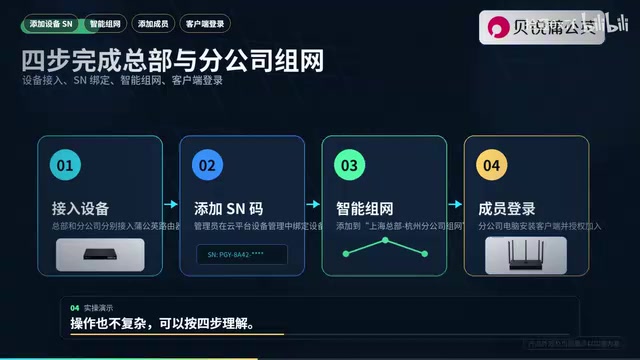
Four Steps to Complete Cross-Location Networking
Step 1: Deploy Hardware Devices
Connect Peanuthull routers (models like G30, X5, X5 Pro, etc.) at both headquarters and branch offices to serve as physical networking nodes.
Step 2: Register Devices on the Cloud Platform
Enter the SN code from the back of each device in the cloud management platform to add branch office routers to the management system.
Step 3: Create a Virtual Network
Use the smart networking feature to add headquarters and branch office devices to the same virtual local area network (VLAN). The core technology behind this step is VPN tunneling — once headquarters and branch office routers are paired, an encrypted network tunnel is established between the devices. Data packets are encapsulated and encrypted at the sending end, transmitted over the public internet, then decrypted and restored at the receiving end. The entire process is completely transparent to upper-layer applications. Common tunneling protocols include WireGuard, OpenVPN, and IPSec, with WireGuard becoming the preferred choice for next-generation networking solutions due to its lean codebase (approximately 4,000 lines) and high-performance characteristics. Through this tunneling technology, devices in different physical locations receive unified virtual private IP addresses, creating a "logical LAN" effect.
Step 4: Client Access
Install the client software on branch office computers and log in with headquarters-authorized accounts to join the network. Mobile devices are also supported.
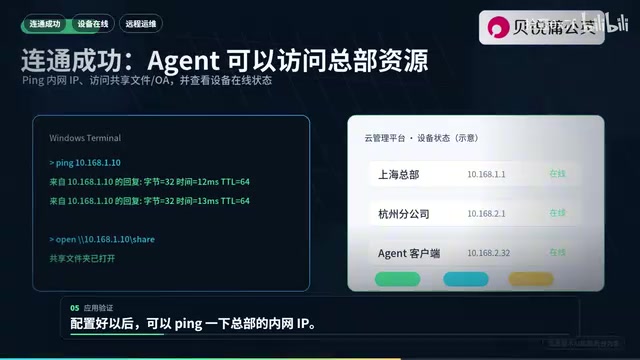
Verifying Network Connectivity
Once configured, branch office devices can directly ping headquarters' internal IP addresses and access shared folders, OA systems, or other internal services as if they were on the same local network.
Practical Implications for AI Agent Deployment
Unified Knowledge Base Access
When Agents at different locations need to call the same knowledge base, establishing underlying network connectivity means:
- Branch office Agents can access headquarters' vector database directly via internal network addresses. RAG retrieval pipeline network latency can be kept within acceptable bounds, ensuring Agent response speed is unaffected by geographic location.
- No need to deploy separate knowledge base replicas at each branch, significantly reducing maintenance costs. Maintaining consistency across multiple vector databases is itself a complex engineering challenge involving incremental synchronization, conflict resolution, version management, and more.
- Data updates sync in real time, preventing information inconsistencies across locations.
Centralized Management and Monitoring
Headquarters network administrators can perform the following through the cloud management platform:
- View the online status of all devices
- Remotely troubleshoot network issues without traveling to branch offices
- Centrally manage network access permissions for Agents. In production environments, it's recommended to layer Zero Trust security policies on top — for example, restricting specific Agents to knowledge base access only while blocking financial system access, and setting differentiated network policies for Agents in different business lines.
Cost Comparison
| Solution | Annual Cost | Deployment Difficulty | Maintenance Complexity |
|---|---|---|---|
| MPLS Dedicated Line | Tens to hundreds of thousands of dollars | High (requires carrier installation) | High |
| IPSec VPN | Moderate (equipment + labor) | Moderate (requires professional configuration) | Moderate |
| Smart Networking (Simplified SD-WAN) | Equipment + service fees | Low | Low |
AI Infrastructure Is More Than Just Compute
Many enterprises planning AI Agent deployments focus on model selection, prompt engineering, and business process design, yet easily overlook a fundamental reality: An Agent's capability ceiling is often determined by how many internal resources it can reliably access.
From a tech stack perspective, a complete enterprise-grade Agent system comprises at least four layers: the top layer is Agent application logic (task planning, tool calling, conversation management), the second layer is model inference services (LLM API), the third layer is data and knowledge (vector databases, business databases, file storage), and the bottom layer is network infrastructure. The first three layers have been extensively discussed in the technical community, but the underlying network — the foundation supporting all upper-layer capabilities — is often underestimated. A carefully tuned RAG system that can't access its knowledge base due to network issues has zero value.
Network connectivity is a prerequisite for AI Agent collaboration. As one core insight puts it: "Only when machines are reliably connected can devices achieve true collaboration."
For enterprises currently deploying or planning to deploy multi-location Agents, getting the underlying network infrastructure sorted out before focusing on upper-layer applications is a problem worth prioritizing. Smart networking solutions offer a low-cost, easy-to-deploy approach, particularly suitable for small and medium-sized businesses looking to quickly build a foundational environment for Agent interconnection. At the same time, enterprises should also evaluate high-availability design features when choosing solutions, including multi-link redundancy, automatic recovery from disconnections, and real-time network quality monitoring — all essential to support the unique demands of 24/7 Agent operations.
Conclusion
The large-scale deployment of enterprise AI Agents is elevating "cross-location networking" — a traditional IT concern — to a new level of importance. Choosing the right network connectivity solution impacts not only current operational efficiency but also lays a solid foundation for the continued expansion of the Agent ecosystem. For enterprises operating across multiple locations, smart networking is the first step toward unlocking the true collaborative potential of AI Agents.
Related articles
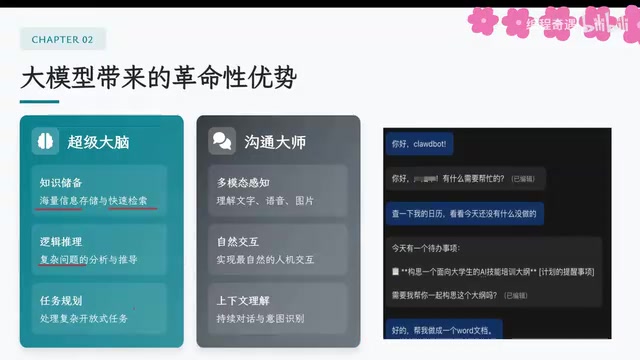
AI Agent Core Architecture Breakdown: From Concept to Enterprise-Grade Intelligent Agent Development
Deep dive into AI Agent architecture: perception, brain, and action modules. Covers RAG memory systems, tool calling mechanisms, Chain of Thought reasoning, and enterprise agent development roadmap.
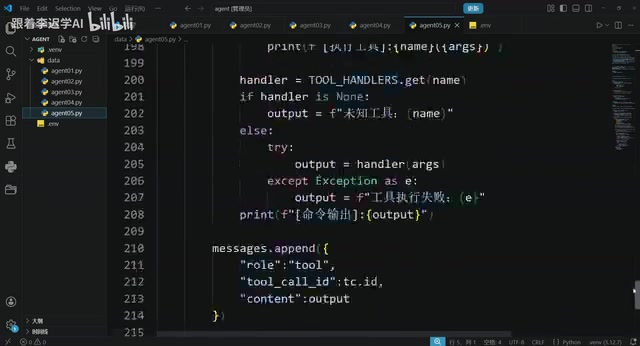
Hands-On Tutorial: Build an AI Agent from Scratch with 200 Lines of Python
Build an AI Agent from scratch with 200 lines of Python, covering prompts, memory, tool calling, RAG, and Skills — a practical guide for developers.
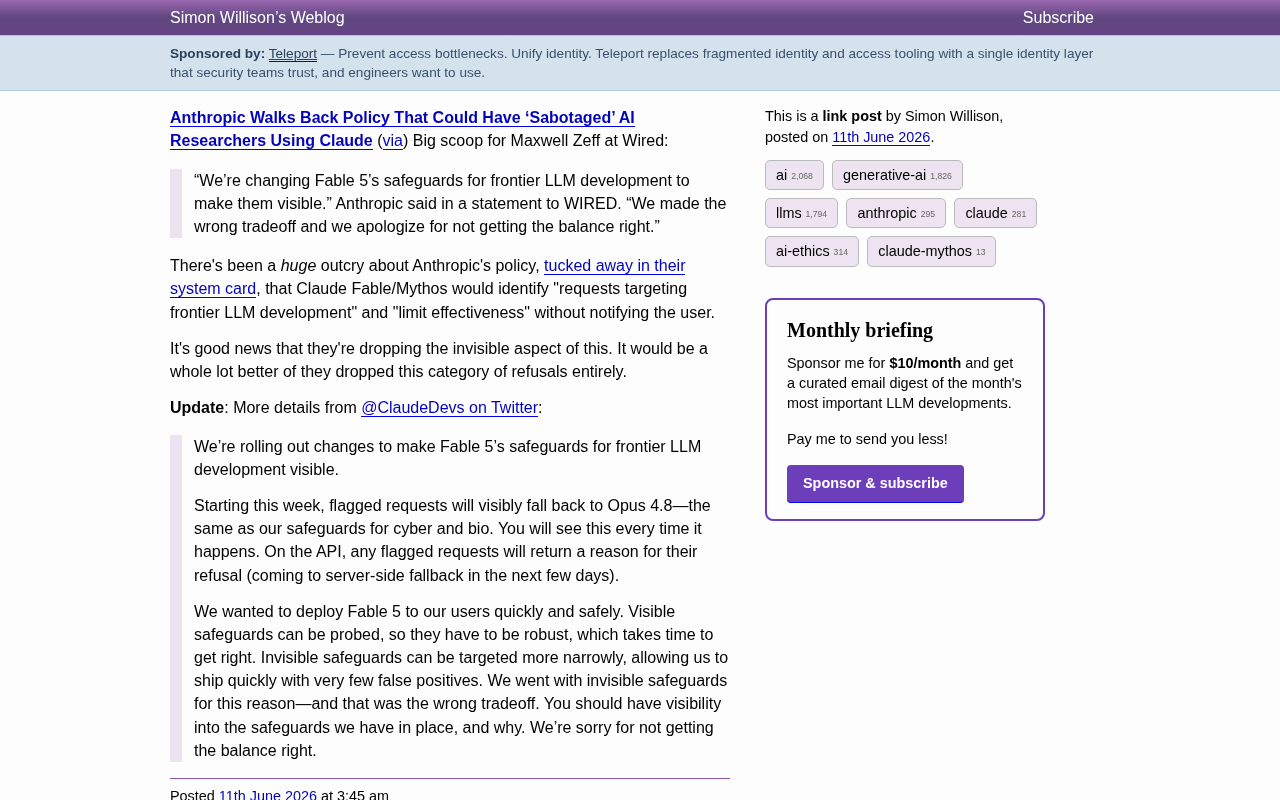
Anthropic Reverses Controversial Policy of Secretly Throttling AI Researchers Using Claude
Anthropic reverses its controversial policy of secretly throttling Claude Fable/Mythos responses to frontier LLM development requests after community backlash, raising critical questions about AI transparency.