Cursor System Outage: Paid Users Hit by Quota Restrictions, Official Fix Underway
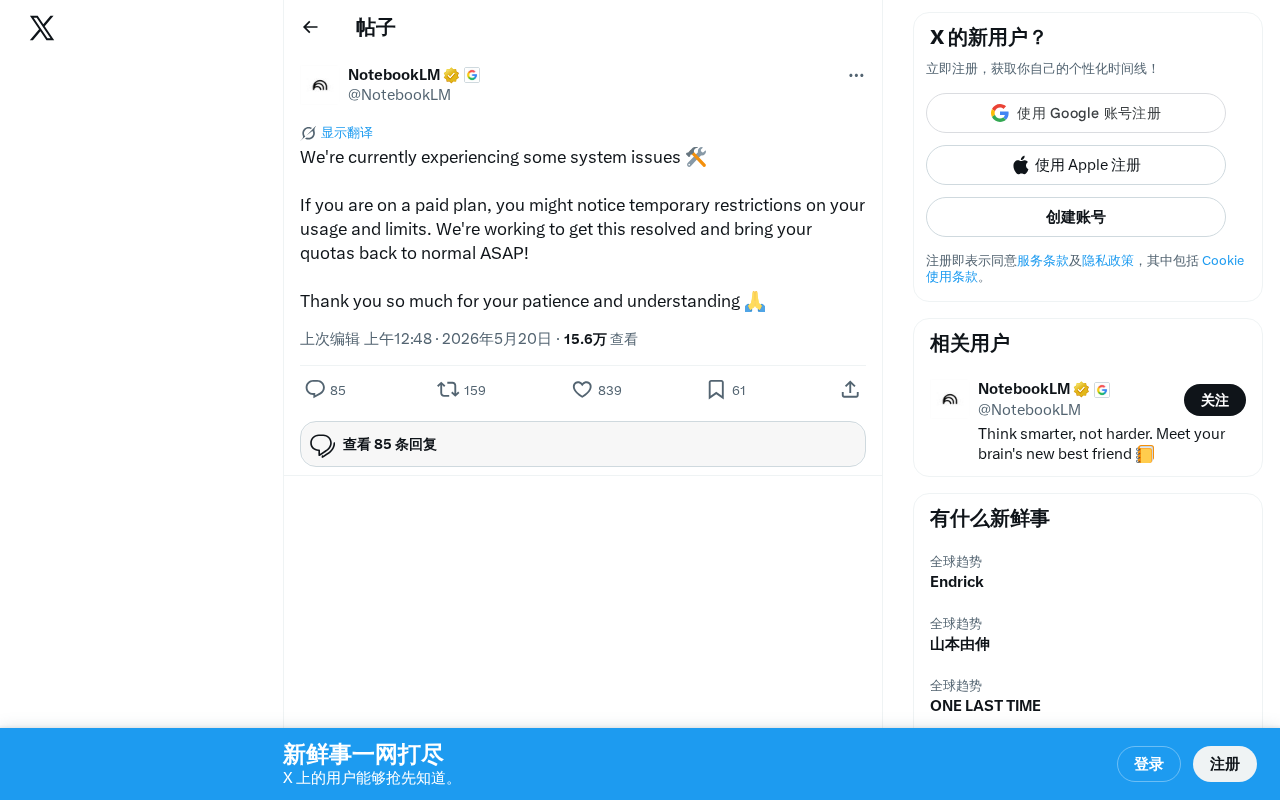
Cursor experiences system outage restricting paid user quotas; emergency fix is underway.
AI coding tool Cursor has confirmed a technical outage causing abnormal quota restrictions for paid users. The issue affects usage limits, quota displays, and overall service experience. While the team works on an emergency fix, developers are advised to use backup tools like GitHub Copilot or Windsurf, save work via Git, and monitor official channels for updates.
Incident Overview
AI coding tool Cursor recently issued an announcement confirming that its system is experiencing a technical outage, causing anomalies in usage quotas and limits for paid users. The official team stated they are working on an emergency fix and asked users to be patient.
Scope of Impact
According to Cursor's official statement on social media, this system issue primarily affects users on paid plans. Specific symptoms include:
- Abnormally tightened usage limits: Paid users may find their usage allowances temporarily restricted
- Quota display anomalies: Premium feature quotas that should normally be available may be temporarily inaccessible
- Degraded service experience: Some users may be unable to fully use all features included in their subscription plan
This is undoubtedly a significant inconvenience for developers who rely on Cursor for their daily work — especially those in the middle of critical project deadlines, where quota restrictions could force workflow interruptions.
Technical Background of the Quota System
Cursor is an AI-powered coding IDE deeply customized on top of Microsoft's open-source editor VS Code, with its core capabilities stemming from deep integration with large language models (LLMs). Cursor's quota system is essentially a mechanism for managing backend AI model API call counts — every time a user triggers code completion, conversational Q&A, code refactoring, or other AI features, it consumes corresponding API call credits. Paid users (Pro plan at $20/month, Business plan at $40/month) enjoy significantly higher call quotas than free users, including priority access to advanced models like Claude 3.5 Sonnet and GPT-4o. This quota anomaly likely involves a failure in the backend metering system or user permission verification service, causing the system to incorrectly identify users' subscription tiers.
Cursor's Market Position and User Dependency
Why This Matters
As one of the most popular AI-assisted coding tools on the market, Cursor has amassed a large base of paying users. Many developers use it as their primary IDE, deeply integrating it into their daily development workflows. When a tool like this experiences a service disruption, the impact is far-reaching.
The AI coding tool market has evolved into a multi-player competitive landscape. GitHub Copilot, as a first mover, holds a significant position leveraging GitHub's massive developer ecosystem, with over a million monthly active users. Cursor has risen rapidly with its differentiated strategy of deeply embedding AI capabilities into the IDE — features like Composer for multi-file editing and Cmd+K inline editing are particularly popular among developers. Windsurf (formerly Codeium) markets itself with its Cascade agent workflow. Additionally, products backed by major companies such as Amazon Q Developer and JetBrains AI Assistant are also actively competing for market share. This intense competition means that any tool's service disruption could drive users toward competitors.
Reliability Challenges for AI Coding Tools
This incident once again highlights the reliability challenges facing AI coding tools. As more developers incorporate AI coding assistants into their core workflows, the stability of these tools becomes critical. When outages occur, they not only impact productivity but can also interrupt ongoing code generation or refactoring tasks.
In software engineering, a "Single Point of Failure" (SPOF) refers to a weak link in a system where the failure of one component causes the entire system to stop functioning. As AI coding tools evolve from nice-to-have assistants to core components of developer workflows, they are becoming new sources of single points of failure. According to the Stack Overflow 2024 Developer Survey, over 76% of developers are already using or planning to use AI coding tools, with a significant proportion stating that AI tools have notably changed their coding habits and efficiency expectations. This deep dependency amplifies the impact of tool outages many times over.
As SaaS (Software as a Service) products, the service availability of AI coding tools is typically measured by SLAs (Service Level Agreements). The industry-standard "four nines" (99.99%) availability means only about 52 minutes of allowed downtime per year. However, AI coding tools face more complex availability challenges than traditional SaaS: they depend not only on the stability of their own infrastructure but are also highly dependent on the API availability of upstream AI model providers (such as OpenAI and Anthropic). This multi-layered dependency chain makes troubleshooting and recovery more complex, and places higher demands on service providers' architecture design and incident response capabilities.
Recommendations for Affected Users
While waiting for the official fix, affected users may consider the following measures:
- Temporarily switch to backup tools: Consider Cursor alternatives such as GitHub Copilot or Windsurf. GitHub Copilot can be quickly enabled via a VS Code plugin, making the migration cost relatively low for Cursor users already familiar with VS Code's workflow; Windsurf is also built on the VS Code architecture and offers a similar AI coding experience
- Save your current work: Make sure any uncommitted code changes are properly saved — especially multi-file editing operations performed through Cursor's Composer feature. It's advisable to stage and commit changes via Git promptly
- Follow official updates: Keep an eye on Cursor's social media accounts for the latest repair progress
- Adjust your work priorities: Front-load tasks that don't depend on AI assistance, such as code reviews, documentation writing, and architecture design discussions
Conclusion
Although this Cursor outage is temporary, it serves as a reminder that while enjoying the convenience of AI coding tools, we also need to maintain a degree of tool redundancy. Over-reliance on a single AI tool can pose risks at critical moments — a principle that aligns directly with avoiding single points of failure in software architecture design. Developers are advised to be proficient with at least two or more AI coding tools and to maintain basic competency with traditional programming approaches, ensuring development efficiency can be sustained under any circumstances. The Cursor team's rapid response and transparent communication deserve recognition, and we look forward to a swift resolution.
Key Takeaways
Related articles
Vibe Coding in Practice: A Junior Student Uses Cursor to Build a Multi-Agent System with 51 AI Officials Based on the Three Departments and Six Ministries Framework
A junior student uses Cursor and Vibe Coding to build a multi-agent system with 51 AI officials modeled on China's Three Departments and Six Ministries, featuring task distribution, approval workflows, and Token cost visualization.
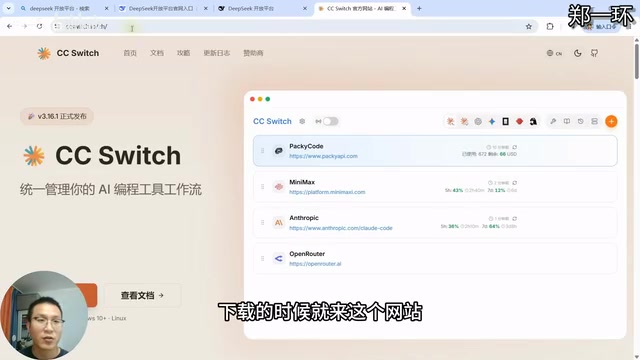
How to Connect Codex to DeepSeek Models: Free Switching via CC Switch
Learn how to connect OpenAI Codex to DeepSeek models via CC Switch, enabling free switching between DeepSeek and GPT with complete setup and routing guide.

AI Coding Deployment Guide: A Complete Hands-On Workflow from Local Demo to Live Website
Most AI Coding tutorials stop at local demos. This guide walks through 8 key steps to deploy an AI-powered 3D figurine website from Codex coding to live server deployment.