Cursor Team Hints at Major Update: What's the Next Game-Changing Move?
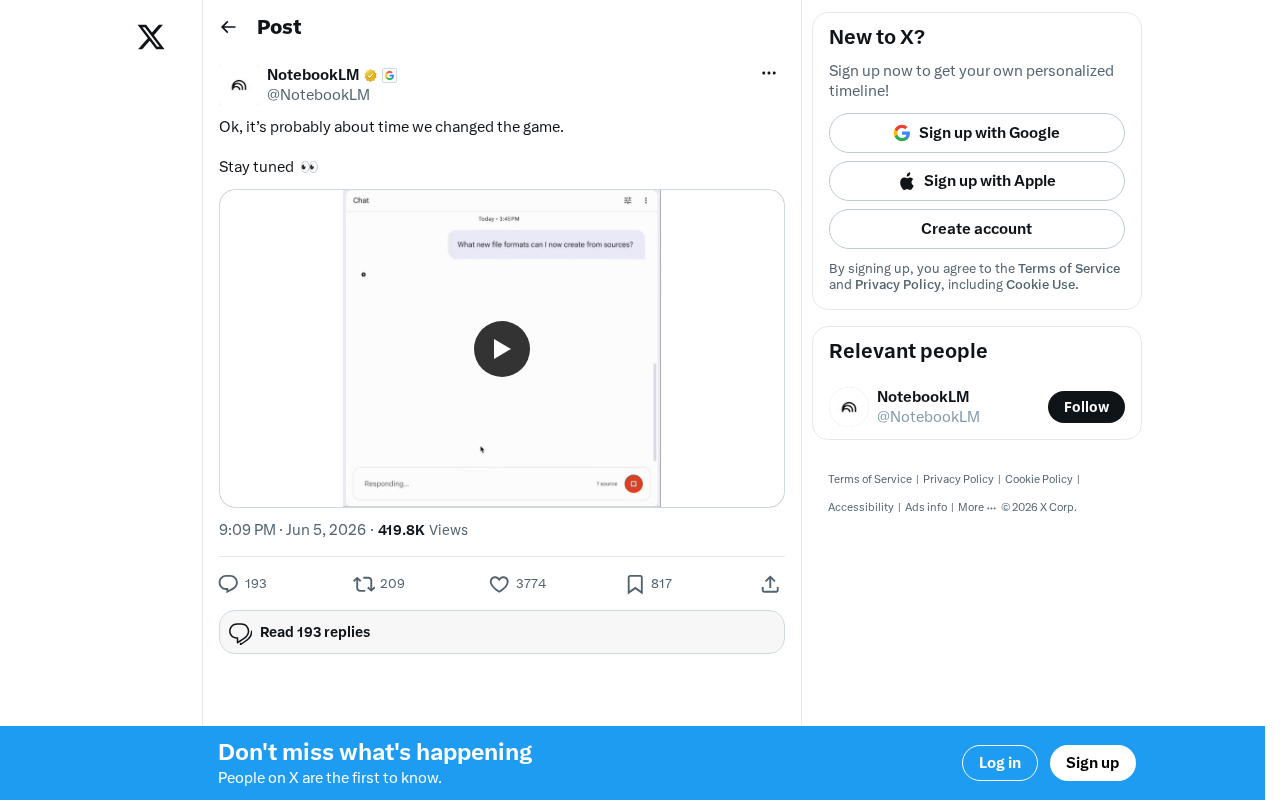
Cursor hints at a game-changing update amid fierce AI coding tool competition.
The Cursor team tweeted a cryptic hint about an upcoming game-changing update, sparking widespread speculation in the AI programming community. Amid intense competition from GitHub Copilot, Claude Code, and Windsurf, possible directions include more powerful autonomous coding Agents, a new intent-driven interaction paradigm, and breakthroughs in model inference — all poised to reshape developer productivity.
A Tweet That Sparked Heated Discussion
The Cursor team recently posted a short but loaded tweet on Twitter:
"Ok, it's probably about time we changed the game. Stay tuned 👀"
The tweet revealed no specific product details, but the confident and suggestive tone quickly sparked widespread attention and discussion across the AI programming community.
Cursor's Current State and Competitive Landscape
Cursor's Technical Foundation
Before discussing the competitive landscape, it's worth understanding Cursor's technical foundation. Cursor is developed by Anysphere, a startup founded in 2022 by several young researchers from MIT. The company has secured multiple rounds of funding from top-tier VCs including a16z and Thrive Capital, with its valuation soaring to the multi-billion dollar range by 2025. Cursor itself is a deep customization (fork) of Microsoft's open-source VS Code, which means it naturally inherits VS Code's massive plugin ecosystem and the familiar interface developers already know. On top of that, it deeply integrates AI capabilities — including context-aware code indexing, intelligent completions, conversational editing, and Agent mode. This "standing on the shoulders of giants" strategy allows Cursor to focus on AI-layer innovation without having to build editor infrastructure from scratch.
Fierce Competition in AI Programming Tools
As one of the most popular AI code editors today, Cursor faces unprecedented competitive pressure. GitHub Copilot, the first AI programming assistant to achieve large-scale commercial adoption, is backed by Microsoft and OpenAI's resources. It has evolved from simple single-line code completions to a full-featured tool supporting multi-file editing and Agent mode. Its natural advantage of being embedded within the VS Code and GitHub ecosystem gives it millions of paying users. Claude Code, Anthropic's command-line AI programming tool, takes a radically different interaction paradigm from traditional IDE plugins — developers converse with AI directly in the terminal, and the AI can autonomously read project files, execute commands, and run tests. This "no GUI" minimalist experience has unexpectedly won over many senior developers, particularly excelling in complex codebase refactoring and debugging scenarios. Windsurf (formerly Codeium), also built on a VS Code fork, focuses on value-for-money and a smooth AI editing experience, with its "Cascade" feature enabling AI to perform multi-step autonomous operations. In such a fiercely contested market, Cursor's decision to signal a "game change" at this moment clearly suggests they've come prepared.
Why "Changing the Game" Matters
"Change the game" carries significant weight in the tech industry. It typically implies not an incremental feature update, but a paradigm-level transformation. Given the technical prowess the Cursor team has demonstrated in AI-assisted programming — from Tab intelligent completions to multi-file editing to Agent mode — they certainly have the capability to deliver something disruptive. Notably, Cursor's Tab completion feature is widely praised by developers not just because it predicts the next token, but because it analyzes the entire project's context, the developer's editing history, and intent to predict likely multi-line code changes ahead. This "predictive editing" experience far surpasses traditional autocomplete and lays the groundwork for even more advanced AI programming paradigms.
Speculations on Possible Update Directions
While the team hasn't provided any specifics, based on industry trends and Cursor's recent trajectory, the community has several main theories about this update:
A More Powerful Autonomous Programming Agent
The competitive focus in AI programming tools is shifting from "code completion" to "autonomous programming Agents." The term Agent here refers to an AI system capable of autonomously planning tasks, invoking tools, executing operations, and iterating based on feedback — fundamentally different from traditional "question-and-answer" AI assistants. In programming, Agent evolution has roughly gone through three stages: the first stage is code completion (like early Copilot), where AI only predicts the next code segment at the cursor position; the second stage is conversational editing (like Cursor Chat), where developers use natural language instructions to have AI modify code; the third stage is the autonomous Agent, where AI understands high-level development goals, autonomously decomposes tasks, browses the codebase, writes code, runs tests, and fixes bugs, forming a complete "perceive-plan-execute-feedback" loop. Products like Devin and OpenAI Codex are already exploring this direction. Cursor may be launching a more autonomous programming agent capable of independently completing more complex development tasks, including cross-file refactoring, automated test generation, and even end-to-end feature development.
An Entirely New Human-AI Interaction Paradigm
Another possible direction is a fundamental redefinition of how developers interact with AI. Current AI programming interaction modes can be roughly categorized as: inline completions (AI suggests code in real-time within the editor), chat panels (conversing with AI through a sidebar), command-line interaction (like Claude Code's terminal dialogue mode), and background Agents (AI works independently in the background and submits results for human review). The next-generation paradigm being explored by the industry is called "Intent-Driven Programming," whose core idea is that developers only need to express "what I want" rather than "how to implement it." The technical challenge of this approach is that AI needs a holistic understanding of the project architecture, the ability to precisely map vague natural language intent to code changes, while maintaining consistency with existing code style and architecture. The current model is still "humans write code, AI assists," but the next generation may evolve into a deeper collaboration mode of "humans describe intent, AI fully implements" — where the developer's role shifts closer to that of a "technical product manager" or "code reviewer."
Breakthroughs at the Model and Inference Level
The Cursor team has always had a distinctive edge in model tuning. Unlike most AI programming tools that directly call general-purpose LLM APIs, Cursor employs a multi-layer model strategy: for low-latency scenarios like real-time completions, it uses specially fine-tuned small models; for complex code generation and refactoring tasks, it calls frontier models like Claude and GPT-4, optimizing output quality through carefully designed prompt engineering and context management. Additionally, Cursor has trained its own proprietary models (such as "cursor-small" for Tab completions), which are deeply optimized for code editing scenarios. The industry has recently made significant progress in "inference-time compute scaling" — improving output quality by having models perform more "thinking" steps when generating answers. OpenAI's o-series models and Anthropic's Claude extended thinking feature are both representative of this direction. It's possible that Cursor has achieved a major breakthrough at the underlying model or inference strategy level — for example, applying inference-time scaling techniques to code generation, or developing a Retrieval-Augmented Generation (RAG) system that better understands entire codebase context, thereby significantly improving the quality and accuracy of code understanding and generation.
What This Means for Developers
Every major update to AI programming tools redefines the upper limit of developer productivity. If Cursor can truly deliver on its "game-changing" promise, it will have far-reaching implications for the entire software development industry. From a broader perspective, the evolution of AI programming tools is reshaping the talent structure of software engineering — the entry barrier for junior developers is lowering (AI can help them quickly generate boilerplate code and learn best practices), while higher demands are being placed on senior developers' system design skills, architectural decision-making abilities, and AI collaboration capabilities.
For developers, the best strategy right now is to stay tuned while continuing to deepen their experience with existing tools. Regardless of what ultimately gets released, developers who can quickly adapt to new tools and new paradigms will have a head start in this AI programming revolution.
Conclusion
A brief tweet, yet it carries the expectations of the entire AI programming community. The Cursor team's choice to build hype in such a high-profile manner suggests they have extremely high confidence in what they're about to release. Let's wait and see what surprises this "game change" will bring.
Key Takeaways
Related articles
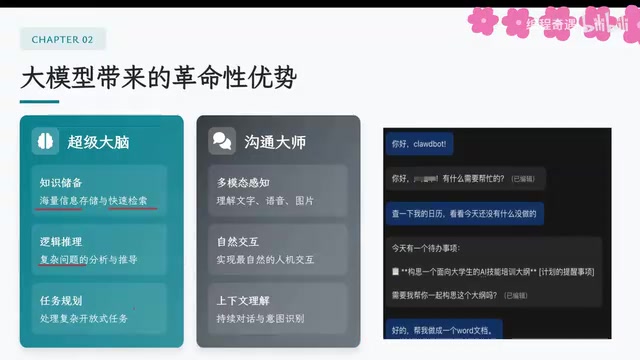
AI Agent Core Architecture Breakdown: From Concept to Enterprise-Grade Intelligent Agent Development
Deep dive into AI Agent architecture: perception, brain, and action modules. Covers RAG memory systems, tool calling mechanisms, Chain of Thought reasoning, and enterprise agent development roadmap.
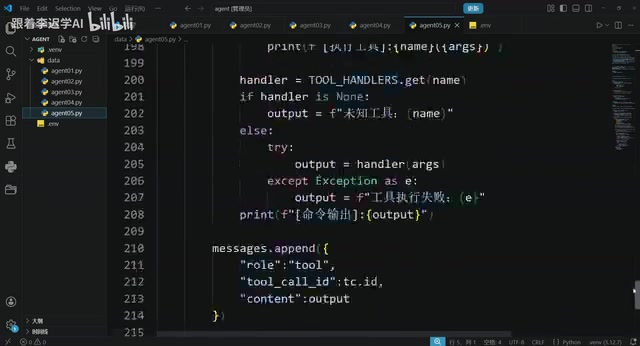
Hands-On Tutorial: Build an AI Agent from Scratch with 200 Lines of Python
Build an AI Agent from scratch with 200 lines of Python, covering prompts, memory, tool calling, RAG, and Skills — a practical guide for developers.
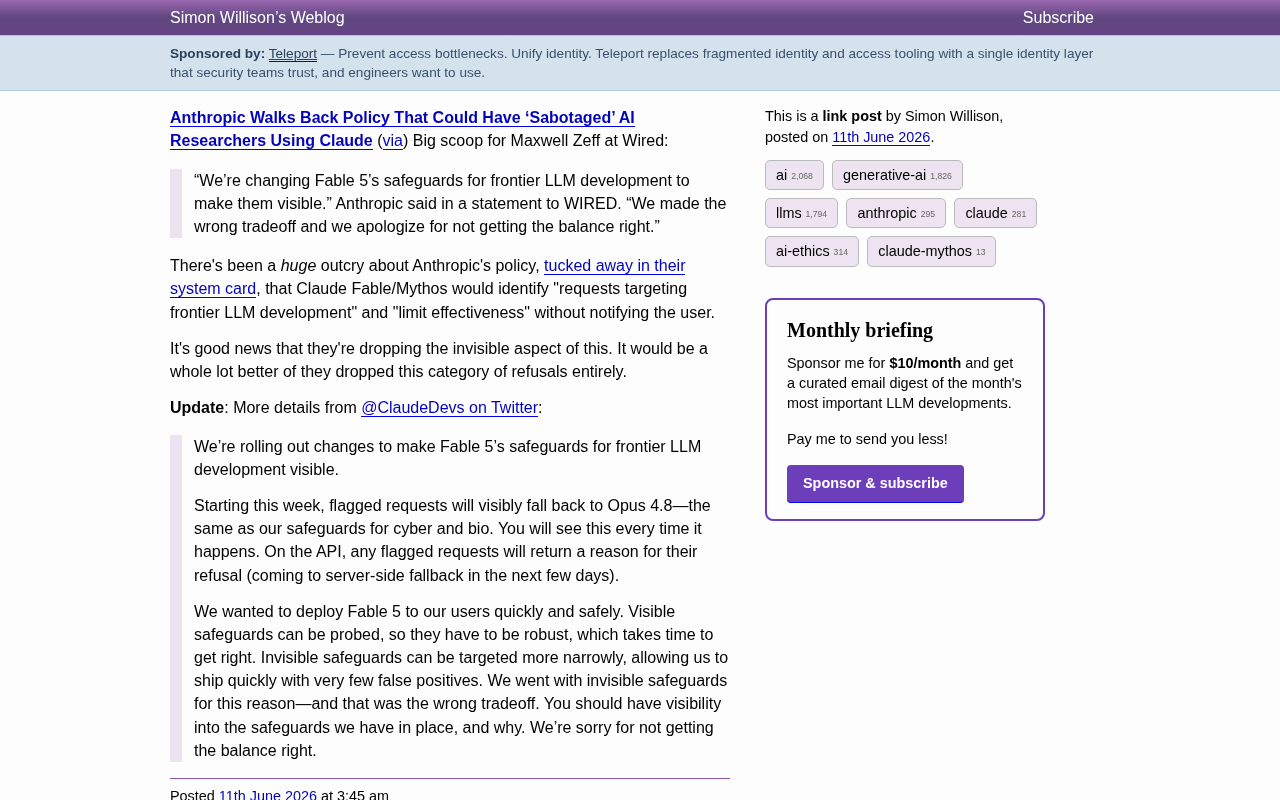
Anthropic Reverses Controversial Policy of Secretly Throttling AI Researchers Using Claude
Anthropic reverses its controversial policy of secretly throttling Claude Fable/Mythos responses to frontier LLM development requests after community backlash, raising critical questions about AI transparency.