Custom GPT Monetization Guide: How Ordinary People Can Land Overseas Clients and Earn in USD

A practical guide to earning USD by building and selling custom GPTs to overseas clients.
This guide shows how ordinary people can monetize custom GPTs by serving overseas clients on platforms like Fiverr and Upwork. It covers a three-tier pricing strategy ($100–$1,000+), a five-step delivery workflow powered by AI, client acquisition tactics combining proactive outreach with content-driven traffic, and a 30-day action plan to go from zero to earning in USD — all with zero coding required.
Why Custom GPTs Are a Monetization Opportunity for Ordinary People
When an AI wave hits, most people's first reaction is anxiety — fear that they lack the technical skills to ride the wave. But here's the truth: the people who profit most from a boom aren't usually the most technically skilled. They're the ones who are quickest to turn other people's "knowledge gaps" into a business.
The monetization logic behind custom GPTs is dead simple: tons of overseas users want AI tools to boost their productivity, but they're either too lazy to figure it out, can't learn it, or don't have the time. You can build them a dedicated GPT bot in about ten minutes — and that gap is exactly where you get paid.
Three core reasons this is friendly for ordinary people:
- Zero coding required: OpenAI has simplified the process to point-and-click level — no technical background needed
- Low startup cost: The only expense is a ChatGPT Plus subscription at $20/month
- USD pricing: Your clients are overseas users, and the same work commands several times the rate compared to domestic markets
The "product" is simply a GPT bot specialized in a specific task through instructions. Give it a set of instructions, feed it some reference materials, and it becomes the client's dedicated AI tool. Precisely because it's so simple, clients are more than willing to pay you to handle it for them.
Custom GPT Monetization Paths and Pricing Strategy
Building the same GPT, some people earn nothing while others cash in on every order. The difference comes down entirely to which monetization path you choose.
Path A (Not Recommended): List your bot on the GPT Store and hope for revenue sharing from traffic. The GPT Store is an app marketplace launched by OpenAI in January 2024, allowing users to publish their custom GPTs for others to use, with revenue distributed based on usage volume. But the reality is that the Store already has millions of GPTs, the discovery mechanism is extremely immature, and the vast majority of creators' work gets buried in an ocean of listings. You're competing for traffic against OpenAI itself and millions of other creators, and most people end up earning exactly zero — a situation eerily similar to what indie developers face on the App Store long after its golden era.
Path B (Recommended): Charge clients directly. The client gives you requirements, you deliver, they pay. The chain is as short as it gets, and theoretically you can start earning from day one.
Three-Tier Pricing Model
Many beginners get stuck at the pricing stage. Here's a proven three-tier framework:
| Tier | Scope | Price Range | Purpose |
|---|---|---|---|
| Starter | Simplest bot | ~$100 | Volume play to build reviews |
| Standard | Includes reference materials and custom logic | $300–500 | Main profit zone |
| Enterprise | Data integration / complex workflows | $1,000+ | Big-ticket profit |
The strategy: start with low-priced orders to nail the process and build trust, then guide clients toward higher tiers. Established sellers on Fiverr almost universally follow this tiered logic.
The Complete Delivery Workflow for a GPT Order
From the moment a client reaches out to the moment money hits your account, there are five key actions. AI can handle roughly 80% of the workload for you.
Action 1: Capture the Requirements
Don't panic when the client messages you in English — just copy it into AI, have it translate and distill the request into one sentence: what exactly does the client want this bot to do?

Weak English skills genuinely don't affect your ability to take orders. AI is your translator and requirements analyst.
Action 2: Negotiate the Price
Key technique: don't just blurt out "I'll charge you $300." First, spell out what the client stands to save or gain. For example, "This bot will save you two hours every day" — and suddenly the price doesn't feel expensive anymore.
Action 3: Write the Prompt Instructions (Core Step)
Whether the bot works well or not comes down entirely to the prompt instructions. Prompt instructions are essentially a "programming language" that uses natural language to define AI behavior boundaries — a well-crafted system prompt typically includes five modules: role definition, task boundaries, output format, prohibited behaviors, and exception handling. This structured approach is known in the industry as Prompt Engineering, and it has evolved from an experimental skill into a standardizable, deliverable service capability.
But you don't need to write it from scratch — feed the client's requirements into AI and have it generate a clearly structured system prompt you can paste directly.
In essence, you're using AI to build AI. This single step eliminates most of the work that used to require a programmer.
Action 4: Upload Materials and Build
First, organize the client's reference materials into plain text with subheadings (this works far better than dumping raw PDFs — AI reads it much more accurately). The technical reason: GPT Builder uses a RAG (Retrieval-Augmented Generation) mechanism. The system splits uploaded documents into hundreds of text chunks and builds a vector index. When a user asks a question, it first retrieves the most relevant chunks before generating an answer. PDF tables, headers, and multi-column layouts tend to produce garbled text and broken segments during chunking, while plain text with subheadings keeps each chunk as a complete semantic unit, significantly improving retrieval accuracy.
Then paste the instructions into GPT Builder, upload the materials, name it, and test. The entire process is zero-code, and once you're practiced, you can deliver in about ten minutes.
Action 5: Delivery and Repeat Business

This step is where you truly separate yourself from the competition:
- Write a user guide: Have AI generate an English instruction manual — the client experience instantly levels up
- Proactive follow-up: Check in a week later with a simple "How's everything working?" to stay on their radar
- Suggest upgrades: Naturally introduce maintenance services or feature expansions, turning a one-time sale into recurring revenue
Beginners earn one payment; skilled operators earn multiple payments from a single client. Repeat business is the real source of profit.
Client Acquisition: Fiverr Orders and Content-Driven Traffic
Proactive Outreach (Faster Money)
Ideal for people who want to land their first order today:
- List packages on Fiverr: Set up your service page with all three pricing tiers
- Bid on Upwork: Target beginner-friendly projects to accumulate reviews
Fiverr is one of the world's largest freelance service marketplaces. Unlike Upwork's hourly billing model, Fiverr uses a fixed-price package model (called Gigs), where sellers pre-define service scope and pricing, and buyers order directly. The platform takes a 20% commission, but its search ranking algorithm heavily favors review count and response speed — meaning new sellers need to use low-priced orders to quickly accumulate their first 10–20 positive reviews before they can earn organic traffic recommendations and enter a virtuous cycle.
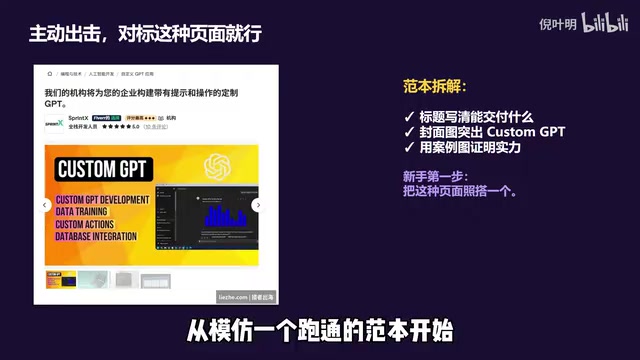
Study established sellers' page structures: the title clearly states what you deliver, the cover image highlights the "Custom GPT" keyword, and case study images prove your capability. A beginner's first step is simply to model a proven template and build from there.
Passive Traffic (Long-Term Compounding)
- Write tutorials on Medium: Search "Custom GPT," study the top-ranking articles, and rewrite them from your own angle. Lock your titles onto specific industries (e.g., "A Custom GPT for Law Firms" or "A Custom GPT for Gyms") so the right clients find you through search
- Answer questions on Reddit: Provide value in relevant subreddits
- Post case studies on LinkedIn: Showcase delivered results to attract enterprise clients
The key is one-time effort, long-term returns. Beginners should use proactive outreach to sustain themselves while planting the seeds for passive traffic.
30-Day Action Plan and Pitfalls to Avoid
Execution Cadence
- Week 1: Practice. Build 2 GPTs for yourself and get comfortable with the entire workflow
- Week 2: Go live. Set up your Fiverr service page and list all three pricing tiers
- Week 3: Land orders. Actively bid on projects + publish one Medium tutorial for inbound traffic
- Week 4: Accelerate. Accumulate reviews and gradually raise your prices from the starter tier upward
Three Pitfalls You Must Avoid
- Don't take on big orders right away: Jumping into enterprise orders without experience means you risk botching the job, issuing refunds, and tanking your reputation. Master the craft on small orders first
- Don't become free customer support: Clearly state in your pricing how many revisions are included — anything beyond that costs extra. Otherwise, endless revision requests will drain all your time
- Don't rely on a single pitch: Talking to a law firm versus a gym requires completely different language — speak in terms of benefits their specific industry understands
Key Takeaways
The underlying logic of custom GPT monetization is crystal clear: you're profiting from a knowledge gap, not from technical expertise — ordinary people can absolutely get in the game. Choose the path of charging clients directly, use the three-tier pricing model to guide them from low to high, and focus on landing orders first before optimizing. Throughout the entire process, AI is both your product and your production tool — use AI to build AI, use AI to communicate with clients, use AI to write delivery documents.
The real barrier was never technical skill. It's whether you're willing to run through the process and get that first order done.
Related articles
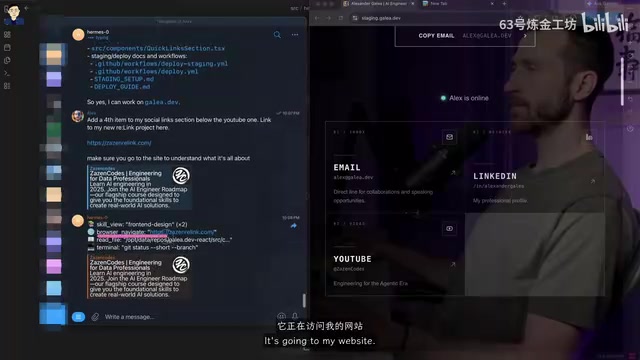
Hermes Agent Deployment Guide: Building a Mobile AI Coding Workflow with Telegram
Learn how to deploy Hermes Agent on a VPS with Telegram Bot integration for mobile AI coding. Covers Docker setup, GitHub integration, auto-deployment, and comparison with OpenClaw.
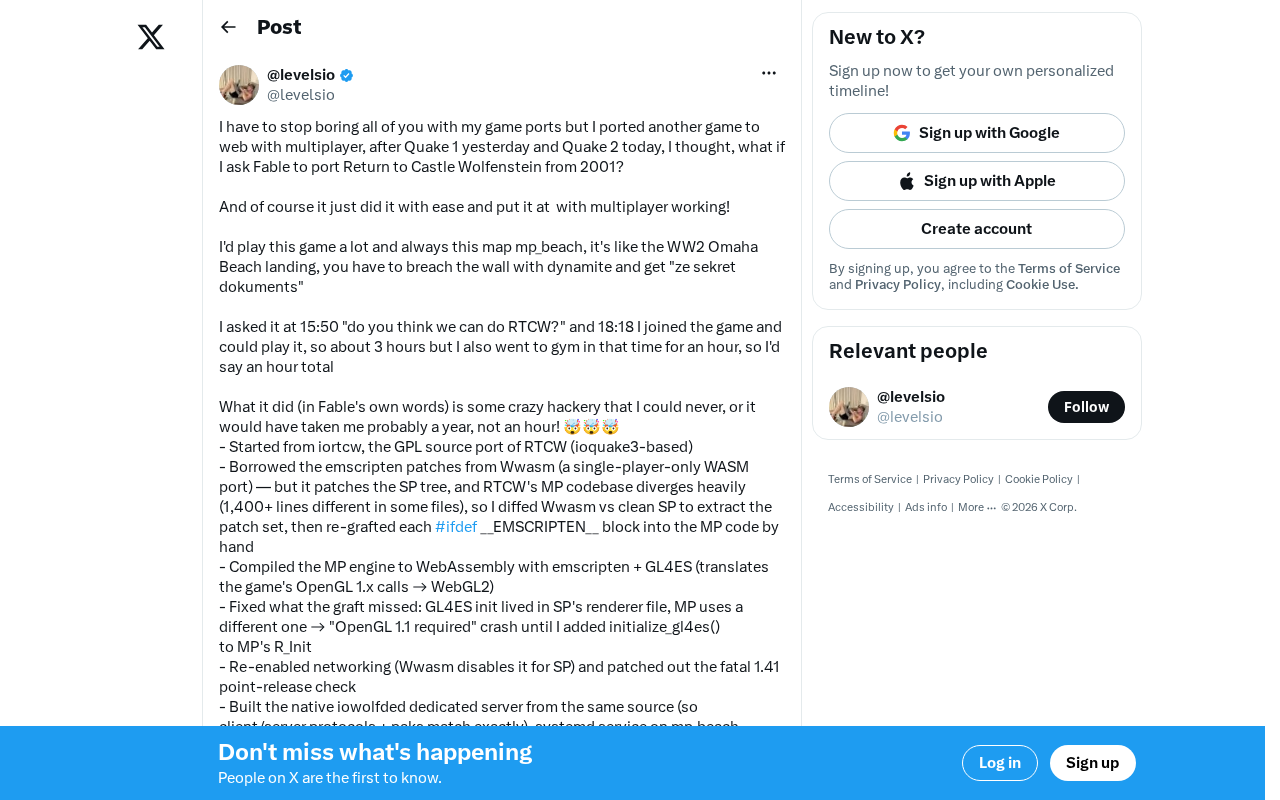
AI Tool Fable Ports Classic FPS to Browser in Two Hours — With Full Multiplayer
A developer used AI coding tool Fable to port Return to Castle Wolfenstein to the web browser in just two hours with full multiplayer, revealing AI's power in system-level engineering.

Building a Cold Chain Logistics Optimization Research Project with Codex: A Complete Workflow from Scratch to PDF Paper
Learn how to use OpenAI Codex to build a complete cold chain logistics optimization research project from scratch, including simulated annealing implementation, experiments, figures, and LaTeX paper compilation.