Free Unlimited Grok AI Image Generation Method Tested: A Comprehensive Analysis of Advantages and Risks
Free Unlimited Grok AI Image Generatio…
An objective analysis of free unlimited Grok AI image generation: advantages, technical details, and risks.
This article examines a method for using Grok AI's image generation feature for free and without restrictions. It covers xAI's technical background, why Grok is popular due to lenient content moderation, the technical implementation behind third-party access solutions, and critical risks including privacy concerns, stability issues, and legal compliance. The article recommends prioritizing official channels and using AI tools responsibly.
Introduction
Grok AI, developed by xAI, has been gaining widespread popularity online thanks to its powerful image generation capabilities. However, official channels often come with usage limits or require paid subscriptions, deterring many users. Recently, a Chinese content creator shared a method for using Grok's image generation feature for free and without restrictions, sparking widespread interest. This article provides a detailed overview and objective analysis of this approach.
Grok AI's Technical Background and xAI Company
xAI is an artificial intelligence company founded by Elon Musk in 2023, headquartered in the San Francisco Bay Area. Musk's motivation for creating xAI was to build a more open, less censored AI system to counter competitors like OpenAI, which he considers overly "politically correct." The name "Grok" comes from science fiction author Robert A. Heinlein's novel Stranger in a Strange Land, meaning "to understand something profoundly and intuitively." Grok's image generation feature is based on the Aurora model, a proprietary image generation model developed by xAI that uses a Diffusion Model architecture capable of generating high-resolution images from text prompts.
Why Grok AI Image Generation Is So Popular
Relatively Lenient Content Moderation
The core reason Grok's image generation feature has sparked widespread discussion in the Chinese-speaking internet community is its relatively lenient content moderation mechanism. Compared to the strict limitations of mainstream AI image generation tools like Midjourney and DALL-E, Grok offers significantly more freedom in content generation, accommodating a wider range of creative scenarios.
The major AI image generation tools currently on the market include: OpenAI's DALL-E 3 (integrated into ChatGPT), Midjourney (accessed via Discord), Stability AI's Stable Diffusion (open-source, locally deployable), Google's Imagen, and xAI's Grok Aurora. These tools differ significantly in their content moderation strategies: Midjourney and DALL-E have strict filtering mechanisms for portraits, violence, and adult content; Stable Diffusion, being open-source, allows users to remove restrictions themselves; while Grok takes a relatively lenient approach, allowing generation of public figure portraits and other content prohibited on other platforms — a key reason for its rapid rise on social media.
A Brief Overview of AI Image Generation Technology
Current mainstream AI image generation technology is primarily based on the Diffusion Model principle. The core idea is: gradually add noise to an image until it becomes pure random noise, then train a neural network to learn the reverse denoising process. When generating images, the model starts from a random noise image and progressively removes noise until a clear image emerges. The text-to-image conversion relies on multimodal models like CLIP, which encode text descriptions into vectors that guide the denoising process toward matching the text description. Midjourney, DALL-E 3, Stable Diffusion, and Grok's Aurora model are all based on different variants of this technical approach.
A Multi-Functional AI Assistant Beyond Image Generation
Grok is not merely an image generation tool — it also offers multiple practical features:
- Intelligent Conversation: Supports in-depth discussions and Q&A on various topics
- Role-Playing: Can embody different characters for interactive experiences
- AI Image Generation: Creates high-quality images from text descriptions
- Continuous Model Updates: Always supports the latest released version of Grok
Detailed Breakdown of the Free Unlimited Grok Solution
According to the video introduction, this free solution has several notable characteristics:
Key Advantages at a Glance
- Completely Free: Access all features including AI image generation without payment
- No Word Limits: No character limits on conversations or prompts, allowing detailed descriptions
- Unlimited Usage: No daily usage caps, enabling repeated refinement of results
- Latest Model Support: Experience the capabilities of Grok's most recently released AI models
Technical Implementation of Third-Party Access
Such free solutions are typically achieved through reverse engineering xAI's API interfaces. Developers analyze the communication protocol between Grok's official client and servers through packet capture, extract API endpoints and authentication methods, then set up intermediate proxy servers for users. Common implementation methods include: polling calls using API quotas from large numbers of free X platform accounts, batch registration through automated scripts to obtain tokens, or exploiting platform vulnerabilities to bypass rate limits. These methods essentially consume xAI's computing resources without authorization, and therefore carry the risk of being blocked at any time.
Risks You Must Understand Before Using
While these third-party free access methods are tempting, they typically come with significant potential issues that cannot be ignored:
- Questionable Stability: Free services may become unavailable or be blocked by the official platform at any time
- Privacy Leak Risks: Third-party platforms may log users' conversation content and generation records
- Compliance Concerns: Using unofficial channels may violate xAI's terms of service
- Legal Liability: Generated content must still comply with local laws and regulations, and users bear responsibility
Rational Considerations About AI Image Generation Tools
Balancing Technological Progress and Content Boundaries
The rapid development of AI image generation technology has indeed brought unprecedented creative freedom, but it has also sparked widespread discussion about content boundaries. The restrictions platforms place on generated content are fundamentally designed to prevent technology from being misused to create harmful or illegal content.
AI Content Moderation is one of the core challenges facing the AI industry today. Platforms typically employ multi-layered filtering mechanisms: on the input side, keyword detection and semantic analysis intercept prohibited prompts; on the generation side, NSFW classifiers assign safety scores to output images; some platforms also conduct manual spot-checks on generated results. Regulations such as the EU's AI Act and China's "Interim Measures for the Management of Generative Artificial Intelligence Services" impose clear compliance requirements on AI-generated content, including content labeling and deepfake prevention. The balance between creative freedom and social responsibility remains a highly controversial topic.
Practical Usage Recommendations for Regular Users
- Prioritize official channels to ensure account security and data privacy
- Understand relevant laws and regulations to avoid generating illegal or infringing content
- Use AI image generation as a creative assistance tool to unlock its true productivity value
- Pay attention to official free quotas — X platform (formerly Twitter) users already have a certain amount of free Grok access
Conclusion
The free unlimited Grok AI image generation solution is certainly attractive, but users should exercise rational judgment when trying it, paying attention to personal information security and content compliance issues. As AI technology continues to mature, more legitimate channels will offer high-quality AI image generation services in the future. Rather than blindly pursuing "no restrictions," it's better to seriously consider how to apply Grok's AI image generation capabilities to truly valuable creative work.
Key Takeaways
Related articles
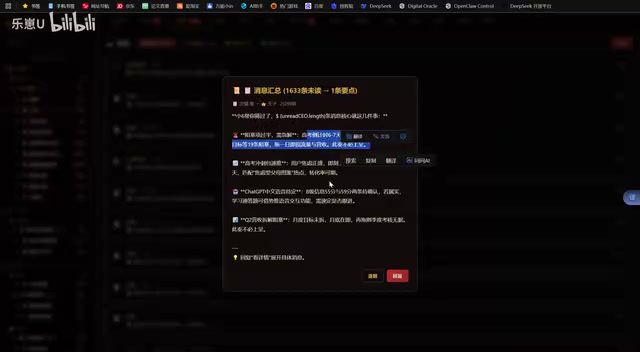
Vibe Coding in Practice: A Junior Student Uses Cursor to Build a Multi-Agent System with 51 AI Officials Based on the Three Departments and Six Ministries Framework
A junior student uses Cursor and Vibe Coding to build a multi-agent system with 51 AI officials modeled on China's Three Departments and Six Ministries, featuring task distribution, approval workflows, and Token cost visualization.
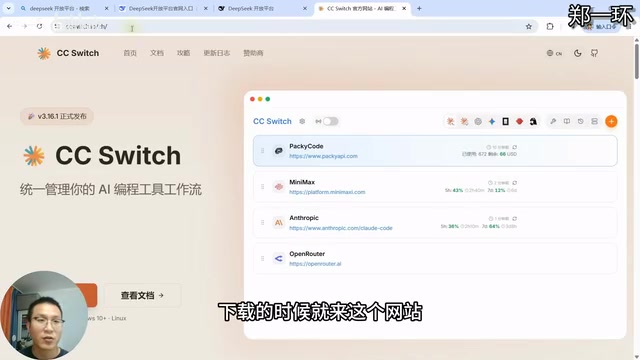
How to Connect Codex to DeepSeek Models: Free Switching via CC Switch
Learn how to connect OpenAI Codex to DeepSeek models via CC Switch, enabling free switching between DeepSeek and GPT with complete setup and routing guide.
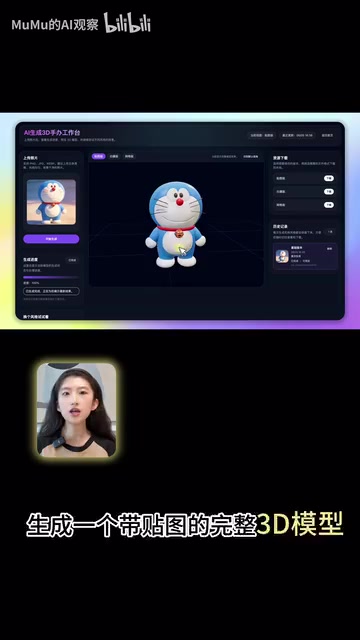
AI Coding Deployment Guide: A Complete Hands-On Workflow from Local Demo to Live Website
Most AI Coding tutorials stop at local demos. This guide walks through 8 key steps to deploy an AI-powered 3D figurine website from Codex coding to live server deployment.