Gen Z Is Collectively Exiting the Dating Market: Anxiety, Social Skill Atrophy, and the Cost of Growing Up Digital
Gen Z Is Collectively Exiting the Dati…
Gen Z is massively exiting the dating market due to economic anxiety and social skill atrophy.
Joint research from the University of Virginia and Brigham Young University reveals Gen Z is in a "depressed dating economy." 50% of respondents lack "dating efficacy," with financial pressure and digital-era social skill atrophy as the two core causes. Anxiety, avoidance, and lack of experience form a vicious cycle, with "fear of getting it wrong" driving an entire generation out of the dating market—a global trend profoundly reshaping demographic structures.
Gen Z Has Stopped Dating: A Structural Social Shift in Progress
A large-scale survey jointly conducted by the Institute for Family Studies at UVA and the Wheatley Institute at BYU has revealed a striking conclusion: we are in the midst of a "depressed dating economy." Gen Z—the digital native generation—is exiting the dating market at an unprecedented scale.
The Institute for Family Studies (IFS) at the University of Virginia is a leading academic institution in the U.S. studying the relationships between marriage, family structure, and social well-being, with a long track record of tracking shifts in American family dynamics. The Wheatley Institute at Brigham Young University focuses on research at the intersection of personal character, family, and civil society. The joint research from these two institutions carries significant academic credibility, with data collection typically covering thousands of respondents using stratified random sampling methods to ensure representativeness and statistical significance.

Gen Z here typically refers to those born between 1997 and 2012—the first generation surrounded by the internet, smartphones, and social media from birth, true "Digital Natives." Unlike Millennials (born 1981-1996), Gen Z never experienced the analog-to-digital transition. Their cognitive development, social patterns, and identity construction have been deeply embedded in the digital ecosystem from the very beginning. This generational characteristic makes them highly fluent in online environments, but it also means they lack the experience of naturally acquiring social skills in purely offline settings that previous generations had.
This is not an isolated phenomenon but a structural social change. When researchers dug deeper into why young people are reluctant to date, the answer wasn't simply "they don't want romance"—rather, deep-seated anxiety is driving this behavioral pattern.
The Anxiety-Driven Vicious Cycle: Why Gen Z Can't Take the First Step
Economic Anxiety: Dating Costs as a Psychological Barrier
The first obstacle mentioned by surveyed Gen Z young people is financial pressure. "Dating is too expensive"—behind this statement lies the economic uncertainty facing this generation. Against the backdrop of high inflation, soaring housing prices, and an unstable job market, young people have developed very real economic anxiety about "spending money to go on dates."

This economic anxiety has deep macroeconomic roots. Gen Z entered adulthood amid multiple overlapping economic shocks: the severe labor market disruptions caused by the COVID-19 pandemic in 2020, the global inflation surge of 2021-2023, U.S. student loan debt surpassing $1.7 trillion, and the ratio of median home prices to young people's median income in major cities reaching historic highs. According to the U.S. Bureau of Labor Statistics, the real purchasing power of those under 25 has declined significantly over the past five years. This economic pressure is not merely an objective financial constraint—it has formed a kind of "economic identity anxiety." Young people feel they haven't yet reached the economic threshold that "qualifies" them to date, especially within a cultural context where traditional gender expectations (such as men being expected to pay for dates) still persist.
They're unsure whether they have enough money to take someone out, and this absence of an "economic prerequisite" causes many to give up before even taking the first step.
Comprehensive Social Skill Atrophy: 50% of Gen Z Lacks Dating Efficacy
The deeper issue lies in the lack of "dating efficacy." The survey shows that a staggering 50% of respondents reported problems in this area.
The concept of "dating efficacy" derives from psychologist Albert Bandura's Self-Efficacy theory. Bandura argued that a person's belief in their ability to successfully complete a task directly determines whether they will attempt it, how much effort they invest, and their persistence in the face of difficulty. Self-efficacy is built primarily from four sources: mastery experiences (personal success), vicarious experiences (observing others succeed), verbal persuasion (encouragement from others), and physiological/emotional states. When Gen Z lacks early successful dating experiences and frequently witnesses others' dating "disasters" on social media, their dating efficacy naturally continues to decline.
This manifests across three dimensions:
- Fear of initiating contact: Lacking confidence to approach someone or express interest
- Inability to read social cues: Uncertainty about what someone's body language or tonal hints mean
- Inability to handle rejection: Fear of being unable to recover after rejection, lacking emotional resilience

These three points collectively point to a core problem: Gen Z's fundamental capacity for face-to-face social interaction is atrophying. They don't lack the desire to date—they genuinely don't know "how to date."
The Cost of Growing Up Digital: How Screen-Based Socializing Destroys Real Interaction Skills
The Chasm Between Screen and Reality
Gen Z grew up with smartphones and social media. A massive portion of their social interactions happen behind screens—messaging, liking, commenting. But dating, at its core, requires face-to-face, real-time, uncertainty-filled interpersonal interaction.
When you're accustomed to online communication that can be edited, deleted, and carefully worded, the immediacy and uncontrollability of face-to-face interaction becomes extraordinarily frightening. Every awkward silence, every glance that might be misread, becomes an enormous psychological burden.
The Generation Afraid of Making Mistakes: A Self-Reinforcing Withdrawal Cycle

Researchers point out that all of this forms a self-reinforcing vicious cycle: anxiety leads to avoidance; avoidance leads to lack of experience; lack of experience leads to greater anxiety. Ultimately, young people choose the "safest" strategy—complete withdrawal.
In the words of respondents, the core driving force is the "worry about getting it wrong." In an era where social media amplifies every mistake and cancel culture can strike at any moment, "doing nothing" seems far safer than "doing something wrong."
Here it's important to understand the deep psychological impact of "Cancel Culture" on Gen Z. Cancel culture refers to the phenomenon in the social media age where individuals are collectively boycotted and ostracized by the public for inappropriate words or actions. For Gen Z, social media's "permanent memory" characteristic means any social misstep could be screenshotted, shared, and preserved forever. This "Digital Permanence" dramatically increases the perceived risk of social interaction. Research shows that Gen Z's fear of "reputational damage" far exceeds that of previous generations, because in their formative environment, a single inappropriate message or awkward interaction truly can spread rapidly through their social circles, causing lasting social consequences.
The Far-Reaching Social Impact of Gen Z Exiting the Dating Market
The social implications of this trend are profound. Dating isn't merely the starting point for romantic relationships—it's a crucial pathway through which young people practice communication, learn compromise, and build the capacity for intimacy. When an entire generation collectively exits this "training ground," we may face broader social isolation, declining birth rates, and an intensifying mental health crisis.
Notably, Gen Z's exit from the dating market is not a phenomenon unique to the United States—it's a global trend. Japan saw the widespread "herbivore men" phenomenon and "celibacy syndrome" as early as the 2010s. Korean young people launched the "N-po Generation" movement (giving up on romance, marriage, childbearing, etc.). Among Chinese youth, "lying flat" and "anti-marriage" ideologies have spread. These phenomena collectively point to a global trend: young people in developed and rapidly developing economies are systematically delaying or abandoning intimate relationships. The consequences are already visible in demographic data—South Korea's total fertility rate dropped to 0.72 in 2023, Japan's fell to 1.20, both far below the 2.1 population replacement level. Sociologists call this the acceleration phase of the "Second Demographic Transition."
The solution likely doesn't lie in simply encouraging young people to "be braver," but rather requires fundamentally rethinking: in the digital age, how do we help young people rebuild confidence and competence in face-to-face social interaction? This is not merely a personal issue—it's a systemic challenge that demands a society-level response.
Key Takeaways
- A joint survey by the University of Virginia and Brigham Young University shows we are in a period of a 'depressed dating economy'
- 50% of Gen Z respondents lack 'dating efficacy'—they don't know how to date
- Economic anxiety and social skill atrophy are the two core reasons Gen Z is exiting the dating market
- Anxiety → avoidance → lack of experience → more anxiety forms a vicious cycle, with 'fear of making mistakes' as the primary driver
- Growing up in digital environments has caused systematic atrophy of face-to-face social interaction skills
- This trend is global—similar phenomena appear in Japan, South Korea, China, and other countries, profoundly impacting demographic structures
Related articles
 Industry Insights
AI Product Development in Practice: Model Selection, Building Moats, and Paths to Commercialization
Practical strategies for AI product development: why not to train models from scratch, when to use APIs vs. fine-tuning, building product moats, and the full path from evaluation systems to commercialization.
 Industry Insights
No Product Fits Your Needs? Building It Yourself Is the Best Starting Point for Indie Developers
Can't find a product that fits? Building from personal pain points is the best entry for indie developers. Niche needs + AI tools = rapid product creation.
 Industry Insights
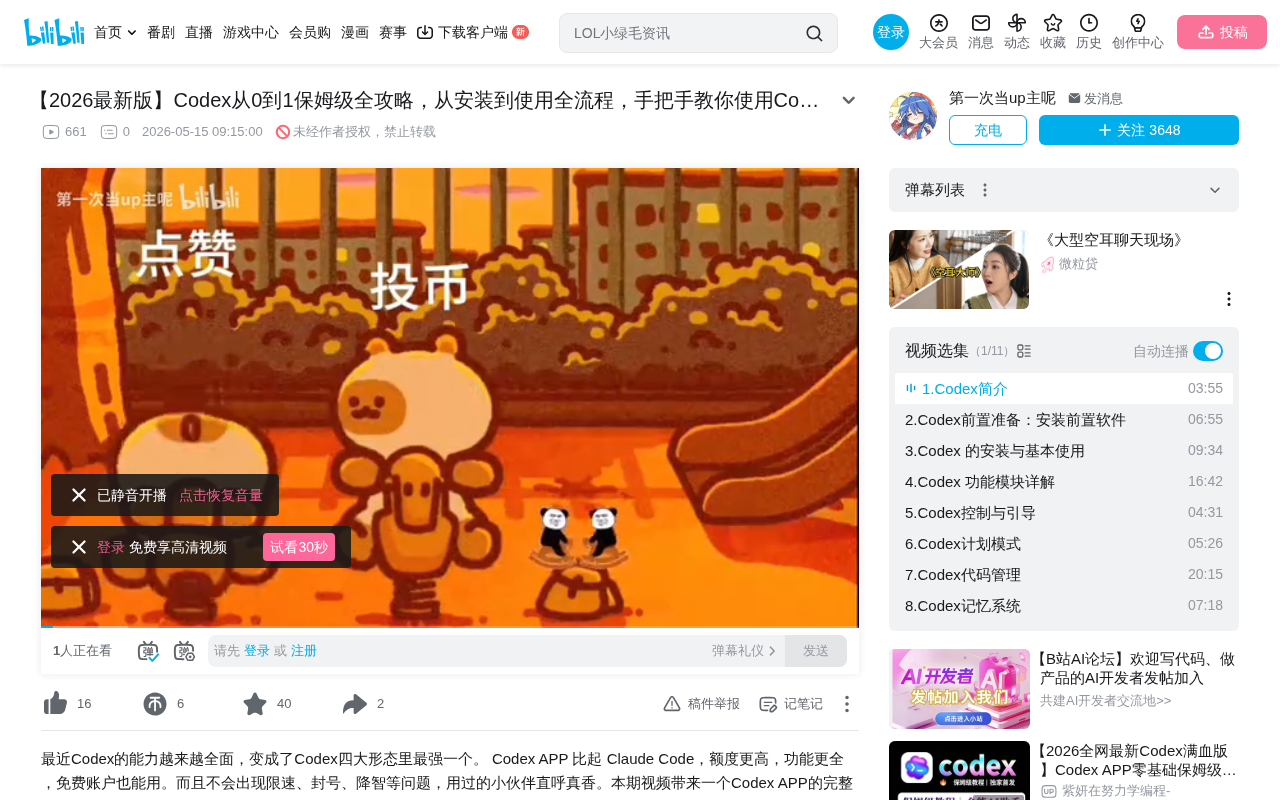
OpenAI Codex Tutorials Mass-Copied on Bilibili, Highlighting AI Content Farm Problem
At least 9 Bilibili accounts mass-published identical OpenAI Codex tutorial videos, exposing content farm operations in the AI tools space.