Harness AI Engineering Programming: A Practical Guide for Enterprise-Level Project Implementation
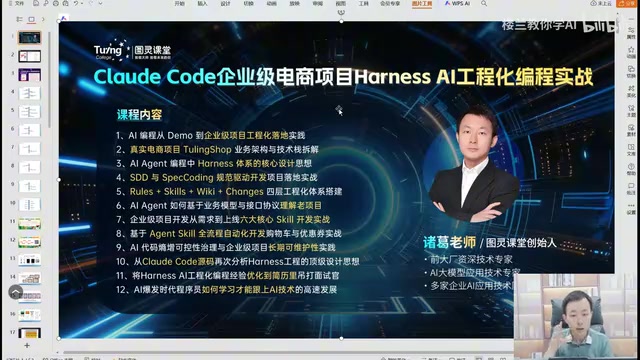
A practical guide to applying Harness AI engineering methodology in enterprise-level projects.
This article explores the Harness AI engineering programming framework for enterprise projects, addressing common AI coding pitfalls like infinite bug loops, code quality issues, and hallucinations. It covers core methodologies including Specification-Driven Development (SDD) and Agentic Scale development, demonstrating how structured engineering approaches can make AI-generated code controllable, maintainable, and production-ready.
The Ideal vs. Reality of AI Programming: Real Challenges in Enterprise Projects
AI programming tools like Claude Code, Cursor, and Codex are incredibly popular, and social media is flooded with claims like "even non-technical people can use AI to replace programmers." But in enterprise-level project practice, reality is far more complex than these claims suggest.
This article is based on a livestream by Bilibili creator Zhou Guangte, offering a deep dive into how Harness AI engineering programming is implemented in enterprise-level e-commerce projects, helping developers avoid common pitfalls on their AI programming journey.
Small Projects Are Easy — So What Makes Enterprise Projects Hard?
If you look closely at those "product managers easily building projects with AI" cases online, most turn out to be simple demo-level projects: a cross-border e-commerce site, an image generation tool, a digital avatar app — essentially just calling a few APIs. But when it comes to large-scale enterprise software like Yonyou or Kingdee, involving high concurrency, distributed microservice architectures, and massive data processing, non-technical users simply cannot get the job done with AI programming tools.
The technical complexity of enterprise software far exceeds what most people imagine. High concurrency means the system needs to handle thousands or even millions of simultaneous user requests, requiring fine-grained thread management, connection pool configuration, and caching strategies. Distributed microservice architecture splits a monolithic application into multiple independently deployed services, each responsible for a specific business domain. These services communicate through API gateways and message queues (such as Kafka and RabbitMQ), and developers must also handle service discovery, load balancing, circuit breaking, graceful degradation, distributed transactions, and a host of other complex issues. These architecture-level decisions and implementations go far beyond simple API calls and require developers to have deep system design expertise.
The Five Most Common Pitfalls Developers Face with AI Programming
Based on extensive user feedback, AI programming in complex projects primarily faces the following issues:
1. Endless Bug-Fixing Loops
AI-generated code works fine in the early stages of a project, but as system complexity grows, once a bug appears, AI tools repeatedly attempt fixes without resolving the issue, falling into an infinite loop. If the developer's own technical skills aren't solid enough, the project grinds to a complete halt.
2. Lack of Code Standards, Resulting in Unmaintainable "Spaghetti Code"
AI-generated code doesn't conform to project standards, and as it accumulates, it becomes a nightmare of unmaintainable "spaghetti code" with extremely high long-term maintenance costs.
3. AI Hallucinations Causing Logic Errors
AI can "confidently produce nonsense" — no matter how clearly you describe the requirements, the generated code may contain serious logic errors. This is an inherent limitation of large language models and cannot be fully eliminated in the short term.
The root cause of AI hallucination lies in how large language models work — they are essentially probability prediction systems that generate text by predicting the next most likely Token. The model doesn't truly "understand" code logic; instead, it makes inferences based on statistical patterns in training data. When encountering scenarios insufficiently covered in training data, the model generates code that looks reasonable but is actually wrong. For example, it might call non-existent API methods, incorrectly handle edge cases, or generate code with race conditions in concurrent scenarios. The industry currently uses techniques like RAG (Retrieval-Augmented Generation) and chain-of-thought prompting to mitigate hallucination issues, but they cannot be fully eliminated yet.
4. Hidden Production Risks That Are Hard to Detect
For projects generated entirely by AI, developers lack confidence and don't know where hidden risks might lurk. Once deployed, issues could lead to financial losses.
5. High Token Costs
Generating a single feature might cost tens or even hundreds of dollars in Token fees. If repeated modifications are needed, costs multiply exponentially.
Tokens are the basic unit that large language models use to process text — roughly 1-2 Tokens per English word, and about 1.5-2 Tokens per Chinese character. Taking Claude 3.5 Sonnet as an example, input Tokens cost approximately $3 per million Tokens, while output Tokens cost about $15. In enterprise projects, a single complete code generation request might include thousands of lines of context code, detailed requirement descriptions, and specification documents, easily consuming tens of thousands of Tokens. If the AI-generated code has issues requiring repeated modifications, each iteration generates new Token consumption, causing costs to grow exponentially. This is precisely why engineering methodologies emphasize "getting it right the first time" — reducing ineffective iterations through comprehensive specifications and context management.
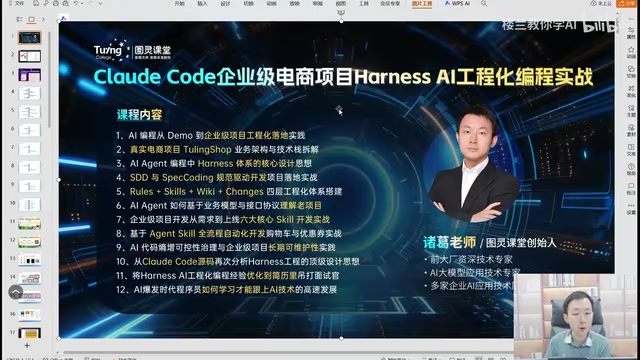
A Complete Breakdown of the Harness AI Engineering Programming System
What Exactly Is Harness Engineering?
Harness AI engineering programming is a technical framework widely adopted in the enterprise world. Its core goal is to enable AI programming tools to generate controllable, maintainable, enterprise-standard-compliant high-quality code. It's not simply about having AI "write code" — it's about leveraging a complete engineering methodology to harness AI programming tools.
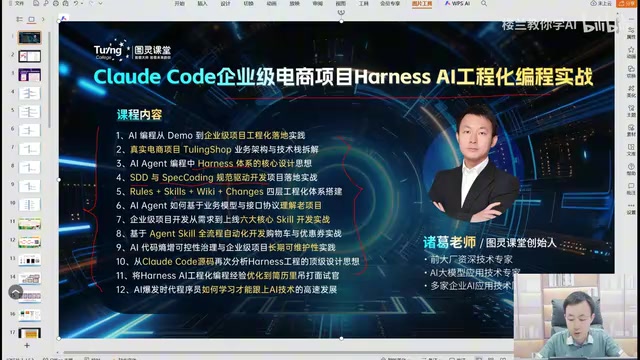
Core Methodology: Specification-Driven Development (SDD)
Specification-Driven Development (SDD) is a development paradigm currently being adopted by IT companies of any significant scale, including major tech firms. Its core principle is: before letting AI generate code, define comprehensive specifications first, so AI works within those constraints.
The concept of specification-driven development isn't entirely new to the AI era — it inherits ideas from Design by Contract and Model-Driven Development (MDD) in software engineering. In the context of AI programming, SDD's core practices include: writing detailed project specification files (typically stored in Markdown format in the project root directory), defining code style guides, establishing API interface contracts, and setting database design standards. These specification files serve as context input for AI programming tools, essentially setting up a "working framework" for the AI. For example, in Cursor, developers can define project specifications through .cursorrules files; in Claude Code, similar functionality is achieved through CLAUDE.md files. This approach transforms AI from a "free creation" mode to a "specification execution" mode, significantly improving the controllability of code quality.
The core advantages of specification-driven development include:
- Reduced hallucination issues: Code generation is evidence-based, preventing AI from "freestyling"
- Avoidance of spaghetti code: Output conforms to unified team standards
- Easier long-term maintenance: Code reviews and iterations follow established guidelines
- Lower production risks: Standardized processes provide multiple layers of quality assurance
Agentic Scale Development Model
In the AI large model space, Scale development is one of the hottest trends. Some tech bloggers even predict that in the future, developers won't need to write specific code — instead, they'll develop individual Scales (scalable workflows).
The Agentic development model is the specific application of AI Agent technology in software development. Unlike simple conversational AI, AI Agents possess capabilities for autonomous planning, tool invocation, environment awareness, and iterative execution. In Agentic Scale development, each Scale is essentially an automated workflow driven by an AI Agent. The Agent can autonomously invoke code editors, terminal commands, testing frameworks, version control systems, and other tools to complete tasks. OpenAI's Codex, Anthropic's Claude Code, and Microsoft's GitHub Copilot Workspace are all evolving in this direction. The core value of this model is that developers shift from being "people who write code" to "people who define workflows and quality standards," while AI Agents handle the actual execution.
In enterprise projects, Agentic Scale development covers the complete process from requirements to deployment, encompassing six core stages:
| Stage | Description |
|---|---|
| Requirements Analysis Scale | Structured decomposition of business requirements |
| Coding Implementation Scale | Code generation under specification constraints |
| Project Review Scale | Automated code review |
| Testing Scale | Test case generation and execution |
| Continuous Integration Scale | CI/CD process automation |
| Deployment Scale | Secure release and monitoring |
Key Takeaways from the Enterprise E-Commerce Project
Why Choose an E-Commerce Project as the Practical Case Study?
The e-commerce project was chosen as the practical case for Harness engineering programming for a simple reason: most developers are very familiar with e-commerce business logic, eliminating the need to spend significant time explaining business concepts and allowing focus on the methodology itself.
It's important to emphasize: Harness AI engineering programming is agnostic to project type and programming language. Whether you use Java, Python, or Go, the methodology is universally applicable.
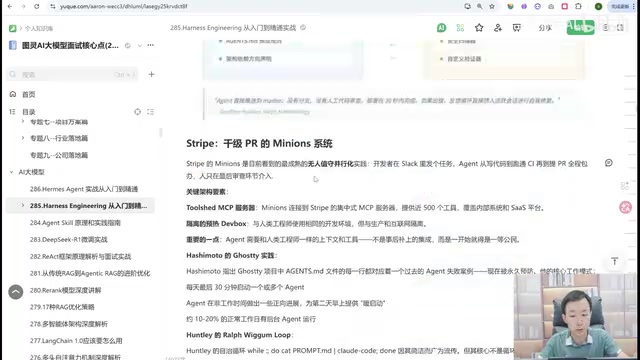
Claude Code's Underlying Architecture Validates the Value of Harness
As one of the hottest AI programming tools today, Claude Code's backend is essentially a standard Harness engineering implementation. By examining Claude Code's open-source code on GitHub, you can see its elegant design — which also serves as indirect proof of the effectiveness and practicality of the Harness engineering methodology.
Claude Code is a command-line AI programming tool developed by Anthropic that runs directly in the developer's terminal environment, capable of reading project files, executing Shell commands, running tests, operating Git, and more. From its open-source code, we can see that Claude Code's backend architecture is a textbook Harness engineering implementation: it loads project specifications through CLAUDE.md files, uses multi-layer Agent collaboration to handle complex tasks, has built-in code review and security check mechanisms, and controls the AI's operational scope through permission sandboxing. This design makes Claude Code more than just a code generator — it's an AI development assistant with engineering-oriented thinking. Its success also validates a core insight: excellent AI programming tools themselves require engineering methodologies to build and use effectively.
From "Concept" to "Implementation": Bridging the Gap Between Theory and Practice
Many developers report that after watching numerous Harness Engineering videos online and learning many concepts, they still don't know how to apply them in real projects. This is the biggest gap between theory and practice.
The key to solving this problem is: lead with practice, and understand theory through projects. First see how Harness is implemented in real enterprise projects, then revisit the concepts — that's the only way to truly master this methodology.
Conclusion: How to Properly Harness AI Programming Tools
AI programming tools are powerful productivity multipliers, but they are by no means a silver bullet for "replacing programmers." For enterprise-level projects, developers need to achieve the following four things:
- Maintain solid technical fundamentals: When AI tools make mistakes, you need the ability to identify and fix problems
- Systematically learn engineering methodologies: Master specification-driven development approaches like Harness and SDD
- Establish comprehensive quality assurance systems: Don't blindly trust AI output — implement thorough Code Review and automated testing mechanisms
- Focus on cost efficiency: Reduce Token consumption through well-designed Scales and avoid meaningless repeated generation
The future of AI programming isn't about "replacing developers" — it's about multiplying the efficiency of developers who master engineering methodologies. Rather than worrying about "being replaced by AI," invest your energy in learning how to better harness AI tools — Harness AI engineering programming is the most valuable methodology to master on this journey.
Related articles
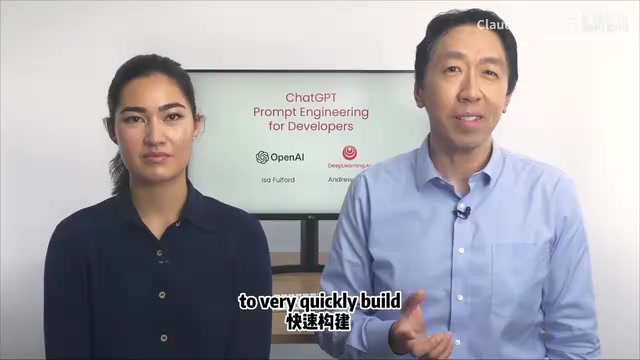
Core Insights from Andrew Ng's Prompt Engineering Course: From Fundamentals to Practice
Deep dive into Andrew Ng's ChatGPT Prompt Engineering course: Base vs. Instruction Tuned LLMs, two core prompting principles, and practical developer methodologies.
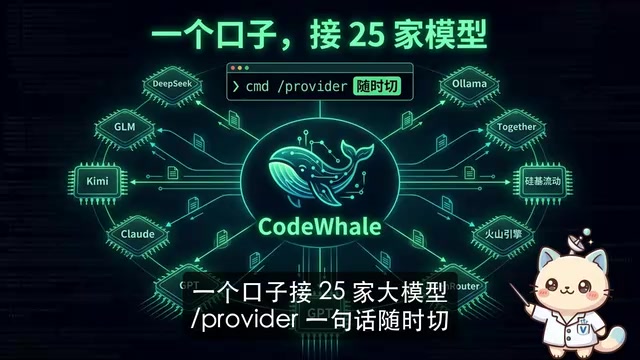
Codewell Hands-On Review: Is This Terminal AI Coding Assistant with Nearly 40K GitHub Stars Actually Worth It?
Hands-on review of Codewell (formerly DeepSeek2E), the open-source terminal AI coding assistant with nearly 40K GitHub stars. Supports 25 LLM providers, local models at zero cost, and MIT license.

Microsoft Copilot Cowork Introduces DeepSeek: Multi-Model Architecture and Enterprise AI Agent Strategy Explained
Microsoft Copilot Cowork launches with multi-model architecture, considering DeepSeek V4 as a low-cost option. Deep dive into usage-based pricing, WebIQ search, and Microsoft's enterprise AI agent strategy.