Hermes Agent Local Deployment Guide: An AI Assistant Framework with Built-in Coding Capabilities and Self-Evolution
Hermes Agent is a self-evolving local AI assistant with built-in coding tools and ultra-low token consumption.
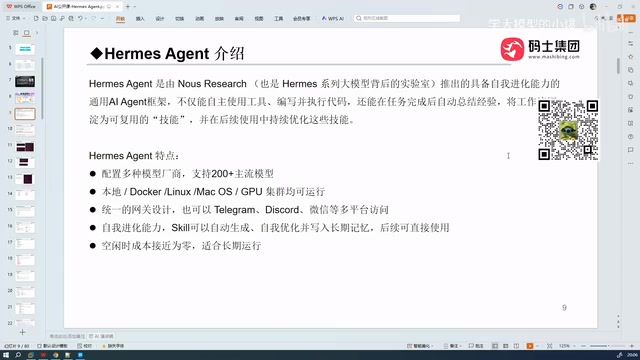
Hermes Agent is an emerging AI Agent framework that combines built-in Cloud Code and Codex coding capabilities, a self-evolving Skill generation mechanism, layered memory management, and extremely low token consumption. Supporting 200+ LLMs and multiple platforms including WeChat and Telegram, it enables practical use cases like remotely controlling your computer via phone. Compared to OpenClaude, it offers superior code support, simpler setup, and significantly lower operating costs.
What Is Hermes Agent?
Over the past month, an AI Agent framework called Hermes Agent has been rapidly gaining traction in the developer community. Its name is inspired by Hermès, symbolizing premium quality and elegance — and its actual performance lives up to that name. In simple terms, Hermes Agent is a local AI assistant framework similar to OpenClaude (an open-source Claude alternative), but it surpasses its counterpart in multiple dimensions.
An AI Agent refers to an AI system capable of autonomously perceiving its environment, making decisions, and executing actions. Unlike traditional chatbots, Agents have the ability to invoke tools, plan tasks, and execute them independently. Since 2024, AI Agent frameworks have become one of the hottest areas in the developer community — from AutoGPT to CrewAI, new frameworks have been emerging one after another. The core goal of these frameworks is to upgrade large language models from "conversational tools" to "execution tools" that can actually complete complex, multi-step tasks. Hermes Agent is a standout newcomer riding this wave.
Some developers have positioned it as a fusion of Cloud Code + OpenClaude — combining powerful code-writing capabilities with a rich tool ecosystem and conversational interaction. Based on hands-on experience, this assessment is not an exaggeration.
Core Advantages of Hermes Agent
Built-in Toolset Far Exceeds Similar Products
Hermes Agent comes with built-in Cloud Code and Codex coding capabilities, meaning you can directly have it write, debug, and run code — unlike OpenClaude, which has notable shortcomings in code support.
Let's explain the technical positioning of these two core components: Cloud Code is a command-line AI programming tool launched by Anthropic that can write, edit, and execute code directly in a terminal environment; Codex is OpenAI's code generation engine. Integrating both capabilities into an Agent framework means the Agent can not only understand natural language instructions but also translate them into executable code and run it directly, forming a complete closed loop from understanding to execution. This integration approach addresses the "can talk but can't do" pain point of many Agent frameworks.
Even more noteworthy is its browser toolset. Unlike OpenClaude, which needs to actually open a browser window, Hermes Agent has browser tools integrated internally. It can directly manipulate web pages, scrape content, and read information through its toolset — all completed silently in the background, making it more efficient and stable.
Beyond built-in tools, it also supports Web tools and user-defined Skills. You can download community-shared Skills from the web or write custom skills tailored to your needs, offering exceptional extensibility.
Automatic Skill Generation: A Self-Evolution Mechanism That Gets Smarter Over Time
One of Hermes Agent's most impressive features is its self-evolution capability. During multi-turn conversations and task completion, if it detects that certain operations are repetitive and follow patterns, it automatically encapsulates those workflows into Skills.
This automatic Skill generation mechanism essentially draws from the "experience replay" concept in reinforcement learning. The system observes users' repetitive behavior patterns and abstracts high-frequency operation sequences into reusable skill modules. This is similar to how humans develop "muscle memory" after repeatedly performing a task. Technically, this typically requires combining sequence pattern mining algorithms with semantic similarity computation to determine which workflows are sufficiently generalizable to be worth encapsulating.
For example: if you frequently ask it to execute a workflow like "pull code → run tests → generate report," after a few iterations, it will automatically generate a corresponding Skill. Going forward, you only need a single command to trigger the entire workflow. This mechanism of learning from usage and continuously optimizing its own capabilities makes it increasingly useful over time.
Layered Memory System
From a practical usage perspective, Hermes Agent's layered memory system is exceptionally well-designed. It effectively manages short-term conversational memory and long-term knowledge memory, maintaining contextual coherence across multi-turn conversations without degrading response quality due to memory accumulation. This is particularly important when handling complex projects.
Layered memory is a key technology in advanced Agent architectures, typically divided into three tiers: working memory (current conversation context), short-term memory (recent interaction summaries), and long-term memory (persistent knowledge and preferences). Technically, long-term memory is usually stored via vector databases, short-term memory is managed through sliding windows, and Retrieval-Augmented Generation (RAG) is used to retrieve relevant memories when needed. This layered design avoids the performance degradation and cost spikes caused by stuffing all historical information into the context window. Hermes Agent's implementation of this architecture is particularly refined, intelligently determining which information needs to be retained and which can be compressed or forgotten.
Extremely Low Token Consumption
This is a highly practical advantage. Through comparative testing, Hermes Agent's token consumption is significantly lower than OpenClaude's in equivalent conversation scenarios. For Deep Agent multi-turn conversation scenarios, token consumption has always been a pain point for users, and Hermes Agent excels in this regard.
Token consumption directly impacts the operational cost of AI applications. Taking GPT-4-level models as an example, the cost per million tokens ranges from a few dollars to tens of dollars. In multi-turn Agent conversations, token consumption is often 5-10x that of regular conversations due to the need to carry tool invocation results, historical context, and system prompts. Common techniques for reducing token consumption include: context compression, selective memory injection, prompt optimization, and model routing (assigning simple tasks to smaller models). Hermes Agent has clearly invested significant effort in these optimization strategies.
More importantly, when you're not actively using it, it consumes virtually zero tokens. This means you can keep it running in the background on standby without worrying about unnecessary costs.
Hermes Agent Deployment Methods and Platform Support
Multi-Platform Compatibility
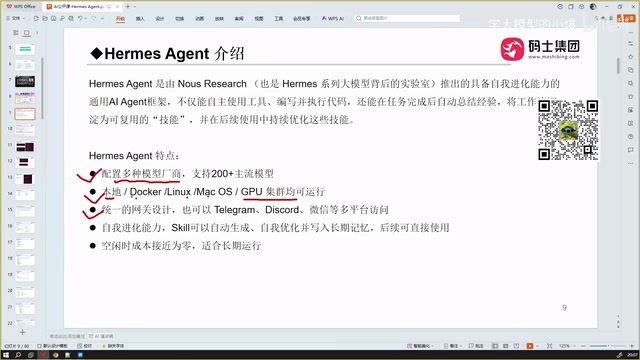
Hermes Agent supports deployment in the following environments:
- Windows (run locally)
- macOS
- Linux
- Docker containers
- Cluster environments
Regardless of your operating system, you can find a suitable deployment method.
Support for 200+ LLM Integrations
Hermes Agent supports over 200 models, covering virtually all mainstream model providers on the market. No matter which LLM provider you prefer, you can seamlessly integrate it. This broad compatibility significantly lowers the barrier to entry and gives users more flexibility in their choices.
Chat Platform Integration Configuration
Similar to OpenClaude, Hermes Agent also supports integration with various chat platforms, but the configuration process is much simpler. Currently supported platforms include:
- China-based: WeChat, WeCom (Enterprise WeChat), DingTalk, Feishu (Lark)
- International: Telegram, Discord, etc.
The configuration process is very straightforward — basically just scan a QR code to complete setup, without the tedious configuration steps required by OpenClaude.
Practical Use Case: Remotely Control Your Computer via WeChat on Your Phone
Here's a highly practical application scenario worth noting. Once you deploy Hermes Agent on your local computer (e.g., Windows) and configure the WeChat integration, you can effectively remotely control your computer through WeChat on your phone.
Here's how it works:
- Hermes Agent runs silently on your local computer
- You chat with the Agent through WeChat
- The Agent receives instructions and executes corresponding operations locally
- When not in use, token consumption is virtually zero
This means that even when you're away from your computer, you can use your phone to have the AI assistant handle file processing, code execution, information retrieval, and various other tasks. And since token consumption is extremely low during idle time, running it long-term carries no cost pressure whatsoever.
Hermes Agent vs. OpenClaude: Summary Comparison
As an emerging AI Agent framework, Hermes Agent demonstrates clear competitive advantages in the following areas:
| Feature | Hermes Agent | OpenClaude |
|---|---|---|
| Coding Capabilities | Built-in Cloud Code + Codex | Limited support |
| Browser Operations | Built-in toolset, runs in background | Requires opening a browser |
| Token Consumption | Extremely low | Relatively high |
| Self-Evolution | Automatic Skill generation | Not supported |
| Platform Integration | QR code setup, quick and easy | More complex configuration |
For developers looking to build a local AI assistant, Hermes Agent is undoubtedly a top choice worth serious attention right now. It strikes a strong balance between ease of use, feature richness, and cost control — making it especially well-suited for deep usage scenarios that require long-running, multi-turn conversations. If you've been using OpenClaude but have been dissatisfied with certain aspects, give Hermes Agent a try — it might just surprise you.
Related articles
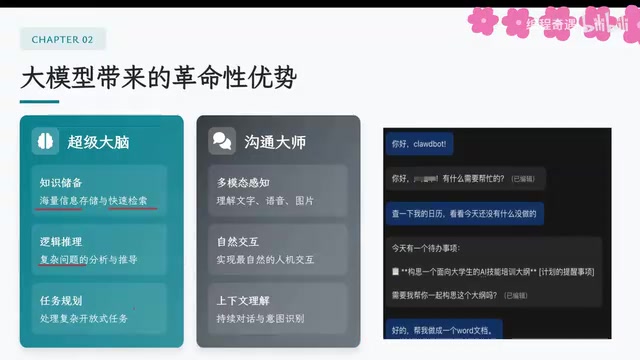
AI Agent Core Architecture Breakdown: From Concept to Enterprise-Grade Intelligent Agent Development
Deep dive into AI Agent architecture: perception, brain, and action modules. Covers RAG memory systems, tool calling mechanisms, Chain of Thought reasoning, and enterprise agent development roadmap.
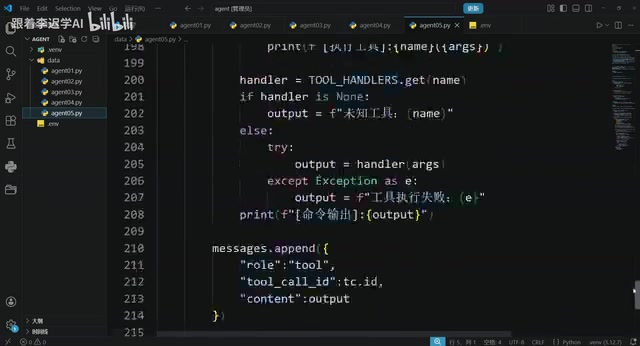
Hands-On Tutorial: Build an AI Agent from Scratch with 200 Lines of Python
Build an AI Agent from scratch with 200 lines of Python, covering prompts, memory, tool calling, RAG, and Skills — a practical guide for developers.
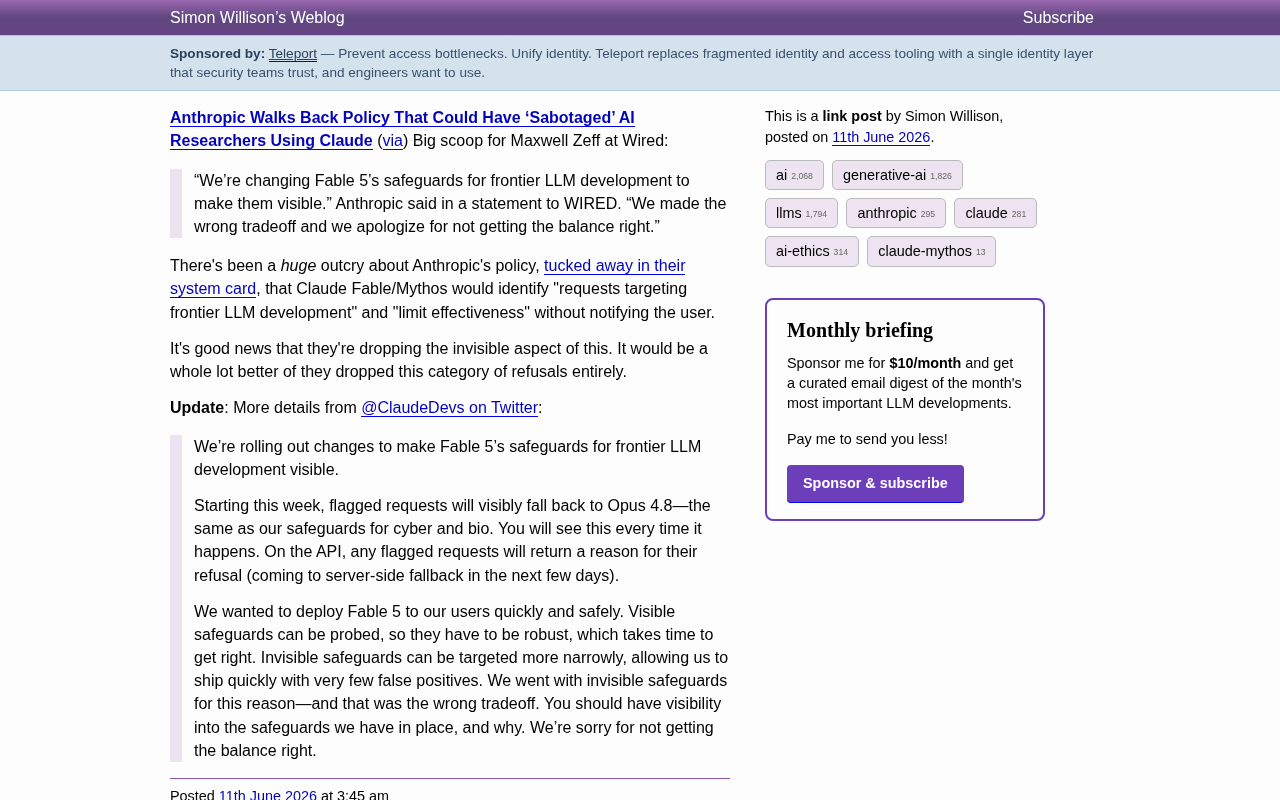
Anthropic Reverses Controversial Policy of Secretly Throttling AI Researchers Using Claude
Anthropic reverses its controversial policy of secretly throttling Claude Fable/Mythos responses to frontier LLM development requests after community backlash, raising critical questions about AI transparency.