How Do AI Solo Companies Make Money? Four Monetization Paths with Practical Advice
How Do AI Solo Companies Make Money? F…
AI tools enable solo companies, but success requires product thinking, market insight, and realistic expectations.
AI tools have dramatically lowered technical barriers to entrepreneurship, enabling individuals to achieve company-level output and giving rise to the "AI solo company" model. Monetization paths include custom development projects, self-built applications, enterprise services, and AI content subscriptions. While real cases show ordinary people achieving significant revenue with AI, survivorship bias must be acknowledged — product thinking, market insight, and sustained operational capability matter more than the tools themselves. The practical advice: start with client projects, maintain your primary income, and gradually validate your business model.
From "Trading Time for Money" to "Trading AI for Money"
Many working professionals share a common frustration: they work diligently at their day jobs, then spend evenings learning new skills and taking on side gigs, only to find their income stuck in place. This isn't a capability problem — most people are trapped in the "trading time for money" death spiral.
"Trading time for money" corresponds to what economists call a "linear income model" — income is directly proportional to time invested, with personal output capped by the physical limit of 24 hours per day. The alternative is a "leveraged income model," where capital, technology, brand, or systems amplify the output value per unit of time. Traditionally, only business owners, investors, or top-tier creators could enjoy this leverage effect. The emergence of AI tools essentially compresses what previously required team collaboration — "organizational leverage" — into tools operable by a single individual.
Looking back over the past decade-plus, from e-commerce to WeChat official accounts to short-form video, each wave created stories of ordinary people breaking through. Now, the AI wave is sweeping in with even greater force. Unlike previous waves, AI dramatically lowers the technical barriers to entrepreneurship — you don't need to know how to code, you don't need to build a team. A single computer plus a few AI tools can potentially create a product that generates sustainable revenue.
This is the core logic behind the frequently mentioned "solo company" concept: Using AI tools to replace traditional team collaboration, enabling individuals to achieve company-level output capacity.
It's worth noting that the "Solo Company" is not an invention of the AI era. As early as the internet's early days, indie developers were commercializing software products built single-handedly. In 2019, Paul Jarvis published Company of One, systematically articulating this business philosophy: deliberately staying small, replacing scale expansion with efficiency and profit margins. The arrival of the AI wave has expanded this model's feasibility from a handful of technical elites to a much broader population — AI handles work that previously required designers, engineers, copywriters, and other roles collaborating together, dramatically extending the output boundaries of a single person.

Real Cases: Ordinary People Achieving Income Breakthroughs with AI
This isn't a castle in the sky — there are already noteworthy real cases:
- An economics graduate: Using AI coding tools, he developed a "Cat Ring Light" app and monetized 7 million yuan in four months.
- A vocational school graduate: Launched over 120 apps in five months, with 90% turning a profit.
- A millennial designer: Producing AI short dramas solo, two per month, earning 20,000–30,000 yuan per production.
Behind these cases, the core driving force is AI-assisted coding tools represented by GitHub Copilot, Cursor, Claude, and others. These tools leverage large language model (LLM) code generation capabilities to transform natural language descriptions directly into runnable code. For non-professional developers, this means you don't need to systematically learn programming syntax — you only need "product description ability" and basic debugging thinking to complete development tasks that previously required junior engineers several weeks to deliver. This technological leap is precisely the technical prerequisite that makes cases like "120 apps" possible.
These cases share a common characteristic: the creators themselves aren't technical wizards, but rather people skilled at using AI tools to amplify their personal leverage. When AI handles the heavy lifting of coding, design, and content generation, individual output efficiency multiplies, and income ceilings rise accordingly.

Four Monetization Paths for AI Solo Companies
Compared to traditional side hustles, AI solo companies have more diverse and stackable monetization paths. Let's break down each path's approach and target audience.
1. Custom Development Projects
Building custom AI mini-tools and mini-programs for clients, with prices ranging from a few hundred to several thousand yuan per project. This is the fastest monetization method — low barrier, short cycle — ideal for beginners to quickly accumulate experience and seed capital.
2. Self-Built Application Products
Developing and publishing your own applications, such as MBTI personality tests, horoscope tools, or practical utilities like graduate school planning and fitness plan generators. Once these products go live, they can sell continuously on platforms. Some people easily earn over 10,000 yuan monthly from a single small tool.
3. Enterprise Service Solutions
Connecting with B2B merchants to provide enterprise-level AI solutions like customer follow-up systems and automated scheduling tools. A single custom solution can easily be quoted at over 10,000 yuan, with profit margins far exceeding consumer-facing products.
The reason enterprise services command much higher prices than consumer products comes down to fundamentally different "purchasing decision logic." When enterprises buy tools or services, they're essentially purchasing "efficiency gains" or "cost savings" — their willingness to pay is directly tied to the ROI (Return on Investment) the tool delivers. An AI system that helps a sales team follow up with 50 additional customers per month might be worth tens of thousands of yuan to a company, while consumers might only pay a few dozen yuan monthly for equivalent functionality. This is why migrating toward B2B after accumulating product experience is often the key path for AI solo companies to raise their income ceiling.
4. AI Content Subscriptions
Creating AI short dramas, paid question banks, and other content products, generating passive income through subscription and revenue-sharing models. The core advantage of this path: once content is produced, subsequent marginal costs are nearly zero, and revenue can compound continuously.

A Reality Check: The True Barriers Behind the Opportunity
While the AI solo company concept is exciting, the following points deserve serious consideration before going all in:
First, tools are easy to learn, but product thinking is hard to develop. AI tools do lower technical barriers, but between "building a product" and "building a product people will pay for" lies a series of non-technical capabilities: product positioning, user insight, market validation, and more. These skills can't be fast-tracked by watching a few tutorials.
Second, monetization cases suffer from survivorship bias. Survivorship Bias is a classic concept in statistics and cognitive psychology — we can only observe samples that "survived successfully," while massive numbers of failure cases are systematically ignored because they're invisible, causing us to severely overestimate success probabilities. In the AI entrepreneurship context, this bias is particularly pronounced: social media's distribution mechanisms naturally favor extreme success stories like "7 million yuan in revenue," while thousands who quietly gave up after trying won't publish failure retrospectives. The prerequisite for rational entry is proactively building your own "failure case database" rather than only consuming success narratives.
Third, sustained operations are harder than launching. The advantage of a solo company is asset-light startup, but the disadvantage is equally obvious — every function falls on one person. Product development, marketing, customer service, financial management... In the long run, energy allocation and sustainability are the biggest challenges.
Practical Advice for Ordinary People
If you genuinely want to try the AI solo company path, the following suggestions might help you avoid detours:
- Start by taking on client projects — don't jump straight into building products. Accumulating hands-on experience by doing projects for others while simultaneously validating market demand is far more efficient than building in isolation.
- Choose a vertical niche and go deep. Don't try to do everything. Find a niche market you're familiar with that has real demand, and concentrate your energy on penetrating it thoroughly.
- Prioritize distribution channels. No matter how good your product is, zero traffic equals zero revenue. Learning content marketing on platforms like Zhihu, Xiaohongshu, Douyin, etc., is an indispensable part of the monetization loop.
- Test the waters while maintaining your primary income. Don't quit your job to go all in. Use your spare time to validate the model's viability first, and only consider full-time commitment after your side income consistently exceeds your salary.

Conclusion
The AI era has genuinely opened a new window for ordinary people. A single computer and a few AI tools can theoretically support a one-person "company." But opportunity always comes with risk. Those who truly make it work rely not just on tools, but on sharp market judgment, the ability to continuously learn, and the resilience to keep iterating amid uncertainty.
Rather than agonizing over "missing the wave," start taking action today: pick an AI tool, build a Minimum Viable Product (MVP) — a product prototype built with minimal cost and time that can validate your core assumptions through real user feedback, rather than waiting until a complete product is developed before engaging the market. Validating that "someone is willing to pay" with a rough but functional version is far more efficient than polishing a perfect product only to discover no one wants it. Engage real users. Get real feedback. Action itself is the best form of learning.
Key Takeaways
- AI tools dramatically lower the technical barriers to solo entrepreneurship — a single computer can launch a "solo company" model
- AI solo companies have four monetization paths: custom development projects, self-built applications, enterprise service solutions, and AI content subscriptions
- Multiple real cases exist of ordinary people achieving high revenue with AI tools, but survivorship bias must be acknowledged
- Product thinking, market insight, and sustained operational capability matter more than mastering AI tools themselves
- Start by taking on client projects to build experience, maintain your primary income, and gradually validate your business model's viability
Related articles
 Industry Insights
AI Product Development in Practice: Model Selection, Building Moats, and Paths to Commercialization
Practical strategies for AI product development: why not to train models from scratch, when to use APIs vs. fine-tuning, building product moats, and the full path from evaluation systems to commercialization.
 Industry Insights
No Product Fits Your Needs? Building It Yourself Is the Best Starting Point for Indie Developers
Can't find a product that fits? Building from personal pain points is the best entry for indie developers. Niche needs + AI tools = rapid product creation.
 Industry Insights
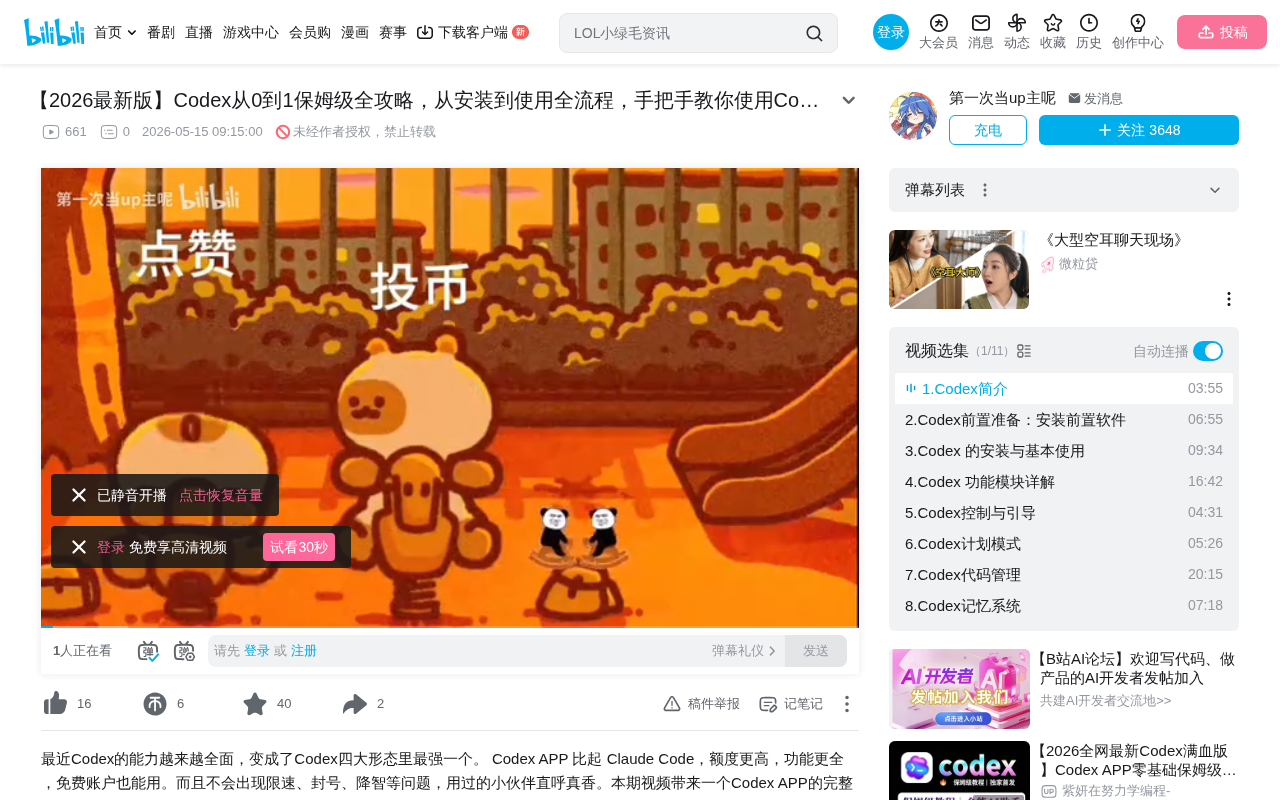
OpenAI Codex Tutorials Mass-Copied on Bilibili, Highlighting AI Content Farm Problem
At least 9 Bilibili accounts mass-published identical OpenAI Codex tutorial videos, exposing content farm operations in the AI tools space.