How OpenAI Helps a Top Racing Team Win Races
How OpenAI Helps a Top Racing Team Win…
OpenAI partners with Chip Ganassi Racing to find critical fractions of a second through AI in motorsport.
OpenAI has partnered with top IndyCar team Chip Ganassi Racing to apply AI technology across multiple aspects of motorsport. AI helps the team process massive telemetry and historical data in minimal time, optimizing pit stops, race strategy, and real-time decisions. In races like Long Beach, the combination of AI assistance and human experience has shown significant results, signaling AI's vast potential in high-pressure competitive sports.
When AI Meets Racing: OpenAI's Partnership with Chip Ganassi Racing
On the racetrack, a 0.1-second gap can determine the winner. Chip Ganassi Racing — one of the most dominant teams in IndyCar — is partnering with OpenAI to find those critical fractions of a second using AI technology.
OpenAI research engineer Joyce explains the origin of this collaboration in a documentary: "It's hard to stay in the lead — everyone is chasing you. But what I love is the problem-solving process — you have the chassis, the engine, the track, so how do you shave off a few more seconds?"
Chip Ganassi Racing is already known as a data-driven team, and their goal is to become the first racing team to truly figure out how to use AI to gain speed. This partnership is where two worlds converge.
The AI Advantage in a Flood of Data
Motorsport generates far more data than humans can process. Every test session and every race produces massive amounts of data — historical data, telemetry data, competitor data — all flooding in at an astonishing rate.
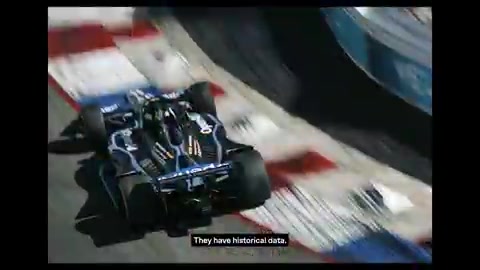
Traditionally, engineers have only a few hours between races to digest data and tune the car. AI changes everything: it can extract data faster and analyze it from different dimensions, helping the team find competitive advantages within extremely short intervals.
Take the Long Beach round, for example — one of the most important events after the Indy 500. The team goes back and analyzes historical data from previous years, looking for trends and patterns. Joyce says: "With OpenAI, we can analyze more data, more races, more strategies — we can even see how competitors' cars are performing to find the optimal approach."
"Do the Simple Things Right" on Race Day
Chip Ganassi has a famous motto: "Do the simple things right." This is perfectly embodied in pit stops.

IndyCar pit stops are completely different from NASCAR. NASCAR hires former college or professional athletes specifically for pit duty, while IndyCar pit crew members wear multiple hats — they're mechanics, truck drivers, or engineers who are called upon only during the most critical moments of a race. A single IndyCar pit stop takes about 7 seconds and costs roughly $7,000. Chip Ganassi's pit stop times are consistently around 7 seconds, while most other teams run slightly over.
The team's human performance trainer, William, even uses ChatGPT as an "assistant strength coach," inputting one week's training plan and having AI generate the next week's program. "It listens, it learns, and it grows — that's the coolest part."
Real-Time Decision Making: Filtering Information and Building Trust
One of the biggest challenges during a race is filtering critical information from the massive stream of signals on the timing stand and communicating it to the driver in time.
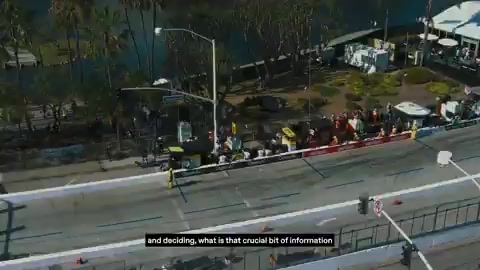
Imagine this: the driver is sitting in the cockpit, unable to see what's behind or ahead. The command center needs to instantly "paint" the full picture of the race — who's chasing, what the gaps are, what the track conditions look like. The precision of this information relay directly affects race outcomes.
The team's engineers use various tools, including some "classified tools" from OpenAI — in the documentary, an engineer even half-jokingly says: "Maybe don't tell everyone about these."
Long Beach in Action: The Art of Strategy
The Long Beach circuit is known for its high-speed straight and the technically challenging Turn 11 — a tight right-hand hairpin. Here, strategic flexibility is crucial.

In this race, driver Alex Palou waited patiently for 29 laps. The team had prepared multiple strategies — "You need more than one strategy because the entire race situation can change in an instant." When multiple cars pitted simultaneously, competitor Felix Rosenqvist seized the opportunity to pit first. This wasn't in the original plan, but the team reacted quickly.
Engineers precisely told the pit crew exactly how many seconds of fuel to add — "They executed precisely, no more, no less." This ability to adjust amid rapidly changing conditions is exactly where AI-assisted decision-making combines with human experience.
The Future of AI-Powered Racing
Joyce reflects at the end of the documentary: "There's nothing more exciting than seeing our models leave the lab and translate into real efficiency gains on the track."
This partnership demonstrates AI's enormous potential in high-pressure, real-time decision-making scenarios. The essence of motorsport is racing against time, and AI is helping teams find new advantages in this eternal competition. As Joyce puts it: "We've only just dipped our toes into the ocean of possibilities."
From data analysis to pit stop optimization, from strategy development to real-time decision-making, the OpenAI and Chip Ganassi Racing partnership is not just a technology case study — it signals AI's vast potential in professional sports. When cutting-edge AI technology meets the ultimate pursuit of speed, a 0.1-second breakthrough may be just the beginning.
Related articles
 Industry Insights
AI Product Development in Practice: Model Selection, Building Moats, and Paths to Commercialization
Practical strategies for AI product development: why not to train models from scratch, when to use APIs vs. fine-tuning, building product moats, and the full path from evaluation systems to commercialization.
 Industry Insights
No Product Fits Your Needs? Building It Yourself Is the Best Starting Point for Indie Developers
Can't find a product that fits? Building from personal pain points is the best entry for indie developers. Niche needs + AI tools = rapid product creation.
 Industry Insights
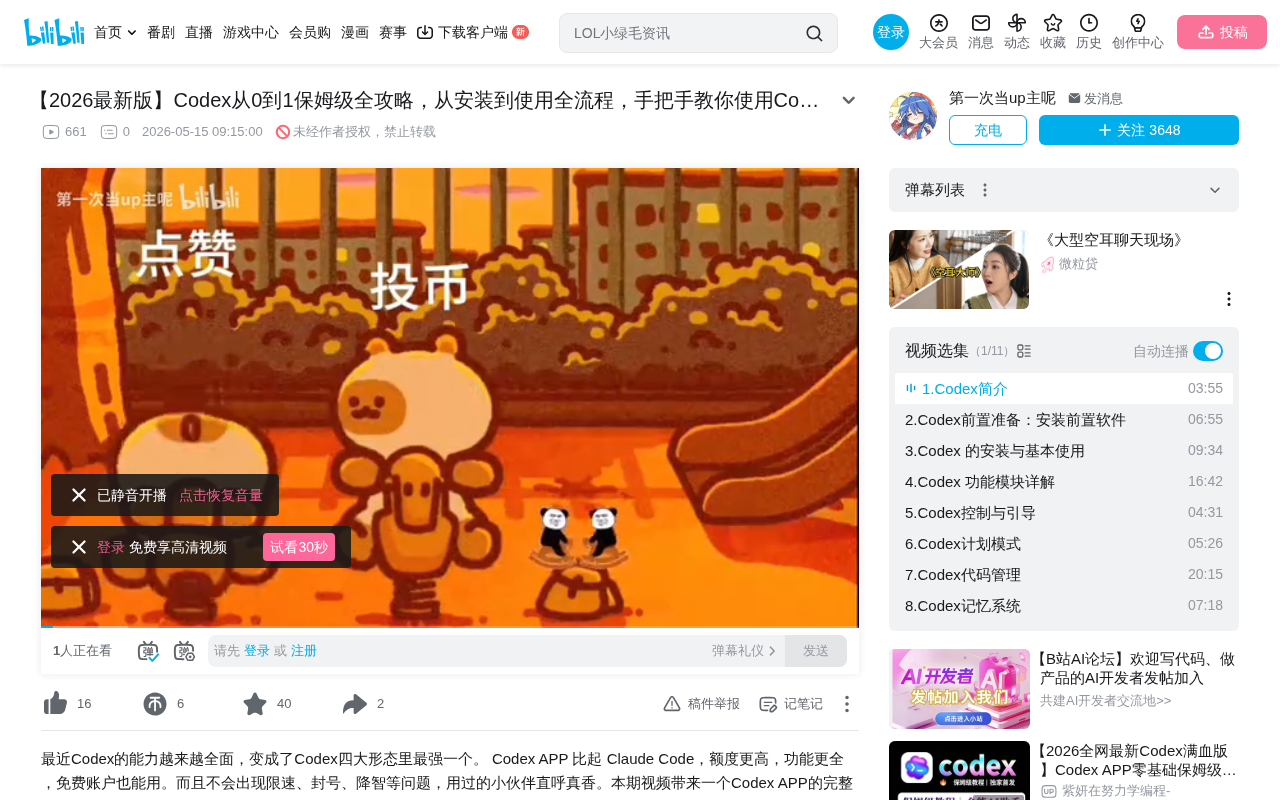
OpenAI Codex Tutorials Mass-Copied on Bilibili, Highlighting AI Content Farm Problem
At least 9 Bilibili accounts mass-published identical OpenAI Codex tutorial videos, exposing content farm operations in the AI tools space.