In-Depth Review of Alibaba's Qoder CN: Is This AI Coding Agent with a Free First Month Worth Using?
Alibaba's Qoder CN offers a localized AI coding agent with enterprise connectors and a free Pro first month.
Alibaba quietly launched Qoder CN, an AI coding agent competing with Cursor. It features expert suites for enterprise workflows, a skill marketplace, and deep integration with Chinese platforms like DingTalk, Feishu, and WeChat. Hands-on testing showed strong programming and reasoning scores, but rapid credit consumption is a concern. At ¥59/month with a free first month, it's a compelling option for Chinese developers and enterprises.
Alibaba Quietly Launches Qoder CN with a Free First Month of Pro
Alibaba recently soft-launched an AI coding agent called Qoder CN, positioned similarly to Cursor but with clear late-mover advantages. Cursor, developed by Anysphere, is an AI code editor deeply customized on top of VS Code. It leverages built-in large language models for code completion, conversational programming, and code refactoring, and has quickly become the benchmark product in AI-assisted programming since its 2023 release. The "late-mover advantage" here refers to the fact that products entering the market later can learn from predecessors' lessons, avoid their pitfalls, and leverage newer tech stacks and more mature model capabilities to build differentiated competitiveness. By entering after Cursor had already validated market demand, Alibaba's Qoder CN can directly address pain points reported by Cursor users — especially around localized services and enterprise-grade scenarios.
The product integrates autonomous agents, a knowledge engine, chat, and various other capabilities. Autonomous AI Agents are one of the hottest technical directions in AI right now. Unlike traditional conversational AI, agents can independently plan task steps, invoke external tools, execute multi-step operations, and dynamically adjust strategies based on intermediate results. In programming scenarios, an AI Agent doesn't just answer code questions — it can proactively read project files, run terminal commands, debug errors, and iteratively fix issues. Since 2024, from OpenAI's GPT-4o to Anthropic's Claude, major model providers have been strengthening their Agent capabilities. Qoder CN integrates Agent capabilities with a knowledge engine, connectors, and other modules, attempting to build a comprehensive platform capable of autonomously completing complex workflows.
On pricing, Qoder CN is quite aggressive — the first month of Pro is completely free (originally ¥59/month). Teachers and students get an additional 4,000 usage credits, and through a referral mechanism, users can stack up to 40,000 bonus credits.
For developers in China, this is undoubtedly a new option worth paying attention to. But how does it actually perform? This article provides an in-depth review from two perspectives: feature architecture and hands-on testing.
Feature Architecture: Three Extension Modules Form the Core Competitive Edge
Chat Interface and Model Support
Qoder CN's chat interface is similar to other AI Agent clients, supporting conversations, task assignment, model selection, and other basic operations. What you might not notice right away is the impressive number of supported models — users can flexibly switch between different models based on task requirements.
Expert Suites: Differentiated Advantage for Enterprise Office Scenarios
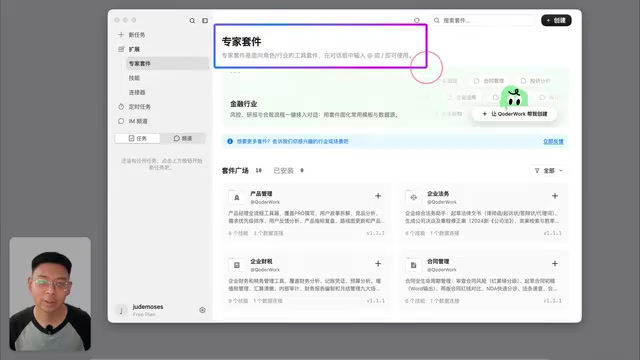
In the left-side extension tab, Qoder CN offers three core modules: Expert Suites, Skills, and Connectors.
Among these, Expert Suites represent the biggest differentiator from other Agent products. The suites include a large number of enterprise document templates covering scenarios like investment analysis, financial management, and contract processing. This signals that Qoder CN is positioned not merely as a programming tool, but as a comprehensive AI work platform for enterprise users.
Skills and Connectors: Deep Localization
The Skills section is similar to Claude Code's Skill mechanism. Claude Code is Anthropic's command-line AI programming tool, and its Skill mechanism allows users to encapsulate frequently used workflows, coding standards, and project-specific knowledge into reusable "skill" modules. These skills are essentially combinations of structured prompt templates and tool-calling chains — the AI can automatically load relevant skills during task execution to improve output quality and consistency. Qoder CN borrows this concept and comes with a rich set of built-in skills, with even more available for installation from a skill marketplace. This marketplace approach significantly lowers the configuration barrier — users don't need to manually write skill definitions and can simply install and use them directly.
Connectors are another major highlight of the product, with distinctly Chinese characteristics. In the enterprise collaboration tool space, the Chinese market differs significantly from overseas markets. International companies primarily use Slack, Microsoft Teams, Notion, and similar tools, while Chinese enterprises' core workflows revolve around DingTalk (Alibaba's platform, covering over 600 million users), Feishu (by ByteDance), and WeChat Work/WeChat. This ecosystem divide means that no matter how powerful overseas AI tools are, they struggle to embed directly into Chinese enterprises' daily workflows. Qoder CN's connector module directly integrates with these mainstream domestic platforms:
- Scheduled Tasks: Supports daily scheduled execution of routine work, similar to traditional Cron Jobs, but with natural language configuration that dramatically lowers the barrier to building automated workflows
- IM Channels: Direct integration with DingTalk, Feishu, and other major office tools, enabling real-time push of AI Agent execution results to team communication channels
- WeChat Connection: Supports WeChat message integration, and can even trigger tasks via IM messages
This level of deeply localized connectivity is something overseas competitors simply cannot offer.
Hands-On Testing: Letting the AI Quiz Itself
Test Design
To comprehensively evaluate Qoder CN's capabilities, I used an interesting approach — having the AI generate its own test questions. This method, known in academia as "self-evaluation" or "self-benchmarking," has the advantage of quickly generating test cases covering multiple dimensions, with difficulty levels that naturally align with the model's own capability boundaries. Of course, it has inherent limitations: the AI may tend to generate questions it's good at, leading to optimistically skewed results. So take the results as a reference only.
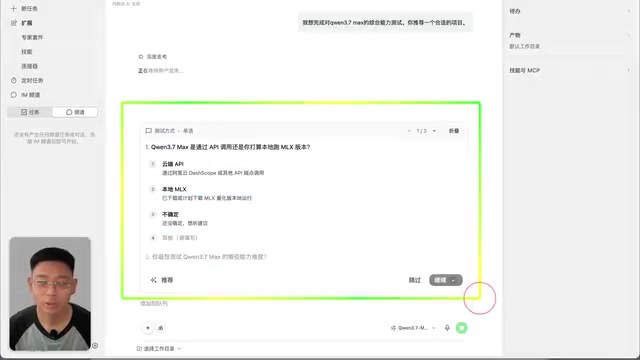
Impressively, Qoder CN was able to detect the local MCP version model. MCP (Model Context Protocol) is an open standard protocol introduced by Anthropic in late 2024, designed to establish a unified communication interface between AI models and external data sources and tools. It uses a client-server architecture that allows AI applications to connect to various local or remote services — including file systems, databases, and APIs — through a standardized approach. MCP's significance lies in solving the previous problem of fragmented AI tools with high integration costs, similar to how the USB protocol unified hardware interfaces. The fact that Qoder CN can detect local MCP services shows it adheres to this open standard and can interoperate with developers' existing local toolchains, meaning lower migration costs and more flexible tool combinations.
After selecting a comprehensive test, the AI recommended a project called "AI Full-Stack Challenge: Build a Personal Knowledge Assistant," covering multiple capability dimensions, with plans to output a test report using a radar chart. A radar chart (also known as a spider chart) is a multi-dimensional visualization tool where each axis represents an evaluation dimension. The larger the area enclosed by the connecting lines, the stronger the overall capability. Common dimensions in AI capability assessment include code generation, logical reasoning, information retrieval, multilingual support, tool invocation, and more.
WeChat Connector Experience
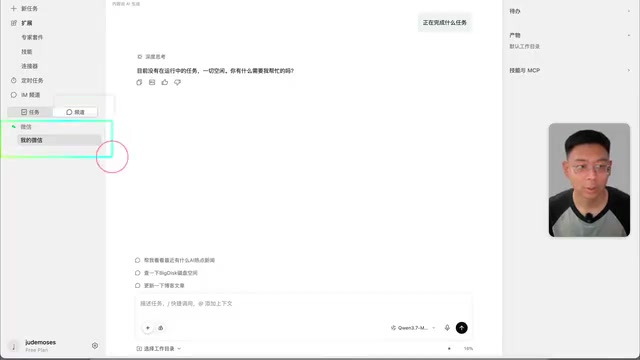
During testing, tasks were synced to a WeChat conversation via the connector, creating a rather interesting interaction experience. However, it's worth noting that tasks sent directly in WeChat may not be read correctly — operations need to be performed in a designated command channel.
Test Results Analysis
After executing 13 test questions spanning deep research (searching mainstream media websites), programming tests (doubly linked lists, hash tables, bug finding, rate limiting, Rust, Markdown, etc.), reasoning ability tests, and other dimensions, the final results were as follows:
Among the test topics, "rate limiting" is a core concept in backend development — it refers to using algorithms to control the number of requests a system processes per unit of time to prevent service overload. Common rate limiting algorithms include Token Bucket, Leaky Bucket, and Sliding Window. Implementing these algorithms requires deep understanding of concurrent programming and data structures, making them excellent test questions for evaluating AI programming ability. Rust, as a systems-level programming language known for memory safety and high performance, has strict ownership and borrow-checking mechanisms that place higher demands on AI code generation, effectively testing the AI's understanding of complex type systems.
- Programming Ability: Scored 90 — a solid performance
- Reasoning Ability: 5 out of 5 correct
- Local Read/Write: Successfully followed the local MCP protocol for file operations
- Deep Research: Able to search mainstream media and synthesize information
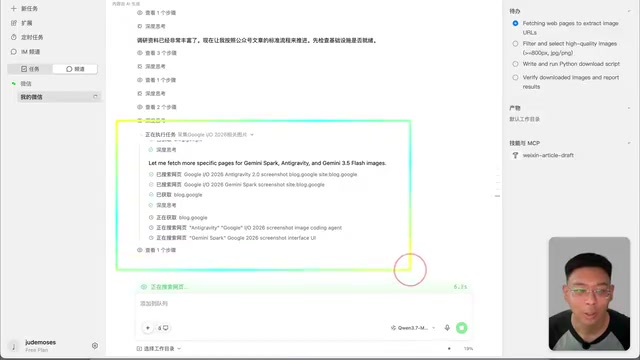
However, the testing process also exposed an issue — credits were consumed quite quickly. Halfway through execution, credits dropped from 85 to 16, and the full test couldn't be completed due to credit exhaustion. This serves as a reminder for users to plan their credit usage carefully. It's worth noting that AI Agent products generally consume credits at a much higher rate than regular conversational AI, because agents perform multiple rounds of internal reasoning, tool invocation, and result verification during complex tasks — each step potentially consuming one or more API call credits.
Summary and Recommendations
Product Positioning
Qoder CN's strength lies in enterprise application scenarios. Compared to pure programming assistance tools, it's better suited for enterprise users who need to handle a mix of document work, programming, research, and other tasks. The addition of DingTalk, Feishu, and WeChat connectors allows it to seamlessly integrate into the daily workflows of Chinese enterprises.
Value for Money
With the free first month, extra credits for teachers and students, and referral bonuses, users can get at least around ¥100 worth of usage at zero cost. For those looking to try it out, the barrier to entry is very friendly. In the current AI coding tool market, Cursor Pro is priced at $20/month (approximately ¥145), GitHub Copilot Individual at $10/month (approximately ¥73), and Qoder CN's ¥59/month pricing is quite competitive in the domestic market — especially considering the included enterprise-grade features and localized connectors.
Shortcomings
- Credits are consumed quickly; complex tasks may exhaust them fast
- Some tests couldn't be completed; stability needs further observation
- The WeChat connector's interaction logic still needs optimization
Overall, as an AI agent product with clear localization advantages, Qoder CN is worth the attention of Chinese developers and enterprise users — and definitely worth a trial run.
Related articles
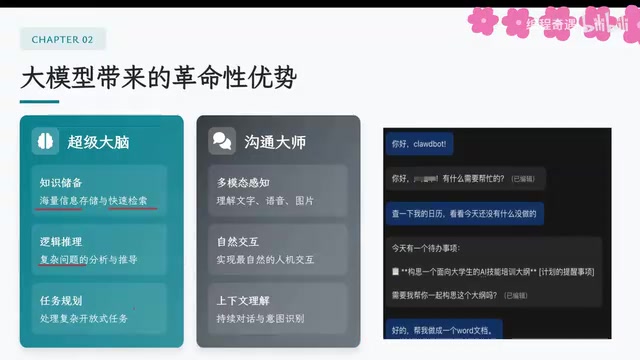
AI Agent Core Architecture Breakdown: From Concept to Enterprise-Grade Intelligent Agent Development
Deep dive into AI Agent architecture: perception, brain, and action modules. Covers RAG memory systems, tool calling mechanisms, Chain of Thought reasoning, and enterprise agent development roadmap.
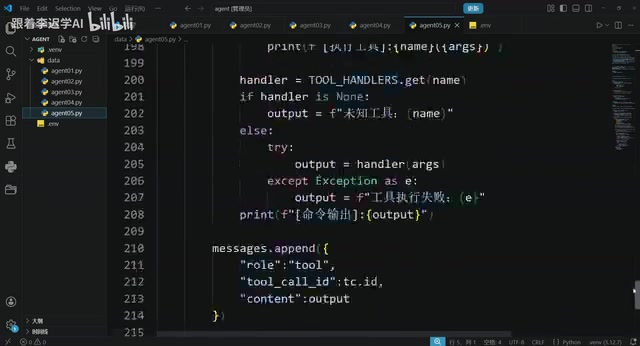
Hands-On Tutorial: Build an AI Agent from Scratch with 200 Lines of Python
Build an AI Agent from scratch with 200 lines of Python, covering prompts, memory, tool calling, RAG, and Skills — a practical guide for developers.
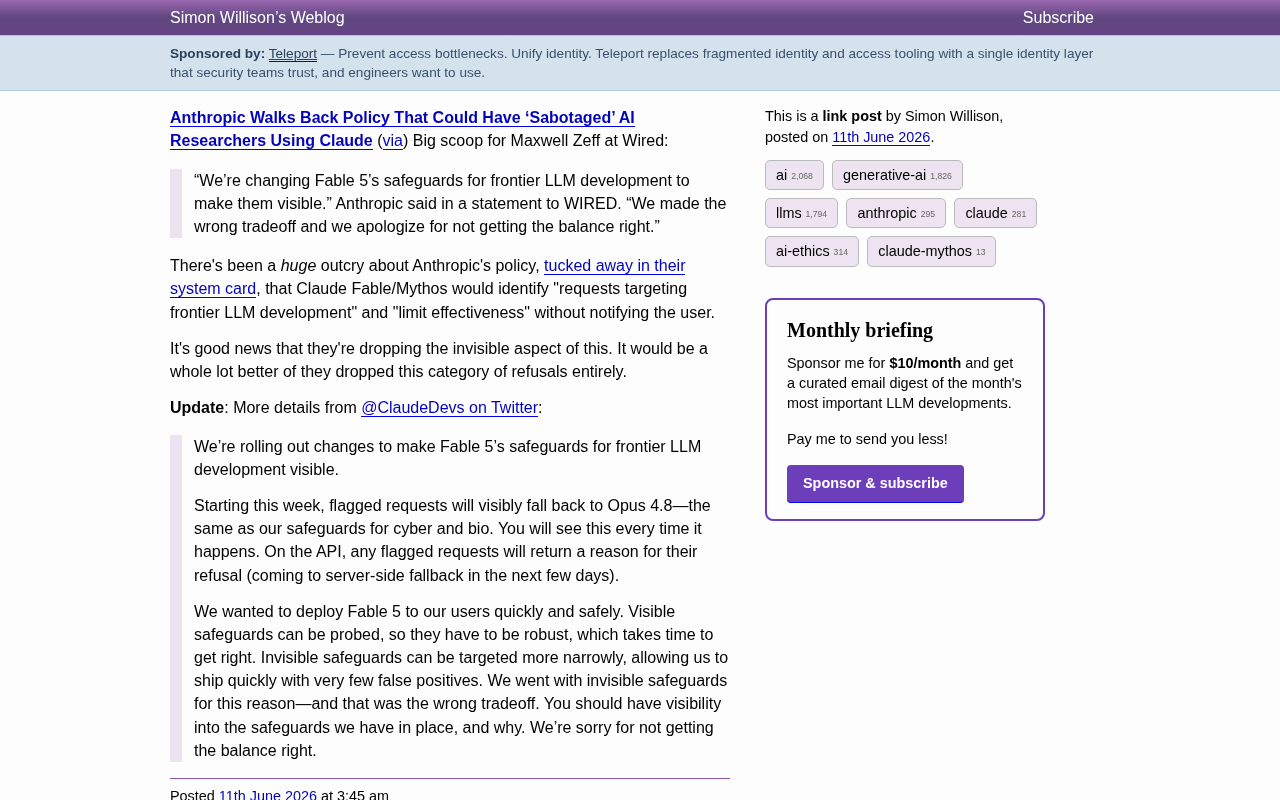
Anthropic Reverses Controversial Policy of Secretly Throttling AI Researchers Using Claude
Anthropic reverses its controversial policy of secretly throttling Claude Fable/Mythos responses to frontier LLM development requests after community backlash, raising critical questions about AI transparency.