India Bans Telegram: VPN Downloads Surge as Users Flock to Alternative Apps
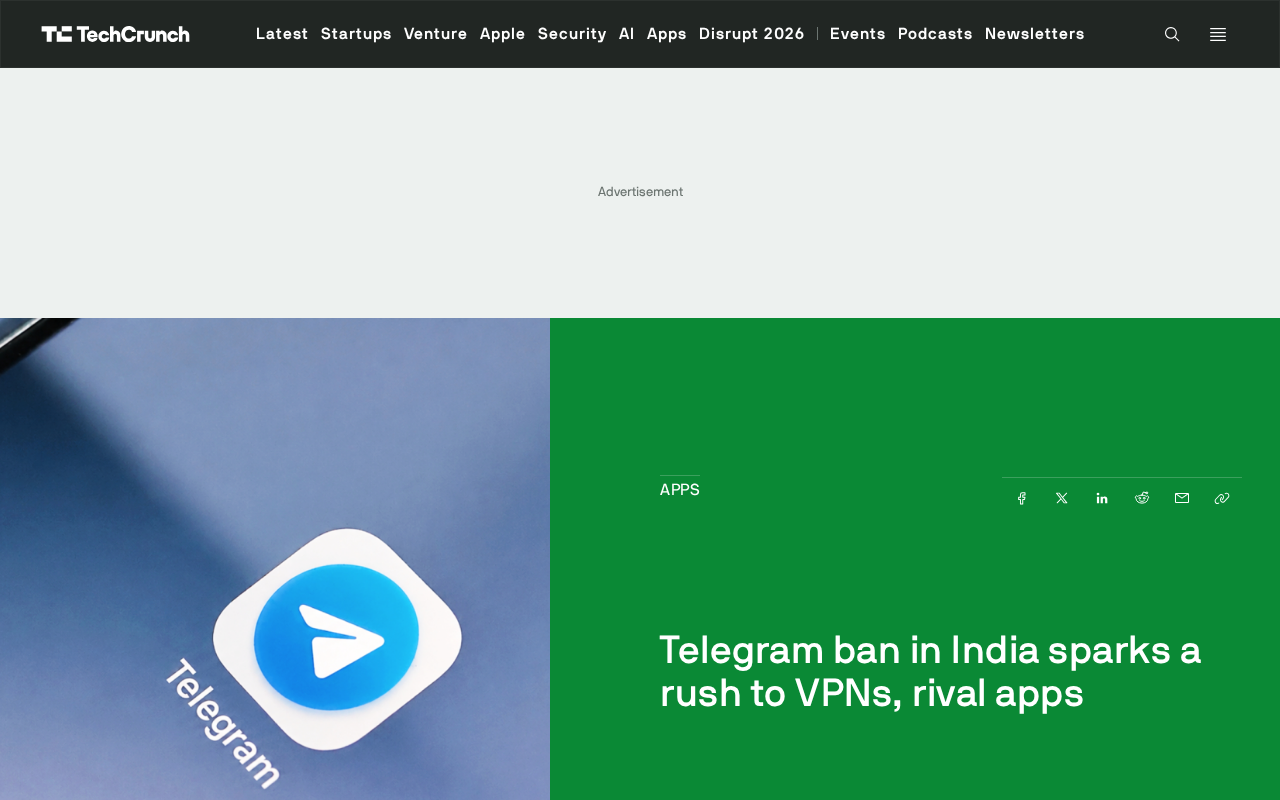
India bans Telegram, driving VPN downloads and user migration to rival messaging apps.
India's ban on Telegram has triggered a massive surge in VPN downloads and a wave of user migration to alternatives like Signal and WhatsApp. Telegram argues governments should block specific content rather than entire platforms. The event highlights the global tension between national security, encrypted communication regulation, and internet freedom, with the EU's Digital Services Act offering a more proportionate governance model.
India Bans Telegram: What Happened
The Indian government recently imposed a ban on the instant messaging platform Telegram, a decision that quickly triggered a chain reaction among millions of Indian users. A massive wave of users began turning to VPN tools and competing messaging apps in an effort to maintain their daily communication needs.
This is not the first time India has banned a major internet platform. The country previously banned TikTok and other apps, and has imposed internet shutdowns in specific regions. In fact, India is one of the countries with the highest number of internet shutdowns worldwide. According to digital rights organization Access Now, India has topped the global internet shutdown rankings for multiple consecutive years. When India banned TikTok and 58 other Chinese apps in 2020, citing national security and data sovereignty, the decision profoundly reshaped India's short-video market, giving rise to homegrown alternatives like Moj and Josh. Additionally, India imposed an internet blackout in Jammu and Kashmir that lasted several months — one of the longest shutdowns in any democratic country. These precedents show that the Indian government tends to take a hardline approach to digital governance, and the Telegram ban is the latest extension of this policy trajectory. However, the Telegram ban has an especially wide-reaching impact due to the platform's massive user base and diverse use cases.
India's regulation of internet platforms is primarily based on the Information Technology Act of 2000 (IT Act) and its subsequent amendments, particularly the Information Technology (Intermediary Guidelines and Digital Media Ethics Code) Rules, 2021 (IT Rules 2021). These rules require social media platforms with more than 5 million registered users (defined as "significant social media intermediaries") to appoint a Chief Compliance Officer, Nodal Contact Person, and Grievance Officer based in India, and to assist in tracing the "first originator" of information when requested by the government. This "traceability" requirement fundamentally conflicts with end-to-end encryption, as identifying the first originator of an encrypted message may require platforms to build backdoors into their encryption. WhatsApp filed a lawsuit in Indian courts over this provision, arguing it would undermine the privacy and security of all users. The Telegram ban occurred against the backdrop of this complex legal battle.
VPN Downloads Surge in India: How Users Are Bypassing the Telegram Ban
VPNs Become the Go-To Tool for Circumventing the Ban
Following the ban announcement, VPN downloads in India saw a dramatic spike. This pattern is highly consistent with user behavior observed when other countries have banned social platforms — when governments restrict access to a platform, technical tools like VPNs tend to be users' first response.
A VPN (Virtual Private Network) creates an encrypted tunnel between the user's device and a remote server, routing the user's network traffic through servers in other countries or regions to bypass local network restrictions. The user's real IP address is replaced by the VPN server's IP address, making it impossible for ISPs (Internet Service Providers) and government firewalls to identify the actual websites or apps the user is accessing.
For ordinary users, VPNs offer a relatively straightforward way to continue using Telegram. However, this "cat-and-mouse game" also introduces new risks: the security vulnerabilities of free VPNs, reduced network speeds, and potential legal issues are all realities users must confront. Some free VPNs log user browsing data and sell it to third-party advertisers, or may even inject malware; their encryption protocols may be outdated or contain vulnerabilities, actually exposing user data to greater risk. Furthermore, India's 2023 CERT-In directive requires VPN providers to retain user logs for at least five years, which led several prominent VPN providers (such as ExpressVPN, Surfshark, and NordVPN) to remove their physical servers from India and instead serve Indian users through virtual servers, further complicating usage.
Signal, WhatsApp, and Other Alternatives See a Growth Window
Beyond VPNs, messaging apps like Signal and WhatsApp are also experiencing a window of user growth. Some users have already begun migrating their groups and channels to other platforms, although these alternatives still lag behind Telegram in terms of feature richness.
The reason Telegram is so hard to replace is that it has built a complete ecosystem that extends far beyond instant messaging. Telegram Channels support unlimited subscribers and have become important information distribution channels in many countries. Its Supergroups can accommodate up to 200,000 members, and combined with tiered admin permissions and anti-spam bots, they offer powerful community management capabilities. The Telegram Bot API allows developers to create feature-rich automated bots covering customer service, payments, content delivery, games, and more. In 2024, Telegram also launched its Mini Apps platform, allowing developers to build full web applications within Telegram, further evolving toward a super app model. In India, numerous educational institutions use Telegram channels to distribute study materials, news outlets reach readers through channels, and small e-commerce businesses complete transaction loops through groups and bots. These deeply embedded use cases make platform migration extremely costly — for users who rely on Telegram to run communities, finding a functionally equivalent alternative is nearly impossible to achieve overnight.
Telegram's Position: Block Content, Not the Platform
In response to the Indian government's ban, Telegram has articulated a clear stance: India should target specific violating content for removal rather than imposing a blanket ban on the entire platform.
This argument has merit. Telegram has millions of users in India, with use cases spanning news dissemination, educational exchange, business communication, community operations, and many other legitimate domains. Banning an entire platform because of isolated instances of violating content inflicts disproportionate harm on legitimate users' rights.
Encrypted Communication Regulation: A Global Debate on Content Governance vs. Platform Bans
This controversy reflects a deeper governance challenge on a global scale: How should governments regulate encrypted communication platforms? Should they require platforms to cooperate with content moderation, or impose outright bans when platforms refuse to comply?
From a technical perspective, Telegram's encryption mechanism differs from what many people assume. Its regular chats use client-server encryption (based on the proprietary MTProto protocol) — messages are encrypted during transmission, but Telegram's servers can decrypt and store them. End-to-end encryption (E2E encryption) is only activated when users manually enable "Secret Chats" mode, in which only the two communicating parties can read the message content and Telegram's servers cannot decrypt it. This stands in stark contrast to Signal and WhatsApp, which apply end-to-end encryption to all messages by default. More critically, Telegram's group chats and channels do not support end-to-end encryption, meaning that from a technical standpoint, Telegram actually has the capability to cooperate with government content moderation. This technical detail undermines the claim that "Telegram cannot comply with regulation due to encryption," and raises further questions about the justification for banning the entire platform.
From the principle of proportionality, targeted content removal requests are clearly more reasonable than a blanket ban. The EU's Digital Services Act (DSA) offers a middle path — requiring platforms to establish transparent content moderation mechanisms while allowing them to continue normal operations. Passed in 2022 and fully effective in 2024, the DSA represents the most systematic platform governance effort globally to date. Its core philosophy is that "content that is illegal offline is equally illegal online." It requires large online platforms (those with over 45 million monthly active users, defined as "Very Large Online Platforms" or VLOPs) to establish transparent content moderation mechanisms, set up user complaint and appeal channels, publish regular transparency reports, and undergo independent audits. For non-compliant platforms, the EU can impose fines of up to 6% of global annual revenue, but does not readily resort to blanket bans. The DSA also introduces a "Trusted Flagger" mechanism, where certified organizations can submit priority content removal requests, improving the precision of content governance. This layered, proportionate regulatory model provides a reference framework for balancing platform operational freedom with content safety, standing in sharp contrast to India's approach of directly banning platforms.
The Far-Reaching Impact of the Ban on India's Digital Ecosystem
Small Businesses and Content Creators Bear the Brunt
In India, Telegram is not just a communication tool — it is a core operational platform for many small businesses, content creators, and community organizations. The ban's impact on these groups extends far beyond instant messaging, affecting business operations, information access, and community cohesion across multiple dimensions.
Balancing Internet Freedom and National Security
The Telegram ban in India once again brings the core contradiction of internet governance to the forefront. Governments have legitimate needs to maintain national security and social order, but internet freedom and user rights are equally important. Finding the balance between the two is a challenge every country faces.
In the long run, blunt bans rarely achieve their intended results — the rapid adoption of VPNs has already demonstrated this. Building a more refined, rule-of-law-based content governance framework is a far more sustainable path forward.
Conclusion: Lessons from the Telegram Ban
India's ban on Telegram is yet another landmark event in the global trend of internet governance. It has not only affected the daily communications of millions of Indian users but has also sparked deeper discussions about how platforms should be governed. Telegram's argument to "block content, not the platform" deserves serious consideration from regulators worldwide. In an increasingly digital world, finding the right balance between security and freedom will continue to test the governance wisdom of governments everywhere.
Related articles

Claude Code Artifacts Explained: How AI Programming Enables Team Collaboration
Anthropic launches Artifacts for Claude Code, turning coding processes into interactive shareable webpages. Explore PR walkthroughs, dashboards, UX prototypes, and the shift from individual productivity to team collaboration.

Aura Ink E-Ink Photo Frame Review: A Home Art Piece That Makes Technology Invisible
In-depth analysis of the Aura Ink e-ink photo frame's design philosophy and technical advantages. How E-Ink solves glare, pixelation, and high power consumption to create home art with paper-like quality.
Anthropic Models Banned by U.S. Government — Did the Ban Actually Boost Brand Awareness?
The U.S. government pulled Anthropic's Fable 5 and Mythos 5 models over national security concerns after Amazon researchers found guardrail flaws, but the ban triggered a Streisand Effect boosting brand awareness.