Is Claude Opus 4.8 Real? Risk Analysis of No-VPN AI Platforms
Is Claude Opus 4.8 Real? Risk Analysis…
Claude Opus 4.8 doesn't exist — viral no-VPN AI platform videos are misleading and risky.
Viral Bilibili videos promoting free, no-VPN access to "Claude Opus 4.8" are misleading. Anthropic has never released this model version, the platforms are third-party wrappers with serious data security risks, and the "free unlimited" business model is economically unsustainable. Users should stick to official channels or compliant domestic alternatives.
What's Behind the Viral "Claude Opus 4.8 No-VPN Tutorial" on Bilibili
Recently, a wave of videos promoting "use Claude Opus 4.8 in China without a VPN" has flooded Bilibili. These videos claim users can directly access Claude, GPT, and other major international AI models from within China — "completely free and unlimited."
Sounds tempting, but is it true? This article provides an objective analysis from three angles — model authenticity, platform security, and business logic — to help you separate fact from fiction and understand the potential risks.
What Are These Videos Promoting?
The So-Called "Opus 4.8 Latest Model"
The videos reference an "Opus 4.8" model, claiming it outperforms all predecessors and competitors like GPT 5.5 across benchmarks in coding, tool use, and reasoning. Demos include the model introducing itself, creating Python learning plans, and generating a browser-playable "Angry Birds" game.
The videos also showcase switching between different reasoning depths (low depth, maximum depth, and thinking mode), attempting to prove the platform offers a "full-powered" model. The so-called "deep thinking mode" refers to the model performing an internal Chain of Thought before generating a final answer — a feature that does exist in some official models. However, whether the implementation and results match what's shown in the video cannot be determined from interface screenshots alone.
No-VPN Direct Access and Multi-Model Switching
Another major selling point is "direct access within China, no VPN needed," claiming users can freely switch between GPT, Gemini, Claude, and other models on a single platform with an experience that's "1:1 identical to the official site."
Is Claude Opus 4.8 Real? Three Major Red Flags
Red Flag #1: The Model Version Doesn't Exist
This is the most critical issue — Anthropic has never released a version called "Opus 4.8."
Claude's naming convention follows a "Claude + major version + product tier" structure, such as Claude 3 Opus, Claude 3.5 Sonnet, and Claude 4 Sonnet. It never uses decimal point version numbers like "4.8." Since launching the Claude series in 2023, Anthropic has maintained a clear versioning system. Claude 1 and Claude 2 were early versions. The Claude 3 series, released in 2024, introduced product tier differentiation for the first time: Haiku (lightweight and fast), Sonnet (balanced), and Opus (flagship). Subsequent Claude 3.5 and Claude 4 releases continued this naming logic. This approach is similar to product line segmentation in the chip industry, where each tier targets different performance needs and price points. Anthropic has never used incremental decimal version numbers like "4.8" — version updates are formally announced through official blog posts and technical reports.
Likewise, the "GPT 5.5" mentioned in these videos is not a publicly released OpenAI product either.
Even more telling, the videos contain obvious spelling errors like "Cloud Sonic 4.6" — the correct names are "Claude" (not "Cloud") and "Sonnet" (not "Sonic"). When you can't even spell the brand name correctly, credibility drops to zero.
Red Flag #2: Third-Party Platforms Pose Serious Data Security Risks
These "direct access from China" services are essentially third-party proxies or wrapper platforms that typically operate through:
- API forwarding: Purchasing official API access and reselling at a markup, or using API keys obtained through illegitimate channels
- Interface wrapping: Putting a custom frontend over official backend API calls
- Data relay: All user conversation data passes through third-party servers
From a technical standpoint, an API (Application Programming Interface) is a standardized way for software systems to communicate. Companies like Anthropic and OpenAI offer paid APIs that allow developers to integrate AI capabilities into their own applications. Wrapper platforms work by building a chat interface that resembles the official one on the frontend. When a user sends a message, the platform's backend forwards the request to the official API, receives the response, and relays it back to the user. In this process, all user input passes through third-party servers, creating a "man-in-the-middle" architecture. Some platforms even use stolen or illegitimately obtained API keys — once those keys are banned by the provider, the service immediately goes down.
This means your private data (including all conversation content) could be logged, stored, or even misused by the third-party platform. The risk is especially acute if your conversations involve work documents, personal information, or trade secrets.
Red Flag #3: "Free and Unlimited" Makes No Business Sense
Official API calls have clear costs. Large language model APIs charge by token — the basic unit of text processing. In Chinese, roughly 1.5–2 characters correspond to one token. Taking Anthropic's flagship model as an example, Claude Opus-level pricing is approximately $15 per million input tokens and $75 per million output tokens. A single in-depth conversation can consume thousands to tens of thousands of tokens, meaning each conversation costs anywhere from a few cents to several dollars. If a platform has thousands of active users with unlimited access, monthly API costs can easily reach tens or even hundreds of thousands of dollars.
For a platform claiming to be "completely free with unlimited usage" — where does the operating budget come from? It's simply not economically sustainable.
Common monetization schemes include:
- Offering free access initially to attract registrations, then forcing paid subscriptions once a user base is established
- Monetizing collected user conversation data
- Using "comment to get the link" tactics to funnel users into private channels for paid service promotions
How to Legitimately Access Claude and Other International AI Models
If you genuinely need to use tools like Claude, here are safe and reliable options:
| Channel | Best For | Key Features |
|---|---|---|
| Anthropic official site (claude.ai) | General users | Requires certain network conditions; data security guaranteed |
| Anthropic official API | Developers | Pay-per-usage; clear privacy policies |
| Compliant domestic LLMs | All users | No VPN needed; Chinese language performance continuously improving |
Domestic large model products that have completed regulatory filing — such as ERNIE Bot, Tongyi Qianwen, Kimi, and Doubao — deliver excellent Chinese language understanding and generation, fully meeting most everyday use cases. In August 2023, China's "Interim Measures for the Management of Generative AI Services" took effect, requiring companies offering generative AI services to the public to complete algorithm registration. As of 2024, over 200 large model products have been filed with the Cyberspace Administration of China. The registration system mandates that companies meet clear standards in data security, content moderation, and user privacy protection, providing users with basic rights guarantees. By contrast, unregistered third-party platforms operate outside China's regulatory framework, leaving users with virtually no recourse.
Conclusion: Don't Let "Free" Cloud Your Judgment
This type of "no-VPN, free access to the most powerful AI" content fundamentally exploits users' demand for cutting-edge AI tools as a traffic-generation marketing tactic. The videos contain obvious fabrications like fake model versions and misspelled brand names, while the promoted third-party platforms carry significant risks in both data security and service continuity.
Key takeaway: Prioritize official channels or verified compliant platforms. Don't let "free" make you overlook privacy and security risks. If a service seems too good to be true, it almost certainly is.
Related articles
Deep Dive into the Three AI Programmin…
Deep Dive into the Three AI Programming Frameworks: The Right Way to Do Specification-Driven Development
Deep dive into the three frameworks of Specification-Driven Development (SDD) for AI programming: Blueprint, Execution Flow, and Change Records — solving the problem of AI code going off the rails.
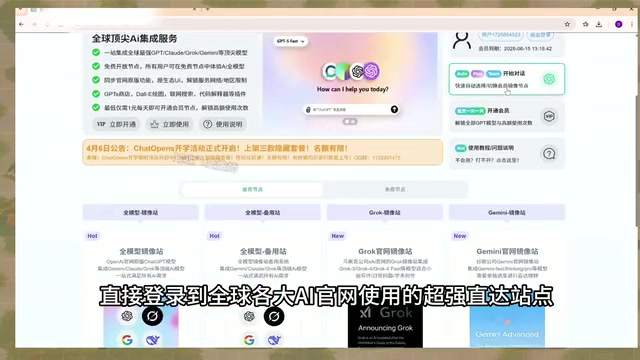
AI Aggregator Platforms Tested: A Complete Guide to Using GPT 5.5 and Other Top Models for Free
A hands-on guide to using GPT 5.5, Gemini 3.1 Pro, and Grok 4.2 for free via AI aggregator platforms, covering cross-model context memory, account pool mechanisms, and key security risks.
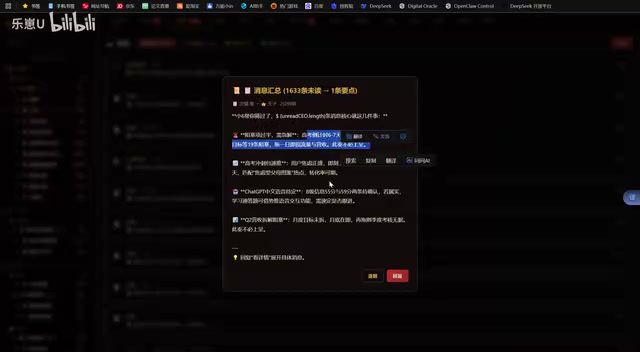
Vibe Coding in Practice: A Junior Student Uses Cursor to Build a Multi-Agent System with 51 AI Officials Based on the Three Departments and Six Ministries Framework
A junior student uses Cursor and Vibe Coding to build a multi-agent system with 51 AI officials modeled on China's Three Departments and Six Ministries, featuring task distribution, approval workflows, and Token cost visualization.