Launching on the App Store for Under $120: A Full Cost Breakdown of AI-Powered Development
Launching on the App Store for Under $…
AI coding tools have reduced the total cost of publishing an app on the App Store to just $99.
A developer documented their complete journey of building and publishing an iOS app using AI coding tools, revealing total costs of just 816 RMB (~$112). The Apple Developer account fee of 699 RMB ($99) is the only mandatory expense, while server, domain, and AI tool costs are either optional or have free alternatives. The article also covers China-specific App Registration requirements and explains how AI has fundamentally shifted development costs from labor to platform fees.
How Low Is the Bar for Solo Developers in the AI Era?
AI coding tools are maturing rapidly, and a very practical question faces everyone: How much does it actually cost for an ordinary person to develop an app with AI and publish it on the App Store?
A content creator on Bilibili shared their team's complete journey of building a smart teleprompter app using AI coding tools and successfully launching it on the App Store, with all real costs disclosed. The answer may surprise many — the total cost was just 816 RMB ($112), and the absolute minimum is only 699 RMB ($99).
Behind these numbers lies a fundamental restructuring of software development costs driven by AI programming.
Full Cost Breakdown: Where Did the 816 RMB Go?
The Biggest Expense: Apple Developer Account — 699 RMB
In the entire development and publishing process, the single largest expense is the Apple Developer Program annual fee — 699 RMB ($99). This is a hard requirement from Apple. Whether you're a solo developer or an enterprise team, there's no way around this fee if you want to publish on the App Store.
The Apple Developer Program is Apple's official registration system for iOS, macOS, watchOS, and tvOS app developers. This $99 annual fee has remained essentially unchanged since the App Store launched in 2008. Upon joining, developers gain access to the full Xcode toolchain, TestFlight beta distribution, App Store Connect publishing management, and other core capabilities. While Apple does offer a free developer account, it only allows testing on your own devices — you cannot submit apps for public distribution on the App Store. For solo developers, this 699 RMB is essentially the "admission fee" to a distribution channel reaching over 2 billion active iOS devices worldwide.
In other words, the absolute minimum cost to publish on the App Store is 699 RMB — non-negotiable.
Optional Expenses: Server and Domain — 117 RMB
The remaining 117 RMB was spent on two items:
- Alibaba Cloud lightweight application server (one year): 79 RMB
- Domain registration: 38 RMB
These were primarily used to set up an official website for the app, hosting usage instructions and the privacy policy page required for all iOS apps.
Regarding the privacy policy page — this is not optional decoration. App Store Review Guideline 5.1.1 explicitly requires all apps to provide a publicly accessible privacy policy link that details what user data the app collects, how it's used, whether it's shared with third parties, and how users can request data deletion. This requirement is not just an Apple platform rule but also aligns with data protection regulations worldwide (such as the EU's GDPR and China's Personal Information Protection Law). The privacy policy must be provided via a publicly accessible URL, so developers need some form of web hosting.
However, the creator acknowledged that this 117 RMB can actually be saved. Apple requires apps to provide a privacy policy link, but this page can be hosted for free using Notion pages, GitHub Pages, or similar services — you don't necessarily need to purchase a server and domain.
AI Tool Costs: Flexible Spending
AI coding tool costs represent another dimension. The creator used a monthly AI coding subscription at about $20/month (~140 RMB). But this wasn't included in the 816 RMB total because AI tool choices are highly flexible:
- Free options: Many free AI coding tools are available, bringing this cost to zero
- Monthly subscriptions: Mainstream AI coding assistants cost around $20/month
- Pay-per-use API: Billed by actual usage; lightweight projects might cost just a few cents to a few dollars
The current AI coding tool ecosystem has formed a multi-tiered product landscape. The first tier includes GitHub Copilot, Cursor, Windsurf, and other tools deeply integrated into IDEs, offering real-time code completion, generation, and refactoring powered by large language models like GPT-4 and Claude. The second tier consists of conversational AI assistants like ChatGPT and Claude, where developers can describe requirements in natural language to receive complete code snippets. The third tier includes no-code AI platforms like Bolt.new and v0.dev that can generate fully deployable applications directly from text descriptions. The core value of these tools lies in transforming "writing code" from manual line-by-line input into a new workflow of "describe intent → review output → iterate and refine."
The Hidden Hurdle for China's App Store: App Registration (备案)
Here's an easily overlooked detail. The App Store covers 175 countries and regions worldwide, but mainland China has an additional hard requirement — App Registration (App备案).
China's App Registration system originates from the "Administrative Measures for Mobile Internet Application Registration" issued by the Ministry of Industry and Information Technology (MIIT) in August 2023, requiring all apps providing internet information services within China to complete registration. The policy officially took effect in April 2024, and apps that haven't completed registration cannot be distributed on any domestic app store. The registration process typically requires developers to first complete ICP domain registration (which requires a domestic server and a real-name verified domain), then submit the app's basic information, service categories, and entity details through the MIIT registration system. The entire process takes approximately 1-4 weeks.
Without completing the domestic App Registration process, apps cannot be listed on the China region App Store, and users in China won't be able to find them. The creator's team completed the entire process including website creation, domain registration, and App Registration — this is also one of the key reasons they chose to purchase a server and domain, as a domestic server and real-name verified domain are prerequisites for completing the registration chain.
For developers targeting Chinese users, the registration process is unavoidable. But if your target market is overseas, you can skip this step entirely, further reducing costs and process complexity.
What Has AI Programming Actually Redefined?
The Cost Structure Has Been Completely Upended
In traditional app development, labor costs typically account for over 80% of total costs. A simple iOS app outsourced for development usually costs tens of thousands to hundreds of thousands of RMB. With AI coding tools, labor costs have been dramatically compressed, and fixed platform fees (like the Apple Developer account) have become the largest expense item.
To understand the magnitude of this disruption, consider the pre-AI landscape: using China's outsourcing market as a reference, a moderately complex iOS app (such as a utility app with user accounts, data storage, and basic interactions) typically costs 30,000-150,000 RMB (~$4,000-$20,000) to develop, with complex apps reaching hundreds of thousands or even millions. Even if developers build it themselves, learning Swift/SwiftUI from scratch to independently completing a publishable app typically takes months. AI coding tools have compressed this development cycle to days or even hours — this order-of-magnitude efficiency leap is the fundamental reason for the dramatic cost reduction.
When the primary cost of developing an app shifts from "tens of thousands in development fees" to "699 RMB in platform fees," the economic barrier to software development has undergone a qualitative change.
Capability Barriers Still Exist
However, low cost doesn't mean zero barriers. From the creator's sharing, it's clear that even with AI assistance, developers still need to:
- Understand the app's product logic and feature design
- Have basic debugging and troubleshooting abilities
- Be familiar with App Store review rules and publishing workflows
- Handle compliance requirements like registration and privacy policies
What AI reduces is the execution cost of coding, but product thinking, process management, and problem-solving abilities remain core competencies developers need. The key distinction here is: AI excels at converting clear instructions into code implementations, but the decisions of "what to build" and "why to build it this way" still require human judgment. When AI-generated code has bugs or an App Store submission gets rejected, developers need the ability to understand the problem and provide correction direction — this capability cannot be fully replaced by AI.
699 RMB: An Admission Ticket to a New Era
| Expense Item | Amount | Required? |
|---|---|---|
| Apple Developer Account | 699 RMB/year | ✅ Required |
| Server (one year) | 79 RMB | ❌ Free alternatives available |
| Domain | 38 RMB | ❌ Free alternatives available |
| AI Tools | 0~140 RMB/month | Flexible |
| Minimum Total Cost | 699 RMB | — |
With AI coding tools, the minimum cost to publish an app on the App Store has dropped to under 700 RMB (~$99). For the vast majority of people, this is virtually no economic barrier at all.
The real question is no longer "Can I afford to develop an app?" but rather "Do you have a product idea worth building, and the execution ability to bring it to life?" AI is transforming software development from a high-cost professional service into a creative medium accessible to everyone.
Related articles
MCP Protocol Explained: Architecture P…
MCP Protocol Explained: Architecture Principles and Hands-On Configuration Guide
Deep dive into MCP (Model Context Protocol): core concepts, four-layer architecture, and hands-on configuration. Learn how MCP transforms AI from a suggestion generator into a true executor.
Codex Complete Tutorial: From Registra…
Codex Complete Tutorial: From Registration and Installation to Hands-On Practice
Complete Codex tutorial from zero: ChatGPT registration, Codex installation, sandbox setup, Skills & MCP advanced features, plus hands-on Snake game and Spring MVC debugging examples.
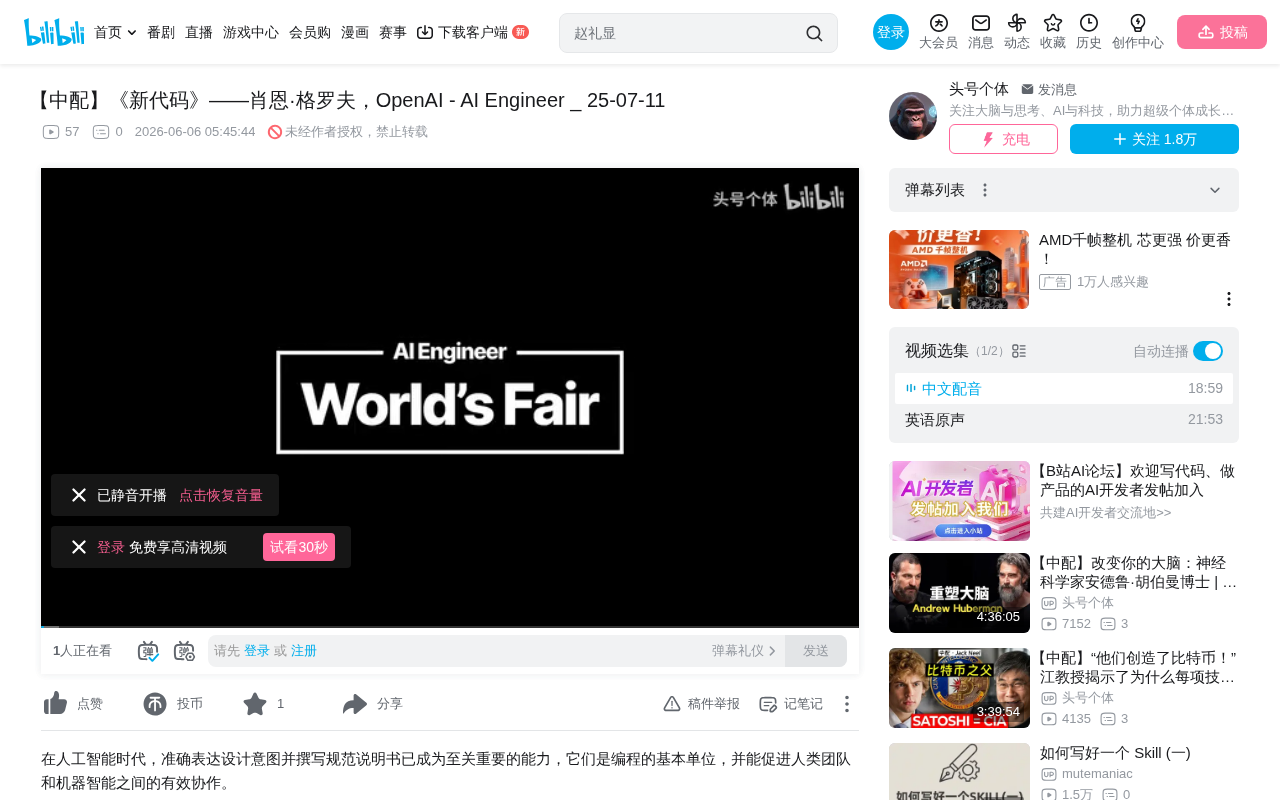
OpenAI Researcher: Spec Documents Are the Real Code
OpenAI researcher Sean Grove argues code is only 10-20% of value—spec documents are the real source code. From Vibe Coding insights to model alignment, why writing specs will be the scarcest skill in the AI era.