New Species Discovered in New York's Central Park? Inside the Urban Insect Hunting Project
New Species Discovered in New York's C…
Scientists set up insect traps in New York City parks to search for undiscovered species.
A Vox team has set up insect traps in New York's Central Park and Prospect Park, attempting to discover new species in a highly urbanized environment. With an estimated 90% of Earth's species still undiscovered, tiny insects in cities like New York may harbor unknown species. Samples will be sent to a Canadian laboratory for DNA barcoding identification. The project aims to address the global insect decline crisis, emphasizing that knowledge is a prerequisite for conservation.
Searching for Unknown Life in the World's Busiest City
Can you imagine that in the heart of New York City—the largest and most thoroughly explored city in America—there might still be species never before discovered by humans? Scientists from the Vox team are conducting a bold experiment in Central Park and Brooklyn's Prospect Park: by setting up large insect traps, they're attempting to discover entirely new species amid the concrete jungle.

This project is supported through collaboration with the Central Park Conservancy, the Prospect Park Alliance, and the New York City Department of Parks and Recreation. Researchers have set up collection devices in both parks, primarily targeting small flying insects including wasps and flies. These traps typically employ the design principles of Malaise traps—tent-like passive collection devices that exploit insects' instinct to fly upward, guiding them into collection bottles at the top where they're preserved in alcohol. The advantage of this method is that it works 24/7 without requiring researchers to be continuously present, making it ideal for long-term monitoring projects.
90% of Earth's Species Remain Undiscovered
Scientists estimate that up to 90% of species on Earth have yet to be discovered and named by humans. This is a staggering number. Currently, science has formally described and named approximately 2 million species, but according to various estimation models, the actual total number of species on Earth may range between 8 and 10 million, or even more. This enormous "knowledge gap" is known as the "Linnean shortfall," named after Carl Linnaeus, the father of modern taxonomy. Meanwhile, the problem of insufficient knowledge about the geographic distribution ranges of known species is called the "Wallacean shortfall." These knowledge gaps severely constrain the development of global biodiversity conservation strategies.
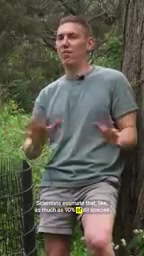
Even in a place as highly urbanized and repeatedly surveyed as New York, the possibility of discovering new species still exists. This demonstrates that our understanding of the biodiversity around us is far more limited than we imagine. Tiny insects in urban ecosystems—due to their small size, enormous diversity, and difficulty of identification—represent the group most likely to harbor unknown species. In particular, parasitic groups within Hymenoptera (wasps, bees, ants) and Diptera (flies, mosquitoes) include many species less than 2 millimeters in body length with extremely subtle morphological differences. Traditional morphological taxonomy methods often struggle to effectively distinguish them, which is why molecular identification techniques have become indispensable in this field.
Collection Plan and Research Timeline
The research team's traps have already begun operating and will continue running throughout the summer until the end of August.
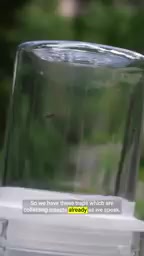
Approximately one month later, the first batch of insect samples will be sent to a laboratory in Canada for analysis and identification. The Canadian laboratory mentioned here is very likely the Centre for Biodiversity Genomics at the University of Guelph in Ontario, a global leader in DNA barcoding research that maintains the International Barcode of Life Data Systems (BOLD Systems), which has catalogued over 15 million barcode records. The laboratory will use morphological and molecular biology methods (such as DNA barcoding technology) to determine whether the collected specimens include species new to science.
DNA barcoding technology uses standardized short gene fragments (for animals, typically a ~650 base pair sequence of the mitochondrial COI gene) to rapidly identify species. This technique was formally proposed by Canadian scientist Paul Hebert in 2003, and its core advantage lies in its ability to effectively distinguish cryptic species—those that are morphologically highly similar—through genetic differences. It can also identify specimens at different life stages (such as larvae or fragments), where traditional morphological methods are often helpless. This approach has been widely applied in biodiversity surveys in recent years and has indeed led to the discovery of new species in urban environments—for example, a new parasitoid wasp discovered in Los Angeles in 2012, and multiple previously unrecorded Diptera species found in London in 2018.
Why Urban Insect Research Matters So Much
The significance of this project extends far beyond the news value of "discovering new species." Researchers emphasize two core reasons:

First, understanding our neighbors. Knowing which animals share our home is the foundation of urban ecological management. The ecological value of urban parks as biodiversity refugia is often underestimated. Central Park covers approximately 341 hectares, and although it was artificially designed and constructed in the 19th century by landscape architects Frederick Law Olmsted and Calvert Vaux, after more than 160 years of ecological succession, it has developed a remarkably complex ecosystem. Located on the Atlantic Flyway for migratory birds, over 280 bird species have been recorded there. However, systematic surveys of invertebrates have remained relatively scarce—a 2014 soil study discovered multiple previously unknown microbial species in the park, proving that even in a place that receives 42 million visitors annually, vast numbers of life forms await discovery.
Second, knowledge is a prerequisite for conservation. Many insect groups are currently declining dramatically worldwide, and we cannot protect species whose existence we don't even know about. A landmark review published in Biological Conservation in 2019 analyzed 73 historical studies and concluded that global insect biomass is declining at a rate of approximately 2.5% per year, with over 40% of insect species facing extinction risk. Long-term monitoring data from the Krefeld Entomological Society in Germany is even more alarming—over 27 years, local flying insect biomass declined by more than 75%. Major driving factors include habitat loss, widespread use of neonicotinoid pesticides, climate change, light pollution, and competition from invasive species.
Insects provide critical ecosystem services to humanity—pollination, decomposition of organic matter, maintaining food chains—and if they go extinct before we discover them, that loss is irreversible. It's estimated that insect pollination services alone contribute over $500 billion annually in economic value to global agriculture. As a foundational link in the food chain, declining insect numbers have already begun producing cascading effects on populations of birds, bats, freshwater fish, and other animals that depend on insects for food.
A New Trend in Urban Biodiversity Research
This project reflects an important shift in ecological research in recent years: moving from wilderness to cities. The traditional view held that new species exist only in tropical rainforests or the deep sea, but growing evidence shows that urban environments also harbor vast amounts of unrecorded biodiversity. This paradigm shift partly stems from the maturation of "Urban Ecology" as an independent discipline, and from the growing recognition that over 55% of the global population lives in cities, making urban ecosystem health directly relevant to human well-being.
New York's park system, while limited in area, offers complex microhabitats—grasslands, woodlands, water bodies, shrublands—that provide diverse habitat conditions for various insects. Combined with the urban heat island effect and unique patterns of human disturbance, these conditions may even give rise to populations uniquely adapted to urban environments. The urban heat island effect raises temperatures in central urban areas by 1-3°C compared to surrounding suburbs, creating microclimatic conditions similar to lower-latitude regions for certain insects, potentially allowing tropical or subtropical species to establish populations in temperate cities. More importantly, sustained selection pressure may drive genetic differentiation in urban insect populations—a famous case is the London Underground mosquito (Culex pipiens molestus) in New York's subway system, where research shows they have developed significant genetic isolation from surface populations and may even be forming an independent species.
Furthermore, unique artificial substrates in cities—such as building facades, underground pipe systems, and green roofs—provide insects with entirely new ecological niches that don't exist in nature. These "novel habitats" may be driving rapid adaptive evolution, producing urban-endemic populations with unique ecological characteristics.
The results of this research are worth anticipating. Whether or not new species are ultimately discovered, it will provide valuable data for understanding the complexity of urban ecosystems and remind us that even in the most familiar environments, the natural world remains full of unknowns. As the renowned biologist E.O. Wilson once said, we live on a "mostly unexplored planet"—and that unknown exists not only in distant wilderness, but also in the city parks we pass through every day.
Key Takeaways
- Scientists have set up insect traps (likely Malaise traps) in New York's Central Park and Prospect Park in an attempt to discover new species
- An estimated 90% of Earth's species have yet to be discovered and named by humans, a knowledge gap known as the "Linnean shortfall"
- The traps will operate throughout the summer, with the first samples sent to a Canadian laboratory for DNA barcoding identification approximately one month later
- Global insect populations are declining at a rate of approximately 2.5% per year; discovering and documenting species is a necessary prerequisite for conservation
- Tiny insects in urban ecosystems are the group most likely to harbor unknown species, and factors such as the urban heat island effect may even give rise to endemic populations
Related articles
The Full Story of the Higgs Boson Disc…
The Full Story of the Higgs Boson Discovery: An Insider's Account of the 'God Particle'
A Fermilab physicist's insider account of the Higgs boson discovery: the transatlantic race with CERN, behind-the-scenes details of the 2012 announcement, 14 years of verification, and the true origin of the 'God Particle' name.
 Research
SciMDR: How a 7B Small Model Rivals GPT-5 in Scientific Reasoning
Yale and other institutions introduce SciMDR, a two-stage data synthesis pipeline enabling a 7B model to match GPT-5 level performance in scientific literature comprehension.
 Research
Deep Dive into Claude Code's Open-Source Architecture: The Design Philosophy Behind 510,000 Lines of Code
Deep analysis of Claude Code's open-source architecture: dual-loop design, 7-step tool pipeline, 4-layer token compression, memory systems, and multi-agent collaboration patterns.