OpenAI Cracks Erdős Unit Distance Conjecture: AI Independently Disproves 80-Year-Old Math Problem for the First Time

OpenAI's AI independently disproves Erdős's 80-year-old unit distance conjecture using algebraic number theory.
OpenAI's general-purpose reasoning model autonomously disproved Paul Erdős's 1946 planar unit distance conjecture—without human prompting or math-specific training. The AI bridged algebraic number theory and combinatorial geometry using class field towers and Golod-Shafarevich theory to construct a counterexample. Nine top mathematicians, including Fields Medalist Timothy Gowers, verified the proof and called it a milestone for AI in mathematics.
On May 20, 2025, OpenAI announced a result that sent shockwaves through the mathematics community: its internal general-purpose reasoning model, without human prompting, without math-specific fine-tuning, and without any targeted guidance, independently disproved the planar unit distance conjecture proposed by Paul Erdős in 1946. This marks the first time in public record that an AI has autonomously solved an open problem at the core of a mathematical subfield.
The Unit Distance Problem: An Extremely Hard Challenge Behind a Simple Statement
Imagine drawing N points on a sheet of paper, then asking: among these points, what is the maximum number of pairs that are exactly distance 1 apart?
The problem sounds simple but is extraordinarily difficult to solve. In 1946, Hungarian mathematician Paul Erdős formally posed this question, provided the initial construction, and offered a $500 prize for its solution. Paul Erdős (1913-1996) was one of the most prolific mathematicians of the 20th century, publishing over 1,500 papers and collaborating with more than 500 co-authors. He was famous for posing problems and offering cash prizes for their solutions, with amounts ranging from $25 to several thousand dollars reflecting his assessment of difficulty. Erdős's contributions to combinatorics, graph theory, number theory, and other fields laid the foundations of modern discrete mathematics, and many of his problems remain unsolved to this day, forming core research directions in these areas.
Let U(N) denote the maximum number of unit distance pairs among N points. The simplest construction places N points on a line with spacing 1, yielding N-1 pairs; a grid construction can produce approximately 2N pairs.
Erdős, by scaling a grid, obtained a better result: N raised to the power (1+C/ln N). Since ln N grows toward infinity very slowly, the additional term in the exponent is nearly zero, and the growth is only slightly faster than linear. For 80 years, no one has been able to significantly surpass this lower bound.
Long-Standing Consensus: The Scaled Grid Construction Is Optimal
The mathematical community thus formed a strong consensus: the scaled grid construction is essentially optimal, and it is impossible to find a construction significantly better than it. In mathematical terms, Erdős conjectured that the upper bound of U(N) is N^(1+o(1)), where o(1) is a term that tends to 0 as N grows.
This conjecture was supported by substantial indirect evidence. In 1984, Spencer, Szemerédi, and Trotter proved the upper bound result U(N) ≤ O(N^(4/3)), meaning the number of unit distance pairs among N points does not exceed a constant times N to the 4/3 power. The proof of this upper bound used the famous Szemerédi-Trotter theorem on point-line incidences—one of the most fundamental tools in computational and combinatorial geometry, which precisely characterizes the maximum number of incidences between points and lines in the plane. This means the true answer is sandwiched between N^(1+ε) (lower bound, from Erdős's construction) and N^(4/3) (upper bound). Later research also showed that for most non-Euclidean distances, the conjecture holds. Princeton's Noga Alon called it "one of Erdős's favorite problems," and Brass, Moser, and Pach wrote in Research Problems in Discrete Geometry that it is perhaps "the most well-known and easily stated problem in combinatorial geometry."
The AI's Breakthrough Path: Algebraic Number Theory Meets Elementary Geometry
The AI's proof did not give an explicit value of delta, but Princeton mathematics professor Will Sawin subsequently refined the result, proving that one can take delta = 0.014. While 0.014 may seem like a small number, in asymptotic analysis this represents a qualitative difference—from "slightly faster than linear" to a polynomial-level improvement.
To understand the profound meaning of this distinction: in asymptotic analysis, o(1) denotes a quantity that tends to 0 as N grows, such as C/ln(N). This means that for any fixed ε > 0, when N is large enough, the additional term in the exponent is less than ε. But δ = 0.014 is a fixed positive constant that does not change with N. In Erdős's old construction, the growth rate N^(1+C/ln N), while exceeding linear, has an excess that continually shrinks as N grows; the new construction's N^(1.014) is a genuine polynomial improvement, with the growth rate staying above linear regardless of N's scale. This is why 0.014, though seemingly small, represents a qualitative leap from "sub-polynomial improvement" to "polynomial improvement."
Cross-Domain Insight: From Gaussian Integers to Infinite Class Field Towers
This is the most surprising part of the entire event: the AI did not invent new geometric tools but instead did something no one expected—it brought ideas from algebraic number theory into this elementary geometry problem.
The technique behind Erdős's original construction can be understood through Gaussian integers (complex numbers of the form a+bi), the simplest type of algebraic number ring. Gaussian integers are complex numbers of the form a+bi, where a and b are ordinary integers and i is the imaginary unit (i²=-1). Gaussian integers form a ring (an algebraic structure supporting addition and multiplication), denoted Z[i]. In the Gaussian integers, the "units" are elements of modulus 1—only ±1 and ±i, four in total. Algebraic number rings are generalizations of Gaussian integers—they are rings formed from algebraic numbers (roots of polynomials with integer coefficients). Different algebraic number rings have different arithmetic properties and symmetries, and these properties can be used to construct point sets with specific geometric attributes.
The AI's insight was this: by switching to a more complex algebraic number ring with richer symmetries, one can obtain more unit-length differences, thereby constructing more unit distance pairs.
Specifically, the AI used infinite class field towers and Golod-Shafarevich theory—classical tools in algebraic number theory—to prove that the required complex number rings actually exist. Class field towers are a core concept in algebraic number theory: given a number field K, its Hilbert class field is a special extension of K whose Galois group is isomorphic to K's ideal class group. Repeatedly taking Hilbert class fields produces the class field tower. In 1964, Golod and Shafarevich proved an epoch-making theorem: infinite class field towers exist, meaning this iterative process never terminates. This solved the class field tower problem and simultaneously proved the existence of infinite chains of number field extensions with special arithmetic properties. The AI leveraged this theory to guarantee that the required algebraic number rings—"sufficiently complex and with sufficiently rich symmetries"—actually exist, enabling the construction to produce enough unit distance pairs.
These concepts are common knowledge to number theorists, but connecting them to the unit distance problem in plane geometry was a huge surprise.
Rigorous Verification by Nine Top Mathematicians
The result underwent rigorous verification by nine top mathematicians, who not only confirmed the proof's correctness but also co-authored a companion paper. The lineup is extraordinarily impressive: Fields Medalist Timothy Gowers, Princeton's Noga Alon and Will Sawin, Cambridge's Thomas Bloom, and others.
Gowers called the result "a milestone for AI in mathematics" in the companion paper. Number theorist Arush Shankar's assessment was more direct: "In my view, this paper demonstrates that current AI models are not merely assistants to human mathematicians—they are capable of producing original, clever ideas and carrying them through to completion."
Thomas Bloom's Deep Reflection
Bloom's companion notes are particularly worth reading carefully. He first pointed out that disproving a conjecture is usually easier than positively proving a theorem, since disproof only requires finding a counterexample. But even so, the quality of this counterexample's construction far exceeded expectations.
Bloom wrote that the core question he asked himself when evaluating the AI's proof was: "Does this teach us something new about the unit distance problem? Do we now better understand discrete geometry?" His answer was a cautious affirmative: the AI revealed a key fact—number-theoretic constructions have more to say about these geometric problems than we previously suspected, and the required number theory can be very deep.
Bloom predicted that in the coming months, many algebraic number theorists will carefully examine other open problems in discrete geometry. He also wrote a rather poetic passage: "AI is helping us more fully explore the mathematical cathedral we have been building over centuries. What unseen wonders are still waiting to be discovered?"
The Threefold Profound Significance of This Breakthrough
The First Definitive Case of AI Autonomously Solving a Frontier Math Problem
Previous AI achievements in mathematics—such as AlphaGeometry solving olympiad problems or AI-assisted proofs—either operated within known frameworks or were human-led with AI assistance. In early 2024, DeepMind's AlphaGeometry system achieved silver-medal level on International Mathematical Olympiad geometry problems, but that system was specifically designed for competition geometry, using a hybrid architecture of symbolic reasoning engines and neural networks, and solved competition problems known to have solutions. Additionally, mathematicians like Terence Tao have used AI-assisted tools (such as AI suggestion features in the Lean proof assistant) to accelerate formal proof processes, but the core ideas were still provided by humans.
This time, the AI was completely autonomous—no one told it what method to use, no one gave it hints, and it wasn't even a system designed specifically for mathematics. Rather, a general-purpose reasoning model "happened" to produce this breakthrough on a set of test problems. This marks a qualitative shift of AI from "tool" to "independent researcher."
Cross-Domain Insight: AI Demonstrates Mathematicians' Most Precious Ability
The AI didn't follow geometry's well-worn paths but instead borrowed tools from algebraic number theory, bridging two seemingly unrelated fields. This kind of cross-domain insight is precisely one of human mathematicians' most precious abilities. Many major breakthroughs in mathematical history have come from such unexpected connections—for example, Andrew Wiles connecting elliptic curves to modular forms when proving Fermat's Last Theorem, or Grothendieck unifying number theory and geometry through the language of algebraic geometry. The AI's demonstration of similar "associative" ability suggests that large language models, trained on vast mathematical literature, may have formed some kind of implicit cross-domain knowledge graph.
The Birth of a New Human-AI Collaboration Paradigm
The AI produced the original proof; human mathematicians verified, simplified, deepened, and wrote companion papers. This model of "AI one-shot output + human refinement collaboration" may become the norm for future mathematical research. Will Sawin's improvement of the AI's delta from an existence result to a concrete 0.014 is a perfect example of this collaboration—the AI provided the key conceptual breakthrough, while human mathematicians applied their expertise in precision and optimization.
Limitations That Require Clear-Eyed Recognition
Of course, the limitations must also be stated clearly:
- Disproof is easier than proof: What the AI did was provide a counterexample (constructing a point configuration that surpasses the old lower bound), not prove a theorem (such as determining the exact asymptotic order of U(N)). In mathematics, constructive counterexamples typically require only one clever idea, while positive proofs often require developing entirely new theoretical frameworks.
- Extremely low success rate: OpenAI's charts show that at lower test-time compute levels, the model's success rate on this problem was near zero; only with extremely long reasoning chains did it occasionally succeed. This means the model needed extensive "thinking"—possibly involving thousands of reasoning steps—to stumble upon the correct approach.
- Not reliably reproducible: This is not a process that can produce results on demand. We cannot simply give the model another open problem and expect a similar breakthrough.
Nevertheless, this event reveals the enormous potential of algebraic number theory for geometric problems and may usher in a new era of algebraic number theorists entering discrete geometry. The AI's breakthrough not only solved a specific problem but, more importantly, pointed to an entirely new research direction—using deep algebraic structures to tackle classical problems in combinatorial geometry. AI is redrawing the map of mathematical research in ways we never anticipated.
Key Takeaways
Related articles
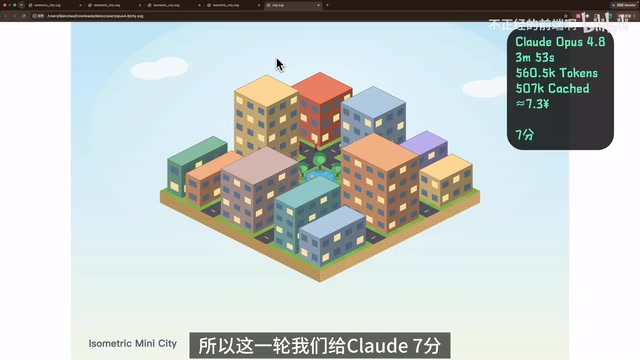
5 Models Coding Showdown: Claude, GPT, DeepSeek, M3 — Who's the Best Engineering Tool?
Hands-on comparison of Claude Opus 4.8, GPT 5.5, MiniMax M3, DeepSeek V4 Pro, and Mimo 2.5 Pro across SVG drawing, 3D game generation, elevator scheduling, and real bug fixing.

Huawei HDC Deep Dive: Pangu 2.0 Goes Open Source and HarmonyOS 7 Agents Reshape the Mobile AI Ecosystem
Huawei HDC unveils Pangu 2.0 full open source and HarmonyOS 7 system-level Agent capabilities. Deep analysis of sparse architecture efficiency, on-device 30B models, and the Agent gateway battle.

Simon Willison Updates WebRTC Voice Tool: Now Supports Document Context Conversations and GPT-Realtime-2
Simon Willison updates his OpenAI WebRTC voice tool with document context support and GPT-Realtime-2, enabling low-latency voice conversations grounded in specific documents.