Wu Xiaobo Predicts China's 6th Entrepreneurial Window in 2026: The Era of Super Individuals and No-Code Startups Has Arrived
Wu Xiaobo Predicts China's 6th Entrepr…
AI no-code tools are set to open China's 6th entrepreneurial window in 2026, letting anyone start a business with just an idea.
Financial writer Wu Xiaobo predicts 2026 will mark China's sixth entrepreneurial window period. Unlike the previous five, the combination of AI large models and no-code tools has reduced technical barriers to nearly zero, enabling ordinary people to start businesses with nothing but ideas. He demonstrated how his liberal arts team used Baidu's Miaoda platform to build multiple apps through natural language alone, and showcased an AI comic mini program as a complete path from concept to monetization — heralding the arrival of the "Super Individual" era.
2026: China's Sixth Entrepreneurial Window Is Coming
Financial writer Wu Xiaobo made a bold prediction at his year-end show: 2026 is very likely to be the sixth entrepreneurial window period since China's Reform and Opening Up. Unlike the previous five, the protagonists this time won't be elite entrepreneurs with teams, capital, and technical expertise — they'll be ordinary people with ideas.
The five previous entrepreneurial windows Wu Xiaobo referenced correspond to key economic and technological inflection points since China's Reform and Opening Up: the first was the liberalization of private enterprise in the early 1980s; the second was the wave of marketization following Deng Xiaoping's Southern Tour speeches in the early 1990s; the third was the emergence of web portals and e-commerce around 2000 during the dot-com bubble; the fourth was the app startup boom driven by mobile internet and smartphone adoption after the 2008 financial crisis; and the fifth was the O2O and sharing economy craze around 2015, fueled by the "Mass Entrepreneurship and Innovation" policy initiative. Each window had a specific level of infrastructure maturity as a prerequisite — from telephone networks to broadband internet to 4G mobile networks, leaps in technological infrastructure have always been the underlying driver of entrepreneurial waves. What makes the 2026 window unique is that the combination of AI large models and no-code tools is, for the first time, removing "technical implementation capability" from the list of prerequisites for starting a business.
The barriers to entrepreneurship used to be formidable — you needed to build a team, secure funding, and write code, each step an obstacle that ordinary people could barely overcome. But the maturation of AI tools is fundamentally changing all of this. Wu Xiaobo summed up the trend in one phrase: The era of Super Individuals is roaring toward us.
The concept of "Super Individual" has a long discussion history in management science and futurism. Management thinker Charles Handy introduced the concept of the "portfolio worker" in his 1989 book The Age of Unreason, predicting that individuals would simultaneously play multiple professional roles in the future. In the AI era, this concept has gained an entirely new dimension of technological support. A 2023 McKinsey Global Institute report noted that generative AI can boost individual knowledge worker productivity by 30%-70%, meaning one person can now accomplish in certain domains what previously required a team of 5-10 people. In the Chinese context, super individual entrepreneurship is also closely tied to the rise of "Indie Developer" culture — a community that congregates around ProductHunt overseas, and in China has grown rapidly alongside the maturation of super-app ecosystems like WeChat Mini Programs and Douyin Mini Programs. Data shows that the number of WeChat Mini Program developers exceeded 3 million in 2023, with a significant proportion being solo developers without teams.
When no-code development platforms eliminate technology as a barrier, and when AI compresses development costs to nearly zero, the fundamental logic of entrepreneurship is being rewritten.
A Liberal Arts Team Built Multiple Apps Without Writing a Single Line of Code
Wu Xiaobo showcased an impressive case on stage: his team of liberal arts graduates, with zero programming background, built multiple application products simply by "talking to AI."
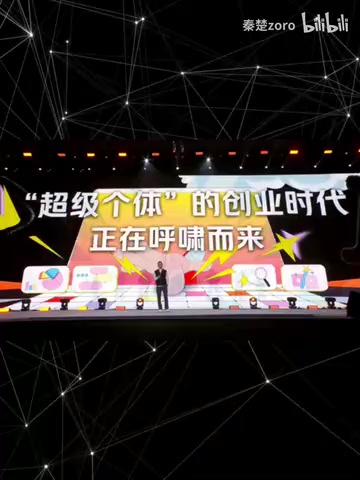
Using Baidu's "Miaoda" (秒搭) platform, the team successfully developed games, habit-tracking tools, survey systems, and content summarization apps. These projects — which in the past would have required at least a small development team spending weeks — were now completed by a few liberal arts graduates simply describing their requirements in natural language.
No-Code and Low-Code platforms are not new concepts — products like Bubble and Webflow emerged as early as the 2010s. However, users back then still needed to understand foundational concepts like database relationships and front-end/back-end logic. The true paradigm shift occurred when Large Language Models (LLMs) deeply integrated with these platforms. The core technology stack of modern AI-driven no-code platforms (such as Baidu Miaoda, ByteDance Coze, and Microsoft Power Platform) consists of three layers: a natural language understanding layer (parsing user intent into structured requirements), a code generation layer (automatically generating front-end and back-end code based on GPT-4-level models), and a cloud-native deployment layer (automatically handling containerized packaging and publishing). A user only needs to describe in plain language something like "I want a mini program that reminds users to drink water every day with a check-in feature," and the system can automatically complete the entire workflow — from database schema design, API endpoint definition, and UI component rendering to WeChat Mini Program publishing. Behind this capability lies the breakthrough progress of the Transformer architecture in code comprehension and generation tasks. GitHub Copilot data shows that AI-assisted programming can already handle approximately 40% of a developer's coding workload.
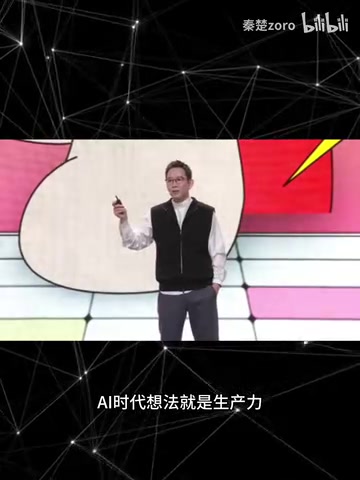
Wu Xiaobo concluded: In the AI era, ideas are productivity. And the core value of no-code development tools like Miaoda lies in transforming ideas directly into working products.
From Idea to Monetization: A Hands-On AI Comic Mini Program Case Study
The video creator also personally tested this workflow, using Miaoda to build an AI comic generation mini program. The implementation logic for the entire project was remarkably clear:
- Idea Input: Describe the original creative concept to AI in natural language
- Story Generation: AI expands the concept into a complete story script
- Storyboard Script: Automatically converts the story into executable storyboard panels
- Video Generation: Calls a text-to-video plugin to generate animated videos based on the storyboards
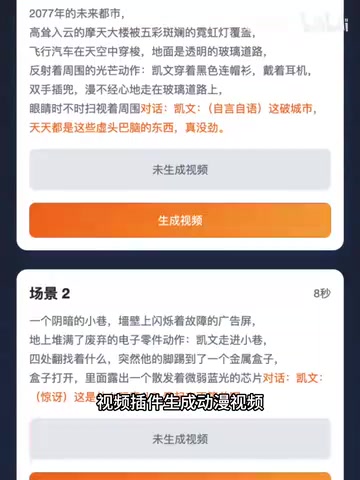
The "text-to-video plugin" mentioned in the article
Related articles
 Industry Insights
AI Product Development in Practice: Model Selection, Building Moats, and Paths to Commercialization
Practical strategies for AI product development: why not to train models from scratch, when to use APIs vs. fine-tuning, building product moats, and the full path from evaluation systems to commercialization.
 Industry Insights
No Product Fits Your Needs? Building It Yourself Is the Best Starting Point for Indie Developers
Can't find a product that fits? Building from personal pain points is the best entry for indie developers. Niche needs + AI tools = rapid product creation.
 Industry Insights
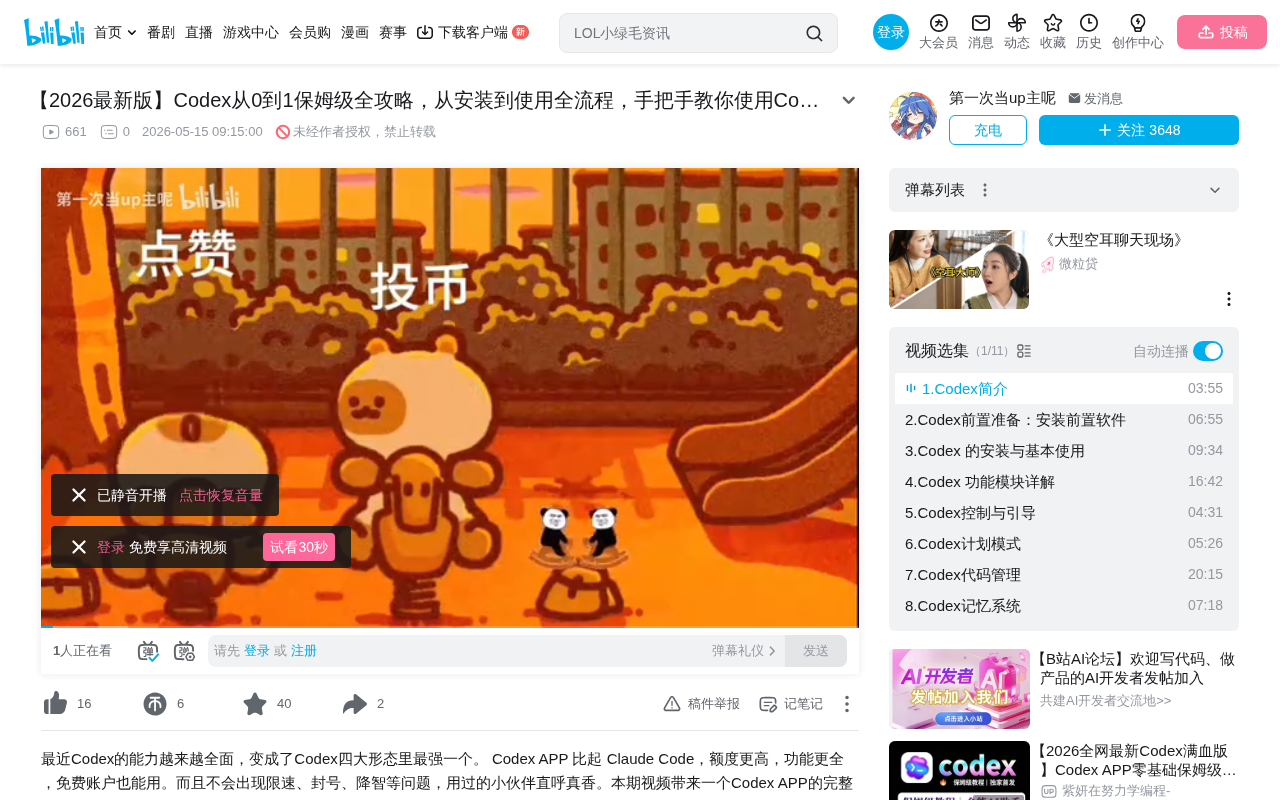
OpenAI Codex Tutorials Mass-Copied on Bilibili, Highlighting AI Content Farm Problem
At least 9 Bilibili accounts mass-published identical OpenAI Codex tutorial videos, exposing content farm operations in the AI tools space.