You Don't Need to Start an Agency to Break Into AI: The Most Underrated AI Career Opportunity
You Don't Need to Start an Agency to B…
Enterprises urgently need AI leaders—becoming an AI expert in your domain is the most pragmatic career strategy.
IBM's survey reveals 76% of large-enterprise CEOs have established or are hiring a Chief AI Officer, but the opportunity extends far beyond this single role—every functional department needs AI-savvy leaders. A 61-percentage-point gap exists between AI skills and actual usage, creating urgent demand for bridge roles connecting AI capabilities to business workflows. Two paths exist: external consulting and internal promotion, with 57% of CAIOs promoted from within. The most pragmatic strategy is building the AI-native version of your domain expertise and capturing the 3-7 year skill premium window.
When everyone is talking about starting AI automation agencies, a more realistic career path suited for most people is quietly taking shape. IBM's survey of 2,000 large-enterprise CEOs reveals a striking trend: corporate demand for AI talent extends far beyond the "Chief AI Officer" role—virtually every functional department is looking for AI-savvy leaders.
76% of Enterprises Are Establishing a Chief AI Officer
IBM's survey data is staggering: among the 2,000 large public company CEOs surveyed (companies with a median annual revenue of approximately $5.8 billion), 76% either already have a Chief AI Officer (CAIO) or are actively hiring one. Just two years ago, that number was only 26%.
This rate of growth is unprecedented. Looking back at history, the Chief Information Security Officer (CISO) took roughly 15 years to go from the rise of the internet to widespread adoption, while the Chief AI Officer achieved mainstream status in approximately 24 months.
Why has the CAIO risen so much faster than the CISO? The rapid emergence of the Chief AI Officer as a C-level position reflects how corporate governance structures adapt to technological waves. The most comparable precedent is the evolution of the Chief Information Security Officer (CISO)—in the early 1990s when the internet was first commercialized, cybersecurity was still viewed as a subsidiary responsibility of IT departments. It wasn't until the massive data breaches of the early 2000s that the CISO became standard, a process that took about 15 years. The Chief Data Officer (CDO) similarly took over a decade to become widespread. By contrast, the CAIO leapt from a fringe position to mainstream configuration in 24 months—a speed virtually unprecedented in corporate history. Behind this is generative AI's disruptive impact on business logic: unlike cloud computing, which primarily affected IT infrastructure, AI directly permeates every layer of business decision-making, forcing enterprises to respond rapidly at the organizational architecture level.
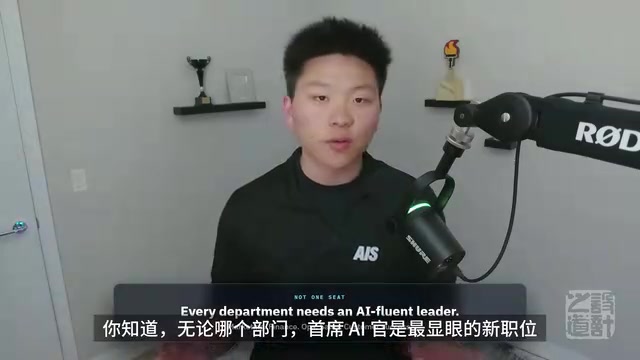
But the more critical insight is this: you don't need to become a Chief AI Officer to participate in this transformation. The same report states that every leader among C-level executives must become AI-literate. This means marketing, finance, operations, sales—every department is quietly placing AI-savvy leaders. The Chief AI Officer is just the most visible new title, but it's far from the only one.
The Massive 61-Percentage-Point Gap: The Disconnect Between Skills and Practice
The survey also reveals a data point that deeply concerns CEOs: 86% of employees have the skills to use AI (or could acquire them with minimal training), but only 25% actually use AI tools in their daily work. That's a 61-percentage-point gap.
This gap pinpoints exactly where the bottleneck lies: the reason most companies haven't fully deployed AI isn't a lack of qualified talent—it's that no one is connecting the people who can use AI with the workflows that actually need it. No one is proactively building that bridge.
Why? Because change management is incredibly difficult. Introducing new technology means retraining personnel and rebuilding workflows—things get worse before they get better. This short-term pain causes most decision-makers to maintain the status quo.
How does organizational behavior explain this 61-percentage-point gap? This data has a clear theoretical explanation in organizational behavior. Research from MIT Sloan School of Management shows that the greatest resistance to technology adoption is never the technology itself, but "Change Fatigue"—the systemic resistance employees develop toward new tools after experiencing multiple rounds of digital transformation. Additionally, the "J-curve effect" plays a role here: new workflows inevitably experience a productivity dip before optimization, and this brief period of pain often becomes the critical point where decision-makers abandon the initiative. McKinsey's 2023 research further confirms that among enterprises that successfully scaled AI deployment, over 70% had a dedicated "AI change champion" role—this person doesn't necessarily need to be a technical expert, but must simultaneously understand business pain points and AI capability boundaries, and be able to build credible connections between the two.
But someone has to take the lead—and that person is exactly the talent every CEO is competing for right now.
Two Paths In: External Entry vs. Internal Promotion
Path A: Start as an AI Consultant
Join an AI automation agency, work as a consultant, take on freelance projects, and help companies solve internal problems with AI. If you do well, some companies will recruit you directly into a full-time role. This path requires you to be comfortable with sales calls, client follow-ups, and frequent rejection.
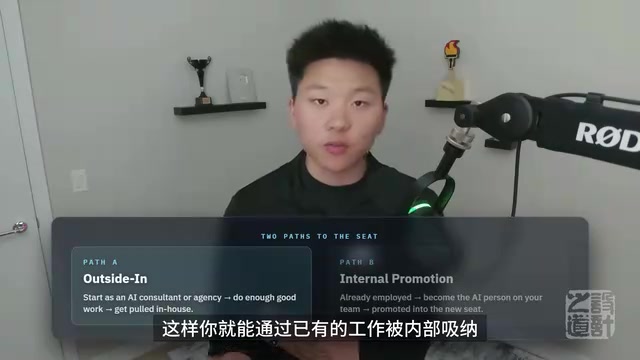
Path B: Become the AI Expert at Your Current Job
You're already working at a company—so become the person who understands AI best. Bring time-saving prompts to meetings, quietly deploy internal automation tools, and help your team save massive amounts of time. When the next executive seat opens up, you'll naturally be the obvious choice.
IBM's research on 600 Chief AI Officers confirms this: 57% of CAIOs were promoted from within the company. They were already excelling in their original roles, doing the work even before the position was formally created.
Why do internal promotees have an advantage? The data showing 57% of CAIOs come from internal promotion aligns closely with the "contextual expertise advantage" in leadership research. Harvard Business School professor Linda Hill's research points out that the scarcest capability for technology change leaders isn't technical knowledge itself, but "organizational contextual intelligence"—the ability to understand company political ecosystems, historical decision-making logic, and informal power structures. Externally hired technical experts often have severe gaps in this dimension, causing implementation roadblocks. Internal promotees naturally possess this contextual advantage: they know which department heads are most open to change, which processes touch historically sensitive power boundaries, and which communication styles will get the CFO to nod. This also explains why the "become the AI expert at your current job" path often produces more lasting organizational impact than the external consultant path.
Most people assume Path A is the only option because this narrative has dominated the conversation. But Path B may be better suited for most people—you don't need to make sales calls, you don't need to chase prospects, you just need to consistently demonstrate AI value in your current role.
Passion Determines Your Lane
Regardless of which path you choose, the factor that truly determines success is passion.
If you don't enjoy sales calls, you'll probably hate running an agency. If you love marketing, you'll hate building financial agents and automation tools—but you'll love automating content creation, marketing copy, and landing page development. You'll become the kind of AI-native marketing expert that the CMO eventually promotes.
85% of CEOs say every functional department leader must become a technology expert. 77% say talent leadership and technology leadership roles are converging—the soft skills of leading teams and the hard skills of operating technology are merging into a single role.
This is like when the internet disruption arrived: there used to be a formal job title called "internet marketer," but now that's just regular marketing. AI will follow the same "prefix disappearance" pattern—in the future there won't be "AI consultants," just "consultants," and consultants who can't use AI simply won't keep up with their peers.
The techno-sociological pattern of "prefix disappearance" This prediction has solid historical precedent. In the late 1990s, "e-commerce manager" was a hot emerging position; around 2005, "social media specialist" became scarce talent that brands competed for; in the 2010s, "data analyst" evolved from a tech-exclusive role to a standard capability across all functional departments. Every technology wave follows the same trajectory: specialized position emerges → skill premium peaks → capability permeates all functions → prefix disappears, becoming baseline literacy. MIT economist Daron Acemoglu calls this process "Skill Generalization." For personal career planning, this means the optimal strategy isn't to become an "AI expert," but to become an "X-domain expert who's proficient in AI"—before skill generalization is complete, this type of hybrid talent enjoys the highest market premium window, which typically lasts only 3-7 years.
How to Start Taking Action Today
You don't need to wait for a formal appointment to begin. There's a thought-provoking line in IBM's report: "Today AI augments humans; by 2030, humans will augment AI." This represents a complete reversal of the human-machine relationship within five years.
Specific action steps:
- Pick a workflow on your team that no one has touched with AI yet, build an AI version of it or automate it entirely
- Document the process and time saved, then present it to your boss and team
- If you're in a regulated industry and get pushback, build a prototype at home using synthetic data, casually share it with your team, and plant the seed
- When the company finally gives the green light, your name will be the first one that flashes in decision-makers' minds
You may not have noticed, but this data comes from a survey of large-enterprise CEOs—the actual global CAIO adoption rate may be far below 76%. And CEO predictions carry their own biases—surveys show half of CEOs once believed AI would quickly become a growth driver, but only 10% say that actually happened.
But the indisputable trend is this: CEOs are hiring, organizational structures are changing, and the most AI-proficient functional leaders are getting promoted. You don't need to change your role—you need to change the version of your role. As one incisive summary puts it: "You can outsource thinking, but you can't outsource understanding." Find the domain you're passionate about, build its AI-native version—that's the most pragmatic AI career strategy.
Key Takeaways
- IBM's survey shows 76% of large-enterprise CEOs have established or are hiring a Chief AI Officer, surging from 26% to 76% in just two years
- Enterprises face a 61-percentage-point AI skill-usage gap (86% have the skills but only 25% actually use AI), with the core bottleneck being the lack of bridge roles connecting AI capabilities to workflows
- There are two paths into AI: external consultant entry and internal promotion—57% of Chief AI Officers were promoted from within
- AI will follow the same "prefix disappearance" pattern as the internet; the "skill generalization" window typically lasts only 3-7 years, during which hybrid talent enjoys the highest market premium
- The key to choosing your path isn't the title but passion—building the AI-native version of what you love is the most pragmatic strategy
Related articles
 Industry Insights
AI Product Development in Practice: Model Selection, Building Moats, and Paths to Commercialization
Practical strategies for AI product development: why not to train models from scratch, when to use APIs vs. fine-tuning, building product moats, and the full path from evaluation systems to commercialization.
 Industry Insights
No Product Fits Your Needs? Building It Yourself Is the Best Starting Point for Indie Developers
Can't find a product that fits? Building from personal pain points is the best entry for indie developers. Niche needs + AI tools = rapid product creation.
 Industry Insights
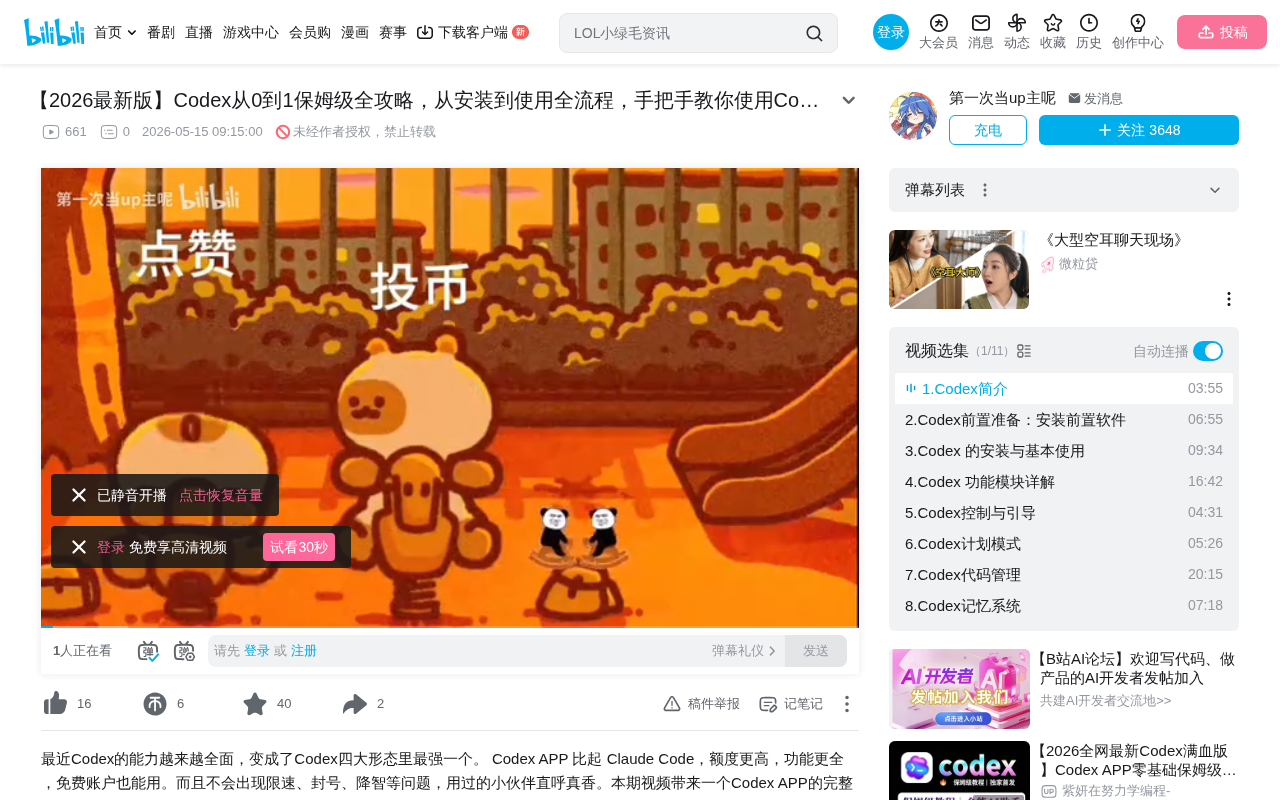
OpenAI Codex Tutorials Mass-Copied on Bilibili, Highlighting AI Content Farm Problem
At least 9 Bilibili accounts mass-published identical OpenAI Codex tutorial videos, exposing content farm operations in the AI tools space.