7 Major AI News: Cursor Security Incident, Opus 5.5 Guide, and Robot Competition

Seven AI news items on November 15: Cursor security incident, Anthropic prompting guide, OpenAI robotics restructuring, Runway open-source model, LangChain funding, Euro Office desktop, and Microsoft 365 outage.
This article reviews seven key AI developments on November 15. Cursor's plugin marketplace was implanted with a malicious extension impersonating Claude Code via a leaked access key, lasting about 11 hours and affecting up to 5,000 users. Anthropic released the Opus 5.5 prompting guide, recommending removing "Think Hard" and starting with Medium reasoning effort. OpenAI restructured its robotics team, reportedly believing general models can control robots, with a goal of a first public demo in 2027. Runway open-sourced the robot model Plexus-1 under Apache 2.0, with a self-tested simulation success rate of 46.2%. LangChain completed a $300 million Series C at a $3 billion valuation, doubling in a year. Euro Office launched a desktop version, and Microsoft 365 experienced an outage of over 10 hours. The editor notes that security governance, model efficiency, the robotics route debate, and active open-source and funding are common trends.
Introduction: Multiple AI Fronts Advance Simultaneously in a Single Day
Security, models, robotics, funding, office software—these seemingly disparate areas all saw noteworthy developments on the same day. According to a roundup by Bilibili creator Whale Girl, the 7 AI news items on November 15 cover key dynamics ranging from a security incident in the Cursor plugin marketplace to Anthropic's prompting guide, OpenAI's robotics team restructuring, and Runway's open-source robot model. This article, while restating the facts, adds cross-verification and industry-perspective analysis.
Cursor Security Incident: How Did a Malicious Extension Bypass Review?
According to Cursor's official disclosure, an investigation into a security incident revealed that a malicious version impersonated Anthropic's Claude Code extension and was placed in Cursor's plugin marketplace cache on October 29, remaining there for about 11 hours. The problematic versions were 2.1.312 and 2.1.313, potentially affecting up to 5,000 users. Anthropic never released this version, and the extension does not exist in the open-source plugin repository OpenVSX.
The incident began when Fireworks leaked an access key that Cursor had sent to it. Attackers used this key to copy the programming agent's run logs, most of which were from 2025 and none of which had privacy mode enabled; some logs contained unmasked credentials. Cursor stated that fewer than 0.01% of customers were involved, and the attacker's last activity was blocked on November 1.
Prompts and code of privacy-mode users were unaffected. However, it is important to note that users who installed these two versions cannot simply uninstall them; they must follow the steps announced on October 29.
This incident exposes the dual fragility of plugin marketplace review and key management—even if the extension itself comes from a trusted ecosystem, once a key leak occurs in the supply chain, attackers can still distribute malicious versions through that channel.
OpenVSX is an open-source VS Code extension marketplace maintained by the Eclipse Foundation, designed to provide extension distribution for editors that do not rely on Microsoft's official marketplace (such as VSCodium and Gitpod). Unlike the Microsoft Marketplace, OpenVSX allows anyone to publish extensions, and its review mechanism is relatively lax. Cursor is built on VS Code, and its plugin marketplace is associated with OpenVSX, but in this incident the malicious extension did not appear on OpenVSX; instead, it was injected directly into Cursor's cache via the leaked key. This highlights the complexity of the plugin supply chain: even if the main marketplace has review, downstream caches or mirror links can still become attack surfaces.
Anthropic Releases Opus 5.5 Prompting Guide: Remove "Think Hard"
Anthropic released a prompting guide for Claude Opus 5.5, and Opus 5.5 became the default model for Pro Max, Ultra, and Team plans. The guide's core recommendations are twofold.
The first is to remove "Think Hard" and "Think Carefully" from prompts. Anthropic says the model automatically reasons according to task difficulty; in tests, removing these phrases led to faster response starts with no measurable drop in quality.
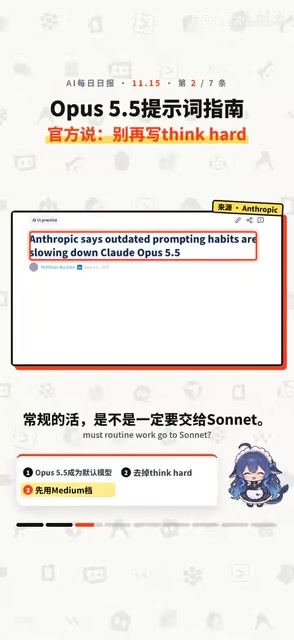
The second is to start with the Medium reasoning effort level. In Anthropic's internal tests, Opus 5.5's Medium level was comparable to Opus 5's High level; switch to High when Medium is insufficient. Additionally, when Sonnet enables Extra High or Max levels, the cost is similar to Opus 5.5, so Anthropic recommends reevaluating whether routine tasks must be assigned to Opus 5.
The guide also suggests writing the goal, output format, and when to ask the user questions in a single message. Attach charts and tables directly as images without retyping them.
It should be noted that the above are Anthropic's own claims and internal test results; actual performance varies by task, and users should verify against their own scenarios.
Reasoning effort is a concept introduced by Anthropic in Claude 3.7 Sonnet, allowing users to control the token budget for internal reasoning before answering via a parameter, typically divided into Low, Medium, High, etc. Higher reasoning effort makes the model spend more time "thinking," suitable for complex tasks but increasing latency and cost; lower effort responds faster. The Opus 5.5 guide recommends starting from Medium because its internal tests show Medium already achieves the effect of the previous generation's High level, reflecting improved model efficiency. Users can adjust it via the API's reasoning_effort parameter or interface options.
OpenAI Restructures Robotics Team: Can General Models Take Over Hardware?
According to a report first published by Fortune on November 13 and confirmed by OpenAI, OpenAI restructured its robotics team: robotics researchers were merged into the core research team, reporting to Chief Research Officer Mark Chen; the robotics and hardware teams were merged into the Applied division led by Greg Brockman. OpenAI emphasized this is a restructuring, not an abandonment; robotics remains a long-term goal.
The report said OpenAI believes general models like GPT-6 Extra can directly control robots. A Nvidia study showed that the Extra agent achieved a 74.8% success rate on simulated robotic tasks, compared with 51% for the best specialized model. Note, however, that this was tested in a simulated environment, not on real robots. In another test involving desktop object manipulation, Extra fully completed 7 out of 100 tasks. Therefore, specialized models may still have advantages in cost, reliability, speed, and energy consumption.
The report also mentioned that Sam Altman's goal is to produce the first public robot demonstration in 2027.
World Action Model is an emerging class of robot control models whose core idea is to have the model first predict the future visual state of the environment (world model), then infer the actions needed to achieve that state. Unlike traditional end-to-end behavior cloning, world action models emphasize explicit modeling of physical dynamics, thereby improving generalization and robustness to ambiguous instructions. Runway's Plexus-1 belongs to this category; it is fine-tuned from a video generation model, takes camera images and instructions as input, and outputs action sequences. This direction contrasts with OpenAI's idea of using general models to control robots: the former is designed specifically for robots, while the latter attempts to let large language models directly take over hardware.
Runway Open-Sources Plexus-1: A New Player in World Action Models
Runway open-sourced the robot model Plexus-1 under the Apache 2.0 license, releasing weights and source code and allowing commercial use. Runway defines it as a world action model: input includes camera images, text instructions, and robot position; it first predicts how the scene will change, then derives corresponding actions, enabling adjustment while watching. The model is based on a video model, then fine-tuned with human action videos and robot data.
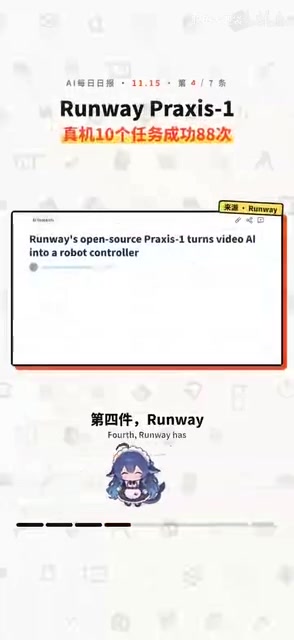
In 120 simulation tasks on Nvidia RoboLab, Plexus-1 achieved a 46.2% success rate, ranking first in the world action model category and fifth overall. On a real Franka robotic arm, 10 tasks were each executed 10 times, with 88 successes, compared with 80 for Flux3 Action.
However, it should be noted that these tests were conducted by Runway itself and have not been independently verified. The standard version requires 80GB of VRAM; a compressed version is expected to fit on an RTX 5090. The model still misidentifies similar objects and handles ambiguous instructions poorly.
LangChain Completes $300 Million Series C: Valuation Doubles in a Year
Agent company LangChain completed a $300 million Series C at a valuation of $3 billion. A year ago, it raised $125 million at a valuation of $1.25 billion, more than doubling its valuation in a year. Investors include CapitalG, GIC, DFJ Growth, IVP, and Sapphire Ventures.

LangChain says its LangSmith has 7,000 customers. As a platform for creating and managing agents, LangChain is not tied to a specific model or cloud; customers include startups such as Harvey, Rippling, and Clay, as well as Nvidia, Toyota, and Salesforce. LangChain started as an open-source project in 2022. However, the 7,000 customer figure is company-disclosed and has not been third-party audited.
LangSmith is a commercial platform launched by LangChain for debugging, testing, and monitoring LLM-based agent applications. It provides call chain tracing, evaluation dataset management, prompt version control, and other features to help developers locate agent failure points in complex tasks. LangSmith integrates seamlessly with the LangChain open-source framework but is also usable independently. The 7,000 customers disclosed in this funding round mainly refer to LangSmith users, reflecting the commercialization progress of the agent toolchain. However, the figure is unaudited, and customer activity and paid conversion rates are not public.
Euro Office Desktop Version Launched: A Localization Attempt for an Open-Source Office Suite
European open-source office software Euro Office launched a desktop version named NextCloud Office Desktop on November 14. Users can install it directly through a browser. Windows offers X64 and ARM64 versions, Linux offers DEB and RPM packages, and macOS supports only Apple chips. The suite includes document, spreadsheet, presentation, and PDF editing functions.

Officials say it has good compatibility with Microsoft Office's DOC, XLSX, and PPTX formats. It can edit local files even when offline, and users can choose which files remain on the computer and which are uploaded to the cloud. When online, it connects to NextCloud Hub and supports real-time collaborative editing by multiple people. The first production-ready version of Euro Office was released on June 9. Note, however, that if collaborators do not have the same fonts, files will display with substitute fonts.
Microsoft 365 Major Outage: Over 10 Hours, Unrelated to Attack
Starting November 12 U.S. time, services including Outlook, Exchange Online, and Teams experienced a major outage. According to an IT之家 morning report, the outage lasted more than 10 hours. DownDetector showed a peak of about 138,000 outage reports for Outlook. Microsoft publicly apologized and confirmed it was a technical failure caused by an issue left over from a previous network capacity upgrade being triggered by a recent network change. Microsoft explicitly stated that it was unrelated to cyberattacks or AI agents.
Microsoft said the underlying issue has been resolved, recovery is proceeding gradually, and a full postmortem will be published after review. However, reports differ on the duration, ranging from nearly a day to almost two days.
Editorial View
The day's events outline several main threads in the AI industry: security governance is becoming a required course for plugin ecosystems; model vendors are starting to educate users to "write fewer prompts, provide more context"; the robotics field is seeing a route debate between general models and specialized models; and open source and funding are both active. For developers and enterprises, what matters is not any single news item but the common trend behind these developments—AI capabilities are penetrating from the model layer into toolchains, hardware, and office scenarios, while security and reliability remain the unavoidable foundation.
One-line Summary
Seven AI news items on November 15: Cursor security incident, Anthropic prompting guide, OpenAI robotics restructuring, Runway open-source model, LangChain funding, Euro Office desktop version, and Microsoft 365 outage.
Paragraph Summary
This article reviews seven important developments in the AI field on November 15. Cursor's plugin marketplace was implanted with a malicious extension impersonating Claude Code via an access key leaked by Fireworks, lasting about 11 hours and affecting up to 5,000 users. Anthropic released the Opus 5.5 prompting guide, recommending removing phrases like "Think Hard" and starting with Medium reasoning effort. OpenAI restructured its robotics team; reports say it believes general models can control robots, with a goal of a first public demonstration in 2027. Runway open-sourced the robot model Plexus-1 under Apache 2.0, with a self-tested simulation success rate of 46.2%. LangChain completed a $300 million Series C at a $3 billion valuation, doubling in a year. Euro Office launched a desktop version, and Microsoft 365 experienced an outage of over 10 hours. The editor notes that security governance, model efficiency, the robotics route debate, and active open-source and funding are common trends.
Related articles
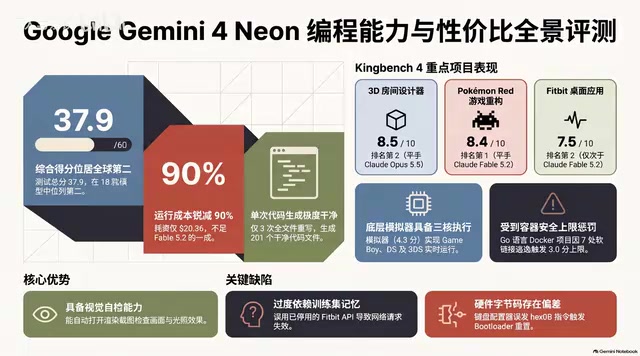
Gemini 4 Neon Hands-On: Value King or Confident Catastrophe?
Gemini 4 Neon review: 1M-token context, four thinking levels, 201 files in one KingBench4 pass at one-tenth Fable 5.2's cost—but it hallucinates fake data, leaves 7 symlink escapes, and bricks keyboards.

Google Gemini 4 Neon Hands-On: 6 3D Works That Impress and Fail
Hands-on with Google Gemini 4 Neon on a 3060 laptop: 6 3D works tested. Sunshower Fishing Harbor and mechanical keyboard impress; soft-body physics and faces fall short.
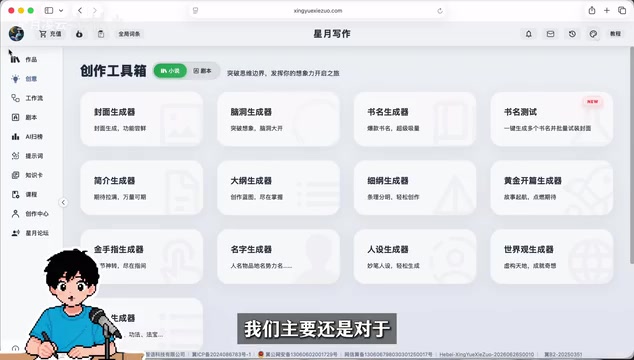
Gemini 4 Neo Web Novel Writing Test: Faint AI Flavor, Textured Dialogue
Bilibili creator's first-look review of Gemini 4 Neo for Chinese web novel writing: testing a Three Kingdoms transmigration opening with faint AI flavor, emotionally textured dialogue, and strong crisis building, plus comparison of 4A/4H/4C models and full workflow demos.