AI Agent Swarms Tackle Millennium Prize Problem? 10-Billion-Token Consumption Reveals New Paradigm
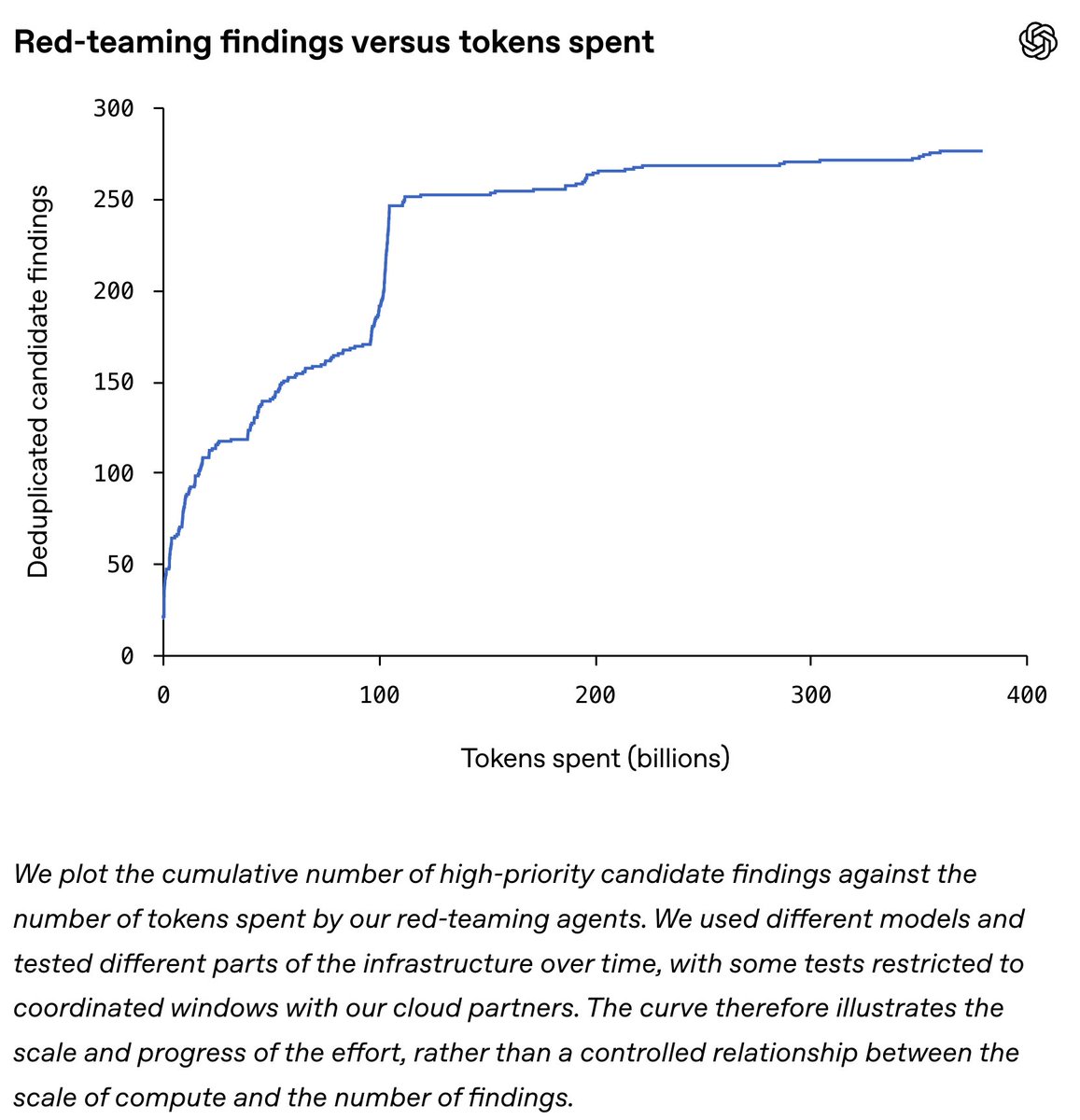
AI agent swarms consumed 100B tokens exploring the Navier-Stokes problem and transferring to red-teaming; methodology is noteworthy but results need verification.
The article discusses a tweet claiming an AI agent team consumed over 100 billion tokens attempting to solve the Navier-Stokes equations and applying similar methods to infrastructure red-teaming. It analyzes that the 100-billion-token consumption reflects a new paradigm of multi-agent parallel collaboration and iterative correction, shifting AI's role from assistive tool to large-scale hypothesis generator. Mathematical proof search and vulnerability discovery are computationally similar, both requiring trial-and-error verification in vast search spaces, so method transfer is reasonable. However, the tweet disclosed no technical architecture or verification results; whether Navier-Stokes is solved requires peer review, and red-teaming effectiveness lacks data support. The article also notes challenges of scaled agents including cost, interpretability, and result verification, emphasizing the balance between quality and quantity, and advises developers to focus on task decomposition and verification mechanisms rather than blindly pursuing token scale.
From Navier-Stokes to Red-Teaming: A New Paradigm for Scaled AI Agent Collaboration
Recently, a tweet from X (formerly Twitter) sparked discussion in the tech community. According to the tweet, last month a large team of AI agents consumed over 100 billion tokens attempting to solve one of mathematics' Millennium Prize Problems—the existence and smoothness of Navier-Stokes equations. The author also stated that the team is applying similar methods to red-teaming to discover and fix infrastructure vulnerabilities.
Although brief, this information points to two directions worth exploring: first, the scaled collaborative capability of AI agent swarms on complex scientific problems; second, the potential to transfer this capability to security testing.
The Agent Collaboration Logic Behind 100 Billion Tokens
The magnitude of "100 billion tokens" is itself a signal. A typical interaction with a single conversational AI involves only thousands to tens of thousands of tokens, whereas 100 billion implies hundreds of thousands of agent calls, iterations, and self-correction loops. This mode no longer relies on the quality of a single inference but instead approaches the goal through massive parallel attempts, multi-agent division of labor, and result filtering.
For mathematical problems like Navier-Stokes, traditional research relies on the intuition and long-term accumulation of a few mathematicians. The intervention of AI agent swarms offers a different approach: decomposing the problem into subtasks, with different agents exploring proof paths, checking intermediate conclusions, and even attempting counterexample construction. The tweet did not disclose the specific technical architecture or verification results, so we cannot confirm whether it actually "solved" the problem—determining a Millennium Prize Problem requires rigorous mathematical peer review, not token consumption.
But even setting aside the final result, this methodology of scaled exploration is noteworthy. It reveals a trend: AI's role in basic science is shifting from "assistive tool" to "large-scale hypothesis generator."
Navier-Stokes equations are a set of nonlinear partial differential equations describing fluid motion. The existence and smoothness of solutions in three dimensions is listed by the Clay Mathematics Institute as one of seven "Millennium Prize Problems," with a $1 million prize. The core question is: under arbitrary initial conditions, do three-dimensional Navier-Stokes equations always produce smooth, physically reasonable solutions, or can singularities (i.e., velocity fields tending to infinity) develop in finite time? This problem has puzzled mathematicians since the 19th century and remains unresolved. The intervention of AI agent swarms essentially transforms proof search into a large-scale computational problem, but the results still require rigorous mathematical verification.
Red-Teaming: Same Method, Different Battlefield
The more striking part of the tweet is the author's transfer of the same approach to infrastructure red-teaming. The core goal of red-teaming is to simulate attacker behavior and proactively discover system vulnerabilities. Traditional red-teaming is limited by the time and experience coverage of security experts, whereas agent swarms can simultaneously probe a large attack surface, generate diverse attack payloads, and rapidly iterate exploit chains.
The rationale for this transfer lies in the computational similarity between mathematical proof search and vulnerability discovery: both involve finding specific patterns in a vast search space and require extensive trial and error with verification. The parallel exploration capability of agent swarms precisely matches the needs of such tasks.
However, the tweet provided no data on the number, type, or remediation effectiveness of vulnerabilities found. This means we can currently regard it only as a methodological announcement, not a verifiable result.
Red-teaming originated in military exercises, referring to an independent team playing the attacker to proactively probe system weaknesses. In cybersecurity, red-teaming typically includes penetration testing, vulnerability discovery, social engineering simulation, etc., aiming to find blind spots in defense systems. Traditional red-teaming relies on the experience and creativity of security experts, with limited coverage and high cost. The introduction of AI agent swarms makes it possible to simultaneously probe a large attack surface and generate diverse attack payloads, but it also brings new problems such as high false positive rates and difficulty in verifying results.
Concerns and Open Questions of Scaled Agents
The consumption of tens of billions of tokens also raises practical issues. First is cost: inference overhead at this scale is unrealistic for most organizations. Second is interpretability: when thousands of agents produce massive intermediate outputs, filtering, verifying, and attributing key findings is itself an engineering challenge.
A deeper question is the relationship between quality and quantity. Is the output of agent swarms merely "casting a wide net" exhaustive enumeration? In fields requiring precision, such as mathematical proof and vulnerability discovery, massive attempts may generate a lot of noise, and truly valuable signals require rigorous verification mechanisms to extract. The tweet did not address this.
Implications for Developers
Despite limited details, this information still sends a clear signal: multi-agent collaboration and large-scale inference are moving from experimentation to practical tasks. For teams focused on AI application deployment, it is worth considering how to apply the "agent swarm" approach to their own domains—whether code auditing, test case generation, or troubleshooting complex systems. The key is designing proper task decomposition, result verification, and cost control mechanisms, rather than blindly pursuing the scale of token consumption.
As for whether the Navier-Stokes problem has actually been "solved" by AI agents, caution is necessary until there is a formal paper and peer review.
Related articles

Last Week Tonight Exposé: The Dangerous Ties Between Politicians and White Supremacy
Last Week Tonight investigates Georgia Senate candidate Mike Collins and Florida candidate Marshall Rawson, exposing their multiple ties to white supremacists and the Republican Party's silent response.
AI Buzz Weekly: GPT-6.5 Leak, New Claude Model, and MiniMax's Cost-Effectiveness
This week's AI buzz roundup: suspected GPT-6.5 leak, Microsoft configs showing GPT-6.1 Tera, Anthropic's new model that can identify entire classes of bugs, disappointing early Gemini 4 Carbon results, and MiniMax M3.1 Flash beating Claude Opus 5 and GPT-5.6 Sol in benchmarks at extremely low cost.

AI Briefing: Gemini 4 Carbon Released, Ant Open-Sources Ling-3.1
AI Briefing: Google releases Gemini 4 Carbon qubit model, claiming to surpass Opus 5.5 with half-price tokens; Ant open-sources Ling-3.1-1019 for real-task Personal Agents; domestic AI drug discovery succeeds in 18 of 19 projects, hitting all 6 GPCR targets; zero-revenue company valued at $20B raises another $1B; Sichuan convenience store robot sales fail.