AI Detection False Positive Controversy: Writer Accused of Using AI, Who Should Bear the Burden of Proof?
An AI detection tool misjudged an award-winning writer, exposing the burden-of-proof dilemma creators face.
A regional winner of the 2026 Commonwealth Short Story Prize was flagged by Pangram as 100% AI-generated. Organizers later confirmed via drafts that AI was not used, but the case revealed a structural flaw: detection tools can easily accuse, while the accused bears nearly all the burden of proof. The Authors Guild admits no reliable AI detection method exists, and most creators lack complete drafts to prove their innocence. The article urges creators to keep process records and the industry to build appeal and review mechanisms.
A multi-award-winning writer was accused of using AI to ghostwrite a short story. Despite his firm denial, an AI detection tool called Pangram labeled his work as "100% AI-generated." The incident ultimately ended with the organizers reviewing his drafts and confirming that AI was not used, but it left an unsettling question: when AI detection tools make mistakes, how can creators prove their innocence?
Incident Recap: From Award-Winning to Accused
The writer was a regional winner of the 2026 Commonwealth Short Story Prize. After winning, an AI detector called Pangram rated his story as "100% AI-generated." He immediately denied using AI, but the accusation had already spread.
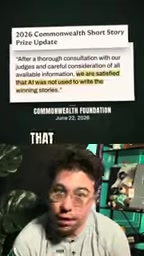
The Commonwealth Foundation subsequently reviewed the winner's drafts and notes and stated it was confident that AI had not actually been used. This conclusion cleared the writer's name, but the process itself exposed a structural flaw in the current AI detection ecosystem: detection tools can easily make accusations, while the accused bears almost the entire burden of proof.
According to an analysis of the incident by a YouTube channel, similar situations are not isolated. When an online detection bot determines that your work "wasn't written by you," or that the art you created "doesn't belong to you," creators are often left in a passive position. Screenshot shows that errors in AI detection tools are putting creators in a "presumption of guilt" dilemma.
The Trust Crisis of AI Detection Tools
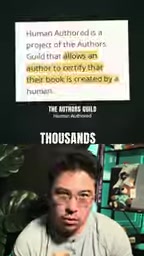
Pangram sells its AI detection service and claims its false positive rate is "extremely low." But the problem is that even if the false positive rate is low, once it happens to an individual, it is a 100% disaster. Moreover, although the Authors Guild has certified thousands of books as human-written, it also admits that there is currently no reliable AI detection method.
This contradiction reveals a core fact: AI detection technology is far from mature enough to serve as a basis for adjudication. According to information cited by the YouTube channel, the Authors Guild explicitly stated that no reliable AI testing method exists. This means that creators "convicted" by AI detection tools are effectively paying the price for a technology that is itself unreliable.
More worrying is the asymmetry in the cost of proof. Most creators will not, like this award-winning writer, happen to have retained complete drafts and notes. If a detection tool misjudges a creator who has not kept process records, the latter has almost no way to prove their innocence.
AI detection tools (such as Pangram) usually make judgments based on statistical features, such as text perplexity (a measure of how surprising the text is to a language model), burstiness (the degree of fluctuation in sentence length and structure), and lexical diversity. These indicators do show statistical differences between human writing and AI-generated text, but the differences are not absolute. Human writing styles vary enormously; formal prose, translationese, non-native writing, or heavily edited text can all be misjudged as AI-generated. In addition, there is a distribution shift between detection tools' training data and real creative scenarios, making false positives difficult to avoid entirely. The Authors Guild's statement is based precisely on this technical reality: no detection method can remain reliable across all genres and authors. Therefore, using detection results as a basis for adjudication lacks sufficient scientific support.
Presumption of Guilt: Creators' New Dilemma
The core contradiction in this incident is not whether the AI detection tool is accurate, but that when a detection result appears, the burden of proof is automatically shifted to the accused. Pangram states that its false positive rate is extremely low, but as the YouTube channel pointed out, if the AI detector makes a mistake, the writer must prove themselves—meaning the artist is already regarded as guilty before being proven innocent.
This logic of "presumption of guilt" is especially dangerous in creative fields. The processes of writing, painting, and composing are often highly personal, and not all creators are in the habit of keeping drafts, outlines, or version records. A short story written in one burst of inspiration may have no intermediate draft to check at all. When a detection tool gives a percentage-based judgment, these creators are left in a position where they cannot prove their innocence.
The YouTube channel raised a sharp question at the end: if tomorrow an AI detector says your work is fake, can you produce drafts to prove you are innocent? This question deserves serious attention from every content creator.
"Presumption of guilt" is originally a legal term, referring to treating the accused as guilty before guilt has been proven through trial. In the context of AI detection, it manifests as a reversal of the burden of proof: after a detection tool gives a percentage-based judgment, creators need to proactively provide drafts, notes, and other evidence to overturn that judgment, rather than the accusing party proving the reliability of the detection result. This logic runs counter to the principle of presumption of innocence, yet it is quietly becoming entrenched in platform and competition rules. The process of creative writing is often nonlinear; a first draft driven by inspiration may directly become the final version, with no checkable version records in between. When detection tools flag such works as AI-generated, creators face not a technical problem but an institutional dilemma—they are required to prove a negative proposition, which is logically almost impossible to accomplish.
How Should Creators Respond?
Faced with the uncertainty of AI detection tools, creators need to build their own "chain of creative evidence." Keeping drafts, notes, outlines, revision records, and even chat logs or emails from the creative process may all become material for proving innocence in the future. This is not unfounded worry, but a new practical need arising after the spread of AI detection tools.
At the industry level, this incident also points in a direction: the use of AI detection tools should be accompanied by a clear accountability mechanism. If a detection tool makes an accusation, platforms or institutions should not presume the accused guilty by default, but should establish appeal and review processes. The Commonwealth Foundation's practice of reviewing drafts is worth learning from, but not every creator is fortunate enough to have such an opportunity.
AI detection technology itself may gradually improve, but before that, creators, platforms, and competition organizers all need to rethink: when a machine gives a judgment, how much weight should we give it? And who should bear the cost of wrong judgments?
One-line Summary
An AI detection tool misjudged an award-winning writer, exposing the burden-of-proof dilemma creators face in proving their innocence.
Paragraph Summary
A regional winner of the 2026 Commonwealth Short Story Prize was judged by the Pangram detection tool as 100% AI-generated. Although the organizers ultimately reviewed the drafts and confirmed that AI was not used, the incident revealed a structural flaw in the AI detection ecosystem: detection tools can easily make accusations, while the accused bears almost the entire burden of proof. Although the Authors Guild has certified thousands of human-written books, it admits there is no reliable AI detection method. Most creators do not retain complete drafts like the award-winning writer did, making it difficult to prove their innocence. The article calls on creators to proactively keep records of their creative process, the industry to establish appeal and review mechanisms for detection tools, and everyone to rethink the weight of machine judgments and who bears the cost of errors.
Related articles

How Stanford Teaches AI-Native Engineering: Inside CS146S
Stanford's CS146S course confronts AI one-click assignment generation, exploring AI-native engineering education. Mihail Eric shares how to treat AI as an engineering partner and build system design and code review skills, offering a new model for engineering education.

Stanford's AI-Native Engineering Course: How to Teach Programming in the Age of Agents
Stanford CS146S course reform: Mihail Eric brings open-source maintainers into the classroom, having students propose changes in unfamiliar real codebases, exploring AI-native engineering teaching in the age of agents, shifting from writing code to cultivating engineering decision-making skills.

Paul Ford's New Piece Sparks Discussion: The Web Itself Is Enough
Paul Ford's "The Web Is More Than Enough" sparks Hacker News debate, arguing Web standards already suffice for app development and warning against closed platforms.